

TL;DR: Whether hair loss can be reversed depends almost entirely on the cause. Telogen effluvium, alopecia areata, and some medication-induced shedding often reverse on their own or with treatment. Androgenetic alopecia (male and female pattern baldness) can be slowed and partially reversed with FDA-approved drugs, but dead follicles cannot be regrown. The earlier you treat, the better the odds.
What does 'reversible' actually mean for hair loss?
Reversible and irreversible are not the same thing as treatable and untreatable. That distinction matters before you spend a dollar.
A follicle that is still alive but dormant or miniaturized can often be coaxed back into producing a normal-diameter, pigmented hair. A follicle that has been replaced by scar tissue cannot. The window between those two states is where almost all effective hair loss treatment happens.
So when researchers and dermatologists talk about "reversing" hair loss, they usually mean one of three things: stopping the active shedding, restoring thickness to miniaturized follicles, or triggering regrowth in follicles that temporarily shut down. Genuine regrowth from follicles that were permanently destroyed is not possible with any currently approved treatment [1].
That's not pessimism. It's the framework you need to set realistic goals and pick the right intervention.
Which types of hair loss are most likely to reverse?
Not all hair loss looks the same under a microscope, and the underlying mechanism predicts how reversible it is.
Telogen effluvium is the most reversible type. It happens when a physical or emotional stressor (crash dieting, surgery, illness, childbirth, thyroid disruption) pushes a large number of follicles into a resting phase simultaneously. The shedding usually peaks 2 to 4 months after the trigger. Most people see spontaneous regrowth within 6 to 12 months once the cause is resolved [2]. No drug required in most cases. For a closer look at how this unfolds, telogen effluvium is worth reading.
Alopecia areata (patchy hair loss driven by the immune system attacking follicles) reverses spontaneously in roughly 50% of mild cases within a year [3]. The FDA approved baricitinib (Olumiant) and ritlecitinib (Litfulo) for severe alopecia areata in 2022 and 2023 respectively, and trial data show significant regrowth in patients who had been bald for years [4].
Nutritional deficiency hair loss (iron, zinc, vitamin D, biotin) reverses once the deficiency is corrected, though it can take 6 to 12 months to see the full effect.
Traction alopecia from tight hairstyles reverses if caught early. If the trauma is chronic and the follicles have scarred, it does not.
Androgenetic alopecia (AGA), the most common type affecting roughly 50 million men and 30 million women in the US [5], is partially reversible in the sense that FDA-approved treatments can slow progression and regrow some hair in miniaturized follicles, but the condition itself does not go away. You maintain the result only by continuing treatment.
Scarring alopecias (lichen planopilaris, frontal fibrosing alopecia, folliculitis decalvans) destroy follicles permanently at the affected sites. Treatment focuses on stopping spread, not reversing existing loss.
| Hair loss type | Reversible? | Main intervention |
|---|---|---|
| Telogen effluvium | Yes, usually spontaneous | Treat the trigger |
| Alopecia areata (mild) | Often yes | Corticosteroids, JAK inhibitors |
| Nutritional deficiency | Yes | Correct the deficiency |
| Traction alopecia (early) | Yes | Stop the tension |
| Androgenetic alopecia | Partial; maintenance required | Minoxidil, finasteride |
| Scarring alopecia | No (affected sites) | Halt progression |
| Chemotherapy-induced | Usually yes | Regrows after treatment ends |
How much of androgenetic alopecia can actually be reversed?
This is the question most men and women are really asking, because AGA accounts for the vast majority of hair loss cases.
The honest answer: meaningful partial reversal is possible, outright full reversal is not. Here is what the clinical evidence actually shows.
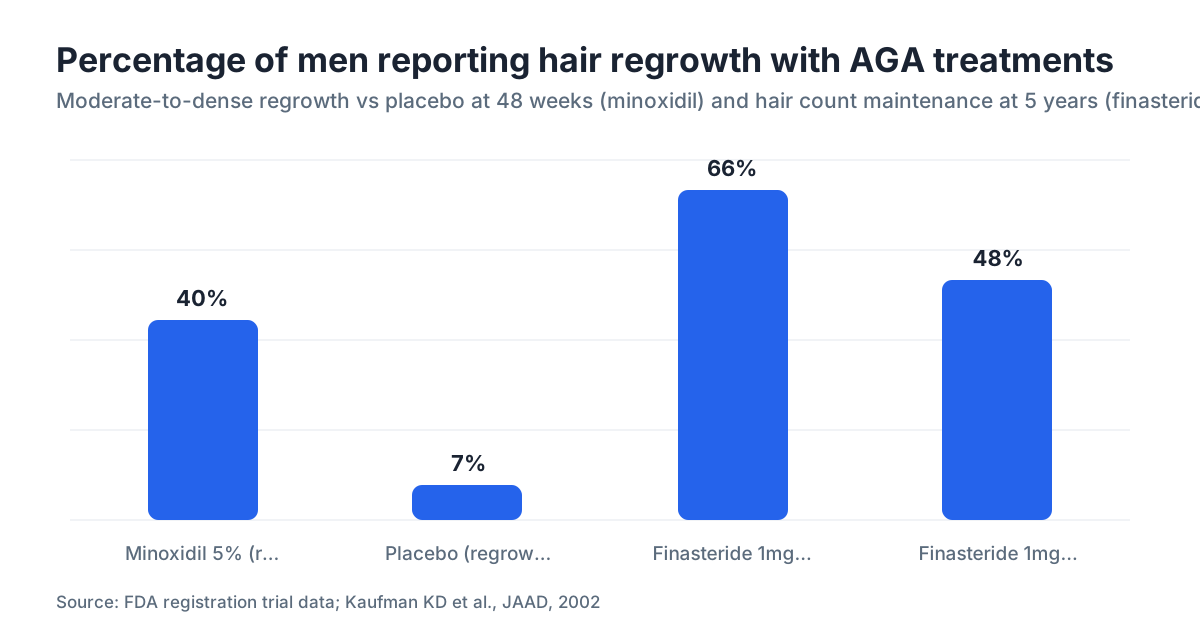
Minoxidil applied topically at 5% twice daily was approved by the FDA for men in 1988 and at 2% for women in 1991 [6]. In the trials leading to that approval, about 40% of men using 5% topical minoxidil reported moderate to dense hair regrowth at 48 weeks, compared to 7% on placebo. Vertex (crown) balding responds better than frontal recession.
Finasteride 1 mg (Propecia) was FDA-approved for men in 1997. In 5-year trial data, 66% of men maintained or improved hair count versus baseline, and 48% reported visible improvement in scalp coverage [7]. Finasteride works by blocking the conversion of testosterone to DHT, the androgen that miniaturizes follicles in genetically susceptible individuals. If you want to understand the mechanism, DHT blocker covers this in depth.
Used together, minoxidil and finasteride outperform either alone. A 2021 study in the Journal of the American Academy of Dermatology found combination therapy produced significantly greater hair count increases than monotherapy over 24 weeks [8]. The finasteride and minoxidil page walks through the evidence for combining them.
The catch: once you stop, hair loss returns. The treatments don't cure AGA. They suppress its progression as long as you use them. People who quit after 2 years typically return to the hair density they would have had if they had never treated, within roughly 6 to 12 months.
What does the FDA actually approve for hair regrowth?
The FDA approval list is shorter than the internet makes it sound.
For androgenetic alopecia, two drugs have FDA approval: minoxidil (topical, OTC) and finasteride 1 mg (oral, prescription for men). Low-level laser therapy (LLLT) devices have FDA clearance as medical devices for AGA, which is a different regulatory pathway than drug approval and a lower evidentiary bar. Platelet-rich plasma (PRP) has no FDA approval for hair loss; it is an off-label use of blood-processing equipment.
For severe alopecia areata, the FDA approved baricitinib (Eli Lilly, 2022) and ritlecitinib (Pfizer, 2023) as the first systemic treatments specifically indicated for the condition [4].
Oral minoxidil is used widely off-label by dermatologists at doses between 0.25 mg and 5 mg daily. It doesn't have an FDA hair-loss indication in tablet form, but many clinicians prefer it for compliance and efficacy. Oral minoxidil has a full breakdown of what's known.
Everything else, biotin megadoses, hair growth shampoos, saw palmetto, collagen peptides, ketoconazole shampoo alone, lacks the clinical trial evidence to earn an FDA approval for hair growth. That doesn't make all of them useless, but it means the burden of proof is on the seller, not on you. See hair loss supplements for what the evidence on common ingredients actually says.
Does the cause of your hair loss change whether it can reverse?
Yes, and this is the most practically useful thing to understand.
Hair loss from a temporary cause reverses when the cause is removed. That sounds obvious but it gets ignored constantly, because people jump to treatments before they know what they are treating.
Thyroid disorders (both hypo and hyperthyroidism) cause diffuse shedding that resolves once thyroid levels normalize on medication. Iron deficiency is one of the most common reversible causes of hair thinning in women. A serum ferritin below roughly 30 mcg/L is frequently cited in dermatology literature as a threshold associated with hair shedding, though the causal relationship is debated [9].
Medications are an underappreciated cause. Beta blockers, anticoagulants, retinoids, some antidepressants, and hormonal contraceptives can trigger telogen effluvium. If you switched medications several months before noticeable shedding began, that timeline is worth raising with your doctor.
Stress-induced shedding is real. The mechanism involves cortisol signaling that prematurely shifts follicles into the resting phase. The regrowth is real too, once stress levels drop.
The reason this matters: if someone with telogen effluvium from a crash diet starts finasteride, they may credit the drug for regrowth that would have happened anyway. And if someone with AGA treats themselves for stress-related shedding, they may feel better for a year before the underlying AGA pattern re-emerges. Understanding what causes hair loss before choosing a treatment saves time and money.
How long does it take to see reversal or regrowth?
Longer than most people expect, which is why so many people quit effective treatments too early.
The hair growth cycle runs in phases: anagen (active growth, 2 to 6 years), catagen (transition, 2 to 3 weeks), and telogen (resting, roughly 3 months) [10]. Any treatment that works does so by shifting follicles back into anagen. That shift takes time to become visible.
Minoxidil users typically see increased shedding in the first 2 to 8 weeks. This is normal: miniaturized hairs in telogen are displaced by incoming anagen hairs. New growth is usually visible at 3 to 4 months. Maximum benefit from minoxidil takes 6 to 12 months.
Finasteride takes at least 3 to 6 months to show stabilization and often 12 months for visible regrowth, because it works upstream by reducing DHT levels rather than directly stimulating follicles.
For telogen effluvium, regrowth typically begins 3 to 6 months after the trigger resolves. Full recovery can take a year.
For alopecia areata treated with JAK inhibitors, the ritlecitinib trials showed 40% of patients achieving at least 80% scalp coverage (SALT score improvement) by 6 months [4]. That's striking given how severe the starting loss was in trial participants.
Bottom line: commit to a minimum 6-month evaluation window for any treatment before judging whether it's working. Twelve months is better.
Can hair transplants reverse hair loss permanently?
Hair transplants are a different category from medical treatment. They don't reverse the biological process; they relocate follicles from areas resistant to DHT (usually the back and sides of the scalp) to areas where native follicles have been lost.
Because transplanted follicles come from DHT-resistant zones, they generally continue growing in their new location for life. That's the "permanent" part. But the surrounding native follicles continue to be affected by AGA, so without continued medical treatment, a transplant patient can end up with transplanted hair surrounded by progressive thinning.
The American Academy of Dermatology notes that hair transplants are most appropriate once hair loss has stabilized, so the surgeon can plan around a predictable pattern [1]. A hair transplant has a detailed breakdown of FUT vs FUE, what results to expect, and typical cost ranges.
Transplant cost in the US runs roughly $4,000 to $15,000 depending on the extent of loss and the surgical technique, based on pricing data from multiple clinic surveys. Insurance does not cover it for AGA.
A transplant combined with finasteride and minoxidil gives the best long-term outcome, because the drugs protect the existing native follicles while the transplanted grafts fill in lost areas.
Are there any new or emerging treatments that show real promise?
A few legitimate candidates are in the pipeline, beyond the JAK inhibitors already approved for alopecia areata.
Clascoterone (Breezula) is a topical androgen receptor inhibitor completing Phase 3 trials for AGA as of 2024. It works at the follicle level without systemic DHT reduction, which matters for men concerned about finasteride's systemic effects. No FDA approval yet for AGA.
Stemoxydine (Aminexil) from L'Oreal has some published data suggesting a modest effect on hair density, but the trials are small and industry-funded.
Wnt signaling pathway activators are being explored based on the biology of follicle cycling. Several companies have candidates in early trials. None are approved.
Platelet-rich plasma (PRP) has a growing body of small trials showing benefit in AGA. A 2019 meta-analysis in Aesthetic Plastic Surgery found statistically significant increases in hair density with PRP compared to placebo, but study quality was variable [11]. It's expensive (typically $1,500 to $4,000 for a series of 3 to 4 sessions), not covered by insurance, and lacks standardized protocols across providers.
If you're considering anything beyond minoxidil and finasteride, the question to ask any provider is: show me the randomized controlled trial data. A well-run clinic should be able to hand you the reference.
What makes hair loss harder to reverse the longer you wait?
Follicle miniaturization is progressive. A follicle in early miniaturization (producing a fine, thin vellus hair) can often be rescued. A follicle that has been miniaturized for years shrinks further, and the supportive dermal papilla cells that drive hair growth gradually lose their signaling capacity [10].
DHT-driven AGA causes something dermatologists call follicular fibrosis: a ring of collagen that forms around the follicle and physically constricts it. Early fibrosis is partially reversible. Advanced fibrosis is not. This is the cellular reason why every study comparing early versus late treatment shows dramatically better outcomes in patients who started sooner.
A receding hairline that's been moving back for 10 years is a harder treatment target than one that started 10 months ago. The receding hairline article covers the Norwood staging system and how to gauge where you are.
If you want to track what's happening before spending money, MyHairline's free AI scan (/scan) can give you a baseline assessment of your current hair density and pattern, which you can use to compare over time.
Timing also matters because the drugs have more to protect when more follicles are still alive. Finasteride in a Norwood 2 patient has much more native hair to preserve than finasteride in a Norwood 5.
What honestly doesn't work for reversing hair loss?
The hair loss supplement market is enormous and the evidence for most products is thin.
Biotin supplementation helps hair loss only if you are actually biotin deficient, which is rare. The FDA has warned that high biotin doses interfere with laboratory test results, including thyroid and cardiac troponin assays [12]. Millions of people take biotin for hair and most see no effect on shedding because they were never deficient.
Ketoconazole shampoo has decent evidence for reducing scalp DHT and may mildly support AGA treatment, but as a solo intervention it is not going to produce visible regrowth.
Castor oil, rosemary oil rubbed on the scalp, scalp massage alone, and dozens of topical "growth serums" lack the trial data to be called effective for AGA. Rosemary oil actually has one small randomized trial suggesting it might perform similarly to 2% minoxidil, but the sample was 100 people, unblinded, and industry-adjacent. Interesting. Not conclusive.
Hair fibers, density sprays, and thickening shampoos are cosmetic. They make hair look fuller. They don't affect follicle biology. That's fine if you understand what you're buying.
Scalp micropigmentation is a tattoo technique that mimics a shaved head look. It's durable and can look excellent, but it's camouflage, not treatment.
If a product or clinic promises to "reverse" your hair loss without citing FDA-approved data or peer-reviewed trials, walk away.
Should you see a dermatologist before trying treatments?
For most men with obvious male pattern baldness, starting OTC 5% minoxidil without a doctor visit is reasonable. The risk profile is low, and the drug is approved for that purpose. Minoxidil for men walks through application, dosing, and what to expect.
For women, a dermatology consultation is more valuable before starting treatment, because the causes of diffuse thinning in women are more varied. Female pattern hair loss can look like telogen effluvium, or both can be present simultaneously. A basic blood panel (TSH, ferritin, CBC, androgen levels if indicated) can identify reversible causes before committing to long-term medication. Minoxidil side effects is worth reviewing too before you start.
A dermatologist can also do dermoscopy (a close-up scalp exam with magnification) to distinguish early scarring alopecia from AGA, which matters enormously for treatment direction.
For any rapid or severe loss, see a dermatologist. Sudden diffuse shedding (losing hundreds of hairs daily for more than a few weeks) or patchy loss should be evaluated rather than self-treated.
The American Academy of Dermatology maintains patient-facing guidance on hair loss causes and treatment options at their public website [1]. It's a good first read before any appointment.
Sources
- American Academy of Dermatology, Hair Loss Overview
- National Library of Medicine, StatPearls: Telogen Effluvium
- National Alopecia Areata Foundation, Disease Overview
- FDA Drug Approvals Database, Litfulo (ritlecitinib) and Olumiant (baricitinib) approvals for alopecia areata
- FDA, Minoxidil labeling history
- Kaufman KD et al., Finasteride 1mg 5-year data, Journal of the American Academy of Dermatology, 2002
- Hu R et al., Combination minoxidil and finasteride vs monotherapy, Journal of the American Academy of Dermatology, 2021
- Trost LB et al., The diagnosis and treatment of iron deficiency and its potential relationship to hair loss, Journal of the American Academy of Dermatology, 2006
- NIH National Library of Medicine, Hair Follicle Biology and Growth Cycle
- Giordano S et al., PRP for androgenetic alopecia meta-analysis, Aesthetic Plastic Surgery, 2019
- FDA Safety Communication, Biotin interference with lab tests