
TL;DR: Finasteride can partially regrow hair at the hairline, but results are modest compared to the crown. Clinical trials show about 65% of men see regrowth after two years, and 87% stop losing more hair. The hairline is harder to recover than the vertex. Expect 12-24 months before judging results, and the drug only works while you keep taking it.
What does finasteride actually do to your hair?
Finasteride is a 5-alpha-reductase inhibitor. It blocks the enzyme that converts testosterone into dihydrotestosterone, or DHT, the androgen most responsible for shrinking hair follicles in genetically susceptible men. Lower DHT means follicles that were miniaturizing get a chance to recover and produce thicker, longer hairs again [1].
The FDA approved 1 mg oral finasteride (Propecia) for male pattern hair loss in 1997, specifically for use on the vertex (crown) and anterior mid-scalp [2]. That approval language matters. The crown is where the main trials showed the clearest results, not the very front hairline. That doesn't mean the hairline sees nothing. It means the evidence is stronger for the top than for the temples.
DHT is the problem finasteride solves. If you want the full mechanism, the dht blocker explainer goes deeper. The short version: finasteride reduces serum DHT by roughly 70% at the 1 mg daily dose, which is enough to shift the growth cycle back toward longer anagen phases for many follicles [1].
One thing finasteride cannot do: revive a dead follicle. If a patch of scalp has been bald long enough that the follicle has been replaced by scar tissue, no drug brings it back. This is why starting early matters more than almost anything else.
Does finasteride regrow hair at the hairline specifically?
Yes, but with real caveats. The Merck phase III trials from 1998, published in the Journal of the American Academy of Dermatology, reported that men on 1 mg finasteride daily for two years saw a mean increase of 107 hairs per inch-squared in the frontal scalp area, compared to a loss of 75 hairs per inch-squared in the placebo group [3]. That's a measurable difference at the front of the scalp.
The frontal hairline, especially the temples, is the hardest zone to recover. The reason involves follicle sensitivity. Follicles along the very front hairline and deep temples tend to be more androgen-sensitive than follicles on the crown, so they miniaturize faster and respond less completely to DHT reduction [4]. Think of it as a spectrum. Some follicles hear a whisper of DHT and stop growing. Others need a shout. The most sensitive ones sit at the temples.
So what does this mean in practice? Men who catch a receding hairline early, at Norwood 2 or early Norwood 3, have a real chance of noticeable thickening along the hairline. Men who wait until Norwood 4 or beyond are more likely to stabilize than to see dramatic fill-in at the temples. Regrowth happens. It's rarely the kind that restores a 20-year-old hairline from a Norwood 4 baseline.
Here's the honest summary. Finasteride is more of a preservation drug than a regrowth drug at the hairline. It does both. It does preservation much more reliably.
What do the clinical trials say about regrowth rates?
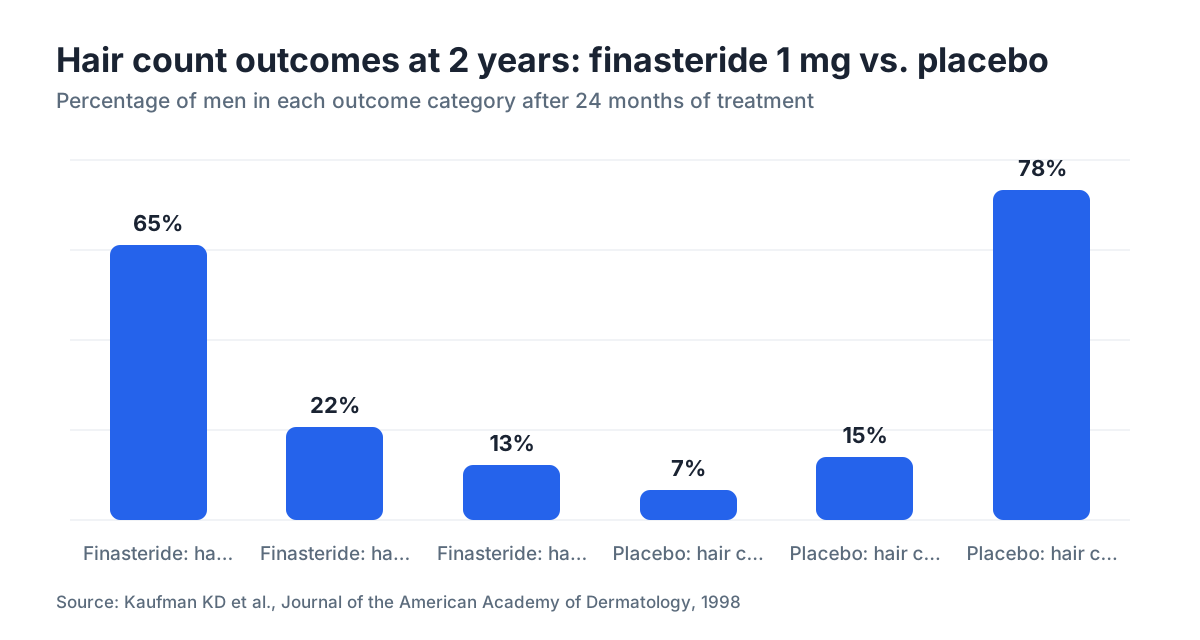
The two-year Merck phase III trials enrolled 1,553 men aged 18-41 with mild to moderate male pattern baldness. After two years on 1 mg finasteride daily [3]:
| Outcome | Finasteride group | Placebo group |
|---|---|---|
| Hair count increased vs. baseline | 65% of men | 7% of men |
| Hair count stable vs. baseline | 22% of men | 15% of men |
| Hair count decreased vs. baseline | 13% of men | 78% of men |
| Investigator-assessed improvement | 48% | 7% |
The five-year open-label extension of those trials found that men who stayed on finasteride held or improved their hair counts, while those who switched to placebo lost the gains within 12 months [3]. This confirms the drug only works while you take it.
A 2002 meta-analysis in the British Journal of Dermatology pooled data from three randomized controlled trials and found statistically significant improvements in both hair count and patient-reported satisfaction at the front and crown, though front-of-scalp improvements were consistently smaller in absolute terms than crown improvements [5].
Nobody has clean data on temple-only regrowth as a separate endpoint, because the trials measured "frontal scalp" as a zone, not the hairline edge specifically. The closest data suggests temple hair regrowth is real but limited. Dermatologists who treat thousands of patients describe the same pattern: crown responds first and most, front mid-scalp responds moderately, temples respond least.
How long does finasteride take to work on the hairline?
Three months is when you might notice shedding slow down. Six months is when early signs of regrowth might show. Twelve months is when you get a real read on whether it's working. Twenty-four months is the standard benchmark from the clinical trials [3].
The delay exists because hair grows in cycles. When finasteride lowers DHT, follicles in the telogen (resting) phase don't immediately flip to active growth. They finish their resting phase first, then grow a new hair. A full hair cycle runs roughly three to four months, and you need multiple cycles before regrown hairs are long enough to change visible density.
One thing that catches people off guard: early shedding. Some men see more hair fall in the first four to eight weeks. This is follicles cycling out of the old miniaturized hair to grow a new, thicker one. It looks alarming. It usually isn't. This is the same mechanism you see with minoxidil, and the telogen effluvium article explains it well if you want the detail.
If you've been on finasteride for 12 months with no change at all, that's meaningful information. Roughly 13% of men in trials are non-responders [3]. For those men, the drug just doesn't produce enough DHT reduction to overcome their follicle sensitivity, or they carry a variant in the 5-alpha-reductase enzyme. No shame in that. It means changing the plan.
Is finasteride more effective combined with minoxidil for the hairline?
Yes, and the evidence is fairly clear on this. Finasteride and minoxidil work through different mechanisms. Finasteride removes the hormonal signal that shrinks follicles. Minoxidil, a vasodilator, extends the anagen (growth) phase and may increase blood flow to the follicle. Using both together hits the problem from two angles.
A 2019 randomized controlled trial in Dermatologic Therapy compared finasteride alone, minoxidil alone, and the combination in men with androgenetic alopecia. The combination group showed significantly greater improvement in hair density at 12 months than either drug alone [6]. A 2012 review in the Journal of Drugs in Dermatology reported similar results, with the combination giving additive benefit across the frontal and vertex regions [10].
If you're weighing whether to add minoxidil, the finasteride and minoxidil piece covers the combination in detail, including dosing options and what to expect from oral versus topical minoxidil. The minoxidil for men overview helps if you want to understand minoxidil's contribution on its own.
Here's the practical read. If your main concern is the hairline and you want the best shot at regrowth rather than just preservation, combining both drugs is what most dermatologists recommend today. The evidence supports it, and the side effect profiles don't meaningfully stack.
What Norwood stages respond best to finasteride?
Norwood 1-3 is where finasteride does its best work. At these stages, the follicles along the hairline and crown are still alive, still cycling, and the miniaturization hasn't gone so far that the follicle itself is gone. DHT reduction at this point can genuinely reverse the miniaturization trajectory.
Norwood 4-5 is a mixed picture. The crown often responds reasonably well because crown follicles, even at this stage, tend to keep more growth capacity. The hairline in a Norwood 4 or 5 patient has usually been receding for years, and the most affected temple follicles may be too miniaturized to respond meaningfully. Finasteride almost certainly slows further loss, and some mid-frontal fill-in is possible, but restoring the hairline to a Norwood 2 appearance from a Norwood 5 baseline isn't realistic.
Norwood 6-7 is mostly about preserving remaining hair. At this point, a hair transplant becomes a serious conversation if restoration is the goal, usually with finasteride as a companion to protect non-transplanted hair after surgery.
The honest opinion here: if you're reading this at Norwood 2 or 3 and wondering whether to start, start. The opportunity cost of waiting is real and is measured in follicles you won't get back. If you're at Norwood 5 or 6 hoping finasteride will rebuild your hairline, manage expectations hard.
What are the real risks and side effects of finasteride?
The FDA-approved label for finasteride 1 mg lists sexual side effects as the main concern: decreased libido, erectile dysfunction, and decreased ejaculate volume occurred in 1.8-3.8% of men in clinical trials, compared to 1.3-2.1% in the placebo group [2]. These resolved in most men who stopped the drug.
Post-finasteride syndrome is a more contested issue. Some men report persistent sexual, neurological, and psychological symptoms that continue after stopping the drug. The FDA added a label update in 2012 acknowledging reports of persistent erectile dysfunction [9]. The honest position is that the frequency and mechanism of persistent symptoms aren't fully understood. The FDA label states: "In clinical studies for PROPECIA (finasteride 1 mg), 1.8% of patients reported decreased libido and 1.3% reported erectile dysfunction while receiving PROPECIA" [2]. The post-finasteride literature is real but limited by study design. If you have a history of depression or anxiety, discuss that with a doctor before starting.
Breast tenderness or enlargement (gynecomastia) is rare but documented in less than 1% of users in trials [2]. Finasteride is FDA pregnancy category X, meaning it must not be handled by pregnant women because of the risk of feminizing a male fetus [2].
The bigger-picture view from most dermatologists: for the majority of men, finasteride is well tolerated over years. The benefit-risk calculation for a 25-year-old Norwood 2 who wants to keep his hair is, in most cases, favorable. But this is genuinely a conversation to have with a physician who knows your history, not a solo decision.
The full finasteride overview covers side effects, dosing, and the off-label topical version in more depth.
Can women use finasteride to regrow a receding hairline?
This is more complicated. Finasteride is not FDA-approved for hair loss in women, and it is contraindicated in women who are or may become pregnant [2]. The 1 mg dose used for male pattern hair loss has not been consistently shown to work in premenopausal women the way it works in men, partly because female pattern hair loss involves different hormonal pathways.
That said, postmenopausal women with androgenetic alopecia are sometimes prescribed finasteride off-label by dermatologists. The American Academy of Dermatology notes that finasteride may be an option for postmenopausal women with female pattern hair loss who haven't responded to other treatments [7]. Some studies using 2.5 mg to 5 mg doses in postmenopausal women have shown modest benefit.
For premenopausal women with a receding hairline, the first-line options are topical minoxidil and addressing any underlying hormonal issues. Spironolactone is another off-label option used in women. Understanding what causes hair loss in women is a useful starting point before deciding on treatment.
Finasteride for women is not a clean parallel to finasteride for men. If you're a woman researching this, the conversation needs to happen with a dermatologist or endocrinologist who can evaluate your specific hormonal picture.
How do you know if finasteride is working on your hairline?
The method most dermatologists trust is baseline photography. Take standardized photos under the same lighting, same angle, same camera distance, every three months. Subjective memory is terrible at tracking gradual change. Photos aren't.
If you want more objective data, trichoscopy (dermoscopy of the scalp) can measure hair shaft diameter and miniaturization. Some clinics offer this as a baseline and follow-up tool. It's the most reliable way to detect whether follicles are thickening before visible density change shows up.
Myhairline.ai's free AI scan takes a photo of your scalp and maps your density and hairline recession, which gives you a repeatable baseline to compare against over time. If you're starting finasteride and want an objective starting point, that's exactly what a tool like that is built for.
The markers that suggest finasteride is working: shedding slows within 3-6 months, fine vellus hairs at the hairline convert to slightly thicker terminal hairs by month 9-12, and density photos show improvement at 18-24 months. The marker that it isn't working: no change in shedding rate, no conversion of vellus hairs, no density change at 12 months. At that point, adding minoxidil or discussing alternatives with a dermatologist is the reasonable next step.
What happens if you stop taking finasteride?
You lose the gains. This is one of the most important things to understand going in.
Within 12 months of stopping finasteride, DHT levels return to baseline. The follicles that had been protected from miniaturization are exposed to DHT again, and the hair loss process resumes. The five-year trial extension showed that men who discontinued the drug lost their hair count improvements within about a year and returned to roughly the trajectory they would have been on without treatment [3].
This means the decision to start finasteride is essentially a long-term commitment. You're not treating the underlying genetics. You're managing the hormonal signal that triggers the genetics. Stop managing the signal, and the genetics take over again.
For some men, this is a dealbreaker. For others, the math is simple: they'd rather take a daily pill and keep their hair than not. There's no objectively right answer. But going in thinking you'll take it for two years to "regrow" and then stop is likely to lead to disappointment. The regrown hair leaves with the drug.
Is a hair transplant a better option for hairline regrowth than finasteride?
They do different things. A hair transplant physically moves DHT-resistant hair follicles from the back and sides of the scalp to the hairline, which can restore a hairline that finasteride can't recover because the follicles are gone. Finasteride protects and partially revives follicles that are still there.
The two are often used together. A transplant without finasteride risks the native hairs around the transplanted zone continuing to miniaturize, making the result look unnatural over time. Finasteride after a transplant protects that native hair. Most transplant surgeons recommend finasteride as a companion treatment.
Cost is a real factor. Finasteride at 1 mg daily runs roughly $20-80 per month depending on whether you use the brand name or generic, or cut 5 mg pills. A hair transplant in the US costs anywhere from $4,000 to $15,000 depending on the technique and the number of grafts needed. There's no comparison on upfront cost.
For a man at Norwood 2-3 who starts finasteride early, a transplant may never be necessary. For a man at Norwood 5 who wants a natural hairline restored, no amount of finasteride replaces surgery. Most of the time, the answer is finasteride first, transplant later if needed, finasteride always maintained afterward.
Are topical finasteride options available for the hairline?
Yes. Topical finasteride has grown a lot in use over the past five years. The idea is to apply the drug directly to the scalp for local DHT reduction with less systemic absorption, which in theory reduces the risk of systemic side effects.
A 2022 study in JAMA Dermatology compared topical 0.25% finasteride applied once daily against oral 1 mg finasteride and found similar efficacy for hair count improvements with much lower serum DHT reduction (roughly 20-30% versus 65-70% for the oral form) [8]. That's a meaningful difference in systemic DHT suppression if side effect risk is your concern.
Topical finasteride isn't FDA-approved as a standalone product for hair loss. It's compounded by pharmacies, which means quality and concentration can vary. If you want to try it, getting it from a compounding pharmacy with a dermatologist's prescription is the reasonable path.
Some products combine topical finasteride with minoxidil in a single solution, which helps with compliance. The finasteride article covers topical formulations in more depth, including the concentration ranges commonly used and what the prescribing landscape looks like.
Sources
- Kaufman KD et al., Journal of the American Academy of Dermatology, 1998, finasteride 1 mg DHT reduction and hair count data
- FDA, Propecia (finasteride 1 mg) Prescribing Information and Label
- Kaufman KD et al., Journal of the American Academy of Dermatology 1998 and 5-year extension, finasteride phase III trial results
- Randall VA, Androgenetic alopecia and androgen receptor sensitivity, Clinical Endocrinology 2008
- Van Neste D and Whiting DA, British Journal of Dermatology 2002, finasteride meta-analysis
- Shin JW et al., Dermatologic Therapy 2019, finasteride plus minoxidil combination RCT
- American Academy of Dermatology, hair loss treatment guidance
- Piraccini BM et al., JAMA Dermatology 2022, topical versus oral finasteride comparison
- FDA, MedWatch Safety Information
- Rossi A et al., Journal of Drugs in Dermatology 2012, combination therapy efficacy review