

TL;DR: Clinical trials report sexual side effects (reduced libido, erectile dysfunction) in roughly 1.5 to 3.8% of men taking 1 mg finasteride for hair loss, versus about 1.3% on placebo. For most men these resolve after stopping the drug. A small subset reports symptoms persisting beyond 3 months off the drug, a pattern researchers call Post-Finasteride Syndrome. The permanent-risk evidence is real but limited, and the absolute numbers are low.
What does finasteride actually do to your hormones?
Finasteride is a 5-alpha reductase inhibitor. It blocks the enzyme that converts testosterone into dihydrotestosterone (DHT), the androgen most responsible for shrinking hair follicles in genetically susceptible people. At the 1 mg dose approved for hair loss (sold as Propecia), it lowers scalp and serum DHT by roughly 60 to 70% [1].
DHT also has a role in sexual function, though the relationship is more complicated than "less DHT equals worse sex." Most of your libido is driven by testosterone, estrogen, and the brain, not DHT directly. But DHT does influence erections, sensitivity, and mood, which is why its suppression can affect some men. The hormone changes are reversible when you stop the drug: serum DHT returns to baseline within about two weeks of stopping [1].
What matters for your risk assessment is that the hormonal mechanism is temporary and dose-dependent. The concern about lasting effects is not about the hormone itself staying suppressed but about what happens in the brain's androgen signaling pathways after prolonged suppression. That's where the science gets genuinely uncertain.
How common are sexual side effects in clinical trials?
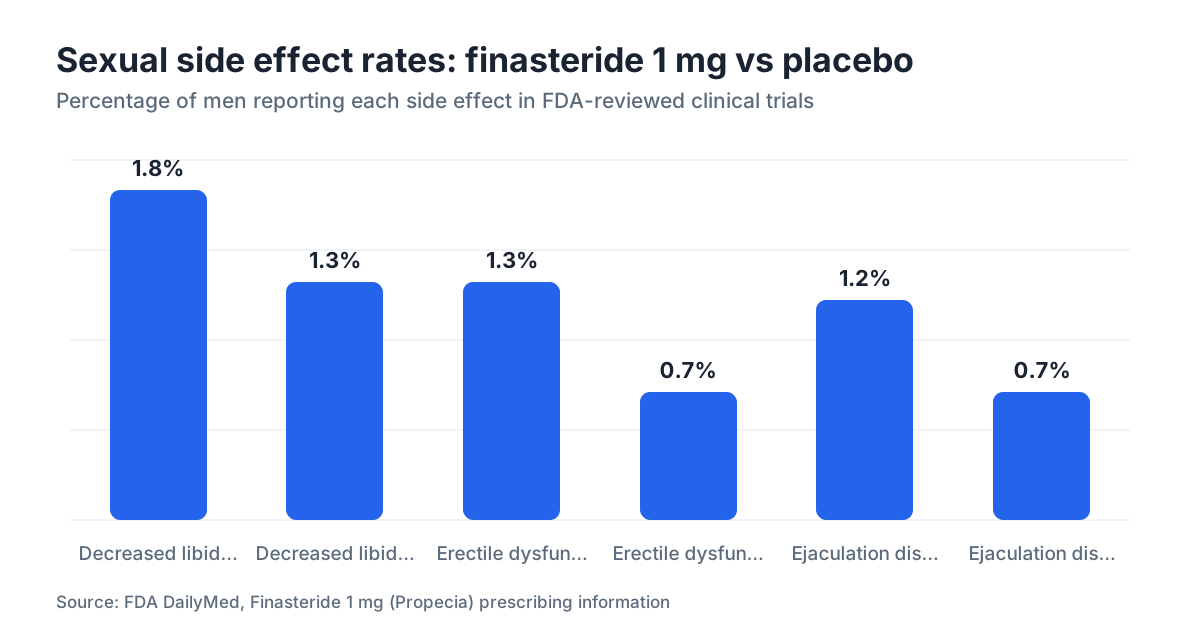
The FDA-approved label for finasteride 1 mg reports the following rates from placebo-controlled trials in men aged 18 to 41 [2]:
| Side effect | Finasteride 1 mg | Placebo |
|---|---|---|
| Decreased libido | 1.8% | 1.3% |
| Erectile dysfunction | 1.3% | 0.7% |
| Ejaculation disorder | 1.2% | 0.7% |
| Any sexual side effect | ~3.8% | ~2.1% |
The gap between drug and placebo is real but modest. You are looking at roughly 1 to 2 extra men per 100 who experience a sexual side effect attributable to the drug rather than to background rates, aging, stress, or nocebo effect (side effects triggered by anxiety about side effects rather than by the drug itself). [2]
A 2007 paper in the Journal of Sexual Medicine found that men who were told about sexual side effects before starting finasteride reported them at nearly three times the rate of men who were not told, a strong sign that nocebo drives part of the trial numbers. [3] That does not make the side effects imaginary. It does mean the true pharmacological incidence may sit closer to 1 to 2% than to 3.8%.
Here is the trade you are actually weighing. Hair loss itself is linked to measurably lower self-esteem and sexual confidence in multiple surveys. Swapping one problem for a roughly 1 to 2% chance of another is a call only you can make, but the numbers are far quieter than the forums.
Do sexual side effects from finasteride go away when you stop?
For the overwhelming majority of men, yes. The FDA label notes that side effects resolved in men who stopped taking finasteride [2]. The drug's half-life is 5 to 6 hours; it is largely cleared in 24 hours and DHT returns to baseline within about two weeks. Most clinical-trial participants who discontinued saw improvement within weeks.
But "most" is not "all," and that exception matters.
A subset of men report sexual symptoms, cognitive problems, and mood changes that persist for months or years after stopping. This pattern was formally named Post-Finasteride Syndrome (PFS) by a group of researchers and patient advocates and is now the subject of ongoing research. The Post-Finasteride Syndrome Foundation has documented thousands of case reports, though self-reported case registries carry heavy selection bias and cannot tell us the true prevalence. [4]
The honest answer is that nobody has a clean population-level rate for persistent PFS. The closest published figure comes from a 2017 study in the Journal of Clinical Endocrinology and Metabolism, which found that among men with PFS symptoms, the neurological and hormonal profiles differed from healthy controls in measurable ways, suggesting a real physiological state rather than a purely psychological one. [5] But that study enrolled men who already had symptoms. It cannot tell you the probability of ending up in that group if you start the drug today.
The FDA added a warning about persistent sexual dysfunction to the prescribing information in 2012, citing post-marketing reports of symptoms continuing after discontinuation. [2]
What is Post-Finasteride Syndrome and is the risk real?
Post-Finasteride Syndrome refers to a cluster of symptoms that begin during or after finasteride use and persist after stopping. The most commonly reported symptoms are reduced libido, erectile dysfunction, diminished genital sensation, anhedonia (loss of pleasure), depression, brain fog, and fatigue. [4]
Is it real? The biological plausibility is genuine. Finasteride does not only affect peripheral DHT; it also reduces neurosteroids, specifically allopregnanolone, a metabolite of progesterone that modulates GABA receptors in the brain. Animal studies have shown that finasteride alters neurosteroid levels and affects mood, anxiety, and sexual behavior. [5] Whether those changes become permanent in a subset of humans is not established.
The Post-Finasteride Syndrome Foundation, which advocates for research funding, puts the prevalence of persistent symptoms at roughly 1 to 2% of men who use the drug. That figure rests on case reports and surveys, not a controlled cohort study. [4] Peer-reviewed literature has not yet produced a rigorous incidence estimate. The FDA's pharmacovigilance database (FAERS) contains thousands of reports, but FAERS data is notoriously subject to reporting bias.
So the honest position: persistent sexual side effects appear rare, appear real in some men, and the science explaining why they persist is still developing. If you are deciding whether to take finasteride, that uncertainty deserves honest weight. If you are already trying to figure out whether your symptoms are related to finasteride, talk to a urologist or endocrinologist who knows this literature.
Does age or health history change the risk?
Age matters in two directions. Younger men (teens to late 20s) may have more androgen-sensitive brain signaling, which could theoretically make them more vulnerable to neurosteroid disruption. Some physicians are more cautious prescribing to men under 20 for this reason, though no large trial has demonstrated higher rates of persistent side effects in younger users. [6]
Men over 40 with pre-existing erectile dysfunction or low testosterone should know that finasteride may worsen an already compromised baseline. That is worth raising with a prescriber before starting, rather than reading about online.
Prior depression or anxiety shows up in many PFS case reports as a pre-existing condition. It is unclear whether this reflects real vulnerability or simply that men with depression are more likely to notice and report symptoms. A 2020 study in JAMA Dermatology, looking at 5 mg finasteride for BPH rather than the 1 mg hair loss dose, found a small but statistically significant increase in depression and self-harm reports in older men. [7] The dermatology and urology communities still debate whether those findings transfer to the 1 mg dose in younger, otherwise healthy men.
If you have a history of depression, low libido, or sexual dysfunction before starting, document your baseline with a doctor. That record protects you and lets any change get caught early.
How do doctors monitor for sexual side effects?
Most prescribers do not use a formal monitoring protocol for the 1 mg dose, which is worth knowing. You are unlikely to get a baseline sexual-function questionnaire unless you ask for one.
If you want to be systematic, the International Index of Erectile Function (IIEF-5) is a five-question validated questionnaire you can fill out yourself before starting and every few months afterward. It takes about two minutes and gives you a documented baseline to compare against. [8] Print it, fill it in, date it. If you notice a meaningful change, you have data to bring to your doctor rather than a vague complaint.
Blood work before starting is a reasonable ask from your GP or dermatologist: baseline testosterone (total and free), LH, FSH, and prolactin. These are not required, but they establish whether you started with normal levels, which makes any future comparison meaningful. DHT testing is more specialized and less standardized, so it is usually not worth pursuing unless something changes.
If you develop sexual symptoms on finasteride, the practical approach most doctors recommend is to stop the drug and wait 2 to 4 weeks before deciding anything further. Most symptoms that are going to resolve do so quickly. If they persist past 8 to 12 weeks off the drug, that warrants evaluation by a urologist familiar with androgen-related dysfunction.
Are women or people with female-pattern hair loss at the same risk?
Finasteride is not FDA-approved for women and is contraindicated in women who are or may become pregnant because it causes birth defects in male fetuses (specifically, abnormal genital development). [2] Some dermatologists prescribe it off-label for postmenopausal women with female-pattern hair loss, where the teratogenic risk is gone.
The sexual-side-effect data for women is sparse. The mechanisms differ because women have much lower baseline DHT levels and different neurosteroid profiles. The limited data from off-label use and from women who took finasteride for other conditions suggests that depression and mood changes may be more prominent concerns than erectile dysfunction (obviously) or ejaculation changes. Any woman taking finasteride off-label should have this discussion explicitly with her prescriber. [6]
If you are looking at the broader question of why you are losing hair in the first place, the causes for women and men differ in important ways. Our overview of what causes hair loss covers both sides of that.
How does finasteride compare to other hair loss options on sexual side effects?
This is the question most people have, and few articles answer it directly.
Minoxidil for men does not block DHT at all. Its mechanism is entirely different (it is a vasodilator that extends the growth phase of hair follicles) and it has no known sexual side effects. It is less effective than finasteride at halting hair loss in men with significant androgen-driven loss, but for men who cannot tolerate finasteride, it is the first alternative to reach for. The minoxidil side effects profile is different: scalp irritation, unwanted facial hair growth, and rarely fluid retention.
Dutasteride blocks both types of 5-alpha reductase (finasteride only blocks type II), lowering DHT by roughly 90% versus finasteride's 60 to 70%. It is not FDA-approved for hair loss (it is approved for BPH) but is prescribed off-label and used more widely in some countries. The sexual side effect rate appears higher than finasteride in head-to-head data, which is the expected trade-off for stronger DHT suppression.
Hair transplant surgery involves no systemic hormone changes, so there is no pharmacological sexual risk. But it does not stop ongoing hair loss, costs $4,000 to $15,000 or more, and carries its own procedural risks. Many men combine a transplant with finasteride precisely because the drug protects the non-transplanted hair. See the hair transplant article for what to expect.
Topical finasteride (applied to the scalp) is an emerging alternative with lower systemic DHT suppression and, in preliminary studies, fewer systemic side effects. It is not yet FDA-approved but is available through some compounders and is worth asking a dermatologist about if you want finasteride's DHT-blocking effect while minimizing systemic exposure.
| Option | DHT reduction | Sexual side effect risk | FDA-approved for hair loss |
|---|---|---|---|
| Finasteride 1 mg (oral) | ~60 to 70% | ~1 to 2% over placebo | Yes (men only) |
| Dutasteride 0.5 mg (oral) | ~90% | Higher than finasteride | No (off-label) |
| Topical finasteride | ~30 to 50% systemic | Likely lower (limited data) | No |
| Minoxidil (topical) | None | None known | Yes (men and women) |
| Hair transplant | None | None | Surgical, not drug |
For men who want the drug option and worry about sexual side effects, the combination of finasteride and minoxidil often allows a lower effective dose of finasteride while keeping efficacy, though that clinical claim needs individual discussion with a prescriber.
What does the FDA actually say about finasteride and sexual side effects?
The FDA approved finasteride 1 mg (Propecia) for male-pattern hair loss in 1997. The agency has updated the labeling twice in response to post-market safety signals.
In 2012, the FDA required a label update to warn that libido, erectile function, and ejaculation disorders may continue after stopping the drug in some men. The updated label states that these adverse reactions "continued after discontinuation of the drug" in post-marketing reports. [2]
The FDA has not required a black-box warning (the strongest warning type), which it reserves for risks that are severe, life-threatening, or irreversible in a significant share of users. The agency's position as of the most recent label update is that the risk of persistent sexual dysfunction is real and should be disclosed, but is not frequent enough to pull the drug from market or trigger the strongest warning tier.
FDA drug labels are public documents. You can read the full prescribing information for finasteride at DailyMed, the National Library of Medicine's official database. [2] If you are making a treatment decision, reading the actual label is 20 minutes well spent.
What questions should I ask my doctor before starting finasteride?
Most primary care doctors and even some dermatologists will spend about five minutes on this conversation. You get a better outcome by walking in with specific questions.
Ask about your baseline: what is your current erectile function, libido, and ejaculation quality? Documenting this before you start is the single most useful thing you can do. If you notice a change later, you will know it is a change and not something you are misattributing.
Ask whether topical finasteride is an option. Some compounding pharmacies now make a 0.25% topical solution. The evidence for equivalent efficacy to oral is limited but growing, and the side effect profile looks better in small trials.
Ask how long you should give the drug before judging efficacy. Hair loss drugs take at least 6 months to show meaningful results and up to 12 months for full effect [9]. Many men quit early because they see nothing at 3 months, which is not enough time.
Ask what the stopping plan is. Agree on three things: what symptoms would prompt stopping, how quickly you would stop, and what follow-up looks like if symptoms persist. Settling this in advance removes the ambiguity if something does happen.
If you want an objective picture of where your hair stands before starting treatment, a tool like the free AI hair analysis at MyHairline can map your loss pattern, which helps you track whether the drug is actually working over time.
If I stop finasteride, how long until my libido returns to normal?
For men whose sexual side effects are pharmacological and reversible, improvement usually begins within days to weeks of stopping. DHT returns to baseline in roughly two weeks [1]. Most improvement in libido and erection quality in this group happens within 1 to 3 months.
If symptoms persist past 3 months off the drug, that is when the PFS framework becomes relevant. The evidence on treating persistent PFS is almost entirely case-report level; there are no large randomized trials for treatments. Approaches that have been tried include testosterone therapy (controversial, since some reports suggest it worsens symptoms in this group), clomiphene citrate to stimulate endogenous testosterone, and SSRIs for the psychological component. None of these has a strong evidence base for PFS specifically. [4]
Do not dismiss the psychogenic component either. Anxiety about whether your libido will return can itself suppress libido, creating a feedback loop. Some men who stopped finasteride due to sexual side effects have benefited from cognitive behavioral therapy aimed at sexual performance anxiety, independent of any hormonal intervention.
If you are in this situation, a urologist or sexual medicine specialist with experience in hormone-related dysfunction is more useful than a general practitioner. The American Urological Association can help you locate one. [10]
Is finasteride still worth it given the sexual side effect risk?
That depends on how much hair loss is affecting your life and how you personally weight the risks. There is no objectively correct answer here.
What I can say plainly: finasteride is the most effective oral medication available for male-pattern hair loss and has more than 25 years of real-world use data. It works for roughly 80 to 90% of men who take it consistently, and it slows or stops loss in almost all of them [9]. The sexual side effects are real, statistically small in placebo-controlled trials, probably affect 1 to 2% more men than placebo, usually resolve on stopping, and rarely persist. The word "rarely" is doing work there. For the man who ends up in the rare group, it is not rare to him.
For a 28-year-old at Norwood 2 who is watching his hairline move back and has no history of sexual dysfunction or depression, the risk-benefit math often lands in favor of trying it. For a 45-year-old with pre-existing erectile issues and heavy psychological dependence on sexual function for his sense of well-being, the same math may land differently.
If you decide to try it, do so with a documented baseline, a clear stopping plan, and a prescriber who takes this conversation seriously. If you want to understand where you are on the receding hairline spectrum before deciding anything, that context matters for figuring out whether the intervention even matches your situation. The free AI scan at MyHairline can show you where you fall on the Norwood scale in minutes, which at least removes one variable from an already complex decision.
Sources
- FDA DailyMed, Finasteride 1 mg (Propecia) prescribing information
- FDA DailyMed, Finasteride 1 mg label, Adverse Reactions and Warnings sections
- Mondaini N et al., Journal of Sexual Medicine, 2007, Finasteride and sexual side effects: nocebo effect
- Post-Finasteride Syndrome Foundation, PFS description and symptom registry
- Melcangi RC et al., Journal of Clinical Endocrinology and Metabolism, 2017, Neuroactive steroids in men with PFS
- American Academy of Dermatology, Finasteride for hair loss guidance
- Dyson TE et al., JAMA Dermatology, 2020, Finasteride and risk of depression in men with BPH
- Rosen RC et al., Urology, 1997, International Index of Erectile Function (IIEF-5) validation
- Leyden J et al., Journal of the American Academy of Dermatology, 1999, Finasteride 5-year hair loss trial
- American Urological Association, Find a Urologist directory