
TL;DR: Transplanted grafts anchor into the scalp within 10-14 days, and the scabs are gone by week 2-3. Shock loss then strips the new hairs, which regrow starting around month 3-4. Visible density arrives by month 9-12, and the final result settles at 12-18 months. The first two weeks are the fragile window where graft survival is decided.
What actually happens to your scalp during a hair transplant?
A surgeon removes follicular units, either as a strip of scalp skin (FUT) or as individual punches (FUE), then inserts them into tiny incisions in the recipient area. Each graft is a small wound on both ends. The donor site heals as a linear scar (FUT) or as hundreds of tiny circular scars (FUE). The recipient sites are puncture wounds, roughly 0.6-1.0 mm wide, scattered across wherever thinning has occurred.
For the first 24-48 hours those grafts are held in place by nothing more than blood clot formation. The follicle is not yet anchored by new tissue. That's why the post-op instructions about sleeping upright, skipping the gym, and not touching your head are not optional.
Blood supply to the graft begins reestablishing at around 72 hours through a process called neovascularization [1]. By day 7-10 enough new capillary connections have formed that the graft is considered mechanically stable. Full vascular integration, where the follicle is properly fed and functional, takes several more weeks.
The hair shaft you can see above the skin is mostly dead protein. It will shed. What matters is whether the dermal papilla at the base of the follicle survived the extraction, storage, implantation, and early healing phases. That's the living engine of the hair cycle, and protecting it is what all the post-op rules are designed to do.
What does the week-by-week healing timeline look like?
Here is a realistic schedule. Individual variation is real, FUT recovery skews slightly longer at the donor site, and larger sessions (over 3,000 grafts) tend to produce more swelling.
Days 1-3: Acute wound phase. The scalp is raw, pink, and crusted with tiny blood-clot scabs on every recipient site. Swelling typically peaks on day 2-3 and can migrate down to the forehead and even around the eyes. This is normal lymphatic fluid redistribution, not infection [2]. Sleep with your head elevated at roughly 45 degrees. Most clinics prescribe a short course of oral antibiotics and a mild anti-inflammatory for these days.
Days 4-7: Early crust formation. The scabs harden and the swelling begins to recede. The grafts are still semi-fragile. Gentle washing, usually with saline or a diluted baby shampoo applied by cupped hand (not direct shower stream), is introduced around day 3-5 depending on your surgeon's protocol. Do not pick the scabs.
Days 8-14: Crust shedding. Scabs begin to fall off naturally, often carrying the visible hair shaft with them. This looks alarming and is completely normal. The follicle below the skin is fine. By the end of week 2 most patients are presentable in public. The recipient area looks pink but clean.
Weeks 3-6: Shock loss (effluvium phase). The transplanted hairs enter a telogen (resting/shedding) phase triggered by the trauma of surgery. Most of the visible hair you came home with falls out. You may also notice thinning of nearby native hairs for the same reason. If you want to understand why this happens at a cellular level, the telogen effluvium article covers the mechanism in detail. This phase is temporary but psychologically difficult.
Months 2-3: Dormant phase. The scalp looks sparse. The follicles are alive underground but not yet producing a new shaft. Nothing visible is happening and patience is genuinely hard here.
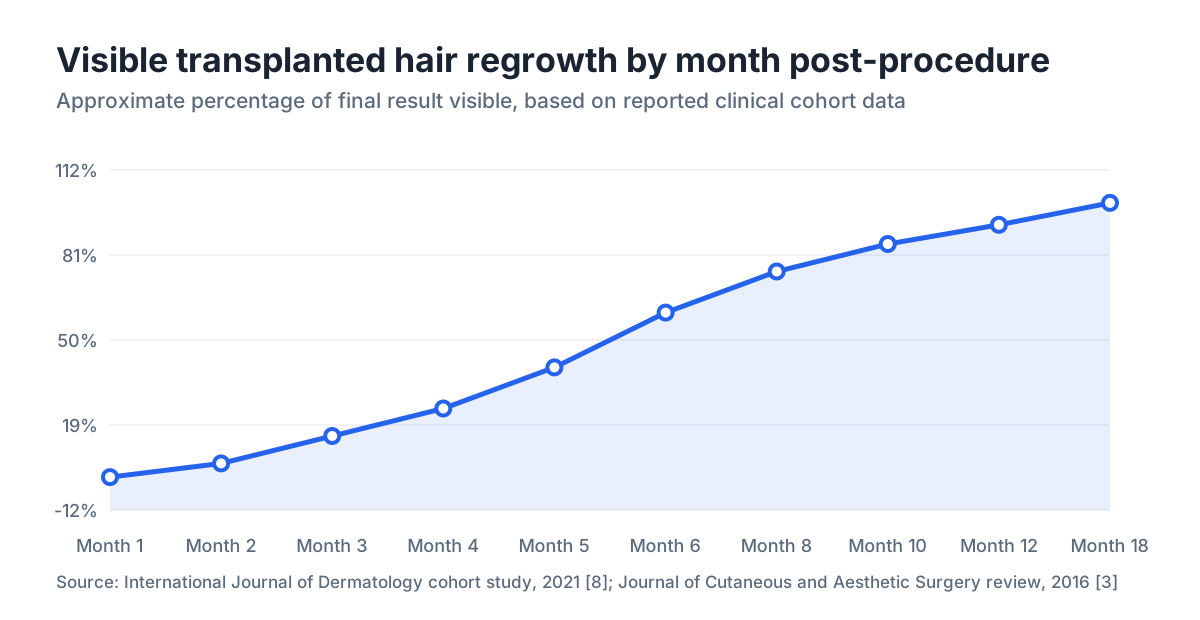
Months 3-5: Early regrowth. Fine, light-colored, sometimes kinky hairs begin to emerge. Texture normalizes over several months as the follicle acclimates to its new location. Expect about 20-30% of the final result to be visible at month 4.
Months 6-9: Accelerating density. Hair thickens and pigment deepens. Most patients see roughly 60-70% of their final result by month 6 [3].
Months 12-18: Final result. The last 30-40% of density fills in. Coarse, mature, fully pigmented hairs complete the picture. Results assessed before 12 months are preliminary; some surgeons ask patients to wait until 18 months before evaluating whether a second session is needed.
How long does hair transplant healing actually take before you look normal?
"Looking normal" has two different answers depending on what you mean.
For casual observers, most patients are back in an office environment within 7-14 days of an FUE procedure, with minimal visible evidence beyond short hair and a slightly pink scalp. FUT patients may have a few more days of visible donor-site tenderness. With a hat or the right hairstyle, many patients are back at work within 5-7 days.
For the actual result you paid for, the honest answer is 12-18 months. A 2016 review in the Journal of Cutaneous and Aesthetic Surgery noted that final hair counts in transplanted areas are typically assessed at 12 months post-procedure [3]. Waiting rooms full of anxious 6-month post-ops are not seeing their final outcome.
The donor site scar from FUT can take 6-12 months to fully mature and pale. FUE punch scars are smaller but also take several months to become truly inconspicuous, particularly in patients with darker skin tones where post-inflammatory hyperpigmentation can persist.
Hair transplant healing time depends on session size, the surgical technique used, your individual wound-healing biology (smokers and diabetics heal more slowly), and how carefully you followed post-op instructions in that critical first two weeks.
What can go wrong during healing, and how do you spot it?
Most complications are minor and predictable. Serious complications are rare but real.
Folliculitis (infected hair follicles) is the most common issue, appearing as small pustules around new grafts in the weeks following surgery. Mild cases resolve with topical antibiotics or warm compresses. Persistent or spreading folliculitis needs oral antibiotics. It affects an estimated 1-5% of patients in the early post-op period [4].
Poor graft survival from trauma, desiccation during surgery, or vascular failure shows up as uneven or thinner-than-expected results at 12 months. This is not always visible early and is part of why you cannot evaluate a transplant at 3 months.
Keloid or hypertrophic scarring at the donor site is more common in patients with a personal or family history of keloids. If this is a concern for you, discuss it explicitly before surgery.
Effluvium of native hairs (existing hairs shedding from the shock of surgery) is common and usually reverses within 3-6 months. It can look catastrophic when combined with the expected loss of transplanted hairs, which is why some surgeons prescribe a short perioperative course of minoxidil or finasteride to reduce shock loss of native hairs [5]. You can read more about how those medications work in the finasteride and minoxidil overview.
Infection beyond folliculitis is uncommon given antibiotic prophylaxis, but signs to take seriously include spreading redness, warmth, pus that isn't clearing, fever, or rapidly increasing pain beyond day 3. Contact your surgeon same day if these occur.
Numbness and tingling in the scalp are expected and usually resolve within a few months as cutaneous nerves regenerate. Prolonged or worsening numbness past 6 months should be discussed with your surgeon.
What should you avoid during the healing period?
The first 14 days are where most avoidable damage happens. Here are the restrictions and why they exist.
No direct shower pressure on the scalp for at least 5-7 days. A direct stream can physically dislodge a graft that is not yet anchored by tissue. Use a cup to pour water gently.
No vigorous exercise for 10-14 days. Increased blood pressure can cause post-op bleeding and graft edema. Sweating also creates a warm, moist environment that raises infection risk before the wounds close.
No alcohol for at least 5-7 days. Alcohol dilates blood vessels and impairs wound healing. Some surgeons extend this to 2 weeks.
No direct sun exposure to the scalp for 4-6 weeks. UV radiation damages healing tissue and can cause hyperpigmentation at graft sites. Wear a loose hat if you must be outside. The American Academy of Dermatology recommends protecting surgical scars from sun exposure during the entire healing period [6].
No swimming (pools, ocean, hot tubs) for at least 4 weeks. Chlorine and bacteria in open water both pose infection risks to open puncture sites.
No smoking. Nicotine causes vasoconstriction that directly reduces blood supply to healing grafts. This is not a mild recommendation. Studies on wound healing consistently show significantly worse outcomes in smokers [7]. If you smoke, stopping at least 2 weeks before surgery and continuing to abstain through the first month post-op is the minimum.
No harsh topicals (retinoids, strong acids, aggressive styling products) until the scalp is fully healed. Most surgeons clear patients for regular shampoo by week 2-3 and more intensive products by month 1-2.
After the first two weeks you can resume normal activities gradually. By month 1 most physical activity is fine. By month 2-3 even contact sports are generally cleared, though protecting the scalp from blunt trauma while new hairs are fragile is sensible.
Does minoxidil help or hurt during hair transplant recovery?
This is genuinely debated and the answer is: it depends on timing.
Before surgery, some surgeons discontinue topical minoxidil 2 weeks before the procedure because it can increase intraoperative bleeding. Others keep patients on it right up to the day of surgery. There is no universal consensus here.
After surgery, minoxidil is often recommended to reduce shock loss of native (non-transplanted) hairs. A small 2013 randomized controlled trial published in Dermatologic Surgery found that patients using topical minoxidil 5% perioperatively had significantly less shock loss of existing hairs compared to placebo [5]. The transplanted grafts themselves are not meaningfully affected by topical minoxidil in the early post-op period because they have their own independent growth cycle reset happening.
Most surgeons who recommend minoxidil post-transplant start it at the 2-week mark, once the recipient sites have closed and direct application to open wounds is no longer a concern. The minoxidil for men guide explains dosing and what to expect if you haven't used it before.
The wider concern is long-term: if your pattern baldness is progressive, the native hairs surrounding your transplant will keep thinning without ongoing medical treatment. A transplant moves permanent follicles but does not stop DHT from attacking your remaining native hair. Many surgeons strongly recommend concurrent use of finasteride and/or minoxidil as long-term maintenance. If you're unsure which medical therapy fits your situation, the free AI scan at MyHairline can help map your current pattern and flag which options are typically appropriate for it.
When does transplanted hair actually start growing?
The first sign of new growth is usually between weeks 10-16. The initial hairs are often fine, depigmented (lighter than your natural color), and may grow in a slightly different texture or curl pattern for the first few months. This is normal and resolves.
A 2021 study in the International Journal of Dermatology that followed 100 FUE patients found a mean onset of visible new hair growth at 3.3 months, with significant density gains between months 5 and 9 [8]. By 12 months, 87% of patients in that cohort had reached plateau density.
Growth rate after a transplant is roughly the same as normal scalp hair: about 1-1.5 cm per month [9]. So if your transplanted hair first emerges at month 4 as a 1 cm stub, by month 12 it has grown about 8-10 additional centimeters, which is enough for most styling purposes.
One thing patients are often surprised by: the transplanted hairs retain the genetic characteristics of the donor site (usually the back and sides of the scalp), not the recipient area. If your donor hairs are coarser or have a different curl than your frontal hair, there can be a slight textural mismatch that typically blends over time as hair length increases.
What is the difference between FUE and FUT healing?
The recipient site heals essentially the same way regardless of technique, since the implanted grafts are the same. The meaningful difference is at the donor site.
FUE donor healing: Individual punches of 0.7-1.0 mm each. Each heals as a tiny circular scar. There are hundreds or thousands of these. Redness and crusting at the donor area resolve in 7-14 days. The back of the scalp can be buzzed short without visible linear scarring. Suitable for patients who want to keep their hair very short.
FUT donor healing: A strip of scalp is excised and sutured or stapled. The resulting linear scar, typically 1-2 cm wide and 15-30 cm long, takes 10-14 days for suture removal and 6-12 months to mature into a thin white line. If the scar stretches (more likely in people who return to physical activity too soon), it can remain visibly wide. Not ideal for patients who want to shave their head close.
FUT typically allows harvest of more grafts per session and has a lower rate of transection (accidentally cutting the follicle during extraction). FUE has a faster donor recovery and no linear scar. The hair transplant overview covers technique selection in more depth if you're still deciding.
Pain levels: most patients rate both procedures as mild discomfort rather than true pain during recovery, because local anesthesia is used during the procedure and prescription pain relief covers the first 1-3 days. Donor site tenderness in FUT is generally more pronounced and lasts longer than FUE donor discomfort.
How do you care for the transplanted area day by day?
Post-op care protocols vary by clinic, but the broad consensus looks like this:
Day 0 (surgery day): Leave the bandages on. Sleep elevated. Ice pack gently on forehead (not on grafts) if swelling develops. Take prescribed medications.
Days 1-4: Saline spray or gentle misting to keep grafts hydrated as directed. Some clinics start gentle washing at 48 hours; others wait until day 4. Follow your surgeon's specific protocol here, not generic internet advice.
Days 5-10: Gentle daily washing with a soft cupped-hand technique. No rubbing, no fingernails on the scalp. Pat dry with a clean towel.
Days 10-14: Scabs should be mostly gone. Normal showering posture is usually cleared by week 2. Continue gentle handling.
Weeks 3-8: Normal washing. Avoid heat styling (blow dryer on high heat, flat irons) for at least 4-6 weeks. Hairs are fragile and the scalp is still recovering.
Month 2 onward: Gradually return to all normal grooming. If you're using minoxidil or finasteride, this is typically when maintenance therapy is in full swing.
Nutrition matters too. Protein is the building block of hair. If you're under-eating protein in the first 3-6 months post-transplant, you may be limiting regrowth. Aim for at least 0.8 grams of protein per kilogram of body weight daily; some surgeons suggest 1.2 g/kg during the first 6 months of recovery. Iron deficiency is a known contributor to hair shedding [10], so if you have any history of low ferritin, get bloodwork before or shortly after surgery.
Will you need more than one hair transplant session?
Possibly. There are two reasons patients return for a second procedure.
First, insufficient coverage from the first session. Very large bald areas may require more grafts than can safely be harvested in a single session. Surgeons typically limit single-session FUE to around 3,000-4,000 grafts to protect donor area density, though some high-volume clinics perform larger sessions with mixed evidence on outcomes.
Second, continued native hair loss. Since a transplant only moves existing follicles and does not stop ongoing androgenetic alopecia, the hair around and behind the transplant continues to thin in many patients. This can create an island of dense transplanted hair surrounded by progressively thinner native hair, which looks unnatural over time. This is the strongest argument for starting long-term medical therapy (finasteride, minoxidil, or both) alongside any surgical plan. The receding hairline article discusses how to think about progressive loss when planning a transplant.
Patients who have a second session typically wait at least 12 months after the first to assess the true result before deciding what more is needed. Rushing a second procedure before full maturation of the first is a common and expensive mistake.
If your hair loss is still active and you're younger than 30, many surgeons will recommend stabilizing your pattern with medical therapy before transplant surgery, specifically to avoid the scenario where you transplant into a pattern that hasn't finished evolving. Checking your pattern against a Norwood scale framework can help frame that conversation with a surgeon.
What factors predict better or worse healing outcomes?
Some of these you can control; some you can't.
Age: Younger patients generally have faster wound healing and a stronger vascular response. However, younger patients are also more likely to have progressing hair loss, which means the long-term cosmetic result is less predictable.
Graft quality and transection rate: The skill of the surgical team during extraction directly affects how many follicles arrive at the recipient site intact. This is why clinic selection matters enormously. A cheap clinic with high transection rates can give you 40% graft survival where a skilled team achieves 90%+.
Scalp laxity and vascularity: Good scalp vascularity (blood supply) predicts faster graft take. Tight, scarred, or previously irradiated scalps are harder operating environments.
Comorbidities: Diabetes, autoimmune conditions, and thyroid disease can all impair healing and hair growth. The FDA-approved labeling for minoxidil notes that cardiovascular conditions require medical supervision [11], and similar caution applies to the perioperative use of any vasoactive drug.
Smoking: As noted above, a consistent independent risk factor for poor wound healing and graft survival [7].
Following post-op instructions: This is genuinely the biggest modifiable factor once you've chosen a good surgeon. The patients who exercise at day 5, drink heavily the first week, sleep flat, or pick their scabs are the ones with worse graft survival. A few weeks of restraint decide the outcome you paid thousands for.
If you want to understand whether your existing hair loss pattern is likely to keep progressing after a transplant, getting a baseline assessment before surgery is smart. MyHairline's free AI scan gives you a Norwood stage estimate and a visualization of your current pattern, which is useful information to bring to a surgical consultation.
What do clinical studies actually say about hair transplant success rates?
Defining "success" is the first problem in the literature. Different studies use graft survival percentage, patient satisfaction scores, blinded photographic assessment, or hair density counts (hairs per cm²), and they rarely agree on thresholds.
That said, here is what reasonably well-designed studies have found:
A 2019 systematic review in the Journal of Plastic, Reconstructive and Aesthetic Surgery found mean graft survival rates of 85-95% in studies using standardized FUE technique with experienced operators, and 75-85% in lower-volume or less-controlled settings [12]. The review covered 18 studies and 1,847 patients.
The same review noted that patient satisfaction at 12 months was above 80% across most studies, but satisfaction dropped sharply in patients who had unrealistic density expectations going in.
Graft survival is not the whole story. Even with 90% graft survival, if a patient had 2,000 grafts covering 80 cm² of bald scalp, the resulting density is roughly 22-25 hairs/cm², compared to a normal scalp density of 80-100 hairs/cm² [13]. That means a single transplant, even a successful one, typically achieves about 25-30% of native density. It looks natural because of strategic placement and the optical illusion created by hair length, not because the density is restored.
The American Academy of Dermatology's hair loss treatment overview states that hair transplants can be an effective treatment for androgenetic alopecia in appropriate candidates, and notes that results depend heavily on the extent of hair loss and available donor supply [6].
Sources
- National Institutes of Health, National Library of Medicine: Wound Healing and Repair overview
- American Academy of Dermatology: Hair loss types overview
- Journal of Cutaneous and Aesthetic Surgery: Hair transplantation review 2016
- Dermatologic Surgery journal: Complications of hair transplantation
- Dermatologic Surgery: Randomized controlled trial of perioperative minoxidil and shock loss, 2013
- NIH National Library of Medicine: Smoking and wound healing systematic review
- International Journal of Dermatology: FUE outcomes at 12 months, 2021 cohort study
- NIH National Library of Medicine: Human hair growth rate physiology
- Journal of the American Academy of Dermatology: Iron deficiency and hair loss review
- FDA: Minoxidil topical solution labeling and prescribing information
- Journal of Plastic Reconstructive and Aesthetic Surgery: Systematic review of FUE graft survival, 2019
- NIH National Library of Medicine: Normal scalp hair density reference values