

TL;DR: Istanbul is the busiest hair transplant market on earth. A full FUE session runs roughly $1,500 to $4,500 all-in, against $10,000 to $20,000 in the US or UK. The gap comes from lower labor costs, not lower standards at the best clinics. The real danger is picking a bad clinic. Here's how to avoid one.
Why does Istanbul dominate the global hair transplant market?
Turkey performs somewhere between 500,000 and 700,000 hair transplants a year, and Istanbul does most of them. The government started licensing medical tourism in the mid-2000s. By the 2010s the city had built an entire machine around the procedure: accredited hospitals, trained surgical teams, recovery hotels, and airport transfers, all bundled into one package. That setup pulled roughly 1 million medical tourists a year into Turkey by the early 2020s, according to Health Ministry figures. [1]
The volume creates a strange split. Because Istanbul clinics do so many cases, the good ones have real technical depth. Senior surgeons there have done 5,000 to 10,000 FUE procedures. That repetition counts in a surgery where graft angle and direction decisions happen thousands of times per session. A US surgeon doing 200 cases a year gets far less practice.
The same volume also spawned a wave of "hair mills." These use unlicensed technicians to do the grafting while a doctor signs the paperwork. That is the actual risk. Not Istanbul, the clinic. More on telling them apart below.
How much does a hair transplant in Istanbul cost?
Most reputable Istanbul clinics charge $1,500 to $4,500 for a full FUE session. The package usually covers the surgery, one or two nights in a hotel, transfers, and a post-op care kit. A handful of premium clinics run $5,000 to $7,000 and put a surgeon on the whole procedure instead of handing it to technicians.
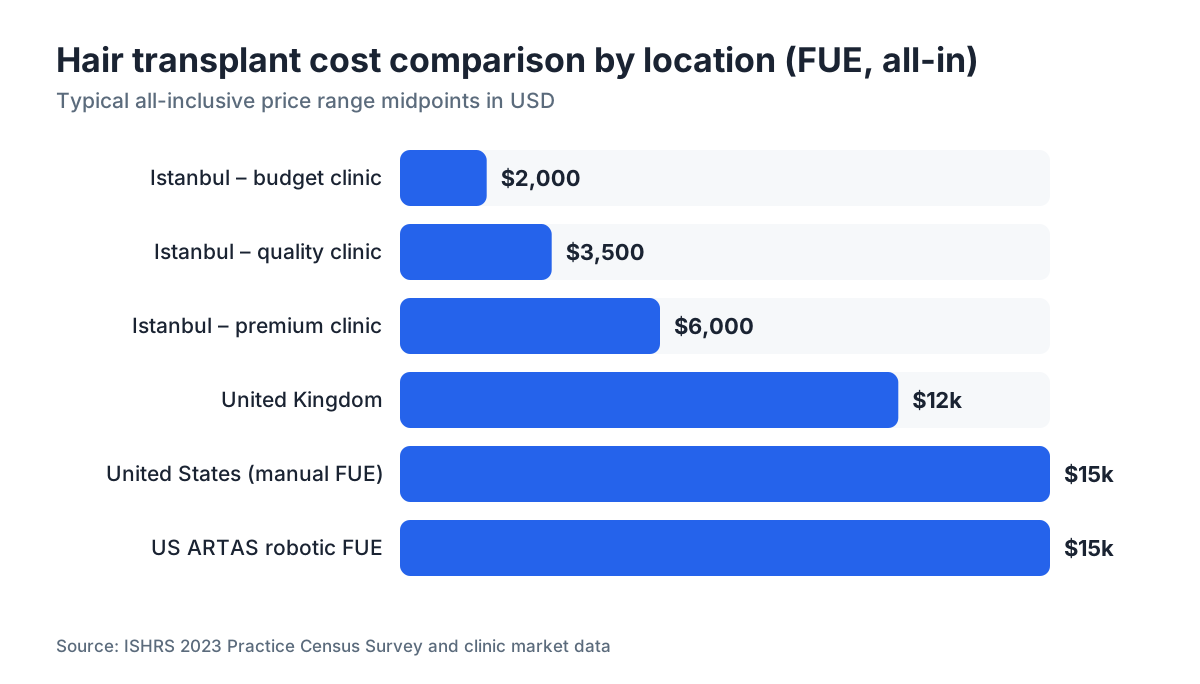
Here's how all-in costs stack up by region:
| Location | Average FUE cost (all-in) | Notes |
|---|---|---|
| Istanbul (budget clinic) | $1,500 to $2,500 | Often technician-led; verify carefully |
| Istanbul (quality clinic) | $2,500 to $4,500 | Surgeon-supervised; accredited hospital |
| Istanbul (premium) | $5,000 to $7,000 | Direct surgeon involvement throughout |
| United Kingdom | $8,000 to $15,000 | Per ISHRS member data |
| United States | $10,000 to $20,000 | Per ISHRS 2023 practice survey |
| ARTAS robotic FUE (US) | $12,000 to $18,000 | Robotic hardware overhead drives the price |
The ARTAS robotic hair transplant cost comes up in almost every comparison. ARTAS uses a robotic arm to score and extract grafts, which cuts some human error in the extraction phase. But the robot adds a lot of equipment cost, which is why US ARTAS pricing sits at the top of the American range. [2] Istanbul clinics mostly use manual or motorized FUE punches, and in skilled hands the graft survival rates are comparable. The robot does not implant the grafts. That step is always done by hand.
One honest caveat on Istanbul hair transplant cost. The prices clinics quote online are usually the entry price for a small graft count, say 1,500 to 2,000 grafts. A full Norwood 4 or 5 hairline often needs 3,000 to 5,000 grafts, and some clinics charge per graft above a threshold. Confirm the total graft estimate and the per-graft structure before you book anything.
What explains the price gap between Istanbul and the US?
Labor is the main driver. A senior hair transplant surgeon in the US earns $300,000 to $600,000 a year. In Turkey, equivalent expertise pays a fraction of that, because of cost-of-living differences, not because the work is worth less. Clinic rent, overhead, and equipment costs run far lower in Istanbul than in Manhattan or London.
The Turkish lira's slide against the dollar and euro since 2018 widened the gap further. A clinic quoting in US dollars collects the same nominal revenue, but its local costs (salaries, rent, supplies) now eat fewer of those dollars. Good for your wallet, and probably sustainable as long as the macro picture holds.
None of this changes the procedure itself. FUE instruments, implanter pens, and sterile protocols are the same everywhere. The only question is whether a given clinic uses them properly. Which brings us to vetting.
How do you vet an Istanbul hair transplant clinic?
This is the section that matters most. Most bad outcomes from Istanbul transplants trace back to which clinic someone picked, not to the city or the technique.
Start with credentials. Turkey's Ministry of Health requires clinics to be licensed as healthcare facilities. Ask for the license number and verify it. The Joint Commission International (JCI) accredits hospitals worldwide and keeps a public directory, so a JCI-accredited Istanbul clinic meets a standard you can actually check. [3]
Ask who will perform the extraction and the implantation. Name and role. In the best clinics, a board-certified surgeon designs the hairline and either performs or directly oversees both phases. In lower-tier clinics, a doctor signs the consent forms and technicians, sometimes barely trained, do the grafting. That setup is legally murky and tracks with higher rates of poor yield and unnatural results.
Look at real patient photos with hair characteristics like yours (color, texture, donor density), and at the 12-to-18-month mark rather than the 6-month mark. Swelling and early growth can make a bad case look convincing at month six. [4]
Check the International Society of Hair Restoration Surgery (ISHRS) member directory. Membership does not guarantee quality, but it means the surgeon submitted credentials and agreed to the society's ethical guidelines. [5]
Ask what happens if results are poor. Reputable clinics offer a defined revision policy or at least a clear follow-up pathway. Hair mills tend to go quiet after payment clears.
If you are still working out whether you even need surgery, our hair transplant overview helps you decide if this is the right next step, or whether finasteride or minoxidil for men should come first.
What techniques do Istanbul clinics use, and which is best?
FUE (Follicular Unit Extraction) is the dominant technique in Istanbul and everywhere else. Individual follicular units get punched out of the donor area, usually the back and sides of the scalp, then implanted into recipient sites. There's no linear scar, recovery beats FUT (strip surgery), and it suits patients who wear their hair short.
FUT (Follicular Unit Transplantation) still happens at some Istanbul clinics. A strip of scalp gets excised from the donor area, dissected into grafts, and implanted. Yield per session can be higher and cost lower, but the linear scar is permanent. Some clinics sell FUT as "old technique" or FUE as "painless." That's marketing, not medicine. Both use local anesthetic injections, and both are uncomfortable.
DHI (Direct Hair Implantation) is a branded version of FUE where grafts load into a Choi implanter pen and go in without pre-made channels. Some clinics charge extra for it. The evidence that DHI beats conventional FUE with implanter pens is weak. A 2021 review in the Journal of Cosmetic Dermatology found no statistically significant difference in graft survival between DHI and standard FUE across comparable studies. [6]
Sapphire FUE means using sapphire-tipped blades to make recipient sites instead of steel ones. Backers claim less trauma and faster healing. The clinical case for it being meaningfully better is thin, and most of it comes from clinics selling it as an upgrade. Be skeptical when a clinic pushes hard on technique names.
What results can you realistically expect?
A well-done FUE transplant with 3,000 to 4,000 grafts can rebuild a natural hairline and add crown density for Norwood 3 to 5 patients, assuming the donor supply is there. The transplanted follicles come from the permanent donor zone and keep growing for life in their new spot.
The timeline is slow. Most transplanted hairs shed within 2 to 6 weeks (shock loss). New growth starts around 3 to 4 months, real density shows at 6 to 9 months, and full results land at 12 to 18 months. Anyone showing you a "final result" at month four is misleading you.
Graft survival in well-run clinics runs 85% to 95%, according to published literature. [4] At a low-quality clinic with sloppy handling, that can drop to 60% or lower. Same money, far less hair.
Here's what people underestimate. A transplant does not stop ongoing hair loss. If your native hair keeps thinning after surgery, the transplanted hair can end up looking like an island as everything around it recedes. Most surgeons want you on finasteride and minoxidil for men to hold the line before or alongside the procedure. Skipping that is a common reason patients need a second transplant sooner than they planned.
Want an objective read on your own pattern before you book? The free AI analysis at MyHairline (/scan) maps your current Norwood stage from a photo, which helps any clinic give you a sharper graft estimate.
What are the main risks and complications of getting a transplant abroad?
Any surgery carries infection risk, and it plays out differently when you fly home a day or two later. Reputable Istanbul clinics send you off with written aftercare instructions, oral antibiotics, and a direct contact for questions. If something goes sideways two weeks later and you're back in Ohio, your local dermatologist or GP can handle most early complications, though they may not know the specifics of your procedure.
Other known FUE complications include folliculitis (small pimples around new grafts), temporary numbness in the donor or recipient zone, and shock loss of native hairs next to the transplant. These usually clear on their own. Persistent donor-area scarring, poor growth, or an unnatural hairline are rarer and more serious, and they almost always come down to technique or clinic quality rather than the procedure itself.
Blood-borne infection from unsterilized instruments is a genuine risk at any unregulated facility. That's why accreditation counts. JCI-accredited hospitals and Ministry of Health licensed clinics run audited sterilization protocols. [3]
Deep-vein thrombosis is a small but real risk from long-haul flights soon after surgery. Most surgeons advise compression socks, hydration, and moving around on the plane. The risk stays low for a young, healthy patient, but raise it with your surgeon if you have any clotting history.
What's behind your hair loss matters here too. If it's telogen effluvium rather than androgenetic alopecia, a transplant is premature. The diffuse shedding phase has to settle first. Read what causes hair loss if you're not sure of your diagnosis.
How do Istanbul costs compare to ARTAS robotic hair transplants in the US?
The ARTAS system, made by Restoration Robotics (now owned by Venus Concept), uses robotic imaging and a motorized punch to score and extract follicular units at consistent depth and angle. It's FDA-cleared for hair transplantation and marketed as more precise than manual extraction. [7]
The honest picture. ARTAS does cut some human variability in extraction, which helps less experienced surgical teams. For a surgeon who has done thousands of manual FUE cases, that margin shrinks toward nothing. The robot does not design the hairline and does not implant the grafts. Those judgment calls stay human.
ARTAS robotic hair transplant cost in the US typically runs $12,000 to $18,000, with some clinics reaching $22,000. Part of that covers the $150,000-plus machine the clinic has to pay off. Istanbul clinics mostly skip ARTAS. Their manual and motorized tools in skilled hands post comparable graft survival data at a fraction of the price.
For most patients, the real question isn't "ARTAS vs manual." It's "experienced surgeon vs inexperienced one." An experienced Istanbul surgeon with a motorized FUE punch will, on average, beat an ARTAS-equipped US clinic staffed by junior practitioners. The robot is a tool. It is not a credential.
What should you do before booking a clinic?
Get two or three consultations, and make at least one a local dermatologist or hair restoration surgeon. A local opinion gives you a baseline read on your donor density and loss pattern with no sales incentive attached. Istanbul clinic consultations are almost always free, and they are almost always trying to close a booking.
Get your pattern assessed honestly. A Norwood 6 or 7 patient with thin donor hair may not have enough grafts for a natural single-session result no matter who does it. Overpromising on high-Norwood cases is a documented problem in the industry. [5]
Stabilize your loss first if you can. Most surgeons want at least 12 months on a DHT blocker like finasteride before transplanting, so you know your true baseline. Transplant into an actively receding hairline and the design you sign off on today may look wrong in three years.
Check what post-op support looks like at home. In the UK, the NHS treats complications from private procedures but won't follow up on the cosmetic result. In the US, insurance covers medically necessary treatment of complications but not the revision itself. Know that going in.
Ask the Istanbul clinic for the surgeon's CV, more than the clinic's branding deck. A real CV lists medical school, residency, any fellowship, and society memberships. If a clinic dodges this and steers you toward testimonials, treat it as a red flag.
Is Istanbul the right choice for you, or should you look elsewhere?
Istanbul makes sense for a patient who has done the homework: a confirmed androgenetic alopecia diagnosis, stable loss, adequate donor density, one reputable clinic identified with verified credentials, and realistic expectations about timelines and outcome.
It makes less sense if you're in a hurry, unwilling to research, carrying a complex medical history, or in need of a surgeon who'll see you in person for multiple follow-ups. Some cases genuinely benefit from a local surgeon who can adjust the plan off 6-month progress photos in their own chair.
The savings are real, and they can fund years of finasteride, which is arguably the most cost-effective thing you can do for long-term retention. A $15,000 saving on a US-priced transplant buys roughly 20 years of generic finasteride at current US pharmacy prices.
If you're early in your loss with a receding hairline and not ready for surgery, the evidence still favors medication first. The combination of finasteride and minoxidil is the most studied non-surgical protocol for androgenetic alopecia, and some patients hold well enough that they never need a transplant at all. Run the MyHairline AI scan (/scan) at the end of your research to see exactly where you stand before you commit to any path.
Sources
- FDA 510(k) Premarket Notification Database, ARTAS Robotic Hair Restoration System
- Joint Commission International, Find an Accredited Organization
- International Society of Hair Restoration Surgery (ISHRS), practice data and literature summaries
- International Society of Hair Restoration Surgery (ISHRS), Member Directory and Practice Standards
- Moussa A et al. Comparison of DHI versus conventional FUE graft survival. Journal of Cosmetic Dermatology, 2021
- FDA Device Classification, Venus Concept ARTAS iX
- ISHRS 2023 Practice Census Survey
- American Academy of Dermatology, Hair Loss: Diagnosis and Treatment
- Gupta AK, Venkataraman M et al. Finasteride for androgenetic alopecia: a review. Skin Appendage Disorders, 2020
- US FDA, Propecia (finasteride) prescribing information