

TL;DR: A hair transplant in Houston runs $4,000 to $15,000 or more, driven by whether you pick FUE or FUT and how many grafts you need. The city has plenty of board-certified surgeons, but the quality gap between them is huge. This guide covers vetting a clinic, what the surgery involves, honest results timelines, and who should skip it entirely.
What does a hair transplant in Houston actually cost?
Most Houston clinics price by the graft, and the spread is wide. Expect $3 to $10 per graft for FUE (follicular unit extraction), and a bit less for FUT (follicular unit transplantation, the strip method). An early receding hairline might need 1,000 to 2,000 grafts. Someone with heavy crown and front loss could need 3,000 to 5,000 or more.
Do the math and the honest range is $4,000 on the low end to $15,000 or past that for big sessions at a premium clinic. Some Houston practices advertise flat all-inclusive pricing instead of per-graft numbers, which makes comparison shopping harder. Always ask exactly how many grafts the quoted price covers and what each graft costs beyond that baseline.
Four things move the price, in Houston and everywhere else: surgeon credentials (a fellow of the American Board of Hair Restoration Surgery commands a premium), the technique, facility overhead, and whether a physician or a technician does most of the graft work. That last one matters more than people think. In many high-volume clinics, the surgeon marks the hairline and technicians handle extraction and implantation. In smaller surgeon-led practices, the physician does more of it personally. Neither model is automatically better. You just need to know which you're buying.
For context, the International Society of Hair Restoration Surgery (ISHRS) surveys member practices worldwide. Its 2021 Practice Census put the average per-graft cost across North American practices at roughly $5 to $6 for FUE. Houston lands inside that range, sometimes below it at the high-volume shops. [1]
Insurance does not cover any of this. Hair transplants are elective cosmetic surgery, full stop. Some clinics offer financing through third parties like CareCredit, which belongs in your total-cost math.
FUE vs. FUT: which technique do Houston surgeons actually recommend?
Both methods move your own hair from a donor area (usually the back and sides of your scalp) to thinning zones. The difference is how the hair gets harvested.
FUT takes a strip of scalp, usually from the back of the head, dissects it into individual follicular units under a microscope, and closes the donor site with sutures. It leaves a linear scar. That scar hides under a couple inches of hair, but shave your head and it shows. FUT allows more grafts per session and often costs less per graft because extraction is faster.
FUE removes follicular units one at a time with a small punch tool. Instead of one long scar you get dozens or hundreds of tiny round ones, small enough that most people can wear their hair very short with no obvious sign of surgery. Recovery is a touch faster and there are no sutures to remove. The catch: it's more labor-intensive, which is part of why it costs more.
Houston surgeons who specialize in hair restoration usually offer both, and your hair does a lot of the deciding. Tight scalps, curly or coarse hair, or very large sessions sometimes yield better with FUT. People who want to shave down after surgery lean FUE. Done well, neither wins on growth results. [2]
You'll also run into robotic FUE in Houston, mostly the ARTAS system. It automates part of the extraction. Published data on whether it beats skilled manual FUE is thin and mixed, and it adds cost. Robotics alone is a weak reason to pick a clinic.
For a national look at how these procedures stack up, the overview at hair transplant breaks down both methods in detail.
How do you find a qualified hair transplant surgeon in Houston?
This is the step people rush, and it decides whether you get a natural hairline or spend years fixing a bad one.
Start with board certification. Look for surgeons certified by the American Board of Hair Restoration Surgery (ABHRS), which requires documented hair restoration training, a knowledge exam, and a case review. Fellowship in the ISHRS is another real credential. General plastic surgeons or dermatologists without dedicated hair training aren't automatically worse, but verify their actual transplant case volume before you trust them with your head.
Then ask for patient photos. Not the polished gallery on the website. Ask for photos of patients whose loss pattern matches yours, shot at 12 months post-op, under normal lighting. Lighting is not a small thing. A good photographer can make mediocre work look spectacular in a marketing shot.
Questions worth asking every clinic before you book:
- Who performs the extraction and implantation, the surgeon or technicians?
- How many grafts do you estimate I need, and why?
- What is your graft survival rate, and how do you measure it?
- Do you have before-and-after photos of patients with my Norwood stage and hair type?
- What happens if I'm unhappy with the result?
The American Academy of Dermatology (AAD) recommends patients see a physician who specializes in hair loss before any surgery, to rule out non-surgical causes of shedding that can change your candidacy or wreck your outcome. [3]
Want a fast read on your pattern before the consult? The free AI scan at MyHairline.ai gives you a sense of where you sit on the Norwood scale and which areas are actively thinning.
Are you actually a good candidate for hair transplant surgery?
Not everyone who wants a transplant should get one, and a surgeon who tells every patient yes is a warning sign.
Donor supply is the whole ballgame. A transplant moves existing hair. It does not manufacture new hair. If your donor area is thin, miniaturized, or small, you don't have the raw material for a result that satisfies you. A surgeon should measure your donor density in hairs per square centimeter, not eyeball it.
Age matters too. Guys under 25 are usually poor candidates because their loss pattern is still moving. A hairline designed for a 22-year-old can look badly mismatched at 40 if the loss keeps marching back. Most experienced Houston surgeons are cautious about operating under 25 without solid evidence the pattern has settled.
Some conditions disqualify or complicate you. Active telogen effluvium (diffuse shedding from stress, illness, or diet changes) should resolve before surgery. Alopecia areata, an autoimmune condition, is generally not a surgical situation. Scalp infections, uncontrolled diabetes, and bleeding disorders need handling first. [4]
Your hair itself predicts the result. Light or fine hair needs more grafts to look dense. Curly or coarse hair covers more per graft because of how it fans out at the surface. Talk through these honestly with your surgeon so they're not surprises after the fact.
For the wider set of things that cause hair loss, what causes hair loss covers the main categories in plain language.
If your loss is still active, ask whether to start minoxidil, finasteride, or both before or alongside surgery. Transplanting into an area where native hair keeps falling out is a plan that demands ongoing maintenance.
What is the hair transplant surgery experience actually like in Houston?
Most procedures happen in an outpatient clinic under local anesthesia with optional oral sedation. You're awake but comfortable. The whole thing runs 4 to 8 hours, longer for large sessions, and some very big cases split across two days.
On the morning of surgery, the donor area gets shaved (FUE) or trimmed (FUT). The surgeon injects local anesthetic, which stings and is usually the worst moment of the day. Once you're numb, most patients feel pressure and movement but no real pain during extraction or implantation. People nap or watch movies.
Grafts placed, you go home the same day. The transplanted area stays red and slightly crusted for 7 to 14 days. Most people return to desk work in 3 to 5 days, but skip hard exercise and direct sun for 2 to 4 weeks. Your clinic hands you specific post-op instructions and usually a rinse or spray to keep the grafts moist early on.
Here's the part that blindsides first-timers: the transplanted hairs fall out. Around 2 to 6 weeks post-op, the implanted hairs shed. That's normal. The follicles drop into a resting phase. New growth starts around 3 to 4 months and builds gradually. Most patients see roughly 60% of their final result by month 6 and close to full results at 12 to 18 months. [2]
Don't let anyone bend that timeline. Anybody promising a dramatic result at 3 months, or one graft count that permanently fixes all your loss, is overpromising.
What results should you realistically expect?
A well-done hair transplant in Houston can restore density in targeted spots and genuinely change how you look. That part is real. A few honest caveats come with it.
A transplant does nothing to stop loss in the areas you didn't treat. Sit at Norwood 3 today, skip medical maintenance, and you might slide to Norwood 5 over the next decade while your transplanted hairline stays put. The mismatch gets more obvious every year. Most experienced surgeons push ongoing medication alongside surgery, not instead of it. [3]
Graft survival, the percentage of transplanted hairs that actually grow, swings with surgeon skill and your biology. In good hands, 90% to 95% survival is achievable and commonly cited in the literature, though these numbers are hard to verify independently because tracking methods differ clinic to clinic. [2]
Hair texture, scalp laxity, and the contrast between hair color and skin color all shape how dense things look. Dark coarse hair on light skin reads denser per graft than fine light hair on a fair scalp.
If a past procedure left you with a pluggy, doll-hair hairline, corrective work exists, but it needs a different strategy and almost always costs more and takes more effort.
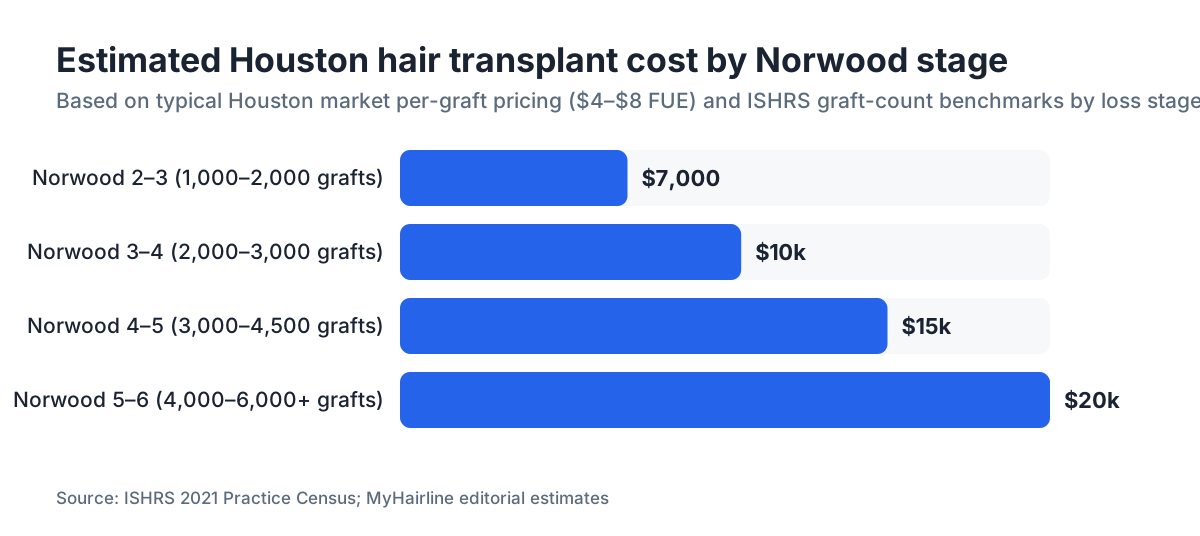
| Norwood Stage | Typical Graft Range | Approx. Cost Range (Houston) |
|---|---|---|
| Stage 2-3 | 1,000 to 2,000 | $4,000 to $10,000 |
| Stage 3-4 | 2,000 to 3,000 | $7,000 to $14,000 |
| Stage 4-5 | 3,000 to 4,500 | $10,000 to $20,000+ |
| Stage 5-6 | 4,000 to 6,000+ | $15,000 to $25,000+ |
These ranges are estimates from typical Houston market pricing and ISHRS benchmarks. Your actual quote depends on your anatomy.
Can women get hair transplant surgery in Houston?
Yes, and more Houston practices now run consultations built for female hair loss. It's less common than for men, but it's a real option for the right candidate.
Candidacy is the big difference. Female pattern hair loss (androgenetic alopecia in women) usually shows up as diffuse thinning across the top of the scalp, not the receding zones men get. In many women with diffuse loss, the donor area at the back is also miniaturized, so there's not enough strong donor hair to move. Those patients aren't good surgical candidates and are often better off with topical minoxidil or low-level laser therapy.
Women who do well tend to have a stable, localized area of loss, a healthy donor zone, or specific traction or scarring alopecia confined to a clear region. Women who've lost frontal hairline hair from years of tight styles can sometimes see real restoration with FUE. [5]
A handful of Houston clinics have surgeons with specific female hair restoration experience, and they're worth hunting down. The consult should include a real evaluation of donor density, ideally with a dermatoscope or trichoscopy to check for miniaturization, more than a look with the naked eye.
If your problem is shedding rather than permanent follicle loss, read telogen effluvium before you assume surgery is the answer.
Hormones matter in women too. Thyroid function, ferritin (iron stores), and hormonal status all deserve a look before any surgical decision. The AAD lists these as standard workup items for female hair loss. [3]
What medical treatments should you use alongside a hair transplant?
Surgery and medication pull in the same direction. A transplant relocates hair. Medications try to keep the hair you still have. Combining them is standard practice for anyone with ongoing androgenetic alopecia.
Minoxidil (Rogaine, now widely generic) is FDA-approved for both men and women with androgenetic alopecia. It stretches the growth phase of follicles and usually goes on topically twice a day. Some patients take low-dose oral minoxidil (0.625 to 2.5 mg daily for women, 2.5 to 5 mg for men), which has growing evidence but is off-label. [6] See oral minoxidil for that data and minoxidil for men for standard topical use.
Finasteride (Propecia, now generic) is FDA-approved for male pattern hair loss at 1 mg daily. It blocks the enzyme that turns testosterone into DHT, the hormone mostly responsible for follicle miniaturization in androgenetic alopecia. Trials show finasteride halts progression in roughly 83% to 90% of men and grows measurable new hair in the majority. [7] It is not approved for women of childbearing age because of birth-defect risk. For how it works, see finasteride.
Running minoxidil and finasteride together beats either one alone. A 2015 randomized trial in Dermatologic Therapy found the combination produced significantly better results than finasteride alone over 12 months. [8] More on that pairing at finasteride and minoxidil.
If you're curious about DHT blocking more broadly, dht blocker covers the options, including supplements and prescription alternatives.
Some Houston surgeons want you stable on medical therapy for 6 to 12 months before they'll schedule surgery. That's not gatekeeping. It's a fair way to confirm the loss has settled so the surgical plan rests on a predictable foundation.
What are the real risks and side effects of hair transplant surgery?
Hair transplants are generally safe when a trained physician does them in a proper clinical setting. Calling them risk-free would be a lie.
The common post-op stuff is temporary and manageable: swelling around the forehead and eyes the first few days, itching as the scalp heals, and shock loss (temporary shedding of transplanted and native hair near the surgical site) that catches most people off guard at weeks 2 to 6. All of it is expected and clears on its own.
The rarer but more serious risks:
- Infection at the donor or recipient site (low with proper sterile technique and antibiotic prophylaxis)
- Folliculitis, inflammation of hair follicles, showing up as small pimples in the transplanted area
- Poor graft survival if grafts were stored badly, implanted too slowly, or the patient has underlying vascular or metabolic problems
- Hiccups, a strange but documented side effect of local anesthetic near the scalp, usually self-resolving
- Scarring beyond the expected level, especially with FUT if the wound heals under tension or the patient tends toward keloids
- Numbness or altered sensation in the donor or recipient area, usually temporary but sometimes lasting months
Unregulated or non-physician procedures carry much higher risk. In Texas, hair transplantation is surgery. Texas Medical Board rules require a licensed physician to be responsible for surgical procedures, though delegation rules let some tasks go to supervised non-physicians. [9] Confirm a licensed physician directs and performs the key steps of your procedure.
The FDA has warned consumers to be careful with clinics selling unproven hair loss treatments and to make sure any surgical procedure is done by qualified medical personnel. [10]
How do you prepare for a consultation with a Houston hair transplant clinic?
Walk in prepared and you'll save time and spot the difference between a sales pitch and an honest assessment.
Bring photos if you have them, ideally old shots of your hairline 5 to 10 years ago. They help the surgeon read your trajectory and design a hairline that still works long-term.
Know your history. How long have you been losing hair? Is it speeding up? Tried minoxidil or finasteride, and for how long? Any labs done (thyroid, iron, hormones)? Family history of pattern loss? These come up, and accurate answers move things along.
Ask how they count and track grafts. Some clinics use photography and graft-counting software. Others go with the surgeon's estimate. Know what you're paying for.
Get the quote in writing before you commit. Ask what happens if you need a touch-up. Some clinics fold minor touch-ups into the original price for a limited window. Others charge separately.
Most Houston clinics offer free consults. Use that. See two or three surgeons before you decide. The graft-count estimates and recommendations you hear will tell you plenty about each surgeon's philosophy and honesty.
Want a baseline read before you walk in? The free AI hair analysis at MyHairline.ai takes a photo and maps your thinning against the Norwood scale, which gives you a starting point for the conversation.
What should you know about Houston's hair transplant clinic landscape?
Houston is a big market with a mix of high-volume national chains, boutique surgeon-led practices, and general plastic surgery or dermatology offices that offer hair restoration as one service among many.
National chains with Houston locations can price competitively through volume, but the model often leans hard on technician work with limited direct physician involvement. Not automatically bad. It does demand scrutiny.
Boutique practices where the surgeon personally leads most of the procedure cost more but can give you more individualized hairline design and technique selection.
A few Houston-area surgeons carry international reputations and pull patients from outside the region. That level of specialization is worth chasing if your case is complex, say prior failed transplants, heavy scarring, or a non-standard loss pattern.
Texas has no separate state license category for hair restoration. Practitioners operate under their existing medical licenses. The Texas Medical Board handles complaints and discipline. [9] If a specific clinic worries you, the TMB's online license verification and complaint portal is a legitimate place to start.
One thing Houston's climate adds to recovery: heat and sun. In a city that stays hot most of the year, shielding the transplanted scalp from direct sun for the first several weeks genuinely matters. UV on a healing scalp can hurt graft survival and healing quality. Most surgeons will tell you to wear a loose hat or SPF outdoors that first month.
Sources
- International Society of Hair Restoration Surgery, 2021 Practice Census
- Bernstein RM, Rassman WR. Follicular transplantation. International Journal of Aesthetic and Restorative Surgery, 1995; and subsequent ISHRS guidelines on surgical hair restoration technique.
- American Academy of Dermatology, Hair Loss: Diagnosis and Treatment
- American Academy of Dermatology, Hair Loss: Who Gets It and Causes
- Olsen EA. Female pattern hair loss. Journal of the American Academy of Dermatology, 2001.
- FDA, Minoxidil Drug Label (NDA 019501), approved topical use for androgenetic alopecia in men and women
- Finasteride (Propecia) FDA-approved labeling; Kaufman KD et al., Finasteride in the treatment of men with androgenetic alopecia, JAAD 1998.
- Hu R et al. Combined treatment with oral finasteride and topical minoxidil in male androgenetic alopecia: a randomized and comparative study in Chinese patients. Dermatologic Therapy, 2015.
- Texas Medical Board, Medical Practice Act and Rules, Texas Occupations Code Chapter 151
- U.S. Food and Drug Administration, Consumer Updates: Hair Loss
- Shapiro J. Hair loss in women. New England Journal of Medicine, 2009.