

TL;DR: More than 300 medications list hair loss as a documented side effect. In women, the usual culprits are hormonal contraceptives, blood pressure drugs (especially beta-blockers), anticoagulants like heparin and warfarin, antidepressants, retinoids, and chemotherapy agents. Most drug-induced hair loss reverses within 3 to 6 months after stopping the medication, though timing varies by drug class.
How do medications cause hair loss in women?
Medications cause hair loss through three separate pathways, and knowing which one you're dealing with tells you how long to wait and whether the hair comes back. Hair grows in cycles. At any moment, roughly 85 to 90 percent of your scalp hairs are in the active growth phase (anagen), and about 10 to 15 percent are resting (telogen) before they shed [1].
The first pathway is telogen effluvium. A drug stresses the follicle and shoves actively growing hairs into the resting phase early. Six to twelve weeks later, those hairs shed all at once. You see diffuse thinning across the whole scalp. Not a receding hairline. Not patches. This reverses in most cases once the drug is stopped or the dose drops. Our guide to telogen effluvium walks through the full process.
The second pathway is anagen effluvium. This is chemotherapy's signature. The drug attacks rapidly dividing cells, and hair matrix cells in the growth phase get caught in the crossfire. Loss is fast, often dramatic, and can strip the whole scalp within days to a few weeks of starting treatment. Hair almost always regrows after chemo ends, though texture and color can shift for a while.
The third pathway gets less attention: androgenetic acceleration. Some drugs raise androgen levels or make follicles more sensitive to dihydrotestosterone (DHT), speeding up genetically programmed thinning in women who are already predisposed. Certain progestins in contraceptives are the main offender. This kind of loss can stick around after you stop the drug if follicles have shrunk enough.
The recovery timeline hangs entirely on which mechanism is at work, so that's the first thing to sort out before you panic.
Which medications most commonly cause hair loss in women?
A handful of drug classes account for most cases dermatologists actually see. Anticoagulants and hormonal agents top the list. Chemotherapy is a category unto itself because of how fast and complete the loss can be.
| Drug Class | Example Drugs | Mechanism | Reversible? |
|---|---|---|---|
| Hormonal contraceptives | Norethindrone, levonorgestrel, desogestrel | Androgenetic / telogen effluvium | Usually, with switch to lower-androgen pill |
| Anticoagulants | Warfarin, heparin, enoxaparin | Telogen effluvium | Yes, 3-6 months post-stop |
| Beta-blockers | Propranolol, metoprolol, atenolol | Telogen effluvium | Usually yes |
| Antidepressants (SSRIs/SNRIs) | Sertraline, fluoxetine, paroxetine | Telogen effluvium | Usually yes |
| Mood stabilizers | Valproic acid (Depakote) | Telogen effluvium | Yes, often dose-dependent |
| Retinoids | Isotretinoin, acitretin | Telogen effluvium | Yes, after discontinuation |
| Thyroid drugs (excessive dose) | Levothyroxine (too high or too low) | Telogen effluvium | Yes, once dose is corrected |
| Chemotherapy | Doxorubicin, cyclophosphamide | Anagen effluvium | Usually yes, 3-6 months post-chemo |
| ACE inhibitors | Enalapril, captopril | Telogen effluvium | Usually yes |
| Antifungals | Voriconazole | Telogen effluvium | Yes |
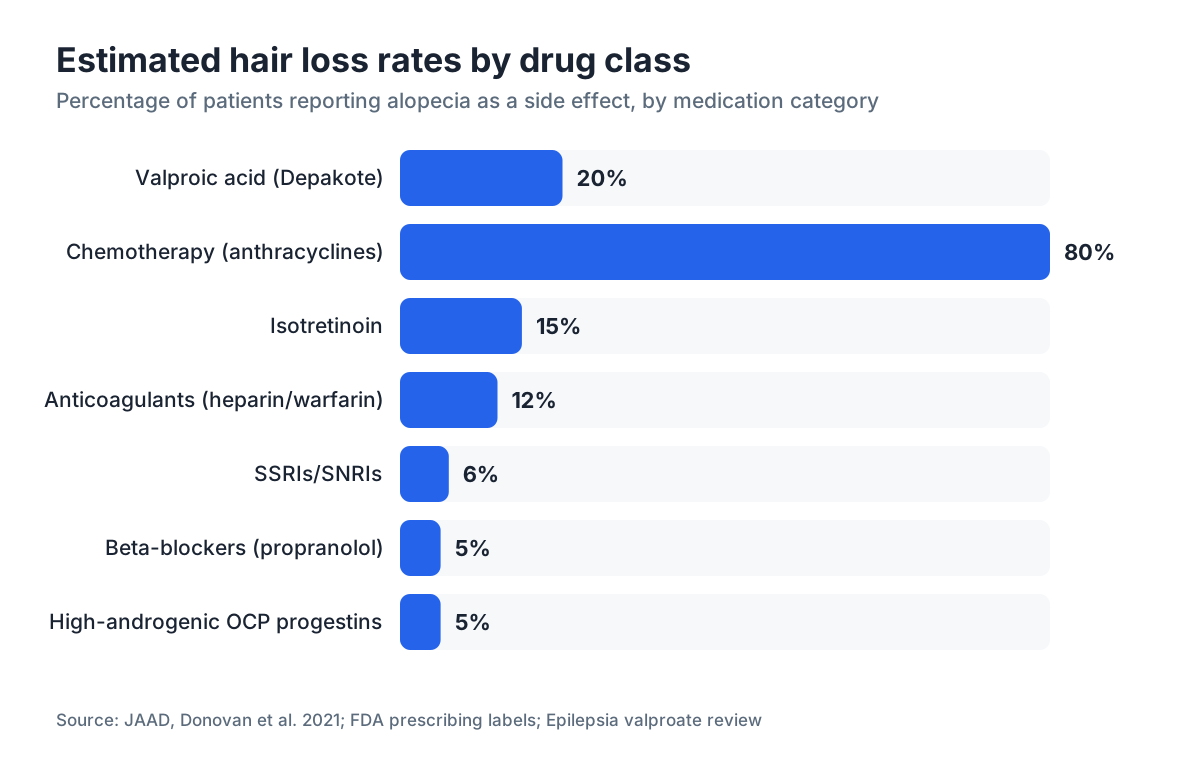
A 2021 analysis in the Journal of the American Academy of Dermatology named anticoagulants and hormonal agents as the two drug classes most often reported in cases of drug-induced alopecia in women seen in outpatient dermatology [2].
Chemotherapy earns its own line. Drugs like cyclophosphamide, doxorubicin, and paclitaxel cause anagen effluvium by interfering with cell division. Loss usually starts 2 to 4 weeks after the first cycle and can be near-total. The American Cancer Society says most people see regrowth within 3 to 6 months after finishing treatment, though the new hair sometimes comes in with a different texture or curl [3].
Do hormonal contraceptives cause hair loss in women?
Yes, some hormonal birth control can trigger or worsen hair loss, but only in certain women, and it depends heavily on which progestin the pill contains. This is genuinely confusing because the same drug category can help one woman and hurt another.
Progestins vary widely in androgenic activity, meaning how strongly they act like testosterone. Pills with high-androgenicity progestins like norgestrel, norethindrone acetate, or levonorgestrel can shrink follicles in women who are genetically sensitive to androgens. They behave like a low dose of androgen on the scalp. That's the same pathway behind female pattern hair loss. Our DHT blocker overview explains how DHT drives it.
At the other end, pills with low-androgenicity or anti-androgenic progestins like drospirenone (Yasmin, Yaz) or norgestimate (Ortho Tri-Cyclen) are sometimes prescribed to help with hormonally driven thinning. The FDA-approved labeling for drospirenone-containing pills notes anti-mineralocorticoid and anti-androgenic activity [4].
There's also a shedding episode that hits when women stop the pill. Estrogen drops, a large batch of hairs shifts into telogen at once, and 6 to 12 weeks later they fall. It looks alarming. It's almost always temporary. The exact same thing happens postpartum when estrogen crashes after delivery.
If you suspect your contraceptive is causing the problem, the useful conversation with your doctor isn't only whether to quit the pill. It's which formulation you're on now and whether switching to a lower-androgen option makes sense.
Can antidepressants and psychiatric medications cause hair loss?
Yes, and it's one of the most underreported causes of female hair loss, partly because women hesitate to raise it and partly because the prescriber doesn't always connect the dots. SSRIs and SNRIs, which include sertraline (Zoloft), fluoxetine (Prozac), paroxetine (Paxil), venlafaxine (Effexor), and escitalopram (Lexapro), all list alopecia in their FDA labeling [5].
The mechanism is telogen effluvium. The loss is diffuse and shows up 2 to 4 months after starting the drug or after a dose bump.
Valproic acid (Depakote), used for epilepsy, bipolar disorder, and migraine prevention, has one of the strongest ties to drug-induced hair loss. Studies report rates of 12 to 28 percent in valproate-treated patients [6]. Loss from valproate can sometimes be managed with zinc supplementation, since valproate appears to interfere with zinc metabolism, but the evidence for this is modest and you should clear it with your prescriber first.
Lithium, another mood stabilizer, also thins hair diffusely in a meaningful minority of patients.
Here's the line that matters: don't stop psychiatric medications on your own over hair. Untreated depression, bipolar disorder, and epilepsy carry real danger. The point of raising it is so your doctor can weigh a dose adjustment, a switch within the same class, or managing the shedding with topical minoxidil while you stay on treatment.
Do blood pressure medications cause hair loss in women?
Beta-blockers are the blood pressure drugs most strongly linked to hair loss, with propranolol having the longest track record. Metoprolol, atenolol, and nadolol are also implicated. The mechanism is telogen effluvium, and the loss is diffuse rather than patterned.
The timing throws people off. Beta-blockers often get prescribed right after a stressful cardiovascular event like a heart attack or a bad arrhythmia, and that stress itself causes telogen effluvium. Figuring out whether the drug or the event triggered the shedding takes a careful timeline with your dermatologist.
ACE inhibitors, another common blood pressure class, come up less often but do show in case reports and in FDA labeling for enalapril and captopril. The mechanism there is murkier.
One twist worth knowing: minoxidil, the hair loss treatment, started life as a blood pressure drug. Its blood-vessel-widening effect turned out to grow hair as a side effect. So if you end up on oral minoxidil for hypertension, the hair effect may actually work in your favor. Our oral minoxidil article covers the current evidence for that use.
If a beta-blocker is the suspect and your blood pressure control has room, your doctor may be able to switch you to a class with less hair loss risk.
Can thyroid medications and thyroid disease both cause hair loss?
Both the thyroid disease and the drug that treats it can cause shedding, which makes this one hard to untangle because the symptoms look identical. Hypothyroidism (underactive thyroid) causes diffuse thinning because thyroid hormones set the pace of the hair cycle. So does hyperthyroidism (overactive thyroid). Either extreme stresses follicles into telogen effluvium.
Levothyroxine (Synthroid), the most prescribed drug in the United States, treats hypothyroidism. Hair loss from levothyroxine appears in the FDA label and usually hits in the first few months as the body adjusts to normalized hormone levels [7]. It almost always clears on its own within 3 to 6 months even if you stay on the same dose. But if the dose runs too high, the drug pushes you into functional hyperthyroidism and shedding keeps going.
The practical move: if you're on levothyroxine and losing hair, ask your doctor to check both TSH and free T4. A TSH suppressed below the lower normal limit points to overtreatment, and a simple dose reduction often clears the hair loss within a few months. Don't adjust the dose yourself.
Do retinoids (isotretinoin, vitamin A) cause hair loss?
Isotretinoin (Accutane, Absorica, Claravis) is one of the best acne drugs there is, and hair loss is a documented side effect hitting somewhere between 10 and 20 percent of users in clinical observations, with the rate bouncing around across studies [8]. The mechanism is telogen effluvium, and it clears after you stop the drug in nearly every case.
Acitretin, an oral retinoid for psoriasis, has an even stronger tie to diffuse shedding. Hair loss sits prominently in its prescribing information and affects a large share of users.
High-dose vitamin A supplements taken without supervision do the same thing. Chronic vitamin A toxicity is real, and diffuse hair loss is one of its well-documented effects. Worth knowing if you take high-dose vitamin A, huge amounts of beta-carotene, or skin and eye products loaded with retinyl palmitate.
If you're weighing isotretinoin for acne and hair loss worries you, the risk is real but usually manageable. Most dermatologists find that lowering the dose cuts the shedding while still clearing the acne. Quitting isotretinoin outright over hair alone is rarely necessary, but the call deserves an honest talk with your prescriber.
How do you know if your hair loss is medication-related or something else?
Timing is the single most telling clue. Drug-induced telogen effluvium usually shows up 2 to 4 months after you start a new medication or raise a dose. If your shedding kicked off in that window after a drug change, the drug is a serious suspect.
A few other clues sort it out.
Drug-induced loss is almost always diffuse, spread evenly across the scalp instead of concentrated at the temples or crown. If you're seeing a receding hairline specifically, you may be dealing with female pattern hair loss instead of, or on top of, a drug effect. Our guide on what causes hair loss covers the full differential.
Your dermatologist can run a pull test, gently tugging clusters of 40 to 60 hairs from several scalp areas and counting how many release. More than 3 to 4 hairs per pull counts as abnormal. Looking at the shed hairs under a microscope (trichoscopy or hair mount) can often tell whether you're losing telogen or anagen hairs, which points toward or away from certain drug classes.
Blood work matters too. Thyroid function, serum ferritin (low iron is a common co-trigger of telogen effluvium in women), complete blood count, and androgen levels can rule out other causes stacking on top of a drug effect.
Want a baseline before your appointment? A free AI hair analysis from MyHairline helps you document the distribution and density of your thinning so you have something concrete to show your doctor.
Never stop a prescribed medication for a serious condition just because you suspect it's thinning your hair. The stakes of the underlying illness nearly always win out. Work with your prescriber on alternatives or management instead.
Does hair loss from medications grow back?
For most drug-induced hair loss, yes. Telogen effluvium from most drug classes clears within 3 to 6 months after the offending drug is stopped or the dose is cut. The follicles are still there. They just need to re-enter the growth phase.
Anagen effluvium from chemotherapy also clears, usually within 3 to 6 months after treatment ends, per the American Cancer Society [3]. A small share of patients, especially those who got busulfan or certain high-dose taxane regimens, end up with prolonged or permanent alopecia. That risk is real and worth raising with your oncologist before treatment if keeping your hair matters to you.
Androgenetic acceleration is the trickier case. If an androgenic progestin has shrunk follicles over months or years in someone genetically predisposed, stopping the drug may halt further loss without restoring what's gone. In those cases, women often ask about topical minoxidil, the only FDA-approved topical treatment for female pattern hair loss, or occasionally about finasteride (used off-label in women) or a hair transplant evaluation. Our minoxidil side effects article covers what to expect on that route.
The rule of thumb: the shorter the loss lasts and the sooner you find and fix the cause, the fuller the recovery.
What can you actually do about medication-induced hair loss?
Removing or replacing the drug that's causing it is the most effective move, but that's not always on the table. Here's what the evidence actually backs.
Topical minoxidil 2% or 5% can speed up regrowth and is a reasonable thing to start while you wait for the drug effect to fade, or if you can't stop the medication [9]. The 2% solution is FDA-approved for women specifically; women use 5% off-label. It doesn't fix the underlying cause, but it shortens the visible hit of the shedding cycle.
For chemotherapy-induced alopecia, scalp cooling (cold caps worn during infusion) has decent evidence for reducing loss from certain chemo agents. A 2017 randomized trial in JAMA found patients using scalp cooling were far more likely to keep enough hair to skip a wig than controls, 50.5 percent versus 0 percent [10]. It doesn't work equally across all regimens.
For valproate-induced loss, zinc supplementation has some case data behind it, as noted earlier, but the evidence is thin. Run it by your neurologist or psychiatrist first.
For contraceptive-related androgenetic loss, switching to a low-androgen or anti-androgenic progestin is the most direct fix. Some women also get spironolactone, an anti-androgen used off-label for female pattern hair loss with reasonable supporting evidence.
Skip the urge to stack supplements without guidance. Biotin, for instance, gets marketed hard for hair loss, but there's no evidence it helps unless you have a genuine biotin deficiency, which is rare [1]. Our hair loss supplements article gives an honest breakdown of what has evidence and what doesn't.
If you've been tracking your shedding and want to see the pattern before your next appointment, MyHairline's AI scan tool gives you a free visual baseline at myhairline.ai/scan.
Are there medications women should ask their doctor about before starting?
If hair loss worries you, asking your prescriber before you start any new drug is completely reasonable. These are the classes where the question earns its keep.
Before a new hormonal contraceptive: ask about the androgenicity of the progestin in the formulation. Request a pill with drospirenone or norgestimate if thinning is already a concern. The gap between formulations is real.
Before any antidepressant: most SSRIs carry some risk, but switching within the class is sometimes an option if one agent sheds more than another. Bupropion (Wellbutrin), which works differently (it blocks norepinephrine and dopamine reuptake rather than serotonin), appears to have a lower hair loss profile based on case data, though head-to-head trial data is limited.
Before isotretinoin: ask about lower-dose or intermittent dosing if you already worry about thinning. The drug is remarkable for severe acne. The question is whether the dosing can be tuned for you.
Before anticoagulation: if you're starting long-term warfarin or heparin, know that telogen effluvium is common and usually peaks around 3 months in. Knowing that ahead of time keeps you from panicking when shedding starts and from making a rushed decision to quit a drug that may be protecting your heart.
Before valproate: talk alternatives with your neurologist if hair loss concerns you, especially if other mood stabilizers or antiepileptics fit your condition. That's a real conversation, not a trivial ask.
Sources
- American Academy of Dermatology, Hair Loss Overview
- Journal of the American Academy of Dermatology, Donovan et al., Drug-induced alopecia in women, 2021
- American Cancer Society, Hair Loss and Cancer Treatment
- FDA, Yaz (drospirenone/ethinyl estradiol) Prescribing Information
- FDA, Zoloft (sertraline) Prescribing Information
- Epilepsia, review of valproate-associated hair loss
- FDA, Synthroid (levothyroxine) Prescribing Information
- Karger, Dermatology journal, review of isotretinoin cutaneous side effects
- FDA, Minoxidil Topical Solution 2% approval for women
- JAMA, Nangia et al., Effect of a Scalp Cooling Device on Alopecia in Women Undergoing Chemotherapy, 2017