

TL;DR: Two treatments have FDA approval for female hair loss: topical minoxidil (2% and 5%) and low-level laser devices. Spironolactone, finasteride, and oral minoxidil are used off-label with solid trial data behind them. No single treatment works for everyone. The right choice depends on your diagnosis, your hormonal status, and which side effects you can live with.
Why female hair loss needs a different treatment approach than men's
Female hair loss is not a smaller version of male pattern baldness. The biology differs, the patterns differ, and several treatments that are standard for men are either unsafe or barely studied in women. Get the diagnosis right before you pick a medicine.
The most common cause in women is female pattern hair loss (FPHL), also called androgenetic alopecia. It affects roughly 40% of women by age 50 and shows up as diffuse thinning over the crown, usually with the part widening, rather than a receding frontal hairline [1]. The Norwood scale used for men doesn't map onto women well. Most clinicians use the Ludwig scale instead.
Other causes each respond to completely different treatments: telogen effluvium, alopecia areata, thyroid disease, iron deficiency, and scalp conditions. A medicine that regrows hair in FPHL does nothing for alopecia areata, and the reverse is true too. If you haven't had bloodwork (ferritin, TSH, CBC, androgens) and a scalp exam, your diagnosis is incomplete. Start there.
Once you have a real diagnosis, the options for women are better than they were a decade ago. Three tiers exist: FDA-approved treatments, well-studied off-label drugs, and a long tail of supplements and alternative approaches. Knowing which tier something sits in, and what the data actually shows, is how you avoid wasting money.
What are the FDA-approved medicines for female hair loss?
Two treatment categories carry formal FDA approval for women with hair loss: topical minoxidil and low-level laser devices. Everything else is off-label.
Topical minoxidil is the only drug the FDA has approved for female pattern hair loss. The 2% concentration was approved for women in 1991; the 5% foam was cleared later [2]. It prolongs the anagen (growth) phase of the hair cycle and widens miniaturized follicles. One clinical fact matters most here: a 48-week randomized trial found that 5% minoxidil foam produced significantly greater gains in hair count and patient-rated outcomes than 2% solution in women [3]. Both work. The 5% just works faster and a bit better.
How do you use it? Apply to a dry scalp, right on the thinning area, once daily for women (the foam label says once daily; men's labeling says twice). Let it dry before lying down or putting on a hat. Missing doses slows progress. Shedding in the first 6 to 8 weeks is normal and does not mean it's failing.
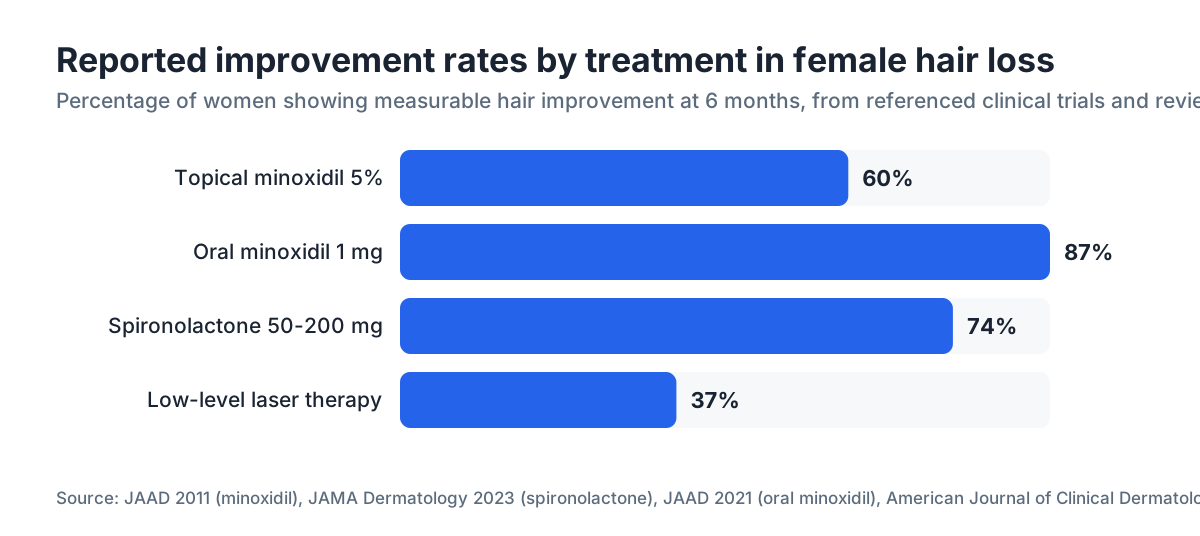
Low-level laser therapy (LLLT) devices, including certain helmets and combs, have FDA 510(k) clearance for female hair loss. That's a device clearance, not a drug approval, but it means the FDA reviewed them for safety and at least some evidence of efficacy. A 2013 randomized, double-blind trial in the American Journal of Clinical Dermatology reported a 37% increase in hair density in women using an LLLT device versus 2% in the sham group [4]. Results take 4 to 6 months and vary a lot.
Nothing else is FDA-approved for women specifically. Off-label doesn't mean it doesn't work. It means nobody paid to run the approval trials in women, often for commercial reasons rather than scientific ones.
How well does minoxidil work for women, and what are the downsides?
Minoxidil is the first medicine most dermatologists reach for in female hair loss, and there's a reason. It has more than 30 years of post-market data, it's over the counter (no prescription needed), and the side effects in women are manageable for most people.
Here's the realistic expectation. About 60% of women see some improvement with topical minoxidil, usually measured as increased hair count or reduced shedding at 6 months [3]. Visible cosmetic regrowth, meaning hair that fills in and shows, is a subset of that group. You won't grow back a full head of hair if follicles are badly miniaturized. The drug holds and modestly thickens what's still there far more reliably than it revives what's been gone for years.
The most annoying side effect is hypertrichosis, meaning unwanted hair growth on the face, particularly the hairline, sideburns, and forehead. It happens in roughly 3 to 5% of women on the 5% concentration and less often with the 2%. It usually reverses within a few months of stopping.
You have to keep using it. Stop, and whatever you gained reverses within 3 to 6 months. That's not a flaw in the drug. It's how hair loss medicine works. The underlying cause is still there.
The minoxidil side effects breakdown covers the full picture, including the rarer scalp irritation and contact dermatitis some people get from the propylene glycol in the solution (the foam skips it).
Oral minoxidil is a separate conversation. See below.
What about oral minoxidil for women?
Oral minoxidil started as a blood pressure drug. Dermatologists noticed the hypertrichosis side effect and began using tiny doses off-label for hair loss. In women, the hair-loss dose is far lower than the cardiac dose: typically 0.25 mg to 2.5 mg daily, against the 5 to 40 mg used for hypertension [5].
The evidence is real. A 2021 retrospective study in the Journal of the American Academy of Dermatology reviewed 100 women taking low-dose oral minoxidil and found 87 reported improvement in hair density after 6 months, with the 1 mg dose showing a favorable benefit-to-risk ratio [5]. Broader dermatology reviews now put oral minoxidil in roughly the same efficacy range as 5% topical, with better tolerability for many women because you skip the scalp application and the propylene glycol irritation.
The tradeoffs. At these low doses, blood pressure effects are minimal but not zero. Women who already run low, or who take antihypertensives, need to be careful. Fluid retention and a faster heart rate can happen. That's why you need a prescription and, ideally, a baseline blood pressure check.
Facial hypertrichosis can still show up with oral minoxidil, and some women find it more pronounced than with topical. Body hair can increase too.
Oral minoxidil got popular partly because it's convenient and partly because some women genuinely do better on it than on topical. It isn't FDA-approved for hair loss in any form, but its evidence base is cleaner than almost any supplement's. The full breakdown is in the oral minoxidil article.
Is spironolactone effective for female hair loss?
Spironolactone is a potassium-sparing diuretic that blocks androgen receptors and lowers androgen production. It's been used off-label for FPHL and other androgen-driven hair loss in women for decades, and it's probably the most commonly prescribed off-label hair loss drug for women in the US.
The mechanism fits hormonal hair loss. Androgens like dihydrotestosterone (DHT) miniaturize follicles in genetically susceptible people. Block their action at the follicle and you should slow or reverse that. The DHT blocker overview covers the underlying biology.
The clinical data is thinner than you'd like. A 2012 retrospective study found 74 of 98 women with FPHL improved on spironolactone at 50 to 200 mg daily, but most of the evidence is observational rather than randomized. The one randomized trial comparing spironolactone to minoxidil in women with FPHL, published in JAMA Dermatology in 2023, found both produced similar improvements in hair density at 6 months, with no statistically significant difference between them [6].
Doses run from 50 mg to 200 mg daily. Menstrual irregularities, breast tenderness, and more frequent urination are the main complaints. Because it affects potassium, periodic bloodwork is standard. Spironolactone is contraindicated in pregnancy because of the risk of feminizing a male fetus. Women of childbearing age need reliable contraception.
Who is it best for? Women with signs of a hormonal driver: elevated androgens on bloodwork, PCOS, or hair loss that tracks with hormonal events like stopping the pill or reaching menopause. It's less likely to help when androgens are normal.
Can women take finasteride for hair loss?
Finasteride is the default for men with androgenetic alopecia. For women it's complicated. It isn't FDA-approved for women, and the picture shifts sharply with reproductive status.
For premenopausal women, finasteride is usually avoided or used only with strict contraception, because it can cause genital abnormalities in a male fetus. This isn't theoretical. It's a documented teratogenicity concern in the drug's FDA labeling. Dermatologists who use it in premenopausal women typically require two forms of contraception.
For postmenopausal women, the risk math changes. Several trials show real benefit. A randomized controlled trial in the British Journal of Dermatology found that finasteride 1 mg daily produced significantly greater hair counts versus placebo in postmenopausal women with FPHL at 12 months [7]. Doses range from 1 mg to 5 mg, and some evidence suggests the higher end (2.5 mg to 5 mg) beats the 1 mg dose that's standard for men.
The finasteride article details how it works and its side-effect profile. The finasteride and minoxidil piece covers what happens when both are used together, which some dermatologists do in more severe cases.
Finasteride in women takes more clinical judgment than it does in men. It isn't first-line for most women. For postmenopausal women with significant androgenetic loss, it's a legitimate option with real evidence behind it.
What other prescription medicines are used off-label for female hair loss?
Past minoxidil and spironolactone, a handful of drugs turn up regularly in dermatology practices treating female hair loss.
Dutasteride is a stronger 5-alpha reductase inhibitor than finasteride. It blocks both type 1 and type 2 enzymes; finasteride only blocks type 2. Small trials in women suggest it beats finasteride on hair count, but the evidence is still limited, and the same teratogenicity concerns apply, made worse by a long half-life. It lingers in the body for weeks after you stop.
Bicalutamide is an androgen receptor blocker used in some European and Australian practices for FPHL, especially where spironolactone is harder to get. Early data looks promising. Randomized data in women with hair loss specifically is sparse.
Platelet-rich plasma (PRP) sits in an odd spot: it's a procedure, not a drug, but it belongs here. A clinician draws your blood, spins it to concentrate growth factors, and injects it into the scalp. A 2019 meta-analysis in Dermatologic Surgery found improvements in hair density across 19 studies, but study quality was inconsistent and PRP preparation methods varied enormously [8]. Results are real in some patients. The effect is probably additive with topical minoxidil, not better than it.
Corticosteroids (topical, injected, or oral) are the main treatment for alopecia areata, which is a different disease from androgenetic alopecia. If your loss is patchy rather than diffuse, that distinction changes everything.
| Drug | FDA Status | Best evidence in women | Key concern |
|---|---|---|---|
| Topical minoxidil 2%/5% | Approved for women | FPHL, randomized trials | Facial hair, ongoing use required |
| Oral minoxidil 0.25-2.5 mg | Off-label | FPHL, retrospective + RCT data | Low BP, facial hair |
| Spironolactone 50-200 mg | Off-label | FPHL, androgenic component | Pregnancy contraindicated |
| Finasteride 1-5 mg | Off-label (caution) | Postmenopausal FPHL | Teratogenic, limited in premenopausal |
| Dutasteride | Off-label (limited) | FPHL, small trials | Teratogenic, long half-life |
| Bicalutamide | Off-label (limited) | FPHL, case series | Limited RCT data |
Does acupuncture or Chinese medicine help with female hair loss?
Acupuncture and Chinese herbal medicine draw real interest from women who want a non-drug route, so here's the honest answer.
The evidence for acupuncture is preliminary. A 2022 systematic review in the Journal of Cosmetic Dermatology found several small trials reporting better hair density and scalp blood flow after acupuncture, but the trials were heterogeneous, blinding was a genuine methodological problem, and sample sizes were small [9]. Based on what's published, you can't make a strong recommendation for or against it.
Chinese herbal medicine for hair loss uses formulas traditionally aimed at kidney and liver deficiency patterns, which in Chinese medicine theory tie to hair thinning. He Shou Wu (Polygonum multiflorum) shows up often. The problem: He Shou Wu has a documented risk of hepatotoxicity. FDA and pharmacovigilance databases carry reports of serious liver injury linked to it [10]. That's a safety concern the marketing around Chinese herbal hair formulas mostly ignores.
Other traditional approaches, like rosemary oil and scalp massage, are safer. A small 2015 randomized trial in Skinmed found rosemary oil applied twice daily for 6 months gave hair counts comparable to 2% minoxidil, with more scalp itching but no systemic side effects. One small study isn't proof of equivalence, but it isn't nothing either.
My honest read: acupuncture is unlikely to hurt and might help some patients, especially those with stress-related shedding like telogen effluvium. It's no substitute for proven treatment in androgenetic alopecia. Chinese herbal formulas need careful sourcing and scrutiny given the hepatotoxicity data on some common ingredients. Work with a practitioner who knows both the tradition and the safety literature.
What about supplements for female hair loss?
The supplement market for hair loss is huge and mostly driven by marketing, not evidence. A few supplements have real, if modest, data. Most have none.
Iron is the exception that proves the rule. Iron deficiency, even without frank anemia, is a documented driver of hair shedding in women. A 2006 review in the Journal of the American Academy of Dermatology summarized evidence that serum ferritin below 70 ng/mL may impair hair growth [11]. That's not supplementing for its own sake. That's correcting a measurable deficiency. Test your ferritin before you buy iron, because too much iron carries its own risks.
Vitamin D deficiency has been tied to alopecia areata and possibly FPHL in observational studies, though causality is unproven. Biotin is the most aggressively marketed hair supplement, but it only helps people with an actual biotin deficiency, which is uncommon. High-dose biotin (5 mg or more) also interferes with thyroid and troponin lab tests, a real clinical hazard.
Nutrafol and Viviscal are proprietary blends with their own trials. Nutrafol has published a small randomized trial showing improved hair growth in women; Viviscal has multiple studies showing reduced shedding. The trials exist and are peer-reviewed, but they're industry-funded and generally small. Treat the results as preliminary.
The hair loss supplements article walks through the major options with their study citations. My take: fix any real nutritional deficiency first. Don't spend $60 a month on a blend before you've done bloodwork.
How does a dermatologist decide which treatment to recommend?
A good workup for female hair loss runs through a few things: a detailed history (when it started, diffuse or patchy, what medications you take, your stress and nutrition), a scalp exam, dermoscopy to check follicle caliber and miniaturization, and targeted blood tests.
The blood panel usually includes ferritin, TSH, free T4, CBC, and, depending on the picture, androgens like DHEA-S, free and total testosterone, and sometimes a fuller hormonal panel if PCOS is suspected. This isn't optional if you want a real diagnosis.
Once the cause is clear, treatment follows a tiered logic. Topical minoxidil often goes first because it has the best safety profile and needs no prescription. If hormonal factors stand out, spironolactone gets added. Postmenopausal women may be offered finasteride. If topical minoxidil is poorly tolerated, or compliance is a problem, oral minoxidil is a reasonable switch.
Because none of these treatments show results in under 4 to 6 months, patience is genuinely required. Most dermatologists want a minimum 12-month trial before calling a treatment a failure.
If you want a starting point before seeing a dermatologist, the free AI scan at MyHairline gives you a visual read on your hairline pattern and thinning distribution, which helps you walk into an appointment with sharper questions.
For women with advanced loss who haven't responded to medical treatment, hair transplant surgery is an option, though candidacy requirements for women differ from men, and many women with diffuse loss are not good candidates.
What can women expect from treatment: realistic timelines and outcomes
The single most common reason women abandon a treatment that would have worked is quitting before it had a fair chance. Hair growth cycles are slow. Here's the honest timeline.
Months 1 to 3: You may notice more shedding, especially with minoxidil. That's the drug pushing hairs stuck in a stagnant phase into a new cycle. It isn't permanent. It stops by month 3 in almost everyone.
Months 3 to 6: Shedding settles. You might spot shorter, finer hairs in the thinning area. Those are early regrowth, not mature hairs yet. Photograph your scalp under consistent lighting to track this, because day-to-day visual assessment is unreliable.
Months 6 to 12: This is when real cosmetic change, if it's coming, starts to show to you and to others. Trial data measures primary endpoints at 6 or 12 months for exactly this reason.
Year 2 and beyond: Treatment holds your gains as long as you keep using it. Stop, and the loss comes back. That's not unique to hair medicine. It applies to most chronic-condition treatments.
Nobody has clean data on what percentage of women reach what level of cosmetic improvement, because trials count hairs rather than satisfaction and individual variation is large. The honest answer: most women who stick with treatment see meaningful slowing or stopping of loss, a minority see substantial visible regrowth, and a small group don't respond. Age, how long you waited before starting, and the degree of follicle miniaturization all shape the outcome.
For context on the underlying causes, the what causes hair loss overview and the receding hairline piece on pattern recognition help you map your situation before you choose a path.
Are there any treatments women should avoid or be skeptical of?
A few things worth flagging directly.
Finasteride for premenopausal women without reliable contraception carries a genuine fetal risk and shouldn't be taken casually. This isn't a scare tactic. It's in the FDA label.
He Shou Wu in any form needs real scrutiny. Despite its wide use in Chinese herbal medicine for hair loss, the hepatotoxicity signal is strong enough that several national health agencies have issued warnings. If you use it, do so only under supervision with liver function monitoring.
High-dose biotin can falsely raise or lower thyroid hormone results and troponin tests, which can lead to a misdiagnosed thyroid disorder or a missed heart attack. The FDA issued a safety communication on this in 2017 [12]. Stop biotin for at least 48 hours before any bloodwork.
Scalp micropigmentation, hair fibers, and similar cosmetic products are not treatments. They don't slow or reverse loss. As a bridge while real treatment kicks in, they're fine. Don't confuse them with medicine.
Creatine comes up a lot. The does creatine cause hair loss article covers it in detail. The short version: one small study showed a DHT rise with creatine loading, but it has never been replicated and the claim stays genuinely uncertain.
Most proprietary laser helmets are FDA-cleared, but the prices swing wildly (roughly $200 to $3,000) for devices that likely produce similar results if they deliver equivalent energy to the scalp. Marketing in this space is heavily inflated.
Sources
- American Academy of Dermatology, Hair Loss in Women
- FDA, Drugs at FDA database (minoxidil approvals)
- Blume-Peytavi U et al., Journal of the American Academy of Dermatology, 2011: Minoxidil 5% foam vs 2% solution in women
- Lanzafame RJ et al., American Journal of Clinical Dermatology, 2013: LLLT for female hair loss
- Sinclair RD et al., Journal of the American Academy of Dermatology, 2021: Low-dose oral minoxidil in women
- Sprague J et al., JAMA Dermatology, 2023: Spironolactone vs minoxidil in female pattern hair loss
- Iorizzo M et al., British Journal of Dermatology: Finasteride in postmenopausal women with FPHL
- Chen WS et al., Journal of Cosmetic Dermatology, 2022: Systematic review of acupuncture for hair loss
- FDA MedWatch, adverse event reporting program (Polygonum multiflorum / He Shou Wu hepatotoxicity reports)
- Trost LB et al., Journal of the American Academy of Dermatology, 2006: Iron and hair loss
- FDA Safety Communication, 2017: Biotin interference with lab tests