

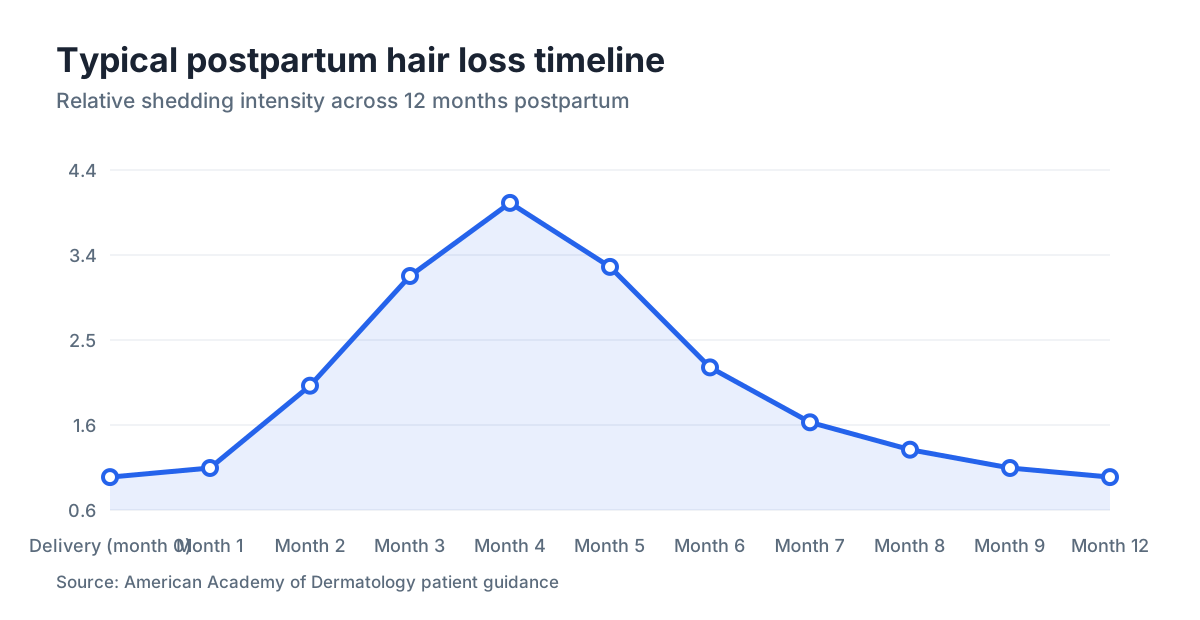
TL;DR: Postpartum hair loss is a form of telogen effluvium triggered by the hormonal crash after delivery. It usually starts around 2 to 4 months postpartum and peaks near month 4. Most women see shedding stop and regrowth begin by 6 to 12 months with no treatment at all. It is temporary. It is not the start of permanent baldness.
What is postpartum hair loss and is it normal?
Yes, completely normal. Postpartum hair loss is not a disease, and it does not mean something went wrong with your pregnancy or your health. It is a predictable biological event that affects somewhere between 40 and 50 percent of new mothers, according to the American Academy of Dermatology [1].
The medical name is telogen effluvium. To understand it you need one basic fact about hair: every strand cycles through three phases. The active growth phase is anagen. The transitional phase is catagen. The resting phase is telogen, after which the hair sheds and a new strand starts growing in its place [2]. On a healthy scalp, roughly 85 to 90 percent of hairs sit in anagen at any moment, with only about 10 to 15 percent resting in telogen.
Pregnancy tilts that ratio in the best possible direction, temporarily. Elevated estrogen and progesterone extend the anagen phase, so fewer hairs enter telogen and shed. Many pregnant women notice unusually thick, full hair in the second and third trimesters. That is real. More hairs than usual are being held in active growth.
Then the baby arrives. Hormone levels drop sharply within days of delivery. The hairs that were held in anagen all get the signal to shift into telogen at roughly the same time. About two to four months later, those resting hairs shed together. That synchronized mass shedding is what postpartum hair loss looks like in practice: clumps in the shower drain, handfuls on the pillow, a ponytail that suddenly feels half as thick.
You can read more about the mechanics in our full explainer on hair loss telogen.
When does postpartum hair loss start?
Shedding usually begins between 2 and 4 months after delivery, though some women notice it as early as 6 weeks and others not until month 5 [1]. The timing depends on how long it takes for the hair that entered telogen at the hormonal drop to finish its resting phase and physically fall.
The telogen phase lasts about 100 days, roughly 3 months [2]. That math lines up with the commonly reported peak at month 4 postpartum. Deliver in January, and the worst of the shedding often hits in April or May.
Breastfeeding can shift the timeline a little. Prolactin, the hormone driving milk production, keeps estrogen suppressed for longer in nursing mothers. Some research suggests breastfeeding mothers may see shedding start or persist a bit later than mothers who do not nurse, but the evidence is not strong enough to attach a reliable number to that delay [3]. If you are breastfeeding and your shedding seems to run late or linger, that is one plausible reason, not a red flag.
Thyroid dysfunction, iron deficiency, and other conditions can cause or worsen shedding and can look nearly identical to postpartum telogen effluvium. If your shedding starts very late (after month 6), seems extreme, or comes with fatigue or cold intolerance, get bloodwork. Those conditions are treatable and worth ruling out.
How long does postpartum hair loss last?
For most women, shedding slows sharply by month 6 postpartum and resolves entirely by month 12 [1][4]. The AAD says most women regain their normal hair fullness by their child's first birthday.
Here is the honest breakdown of what the timeline tends to look like:
| Phase | Typical timing |
|---|---|
| Shedding begins | 2 to 4 months postpartum |
| Peak shedding | Around month 4 |
| Shedding slowing noticeably | Months 5 to 6 |
| Normal shed rate restored | Months 6 to 9 |
| Hair fullness fully recovered | By month 12 |
Those ranges come from dermatology clinical guidance and the AAD's patient resources [1][4]. There is real variation. A small group of women find shedding continues past 12 months, and in those cases a dermatologist visit earns its keep, checking for an underlying cause. Iron deficiency anemia, hypothyroidism, and androgenetic alopecia are the usual suspects.
One thing nobody warns you about: regrowth can feel almost as frustrating as the shedding. New hairs come in fine and short and often stand straight up along the hairline and part. People call them baby hairs. They are visible proof that regrowth is happening. It takes about a year of steady growth for those hairs to blend back into your normal length.
Why do hormones cause so much hair to fall out at once?
The core mechanism is estrogen withdrawal. During pregnancy, estradiol can reach roughly 100 times its pre-pregnancy baseline [5]. Estrogen appears to prolong the anagen phase by promoting growth factors in the follicles. When estrogen falls sharply after delivery, that growth signal vanishes and a large cohort of follicles all shift into telogen at once.
Progesterone drops too, and some researchers point to the ratio of estrogen to androgens (testosterone and its derivatives) as part of the picture. After delivery, estrogen falls faster than androgens, so the relative androgenic influence on follicles rises for a while. That may be why some women see a thinning pattern that looks a little like androgenetic alopecia rather than diffuse shedding, though in most cases it clears on the same timeline.
Cortisol also spikes with the physical stress of labor, and sleep deprivation keeps it elevated for weeks. Cortisol contributes to telogen effluvium through separate pathways tied to the hair follicle's own stress response system [6]. So postpartum hair loss is driven by the hormone drop, but layered stress makes it worse.
Short nutritional gaps after delivery, especially in iron and zinc, can pile on. The fetus gets first access to maternal iron stores, so postpartum iron deficiency is genuinely common, particularly after a bleed-heavy delivery. A serum ferritin below 30 ng/mL has been linked to telogen effluvium in clinical studies, though the exact threshold is debated [4].
Knowing the drivers is useful for one practical reason: it tells you what to check (thyroid, ferritin, CBC) and which interventions have real biology behind them.
How much hair loss is too much, and what are the signs of something more serious?
Postpartum telogen effluvium causes diffuse shedding across the whole scalp. You lose more than the usual 50 to 100 hairs a day [1], probably a lot more during peak months, but the follicles themselves are not damaged and the hair grows back.
Patchy loss is different. Losing hair in round bald spots points toward alopecia areata, an autoimmune condition that the postpartum immune shift can trigger [6]. Alopecia areata needs different evaluation and treatment than telogen effluvium.
A clearly receding or thinning hairline that has not recovered by 12 to 18 months could mean androgenetic alopecia (female pattern hair loss), which the postpartum hormonal environment can unmask or speed up. Female pattern hair loss miniaturizes follicles over time and does not fully reverse on its own. To understand that process and whether you might be at risk, our page on what causes hair loss covers the genetics and physiology in detail.
Signs worth discussing with a doctor:
- Shedding that starts after month 6 with no prior postpartum pattern
- Shedding that has not slowed at all by month 9
- Fatigue, weight gain, cold sensitivity, or constipation alongside the hair loss (thyroid screening)
- Visible scalp at the crown with a Christmas-tree distribution along the part (female pattern hair loss pattern)
- Itchy, scaly, or inflamed scalp patches
Get bloodwork that includes TSH, free T4, CBC, serum ferritin, and a metabolic panel if your shedding feels severe or drags on too long. These tests are cheap and the results change what you do next.
What treatments actually help with postpartum hair loss?
For true postpartum telogen effluvium, the honest answer is that the best treatment is time. The follicles are intact. The shedding is temporary. No intervention has been shown in a randomized controlled trial to meaningfully shorten postpartum telogen effluvium specifically [4].
Still, a few things can support the conditions for healthy regrowth:
Fix nutritional deficiencies if they exist. If your serum ferritin is below 30 ng/mL, supplementing iron to bring it up is reasonable and has some evidence behind it for telogen effluvium in general [4]. Same with vitamin D deficiency. Do not supplement iron without testing first, because iron overload carries real risks.
Minoxidil. Topical minoxidil (Rogaine) is FDA-approved for women's hair loss at 2% applied twice daily [7]. It is not approved specifically for postpartum telogen effluvium, and the trials that earned approval ran mostly on androgenetic alopecia, not telogen effluvium. So we do not have strong evidence it shortens the postpartum shed. Some dermatologists suggest it if hair has not recovered by 12 months and they suspect underlying female pattern hair loss. Read our page on minoxidil side effects before deciding. Oral minoxidil is increasingly used off-label for women with stubborn hair loss; our page on oral minoxidil covers dosing and evidence. The FDA-approved women's labeling describes minoxidil 2% topical solution as indicated to regrow hair in women.
Finasteride and dutasteride. Not appropriate for women who are breastfeeding or who may become pregnant again. They also have limited evidence for telogen effluvium as opposed to androgenetic alopecia.
Hair loss supplements. Products marketed for postpartum hair loss often bundle biotin, collagen, and a mix of vitamins. Biotin deficiency does cause hair loss, but most people are not deficient, and no trial shows that supplementing above normal levels speeds recovery [8]. Our page on hair loss supplements walks through the evidence for the main ingredients honestly.
If you want an objective read on your current density before deciding whether to treat, MyHairline's free AI hair scan (/scan) can map your scalp and flag pattern thinning worth taking more seriously.
Does breastfeeding make postpartum hair loss worse?
Not in terms of the total hair lost. The hormonal reset that triggers shedding happens when the placenta is delivered, not when you breastfeed. The estrogen crash occurs whether or not you nurse.
Breastfeeding does keep prolactin high and estrogen suppressed longer than in non-nursing mothers. That prolonged low-estrogen state might stretch the window during which shedding occurs or delay full hormonal recovery. Some clinicians and patients report that exclusive breastfeeding seems to prolong the shed, but high-quality studies have not quantified it [3].
On the nutrition side, breastfeeding raises caloric and micronutrient demands a lot. The recommended dietary allowance for iron during lactation is 9 mg per day for women over 18, and for iodine it is 290 mcg per day [9]. Postpartum women who are nursing and eating a restricted diet are at real risk of depleted ferritin and zinc, both of which affect hair cycling. Eating enough and taking a postnatal vitamin with iron is worth doing, mostly for your overall recovery, hair aside.
The takeaway: breastfeeding does not cause postpartum hair loss, and stopping will not cure it. Your hair recovers on roughly the same schedule either way.
How do you manage postpartum hair loss day-to-day without making it worse?
You cannot stop the shedding by changing your routine, but you can avoid stacking mechanical or chemical damage on top of it.
Be gentle. The hairs actively shedding are already in telogen and would fall out anyway, but aggressive brushing, tight ponytails, and heat styling can snap hairs still in anagen and make the thinning look worse than it is. Use a wide-tooth comb on wet hair. Skip the elastic bands that catch and pull.
Wash frequency does not meaningfully change the shed rate. Washing less does not save hairs. It just lets shed hairs pile up, so the eventual drain-clearing moment looks terrifying even when the daily loss is identical. Wash when you want.
Volumizing products and dry shampoo make thin hair look fuller and hand you a little control during the peak months. They are fine. They do nothing to the underlying biology.
If you are losing volume around the hairline, a good haircut can redistribute density and hide the thinning. Short layers around the face work well. Not a medical fix, just a practical one.
Avoid tight weaves, extensions, and braids right now. Chronic tension can cause traction alopecia, a separate condition that can scar follicles permanently if it goes on long enough. Hair transplants are not appropriate for postpartum telogen effluvium since the condition is temporary, though a hair transplant may be worth discussing later if permanent thinning is confirmed after full recovery.
Postpartum hair loss vs. other types of hair loss: how do you tell the difference?
Pattern and timing are the main clues.
Postpartum telogen effluvium is diffuse (all over the scalp), starts 2 to 4 months after delivery, and resolves within 12 months. The scalp looks normal. No itching, no scarring, no localized bald patches.
Female pattern hair loss (androgenetic alopecia) widens the part gradually and thins the crown. It often runs in families. It does not resolve on its own and creeps along over years [10]. The postpartum hormonal shift can trigger or unmask it, which is why some women first notice it in the year after delivery. The distinction matters because androgenetic alopecia has proven treatments (minoxidil, and in non-pregnant, non-breastfeeding women, finasteride) while telogen effluvium does not benefit from those during the active episode.
Alopecia areata shows up as one or more smooth, round bald patches, often quite suddenly. The immune system attacks the follicles. Pregnancy suppresses certain immune responses, and the return of normal immune function postpartum can trigger or worsen alopecia areata in susceptible women [6]. A dermatologist can usually tell it apart from telogen effluvium on exam.
Telogen effluvium from a non-hormonal cause (crash dieting, a high fever, major surgery) follows the same 2 to 3 month lag from the trigger. If your shedding does not fit the postpartum timeline, think back to what happened 2 to 3 months before it started.
If you spot a receding hairline or a widening part developing alongside the shedding, track it closely, since it may point to pattern hair loss rather than pure telogen effluvium.
What does the research actually say about postpartum hair loss treatments?
Honestly, not much. The clinical literature on postpartum telogen effluvium specifically is thin. Most large hair loss trials exclude pregnant and postpartum women, so we are largely extrapolating from research on telogen effluvium in general or on androgenetic alopecia.
The strongest evidence in women's hair loss is for topical minoxidil 2%. A 32-week placebo-controlled trial published in the Journal of the American Academy of Dermatology found that 2% topical minoxidil raised hair count significantly compared to placebo in women with androgenetic alopecia [10]. That is androgenetic alopecia, not postpartum telogen effluvium, but it is the trial behind the FDA approval. See does minoxidil work for a full look at the evidence.
On iron, a review in the Journal of the American Academy of Dermatology noted an association between low serum ferritin and telogen effluvium and suggested correcting iron deficiency may help recovery, though it stopped short of calling it proven treatment [4].
On biotin, the FDA has warned that high biotin doses can interfere with thyroid and troponin lab tests, a real concern for postpartum women getting hormonal bloodwork [8]. The clinical evidence that biotin above RDA levels does anything for hair loss in non-deficient people is essentially absent.
Nobody has good data on whether PRP (platelet-rich plasma) injections speed recovery from postpartum telogen effluvium. The closest studies are on androgenetic alopecia, and those results are mixed. PRP runs roughly $1,500 to $3,500 per treatment course, and insurance coverage for a postpartum cosmetic concern is a flat no. For a condition that resolves on its own, that is a hard spend to justify.
The cleaner financial decision, if you want professional evaluation, is a visit to a board-certified dermatologist who can run the right labs, confirm the diagnosis, and tell you whether you are dealing with pure telogen effluvium or something that warrants treatment.
When should you see a dermatologist about postpartum hair loss?
Most cases do not need a specialist. If you are 4 months postpartum, shedding heavily, and otherwise feel healthy, that is the expected experience and you are likely fine to watch and wait.
Make an appointment if:
- The shedding has not improved at all by 9 months postpartum
- Your hair is still noticeably thinner at 12 months compared to your pre-pregnancy baseline
- You have visible scalp at the crown or a widened part that is not recovering
- You have round bald patches anywhere on the scalp
- You have other symptoms suggesting thyroid disease or iron deficiency
- You have a strong family history of female pattern hair loss and worry the postpartum period triggered it
A dermatologist can do a pull test to gauge active shedding, a dermoscopy exam to look at follicle miniaturization, and order bloodwork. They can also tell you with reasonable confidence whether you are looking at self-resolving telogen effluvium or something that will respond to treatment.
If you have not seen a doctor yet and want a preliminary read on whether your density looks normal for your age or shows signs worth investigating, the MyHairline AI scan (/scan) analyzes your scalp and gives you a structured starting point before you sit down with a clinician.
Sources
- American Academy of Dermatology, Hair Loss section (patient resources on postpartum shedding)
- StatPearls (NCBI Bookshelf), Hair Follicle Anatomy and Physiology
- Clinical, Cosmetic and Investigational Dermatology, Postpartum Alopecia review
- Journal of the American Academy of Dermatology, The role of iron in diffuse telogen hair loss
- Endocrine Reviews (Oxford), estrogen physiology in pregnancy
- Journal of Investigative Dermatology, Stress and the hair follicle
- FDA, Drugs@FDA database entry for minoxidil topical solution
- FDA, Consumer update on biotin interference with lab tests
- National Institutes of Health Office of Dietary Supplements, Iron Fact Sheet for Health Professionals
- Journal of the American Academy of Dermatology, minoxidil 2% randomized controlled trial in women with androgenetic alopecia