
TL;DR: Platelet-rich plasma (PRP) means injecting a concentration of your own platelets into the scalp to stimulate hair follicles. Multiple randomized controlled trials show real increases in hair density and thickness, mostly for androgenetic alopecia. It is not a cure. Results need maintenance sessions, and it works best added on top of proven treatments like minoxidil or finasteride.
What is PRP and how does it work for hair loss?
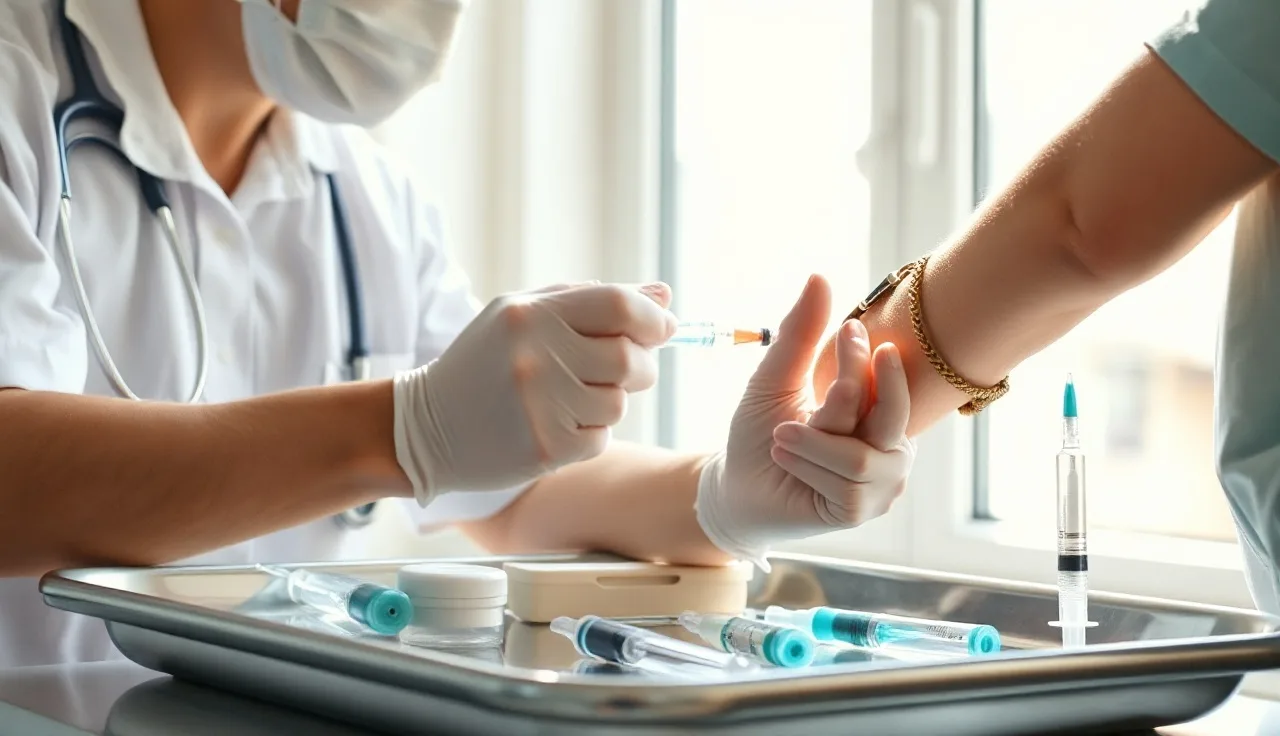
PRP stands for platelet-rich plasma. It is made from your own blood, drawn at the clinic, then spun in a centrifuge to separate and concentrate the platelets. That concentrated fraction, sometimes called platelet enriched plasma, gets injected directly into the scalp.
Platelets are more than clotting cells. They carry growth factors, including platelet-derived growth factor (PDGF), vascular endothelial growth factor (VEGF), and insulin-like growth factor-1 (IGF-1). Injected into a thinning area, those growth factors are thought to stimulate dermal papilla cells, the cells at the base of each follicle that control the hair growth cycle [1].
The most plausible mechanism is that PRP prolongs the anagen (active growth) phase of the hair cycle and may partially reverse follicle miniaturization. That matters for androgenetic alopecia, the pattern baldness driven by DHT, because miniaturization is exactly what that condition causes. It is less clear how well PRP works once a follicle is completely dead, which is why earlier treatment generally gets better outcomes.
One thing PRP is not: a drug. The FDA regulates PRP as a device procedure, not as a pharmaceutical product, which means the growth-factor concentrations and platelet counts vary widely depending on the centrifuge system and preparation protocol the clinic uses [2]. That variability is one of the main reasons trial results differ.
Does PRP actually regrow hair? What do the clinical trials show?
Yes, with real caveats. The evidence has grown a lot since about 2015, and several well-designed randomized controlled trials now show statistically significant improvements in hair density and thickness.
A 2019 systematic review and meta-analysis in Dermatologic Surgery pooled data from 11 randomized controlled trials and found PRP produced a mean increase in hair density of roughly 33.6 hairs per cm² compared to baseline, and a mean increase in hair thickness of about 0.2 mm [3]. Those are not dramatic numbers. They are clinically meaningful for someone with early to moderate thinning.
A frequently cited 2015 randomized, half-head controlled trial by Gentile et al. in BioMed Research International found that patients getting three monthly PRP sessions showed significant increases in mean number of hairs and hair thickness, with no serious adverse events [4]. The half-head design matters because each patient acts as their own control, which removes genetic and lifestyle confounding.
Here is what the evidence does not support: PRP as a standalone cure, or as reliable treatment for advanced hair loss (Norwood 6 or 7). Results plateau, regrowth stops when injections stop, and some patients see very little response. The honest summary is that PRP works, on average, for the right patient, but the effect size is moderate and maintenance is required.
If you are also researching minoxidil for men or finasteride, note that combining PRP with those established treatments is where the most durable results show up in the literature.
Who is a good candidate for PRP hair treatment?
The patients who respond best share a few traits: they have androgenetic alopecia (male or female pattern hair loss) at an early to moderate stage, they still have living, miniaturized follicles in the thinning zone, and they are in generally good health.
PRP also has evidence for alopecia areata, though the data there are thinner. A 2018 randomized trial in the Journal of Dermatology found PRP superior to triamcinolone (steroid) injections for alopecia areata patches in both hair regrowth and patient satisfaction [5].
For telogen effluvium, the picture is murkier. Some practitioners use PRP to speed recovery after a major shedding event, but there are no large trials for that indication.
Poor candidates include:
- People with active scalp infection or uncontrolled seborrheic dermatitis
- Those on anticoagulants (blood thinners), because preparation requires adequate platelet function
- Patients with platelet disorders or low platelet count
- Anyone with active cancer, particularly blood cancers
- Very advanced hair loss with significant scarring or fibrosis, where follicles are likely gone
Age and sex do not disqualify you. Women with female pattern hair loss are reasonable candidates, and several trials include mixed-sex groups with comparable results between men and women.
How many PRP sessions do you need and how often?
The most common protocol in clinical trials and in practice is three sessions spaced four to six weeks apart, followed by maintenance sessions every three to six months [3].
You will not see results after one session. Most patients notice reduced shedding within the first one to two months. Visible thickness and density improvements typically show up between months three and six, after the initial series is done.
Maintenance is not optional if you want to keep the results. Growth factors degrade, and the biological stimulus fades. Most clinicians recommend at least one session per year, and many recommend two. Stop entirely and you usually drift back to your pre-treatment baseline over twelve to eighteen months.
There is no universally agreed protocol. The centrifuge system, platelet concentration, injection depth, and session frequency all vary by clinic. That is a real limitation. A clinic using a poorly validated system or low platelet concentrations may deliver a weaker treatment even if the session price is the same.
What does PRP hair treatment cost?
PRP is almost never covered by insurance. It counts as cosmetic or elective in the US, no matter the underlying diagnosis.
Prices vary by geography, clinic type, and preparation system. Based on published cost surveys and reported clinic pricing, a single PRP session in the United States costs between $500 and $1,500 [6]. A standard initial series of three sessions therefore runs $1,500 to $3,500 out of pocket. Add annual or biannual maintenance and you are looking at $600 to $1,500 per year ongoing.
| Treatment phase | Typical US cost |
|---|---|
| Single PRP session | $500, $1,500 |
| Initial series (3 sessions) | $1,500, $3,500 |
| Annual maintenance (1 to 2 sessions) | $600, $1,500/year |
| 5-year total cost (series + maintenance) | $4,000, $9,500 |
For comparison, generic oral finasteride costs roughly $20 to $40 per month, and generic topical minoxidil is under $20 per month. PRP is a lot more expensive and requires in-clinic visits. That cost-benefit math matters. PRP is probably most defensible as an add-on for patients already using medications who want extra gains, not as a first-line standalone option.
Medical spas often charge less than dermatology practices, but the tradeoff may be in quality control of the preparation protocol and in physician oversight.
What is the PRP procedure like, and does it hurt?
A standard PRP session takes about 45 to 90 minutes from blood draw to the last injection.
Here is the sequence. A clinician draws 10 to 60 mL of blood from your arm, depending on the protocol. The blood goes into a centrifuge, which spins for 10 to 15 minutes to separate red blood cells from the plasma and platelets. The platelet-rich layer is extracted. Some systems use a second spin to concentrate it further. The resulting PRP is loaded into syringes and injected into the scalp at roughly 1 to 1.5 cm intervals across the treatment area.
Pain is the honest downside. Scalp injections hurt. Most clinics apply a topical numbing cream for 20 to 30 minutes before treatment. Some clinicians use a nerve block. Neither kills the discomfort completely, but most patients describe the procedure as tolerable rather than unbearable. The hairline and temples are the most sensitive areas.
After the procedure you can expect mild redness, swelling, and sometimes a feeling of pressure or tightness on the scalp for 24 to 48 hours. Bruising at the injection sites is possible. Serious adverse events are uncommon since you are using your own blood, though infection, while rare, can happen. Most dermatology practices have patients avoid vigorous exercise, saunas, and hair washing for 24 hours after treatment.
You cannot have PRP the same day you start a new medication and expect to credit any results cleanly to either one. If you are building a treatment stack, talk to your dermatologist about sequencing.
How does PRP compare to minoxidil, finasteride, and hair transplants?
These are different tools with different mechanisms, and comparing them means being clear about what each one does.
Finasteride blocks DHT, the hormone that miniaturizes follicles in androgenetic alopecia. In the FDA registration trials, finasteride stopped progression in 83% of men and regrew visible hair in 66% at two years [7]. It is a daily oral pill. The main concern for some patients is sexual side effects, which affect a minority of users. Finasteride hits the root hormonal cause. PRP does not.
Minoxidil for men is a topical (or oral) vasodilator that extends the anagen phase and increases follicle size. At 5% concentration applied twice daily, trials show roughly 40% of men get moderate to dense regrowth at 48 weeks [8]. It is cheap, widely available, and evidence-backed, but it requires daily ongoing use and can cause side effects including scalp irritation and, with oral forms, fluid retention.
Hair transplant surgery is the only truly permanent option. FUE and FUT procedures move living follicles from a donor zone to a bald area. Results are permanent for those grafts, but the procedure costs $4,000 to $15,000 or more, requires surgical recovery, and does not stop ongoing loss in untransplanted areas.
PRP sits between these options. It does not stop DHT, it does not move follicles, and it is not permanent. But it stimulates existing follicles without surgery, has a reasonable safety profile, and can add meaningfully to results when combined with finasteride or minoxidil. Many dermatologists now recommend PRP as part of a multi-modal approach rather than as a standalone treatment.
Still figuring out why you are losing hair? Reading about what causes hair loss and DHT blockers first will help you see which interventions actually target your specific mechanism.
Are there risks or side effects of PRP for hair loss?
Because PRP uses your own blood, the risk profile is genuinely better than most injectables. You cannot have an allergic reaction to your own plasma. There is no risk of disease transmission from donor material.
That said, risks exist:
- Injection site pain: common, usually gone within 48 hours
- Scalp swelling or bruising: common, typically minor
- Infection: uncommon but possible with any skin injection; more likely if sterile technique is poor
- Calcification at injection sites: rare, seen in case reports, not in major trials
- No response at all: happens in a meaningful share of patients; some estimates put non-responders at 20 to 30 percent
- Transient shedding in the first four to six weeks after treatment: reported by some patients, thought to be a follicle reset, not a permanent loss
The American Academy of Dermatology notes that side effects from PRP for hair loss are generally mild and temporary [9]. There is no FDA-approved PRP product specifically for hair loss. The FDA has cleared certain PRP centrifuge systems as medical devices, but the clinical application to hair is off-label, which is common in procedural dermatology and does not mean unsafe.
One thing to watch for: clinics that claim PRP has no side effects or that it is guaranteed to work are overstating the evidence. No treatment is guaranteed, and informed consent should include the realistic possibility of a non-response.
Does adding PRP to finasteride or minoxidil work better than either alone?
The combination data are more limited than the standalone data, but what exists is encouraging.
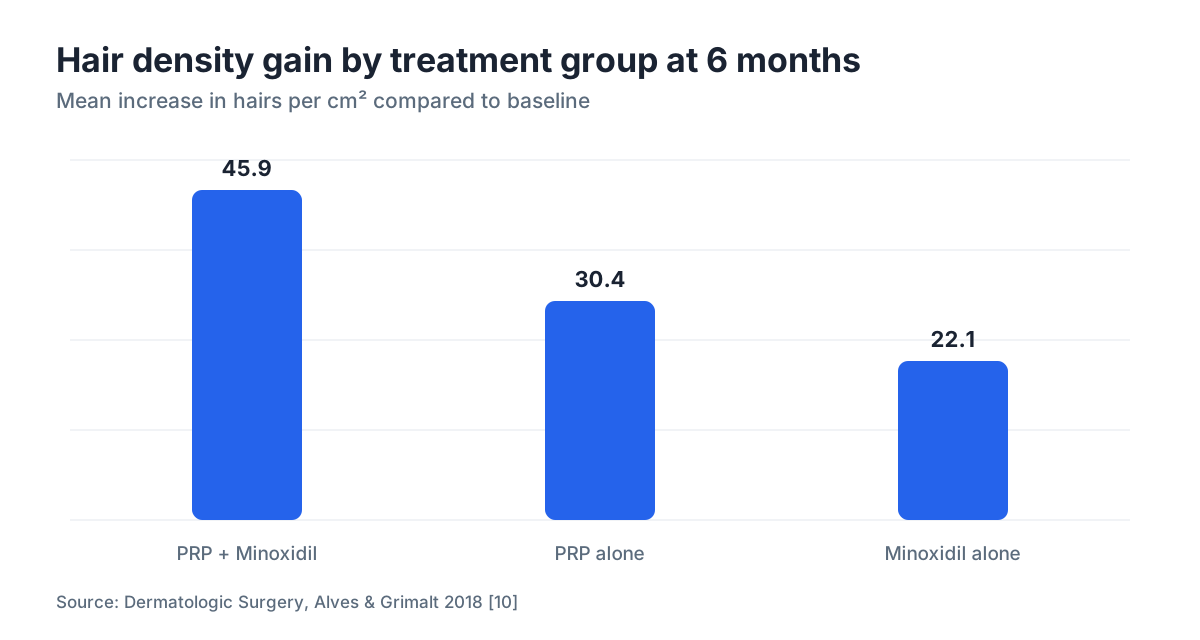
A 2017 trial in Dermatologic Surgery compared three groups: PRP alone, minoxidil alone, and PRP plus minoxidil [10]. The combination group showed superior hair density and thickness gains at six months versus either treatment alone. Hair density increased by 45.9 hairs per cm² in the combination group, versus 30.4 in the PRP-only group and 22.1 in the minoxidil-only group.
For finasteride combinations, the data are mostly from observational studies rather than randomized trials. The logic is biologically sound. Finasteride removes the hormonal insult that is killing follicles, while PRP gives a direct growth stimulus to those same follicles. Many hair loss specialists use this combination in practice.
Already exploring the finasteride plus minoxidil combination? Adding PRP on top is a reasonable third layer, especially if you have seen a partial response to the medications but want more density. The finasteride and minoxidil page has more on that base stack.
The main barrier to combination therapy is cost and commitment. Adding PRP sessions to an ongoing medication regimen takes both money and time. Whether that increment is worth it is a personal call based on how much the hair loss affects you and what you can afford.
How do you find a qualified provider and avoid wasting money?
This is where a lot of people go wrong. PRP has a low barrier to entry as a procedure, so it gets offered in medical spas, wellness clinics, and cosmetic offices by providers with widely varying training and equipment quality.
What to look for:
A board-certified dermatologist or plastic surgeon with specific experience in hair loss is the gold standard. The American Academy of Dermatology has a find-a-dermatologist tool on its website [9]. Hair restoration specialists who are members of the International Society of Hair Restoration Surgery (ISHRS) are another reliable category [11].
Ask specifically about the PRP system they use. Better systems achieve platelet concentrations of five to eight times baseline (roughly 1,000,000 platelets per microliter). Not all centrifuge systems reach that. A clinic that cannot tell you its target platelet concentration is a yellow flag.
Ask how many PRP procedures the provider personally performs per month. Someone doing two or three procedures a month has much less pattern recognition than someone doing twenty.
Before spending on PRP, get clarity on your specific hair loss pattern and cause. MyHairline's free AI scan at /scan can analyze your hairline and thinning pattern from photos, which helps you walk into a dermatology appointment with a clearer picture of what you are dealing with.
Get a consultation, more than a quote. A good provider will examine your scalp, ask about your medications and health history, and tell you honestly whether PRP is likely to help you. Anyone who sells you a package before examining you is prioritizing revenue over outcomes.
What questions should you ask before booking a PRP session?
Walking in with prepared questions saves you from oversold packages and underqualified clinics. Here is what is worth asking:
What centrifuge system do you use, and what platelet concentration do you target? A legitimate clinic can answer this.
How many PRP hair sessions do you perform per month? This tells you whether the provider has real pattern recognition.
What results should I realistically expect given my Norwood stage and age? If the answer is pure optimism with no caveats, that is a warning sign.
What happens if I see no improvement after three sessions? A good clinic has a plan: re-evaluation, possible protocol adjustment, or a candid conversation about switching strategies.
Do you combine PRP with any topical numbing or nerve block? If you are sensitive to pain, this matters practically.
Are there before-and-after photos from your actual patients, not stock images? You want to see real cases from this provider, not promotional material.
What is the maintenance schedule and total cost over two years? Get the full picture before committing to a series, more than the per-session price.
If you have a receding hairline specifically, ask whether PRP has evidence for hairline regrowth versus vertex (crown) thinning. The data are somewhat stronger for diffuse thinning than for frontal hairline recession.
Is PRP worth it for hair loss?
For the right patient, yes. For the wrong patient, probably not.
If you have early to moderate androgenetic alopecia, living but miniaturized follicles, and you are already on or willing to use finasteride or minoxidil, PRP is a reasonable addition with clinical evidence behind it. The combination approach gives you the best odds of meaningful, lasting improvement.
If you have advanced hair loss, expect a permanent result without maintenance, or are looking for PRP as a cheaper alternative to a hair transplant, you will likely be disappointed. PRP does not regrow hair on a bald scalp. It stimulates follicles that are still there.
The cost is real. Over five years, you could spend $6,000 to $10,000 on PRP sessions. That money could instead go toward hair transplant surgery or toward long-term medication costs. The right choice depends on your stage of loss, your goals, and your budget.
Unsure where you stand? Start with the basics: understand what causes hair loss, get a clear read on your pattern and progression, and then add PRP to a grounded treatment plan rather than using it as a first and only move. For an objective starting point before you see a dermatologist, MyHairline's free AI hair loss analysis at /scan gives you a pattern assessment from photos that you can bring to your appointment.
PRP is a real treatment with real evidence. It is not magic, and it is not cheap. Knowing those two things going in is most of the battle.
Sources
- Elsevier, Journal of the American Academy of Dermatology, Gupta & Carviel, 2016, 'Meta-analytical comparison of platelet-rich plasma therapy in androgenetic alopecia'
- U.S. Food and Drug Administration, Medical Devices, 510(k) premarket notification and PRP centrifuge system clearances
- BioMed Research International, Gentile et al., 2015, 'The effect of platelet-rich plasma in hair regrowth: a randomized placebo-controlled trial'
- Journal of Dermatology, El Taieb et al., 2018, 'Platelets rich plasma versus minoxidil 5% in treatment of alopecia areata: a trichoscopic evaluation'
- American Society of Plastic Surgeons, Procedural cost statistics and patient education
- U.S. National Library of Medicine, DailyMed, Propecia (finasteride 1 mg) prescribing information
- U.S. Food and Drug Administration, DailyMed and OTC drug label, minoxidil topical 5%
- American Academy of Dermatology, Hair loss treatment patient information and find-a-dermatologist tool
- International Society of Hair Restoration Surgery, ISHRS Practice Standards and member directory