

TL;DR: Crown hair loss is usually androgenetic alopecia (pattern baldness) driven by DHT shrinking hair follicles at the vertex. In men it follows the Norwood scale; in women it more often shows as diffuse thinning at the top. Minoxidil is the first-line treatment with solid evidence. Finasteride works in men. Catching it early matters most.
What is crown hair loss and why does it start there?
The crown, sometimes called the vertex, is the circular area at the top-back of your scalp. For a lot of people, this is the first place hair visibly thins, partly because follicles in that zone are genetically more sensitive to dihydrotestosterone (DHT) than follicles at the sides or back. That sensitivity is encoded in your androgen receptors before you're born.
When DHT binds to a susceptible follicle, it shortens the anagen (growth) phase and gradually miniaturizes the follicle. The hair it produces gets finer and shorter over cycles until eventually the follicle stops producing visible hair altogether. That process can take years or decades, which is why crown thinning feels so slow and then suddenly very obvious.
The crown is also hard to see on your own, so many people don't notice until a photo, a haircut, or an honest friend delivers the news. By that point, meaningful miniaturization has often already happened. That's not doom, it's just a reason to act rather than wait.
Androgenetic alopecia (AGA) is not the only cause of crown thinning. Telogen effluvium, alopecia areata, nutritional deficiencies, and thyroid disorders can all thin hair at the crown too. Getting the cause right matters because the treatment paths are completely different. See a board-certified dermatologist if you're unsure.
What causes crown hair loss in men?
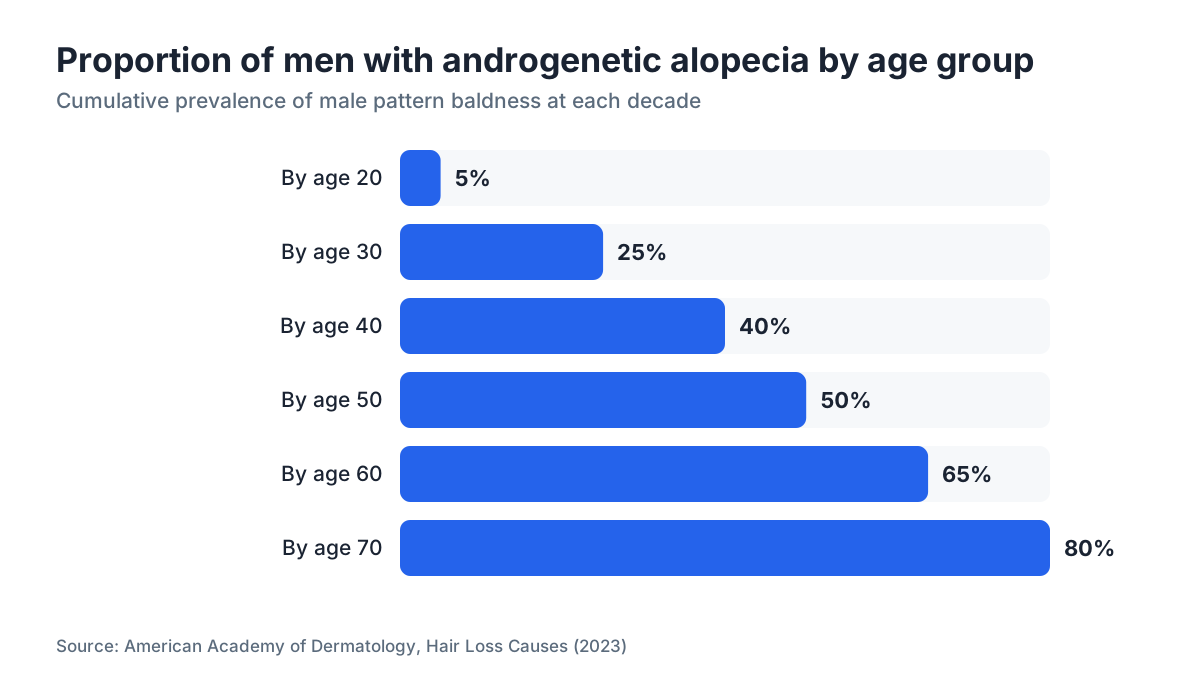
Androgenetic alopecia is by far the most common cause in men, affecting roughly 50% of men by age 50 [1]. The genetic risk comes from multiple genes, not a single "baldness gene," and you can inherit it from either parent.
DHT is the driver. Testosterone converts to DHT via the enzyme 5-alpha reductase, mostly in the scalp, skin, and liver. DHT then acts on androgen receptors in the dermal papilla cells of susceptible follicles, triggering miniaturization [2]. Finasteride works by blocking 5-alpha reductase, which is why it slows progression in most men who take it.
In men, crown loss tends to show up in a predictable pattern: a small bald spot or thinning whorl at the vertex that gradually expands. On the Norwood-Hamilton scale, significant crown involvement typically starts at Stage III Vertex and progresses through Stages IV, V, VI, and VII, where the crown patch merges with a receding frontotemporal hairline [3].
Other causes worth ruling out:
- Scalp conditions like seborrheic dermatitis or psoriasis can cause inflammation that accelerates shedding at the crown.
- Certain medications (chemotherapy, some blood pressure drugs, anticoagulants) can trigger telogen effluvium that preferentially shows at the crown.
- Nutritional deficits, particularly low ferritin or low zinc, can worsen any underlying genetic pattern.
If your crown hair loss appeared suddenly over weeks or months rather than gradually over years, that pattern points more toward telogen effluvium or an inflammatory cause than straight AGA.
What causes hair loss at the crown in women?
Crown hair loss in women is real, common, and underdiagnosed. About 40% of women experience noticeable hair loss by age 50 [4], and the crown and central part are the most affected areas in female-pattern hair loss (FPHL).
FPHL is also androgen-related, but it typically presents differently from male pattern loss. Instead of a discrete bald spot, women more often get diffuse thinning across the top of the scalp, with a widening center part and preserved frontal hairline. The Ludwig classification describes this in three grades of severity.
The androgen sensitivity of follicles is the same underlying mechanism, but women have lower overall androgen levels, which is why the pattern is usually less dramatic and progression slower. Hormonal shifts amplify the picture significantly, though.
Post-menopausal women experience a drop in estrogen that makes androgen effects on follicles more pronounced, which is why many women first notice crown thinning in their late 40s or 50s. Polycystic ovary syndrome (PCOS), which elevates androgens, can trigger earlier and more aggressive crown thinning in younger women [5].
Crown stress female hair loss is a specific pattern some dermatologists flag: chronic psychological or physiological stress elevates cortisol, which can push follicles into telogen (resting) phase en masse. Because the crown has the highest follicle density and longest cycling hairs, it often shows the shed most visibly. This is reversible, but it can take 6 to 12 months to see full regrowth after the stressor resolves.
Other causes specific to women: postpartum shedding, thyroid dysfunction (both hypo and hyper), iron-deficiency anemia, and traction from tight hairstyles (traction alopecia). Each of these can look like FPHL but responds to a completely different treatment.
How do you know what Norwood stage your crown is at?
The Norwood-Hamilton scale runs from Stage I (no meaningful loss) to Stage VII (only a horseshoe rim of hair at the sides and back). For the crown specifically:
| Norwood Stage | Crown Appearance |
|---|---|
| I | No visible thinning at crown |
| II | Slight temporal recession, crown intact |
| III Vertex | Small bald spot or thin whorl at crown begins |
| IV | Crown spot larger, starting to merge with front |
| V | Crown and frontal loss nearly connected |
| VI | Full connection, large bald area |
| VII | Only horseshoe fringe remains |
Self-staging is tricky because the crown is hard to photograph accurately. Take a photo under bright overhead light with your phone pointing straight down at the top of your head. A second person's eyes are more reliable than a mirror.
For women, the Ludwig scale is more appropriate:
- Grade I: Widening part line, thinning mainly at crown, but still plenty of coverage
- Grade II: More pronounced widening, significant density reduction at top
- Grade III: Near-total thinning at top with scalp clearly visible
Early staging genuinely matters. Treatments like minoxidil and finasteride slow or stop miniaturization; they don't reverse it well once follicles are completely gone. Acting at Norwood III Vertex gives you much better outcomes than acting at Norwood V or VI.
If you want an objective read on your current stage, a trichoscopy exam (dermoscopy of the scalp) performed by a dermatologist can measure follicle miniaturization before it's obvious to the naked eye. Some digital tools now offer baseline tracking. MyHairline's free AI scan (/scan) can give you a starting read on your crown thinning pattern based on photos, which you can then bring to a dermatologist.
Which treatments actually work for crown hair loss?
Let's be direct: there is no cure. There are treatments that slow progression and in some cases partially reverse miniaturization, and there are treatments that do little but cost money. The evidence base matters a lot here.
Minoxidil (topical and oral)
Minoxidil is FDA-approved for androgenetic alopecia and has the strongest evidence base of any topical treatment [6]. The 5% foam or solution used twice daily produces measurable increases in hair count and caliber. A key fact: minoxidil works better at the crown than at the frontal hairline in most studies. The registration trials for 5% minoxidil used vertex regrowth as the primary endpoint.
Oral minoxidil (0.625 to 2.5 mg daily in women, 2.5 to 5 mg in men) is increasingly used off-label and some trials suggest it outperforms topical at the crown, though it carries a higher side-effect risk. Read about the tradeoffs at oral minoxidil and minoxidil side effects before deciding.
Finasteride (men only)
Finasteride 1 mg daily (Propecia) is FDA-approved for male AGA. In the original 2-year trials, 83% of men who took it showed no further hair loss, and 66% experienced some regrowth, with crown response stronger than frontal response [7]. It works by reducing scalp DHT by about 60%. It doesn't work in post-menopausal women and is contraindicated in women who could become pregnant. More detail at finasteride.
Combining finasteride with minoxidil produces additive benefits. A 2021 randomized trial found the combination outperformed either agent alone for vertex density [12]. See finasteride and minoxidil.
Low-level laser therapy (LLLT)
The FDA has cleared several laser devices (combs, helmets) for hair growth. The evidence is real but modest: a 2014 meta-analysis found statistically significant but clinically modest increases in hair density [8]. LLLT is probably useful as an adjunct, not a standalone treatment.
Platelet-rich plasma (PRP)
PRP injections involve spinning your own blood to concentrate growth factors, then injecting into the scalp. The evidence is promising but inconsistent. Most dermatologists use it as an adjunct to minoxidil or finasteride rather than a replacement. Costs range from $500 to $2,000 per session and typically three to six sessions are recommended.
Hair transplant surgery
For crown hair loss specifically, transplants require careful planning. The crown has a spiral growth pattern and a large surface area, so restoring it fully takes many grafts, often 2,000 to 4,000 for a meaningful result. Surgeons are also cautious about transplanting the crown aggressively in younger patients because ongoing native hair loss can leave transplanted islands surrounded by thinning, requiring future procedures. Full article on what to expect at hair transplant.
Treatments that don't have good evidence
Biotin supplements, unless you have a genuine biotin deficiency (rare), don't produce measurable hair regrowth. Caffeine shampoos, keratin treatments, and scalp massage alone fall into the "won't hurt, probably won't help much" category. Ketoconazole 2% shampoo has weak anti-androgenic properties and some small studies show modest benefit, making it a reasonable adjunct, but it's not a primary treatment.
How do treatments for crown hair loss compare?
Here's a side-by-side of the main options so you can see where the evidence sits and what to realistically expect.
| Treatment | Evidence level | Approx. cost/year | Who it's for | Regrowth at crown |
|---|---|---|---|---|
| Topical minoxidil 5% | FDA-approved, multiple RCTs | $100-$300 | Men and women | Moderate in 40-60% of users [6] |
| Oral minoxidil | Off-label, growing RCT data | $200-$500 | Men and women | Slightly higher than topical |
| Finasteride 1 mg | FDA-approved, large RCTs | $150-$500 | Men only | Regrowth in ~66%, stops loss in ~83% [7] |
| Dutasteride 0.5 mg | Approved in some countries (not US for hair), off-label | $300-$600 | Men only | Stronger than finasteride, less long-term data |
| LLLT devices | FDA-cleared, modest RCTs | $200-$800 (device) | Men and women | Modest density increase |
| PRP injections | Promising, inconsistent RCTs | $1,500-$12,000 | Men and women | Variable |
| Hair transplant (FUE) | Surgical, permanent | $4,000-$15,000+ | Men and women with stable loss | Permanent if donor hair survives |
For most people early in crown thinning, starting with topical minoxidil and finasteride (if male) is the cost-effective path with the best evidence. Everything else is layered on top, not instead of.
Is crown hair loss from stress reversible?
Yes, stress-induced crown hair loss can be reversible, but the timeline is slower than most people expect.
When physical or emotional stress pushes a large number of follicles into telogen simultaneously (telogen effluvium), they shed 2 to 4 months after the stress event, not during it. That lag means many people can't identify the trigger. The crown and top of the scalp tend to show the shed most visibly because that's where the longest hairs are concentrated.
Once the stressor resolves, regrowth typically begins within 3 to 6 months, but full density can take 12 to 18 months to return [9]. The tricky part is distinguishing telogen effluvium from AGA, because both thin the crown, both can occur at the same time, and AGA is not reversible in the same way.
Clues that suggest telogen effluvium rather than or in addition to AGA:
- Shedding happened suddenly over weeks, not gradually over years
- You had a clear stressor 2 to 4 months before the shedding started (illness, surgery, childbirth, dramatic weight loss, severe psychological stress)
- Hair loss is happening across the whole scalp, more than the crown and top
- Pull test shows more than 6 hairs per 60-hair grab [9]
Chronically elevated stress can also worsen an underlying AGA pattern. In those cases, managing stress helps but won't fully reverse the loss because the AGA component is independently progressing.
For women specifically, crown stress-related hair loss often gets mistaken for FPHL. A dermatologist can use trichoscopy and sometimes blood work (ferritin, thyroid, DHEA-S, testosterone) to distinguish them.
Does crown hair loss mean you'll go fully bald?
Not necessarily. Progression varies enormously by genetics, age of onset, and whether you treat it.
About 50% of men with androgenetic alopecia will reach Norwood Stage IV or above by age 50, and about 25% will reach Stage VI or VII [1]. But the other half never progress beyond mild to moderate thinning. The earlier loss starts (teens or early 20s), the more likely it is to progress aggressively. Onset in the late 30s or 40s often means slower, more limited progression.
For women, full baldness from FPHL is uncommon. Most women plateau at Ludwig Grade I or II, with the frontal hairline remaining intact. Severe Grade III loss happens but is much rarer.
Treatment changes the math. Men who start finasteride at early crown thinning and stay on it significantly reduce their probability of reaching Stage VI or VII. That's not a guarantee, just a meaningful shift in odds.
Family history gives you a rough signal. Look at both your maternal and paternal relatives, more than one side.
When should you see a doctor about crown hair loss?
You don't need to be at crisis point to see a dermatologist. The earlier you go, the more options you have.
See a dermatologist soon if:
- Crown thinning appeared suddenly in weeks rather than gradually over years
- You have other symptoms like fatigue, weight changes, or irregular periods (these point toward thyroid or hormonal issues)
- Hair loss is patchy rather than diffuse (that's more consistent with alopecia areata)
- You're a woman under 30 with significant crown loss
- Standard over-the-counter treatments haven't worked after 6 months of consistent use
A dermatologist can do a scalp biopsy if needed, run bloodwork, and use trichoscopy to measure miniaturization. These tools actually change the treatment plan in a meaningful number of cases.
For most men with classic crown pattern loss and no red flags, seeing a primary care doctor first is fine. Many will prescribe minoxidil or refer you to dermatology.
One honest note: telemedicine hair loss services have expanded access to prescriptions, which is genuinely useful. But they can't examine your scalp directly, so they're best for people who already have a clear diagnosis and are looking to manage an established pattern.
What lifestyle changes actually help crown hair loss?
Lifestyle won't reverse androgenetic alopecia, but several factors can meaningfully affect the pace of loss and the quality of the hair you do keep.
Nutrition Iron deficiency is probably the most underappreciated driver of excess shedding in women. Ferritin below 30 ng/mL correlates with increased shedding in multiple studies, even without full anemia [10]. Low protein intake reduces the amino acids needed for keratin synthesis. Zinc deficiency impairs follicle cycling.
The flip side: supplementing nutrients you're not deficient in does very little. Spending money on biotin when your levels are normal won't grow hair. The hair loss supplements page breaks down which ones have actual data.
Scalp health Chronic scalp inflammation (from seborrheic dermatitis, fungal overgrowth, or persistent dandruff) can worsen AGA and disrupt the follicle environment. Treating the inflammation with ketoconazole shampoo or prescription topicals is a reasonable adjunct.
Stress management Chronic stress elevates cortisol and prolongs telogen, which means more hairs resting and fewer growing at any given time. Sleep quality, exercise, and managing psychological load all matter here, though this is hard to study in isolation.
Avoid traction Tight ponytails, braids, and hair extensions apply mechanical force that can cause traction alopecia, especially at the hairline. This is distinct from AGA but can compound crown thinning.
DHT and diet There is no food that meaningfully blocks DHT. Some people ask about saw palmetto, which has weak 5-alpha reductase inhibiting properties. The evidence is low quality. If you want DHT blocking, finasteride has the actual data. See dht blocker for more on what works and what doesn't.
How long does it take to see results from crown hair loss treatment?
This is where a lot of people give up too early.
Minoxidil takes 4 to 6 months before you can assess whether it's working. The first 6 to 8 weeks often bring a shedding phase (minoxidil-induced telogen effluvium) as follicles rapidly cycle. This shed alarms people into stopping, which is exactly the wrong move. Stick through 6 months before concluding it's not working.
Finasteride takes even longer to show its full effect. Most dermatologists recommend a 12-month trial before deciding it's ineffective. A single follicle takes 3 to 6 months to move through one complete cycle, and early benefit from finasteride is mainly halting miniaturization rather than visible regrowth.
For the crown specifically, minoxidil studies consistently show that 12-month results are substantially better than 6-month results, and the crown responds better to minoxidil than the frontal hairline does [6].
Hair transplant results take 9 to 18 months to fully appear. Transplanted grafts shed at about 3 to 4 weeks post-procedure (this is normal), then new growth begins around 3 to 4 months, with the majority of density visible by 12 months.
Commit to at least 12 months before you judge any non-surgical treatment. Photograph your crown under consistent lighting every 8 to 12 weeks so you have an objective record instead of relying on memory.
Sources
- American Academy of Dermatology, Hair Loss: Who Gets and Causes
- StatPearls (NCBI Bookshelf), Androgenetic Alopecia
- American Academy of Dermatology, Hair Loss in Women
- NCBI PMC, Female Pattern Hair Loss and PCOS (Journal of Clinical and Aesthetic Dermatology 2015)
- New England Journal of Medicine, Finasteride in the Treatment of Men with Androgenetic Alopecia (1998)
- NCBI PMC, Laser Phototherapy for Hair Loss (American Journal of Clinical Dermatology 2014)
- NCBI PMC, The Role of Ferritin in Hair Loss (Journal of Investigative Dermatology Symposium Proceedings 2003)
- NCBI PMC, Combination Finasteride and Minoxidil vs Monotherapy RCT (Dermatology and Therapy 2021)