
TL;DR: No natural treatment reverses androgenetic alopecia, but a few have real evidence. Rosemary oil and saw palmetto show modest, measurable results in small trials. Nothing natural matches finasteride or minoxidil for regrowth. If your hair loss is actively progressing, treat natural options as complements to proven drugs, not replacements. Start early, because miniaturized follicles don't come back.
What is androgenetic alopecia and why is it so hard to treat naturally?
Androgenetic alopecia (AGA) is the most common cause of hair loss in men and women. It affects roughly 50% of men by age 50 and up to 40% of women in their lifetime [1]. The mechanism is specific. Dihydrotestosterone (DHT), an androgen converted from testosterone by the enzyme 5-alpha reductase, binds receptors in hair follicles. In genetically susceptible people, this shrinks follicles over time in a process called miniaturization. The follicle doesn't die outright. It just produces thinner, shorter, eventually invisible hairs.
That mechanism decides everything about natural treatments. To slow AGA, something has to reduce DHT production, block its receptor at the follicle, or wake the follicle up through another pathway. Most herbal compounds don't do any of that potently enough to clear the bar FDA-approved drugs have already cleared. That doesn't mean they do nothing. It means you need to be honest about what "working" actually looks like.
The FDA has approved two treatments for AGA: topical minoxidil (1988) and oral finasteride (1997, for men) [2]. Every natural option gets measured against that line. If you're exploring naturals because you're nervous about finasteride side effects, or you want the full picture before starting minoxidil for men, that's a fair place to start. Just know the evidence gap is wide.
One more thing. What causes hair loss in your specific case decides which treatment makes sense. AGA is permanent and progressive without intervention. Telogen effluvium often clears on its own. Confuse the two and you waste months and money.
Does rosemary oil actually work for hair loss?
Rosemary oil is the best-supported natural topical for AGA, and the evidence is specific enough to take seriously. A 2015 randomized controlled trial in SKINmed compared rosemary oil, applied twice daily for 6 months, to 2% minoxidil solution in 100 patients with AGA. Both groups saw a similar increase in hair count at 6 months. The authors concluded that "rosemary oil was as effective as minoxidil 2% for the treatment of AGA" [3].
That's less impressive than it sounds. This was one small trial. It used 2% minoxidil, the weaker formula (5% is standard for men now and common for women). There was no placebo arm, so natural variation is hard to rule out. And "as effective" here means modest regrowth, not a reversed hairline.
The proposed mechanism is that rosemary oil inhibits 5-alpha reductase and improves scalp circulation, though human evidence for DHT reduction specifically is thin. What's clear: it has a real biological effect and low side-effect risk.
How to use it. Dilute rosemary essential oil in a carrier oil (jojoba and coconut are common) to roughly 2%, about 4 drops per teaspoon of carrier. Massage into the scalp, leave it 30 minutes, rinse. Do it consistently. Scalp irritation is the main risk. It won't work overnight. The trial ran 6 months before results showed up [3].
What does the evidence say about saw palmetto for androgenetic alopecia?
Saw palmetto (Serenoa repens) is a plant extract that weakly inhibits 5-alpha reductase, the same enzyme finasteride blocks. It's the most studied oral natural DHT blocker for AGA, and the evidence, while preliminary, isn't nothing.
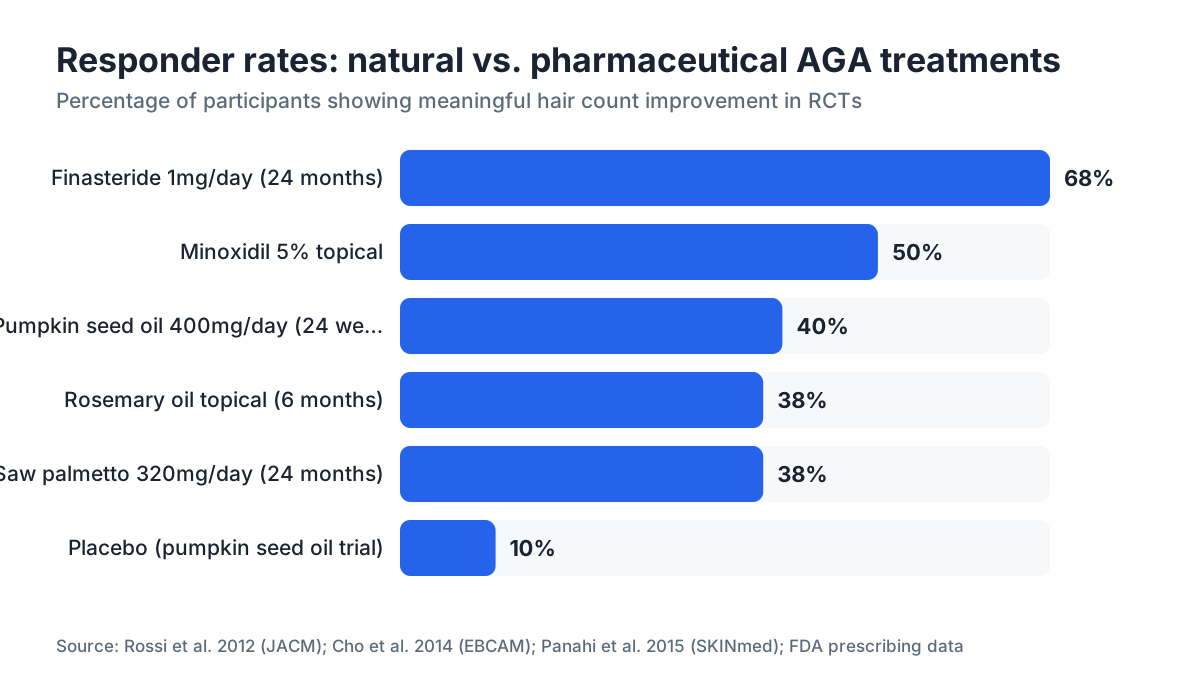
A 2012 study in the Journal of Alternative and Complementary Medicine randomized 100 men with mild to moderate AGA to saw palmetto (320 mg/day) or finasteride (1 mg/day) for 24 months. Hair count improved in 38% of the saw palmetto group versus 68% of the finasteride group [4]. Saw palmetto helped a meaningful minority. Finasteride helped nearly twice as many.
A 2019 review in Dermatology and Therapy looked at vitamins and minerals in hair loss and found saw palmetto had the most consistent evidence among natural supplements, while rating the overall quality of that evidence as low [5].
For women, the data is thinner still. Saw palmetto has antiandrogen properties, so in theory it could help women with AGA who have elevated androgens. No adequately powered trial exists in women.
Trials use 320 mg/day of a liposterolic extract. Give it 6 to 12 months. Side effects are usually mild, mostly GI upset in some users. If you're weighing supplements more broadly, our guide to hair loss supplements covers biotin, iron, and vitamin D too.
How does pumpkin seed oil compare to finasteride?
Pumpkin seed oil has one small but real trial behind it. A 2014 randomized, double-blind, placebo-controlled study in Evidence-Based Complementary and Alternative Medicine gave 76 men with AGA either 400 mg/day of pumpkin seed oil or placebo for 24 weeks. Mean hair count rose 40% in the oil group versus 10% on placebo [6].
A 40% jump in hair count sounds dramatic. In practice it means a modest bump in density, not a regrown hairline. The trial was small and nobody has replicated it at scale.
Pumpkin seed oil also seems to inhibit 5-alpha reductase, like saw palmetto. The two get combined in supplement formulas. Evidence for that combination specifically is basically nonexistent.
Worth trying if you're already set on a natural-first approach. A decent supplement runs about $15 to $30 per month. Don't expect finasteride results. The finasteride and minoxidil combination, for context, shows hair count increases of 60 to 80% in some trials, in populations where either drug alone gave 30 to 40%.
Can ketoconazole shampoo help with androgenetic alopecia?
Ketoconazole is an antifungal, but it has weak antiandrogen properties that seem relevant to AGA. A 1998 study compared ketoconazole 2% shampoo to 1% zinc pyrithione shampoo in men with AGA. Both improved hair density and shaft size, but ketoconazole was more consistent [7].
This is not a standalone fix. Nobody regrows a Norwood 4 hairline with shampoo. As an adjunct, though, especially for people who also have seborrheic dermatitis (dandruff), ketoconazole 1% shampoo is over-the-counter and cheap. The 2% version needs a prescription in the US.
The proposed mechanism is two-part: reducing scalp DHT and calming inflammation, which can worsen miniaturization. A healthier scalp isn't a cure. It isn't irrelevant either.
Use it 2 to 3 times a week. Leave it on 2 to 5 minutes before rinsing. If you're already on minoxidil or other treatments, ketoconazole shampoo sits alongside them without any meaningful interaction risk.
What natural treatments don't work despite being popular?
This is where honesty saves you money, because plenty gets spent on things with no real evidence.
Biotin is the most overhyped supplement in the hair loss aisle. If you're not biotin-deficient, and most people eating a normal diet aren't, extra biotin does nothing for AGA. The American Academy of Dermatology does not recommend biotin for AGA [8]. It helps people with true deficiency, which is rare.
Castor oil is everywhere on social media. No controlled trial supports it for AGA. It adds shine and moisture to hair you already have. It doesn't regrow miniaturized follicles.
Onion juice got studied in a 2002 trial for alopecia areata, a completely different condition driven by autoimmune attack, not DHT. People keep dragging that data over to AGA. For AGA specifically, there's no trial evidence.
Essential oils beyond rosemary, like peppermint, lavender, and cedarwood, sit on very preliminary data, mostly mouse studies or single tiny trials. Peppermint oil has one encouraging 2014 mouse study showing growth comparable to minoxidil. Mouse skin isn't human scalp, and no human AGA trial exists.
Hair growth gummies, collagen powders, and generic "hair" multivitamins mostly ride loose enforcement of supplement marketing. The FTC requires "competent and reliable scientific evidence" for health claims, but that bar sits below FDA drug approval and gets enforced unevenly [9]. If a product's evidence page links only to rat studies and testimonials, judge it accordingly.
How do natural treatments compare to minoxidil and finasteride?
Here's the honest comparison. These numbers come from clinical trials, not from marketing pages.
| Treatment | Mechanism | Evidence quality | Typical responder rate | Time to see results |
|---|---|---|---|---|
| Finasteride 1mg/day (oral) | DHT reduction via 5-AR inhibition | High (multiple RCTs) | 60-90% halt progression; 66% see regrowth [2] | 6-12 months |
| Minoxidil 5% topical | Vasodilator, prolongs anagen phase | High (multiple RCTs) | 40-60% significant response [2] | 4-6 months |
| Rosemary oil (topical) | Possible 5-AR inhibition, circulation | Low (one RCT vs 2% minoxidil) | Similar to 2% minoxidil (one trial) [3] | 6 months |
| Saw palmetto 320mg/day | Weak 5-AR inhibition | Low (one RCT vs finasteride) | ~38% vs 68% for finasteride [4] | 6-24 months |
| Pumpkin seed oil 400mg/day | Possible 5-AR inhibition | Low (one small RCT) | 40% hair count increase vs 10% placebo [6] | 6 months |
| Ketoconazole 2% shampoo | Weak antiandrogenic, anti-inflammatory | Low-moderate (adjunct use) | Modest density improvement [7] | 3-6 months |
| Biotin (no deficiency) | None relevant to AGA | None | No benefit [8] | N/A |
The gap between natural and pharmaceutical is real. Rosemary oil and saw palmetto still aren't placebos. For someone who can't tolerate finasteride, or a woman who isn't eligible for it, they're a meaningful option rather than a false hope.
One trade-off to name plainly. The side effect profile of naturals is generally gentler than minoxidil side effects or finasteride's. You pay for that gentleness in efficacy.
Are natural treatments safer than medications for hair loss?
Usually yes. Not unconditionally.
Saw palmetto can cause GI upset and, rarely, may shift hormone levels enough to interact with hormone therapies. Men on alpha-blockers for prostate conditions should check with a doctor before adding any 5-alpha reductase inhibitor, natural or not.
Rosemary oil can trigger contact dermatitis in sensitive people. Patch test before you apply it to the whole scalp.
Pumpkin seed oil is well tolerated. No serious adverse events showed up in the 2014 RCT [6].
Ketoconazole shampoo is safe for most people at OTC strength. Prescription 2% used long-term over large areas raises theoretical concerns about systemic absorption, though shampoo use is considered low risk.
The safety edge counts most in a sensitive category: a woman who is or might become pregnant, a teenager, or someone who reacted badly to a drug. Finasteride is absolutely contraindicated in pregnancy because of teratogenic risk, and oral minoxidil carries cardiovascular effects that need monitoring.
For most healthy adults, naturals aren't dangerous. They're just less effective.
What lifestyle changes actually affect androgenetic alopecia?
AGA is genetic and hormonal at its root. No lifestyle change reverses it. Lifestyle can still shift the rate of progression and the health of the scalp your follicles have to work in.
Nutrition matters for follicle cycling. Iron deficiency, even without full anemia, and low ferritin track with shedding and can worsen AGA in women. A serum ferritin below 30 ng/mL is often cited as the threshold worth addressing in women with hair loss, though the ideal target is debated [10]. Get a blood panel before you spend on supplements.
Vitamin D deficiency is common and has some link to follicle cycling, though direct evidence for AGA specifically is limited. If you're low, correcting it is cheap and sensible.
Chronic stress raises cortisol, which pushes more follicles into the telogen (shedding) phase and can speed up visible thinning in someone with AGA. That's not stress causing AGA. It's stress accelerating something already moving.
Scalp massage has a tiny supporting trial. A 2016 study in Japan found increased hair thickness after 24 weeks of 4-minute daily massages in 9 men [11]. The sample is small. The mechanism, mechanical stretching of dermal papilla cells, is plausible, the cost is zero, and it takes 4 minutes. Hard to argue against as an adjunct.
Smoking tracks with earlier onset and faster progression of AGA in some epidemiological studies. Quitting helps your whole body, and the benefit probably reaches your hair even where the evidence is indirect.
If you're tracking a receding hairline over time, take photos every 3 months under the same lighting. That gives you real data on whether anything is working.
Should you try natural treatments before or instead of proven medications?
It depends on your situation, your risk tolerance, and how fast you're losing ground.
If you're early, Norwood 1-2 or the female equivalent, your loss is slow, and you're wary of drug side effects, a 6-month trial of rosemary oil plus saw palmetto is a reasonable first move. You're not burning much time, and you're finding out whether your follicles respond to a lighter touch.
If your loss is moving fast, you're in your 20s shedding ground quickly, or you're at Norwood 3 or beyond, spending 12 months on naturals to learn they weren't enough is a real cost. Fully miniaturized follicles don't come back with any treatment. Time is the thing you can't get back in AGA.
The answer most dermatologists give: naturals work best alongside proven drugs, not instead of them. Rosemary oil plus finasteride is more defensible than either alone for someone who wants to be thorough. Ketoconazole shampoo adds almost nothing in risk and maybe something in benefit as an adjunct.
Want to know where your loss stands before you commit to a protocol? The free AI hair analysis at MyHairline reads your Norwood stage from a photo, which gives you a concrete baseline to track against.
Natural-first isn't irrational. It's slower and less certain. Go in knowing that.
When should someone with androgenetic alopecia see a dermatologist?
Natural treatments carry a low risk of harm, but they carry the cost of delaying effective treatment. See a dermatologist if any of this fits:
Your hair loss is moving fast (more than 100 to 150 hairs a day for more than 3 months). You have patchy loss, which points to alopecia areata rather than AGA. You have significant scalp inflammation or scaling. Or you're a woman with hair loss plus irregular periods, acne, or other signs of a hormonal imbalance.
A board-certified dermatologist can run a trichoscopy (dermoscopy of the scalp) to confirm AGA, stage it, and rule out other causes. Blood work for ferritin, thyroid function, and androgen levels adds context, particularly in women.
Get a diagnosis before you spend months on natural protocols. If your shedding is actually telogen effluvium from a nutritional deficiency, fixing the deficiency may resolve it entirely with no hair-specific treatment at all.
The American Academy of Dermatology publishes public clinical guidance on diagnosing and treating hair loss, and it's worth reading before your appointment [8]. Walking in informed saves time.
If you've been evaluated and want to know whether a hair transplant is a future option, make that decision with a stable treatment baseline in place. Transplants don't stop the ongoing miniaturization of your native hairs.
What about red light therapy, microneedling, and platelet-rich plasma for natural hair regrowth?
These aren't herbal, but they get grouped with natural alternatives because they don't involve taking a drug.
Low-level laser therapy (LLLT), sold as laser combs and helmets (FDA-cleared devices include the HairMax LaserComb), has a few RCTs behind modest density gains in AGA. A 2014 meta-analysis found statistically significant hair density improvements with LLLT versus sham devices [12]. The effect size is modest. Devices run $200 to $800. FDA clearance here means "substantially equivalent to a predicate device" under 510(k), which isn't the same as drug approval, so read the claims with that in mind.
Microneedling (dermarolling) triggers wound-healing responses that seem to raise growth factors relevant to follicles. A 2013 RCT compared microneedling plus minoxidil to minoxidil alone in 100 men. The combination group had significantly higher hair counts at 12 weeks [13]. Microneedling alone for AGA has weaker evidence, but it's an interesting adjunct.
Platelet-rich plasma (PRP) means drawing your blood, concentrating the platelets, and injecting them into the scalp. Multiple small RCTs show density gains in AGA. It's expensive ($500 to $2,000 per session, usually 3 sessions to start) and not FDA-approved as a treatment (the equipment is cleared), so insurance won't cover it. Results swing a lot by protocol and provider.
None of these match finasteride or minoxidil for proof. All beat most herbal supplements on evidence. They sit in a middle ground worth knowing about when pharmaceuticals are off the table.
Sources
- American Academy of Dermatology, Hair loss: who gets and causes
- U.S. FDA, Drug Approvals and Databases
- Panahi Y et al., Rosemary oil vs minoxidil 2% for the treatment of androgenetic alopecia, SKINmed 2015
- Rossi A et al., Comparative effectiveness of finasteride vs saw palmetto in male androgenetic alopecia, Journal of Alternative and Complementary Medicine 2012
- Almohanna HM et al., The role of vitamins and minerals in hair loss: a review, Dermatology and Therapy 2019
- Cho YH et al., Effect of pumpkin seed oil on hair growth in men with androgenetic alopecia, Evidence-Based Complementary and Alternative Medicine 2014
- Piérard-Franchimont C et al., Ketoconazole shampoo effect on scalp and seborrheic dermatitis, Dermatology 1998
- American Academy of Dermatology, Hair loss: diagnosis and treatment
- U.S. Federal Trade Commission, Advertising and marketing basics
- Kantor J et al., Decreased serum ferritin is associated with alopecia in women, Journal of Investigative Dermatology 2003
- Koyama T et al., Standardized scalp massage results in increased hair thickness, ePlasty 2016
- Avci P et al., Low-level laser therapy for hair loss, Lasers in Surgery and Medicine 2014
- Dhurat R et al., A randomized evaluator blinded study of the effect of microneedling in androgenetic alopecia, International Journal of Trichology 2013