
TL;DR: No alternative treatment cures alopecia, but a few have real evidence. Platelet-rich plasma (PRP) shows regrowth in roughly 40 to 60 percent of androgenetic alopecia patients in controlled trials. For alopecia areata, topical immunotherapy and JAK inhibitors beat most alternatives. Herbal and supplement options have weak or no trial data. Here is what is worth trying and what wastes money.
What counts as an 'alternative' alopecia treatment?
"Alternative" gets used loosely. Here it means anything outside the standard first-line treatments: minoxidil and finasteride for androgenetic hair loss, corticosteroids and the newer JAK inhibitors for alopecia areata.
Some alternatives have real peer-reviewed evidence. Some have one small study and a lot of hype. Some have nothing at all. Sorting those three piles is the whole job, because the difference decides where your money and clinic time should go.
One thing to settle upfront: alopecia is not one disease. Androgenetic alopecia (pattern baldness, driven by DHT sensitivity) behaves nothing like alopecia areata, an autoimmune condition where the immune system attacks the follicles. A treatment that helps one can do nothing for the other, or make it worse. This article covers both, labeled throughout, so check which type applies to you before acting on anything here [1][2].
What does the evidence actually show for platelet-rich plasma (PRP)?
PRP is the alternative treatment with the most serious clinical backing for androgenetic alopecia. A dermatologist draws a small vial of your blood, spins it to concentrate platelets and growth factors, then injects it into the scalp.
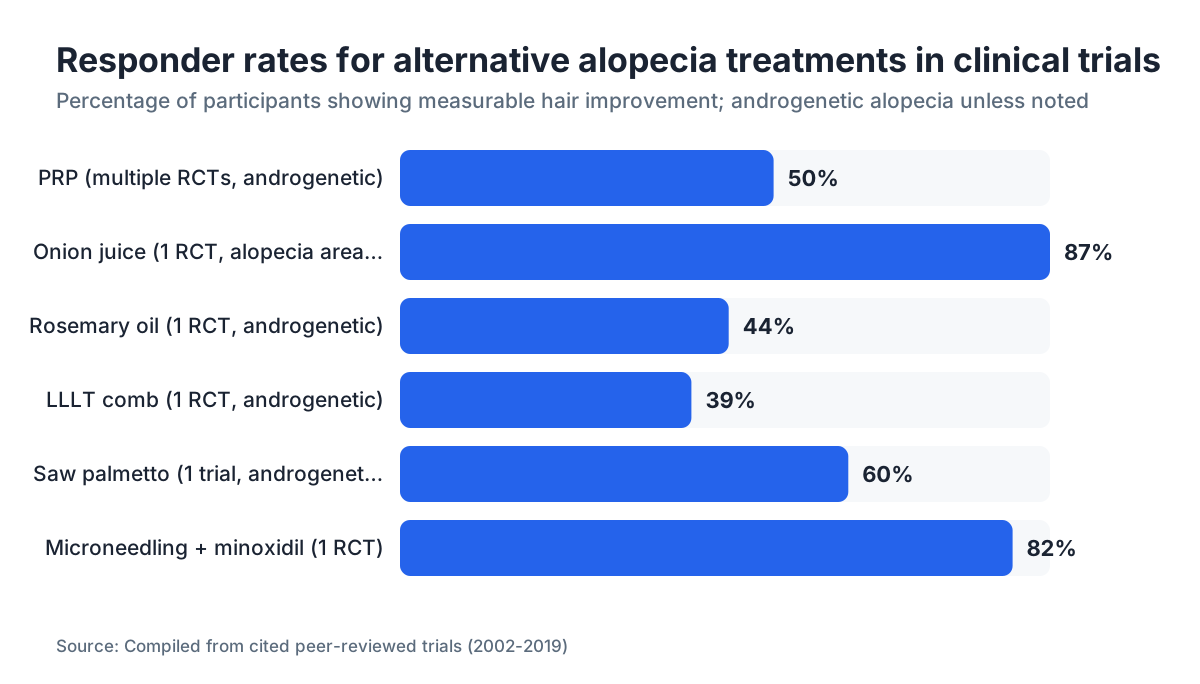
A 2019 systematic review in Dermatologic Surgery examined 19 randomized controlled trials and found PRP increased hair density and thickness compared to placebo across most of them [3]. The responder rate in better-designed trials runs roughly 40 to 60 percent. That means a real chunk of patients see nothing.
For alopecia areata specifically, the evidence is thinner. A 2020 randomized trial found PRP beat intralesional saline on regrowth scores, but the samples are small and results swing hard with disease severity [4].
Cost is the real barrier. A single session runs $500 to $1,500, and most protocols call for three sessions spaced four to six weeks apart, then maintenance every six to twelve months. There is no FDA-approved PRP protocol for hair loss. The FDA regulates the devices used to prepare PRP but not the treatment itself, so quality control varies clinic to clinic [5].
PRP is the best-evidenced non-drug option for androgenetic alopecia in people who cannot or will not use minoxidil or finasteride. It is expensive and it is not guaranteed. If cost matters, trying minoxidil for men first is almost always the smarter starting point.
Does onion juice, rosemary oil, or peppermint oil have any real evidence?
These three come up constantly, so here are straight answers.
Onion juice: a small 2002 study in the Journal of Dermatology found crude onion juice applied to the scalp twice daily produced regrowth in 86.9% of alopecia areata patients after six weeks, versus 13% with tap water [6]. That sounds remarkable. The catch: 38 participants, no blinding, never replicated at scale. The proposed mechanism is sulfur compounds boosting circulation and antioxidant activity. Treat it as a cheap thing to try, not a proven therapy.
Rosemary oil: a 2015 randomized trial in SKINmed compared 2% minoxidil to rosemary oil (Rosmarinus officinalis) applied twice daily for six months in androgenetic alopecia. Both groups showed similar hair count increases by month six. The authors suggested rosemary's carnosic acid may stimulate nerve growth factor, which can promote follicle regeneration [7]. This is one of the better-designed herbal studies out there. Rosemary oil is cheap, low-risk, and has that one respectable trial. Worth a shot, especially if you react to minoxidil side effects.
Peppermint oil: a 2014 study in Toxicological Research using mice found peppermint oil produced thicker dermis and more follicles than minoxidil in a murine model [8]. Mouse studies do not translate cleanly to humans, and there is no adequate human RCT for peppermint oil in alopecia. Interesting, not proven.
All three are cheap and safe when diluted properly in a carrier oil. None replaces a treatment with real trial evidence. Using them while you wait for a dermatologist appointment is reasonable. Leaning on them instead of proven therapy for significant loss is not.
How effective are low-level laser therapy (LLLT) devices at home?
Low-level laser therapy, also called photobiomodulation, uses red light around 650 to 670 nm to stimulate follicle activity. Combs, caps, and helmets carry FDA 510(k) clearance as Class II medical devices for androgenetic alopecia [5].
Clearance means the devices showed safety and some efficacy signal, not that they match approved drugs. A 2014 randomized, double-blind, sham-controlled trial in the American Journal of Clinical Dermatology found a 9-beam LLLT comb increased hair count significantly more than sham over 26 weeks [9]. Several later meta-analyses back a modest positive effect on density.
Modest is the word. LLLT usually produces less regrowth than minoxidil in head-to-head comparisons. It works best as an add-on. Some trial data suggests combining LLLT with minoxidil beats either alone.
Cost runs about $200 for a handheld comb to $900 for a laser cap. You have to use them consistently, typically 20 to 30 minutes every other day, for at least six months before judging results. Stop, and the gains likely fade.
For alopecia areata, the evidence is very limited. LLLT is not a recognized treatment for autoimmune-driven hair loss in major dermatology guidelines.
Evidence comparison: alternative treatments side by side
The table below shows the strongest evidence for each alternative, the type of alopecia it has been studied in, and a realistic cost range.
| Treatment | Best evidence type | Alopecia type studied | Typical cost | Evidence grade |
|---|---|---|---|---|
| PRP | Multiple RCTs | Androgenetic, limited AA | $1,500-$4,500 (course) | B (moderate) |
| Rosemary oil | 1 RCT vs. minoxidil | Androgenetic | <$20/month | C (limited) |
| LLLT devices | Multiple RCTs | Androgenetic | $200-$900 device | B (moderate) |
| Onion juice | 1 small RCT | Alopecia areata | Negligible | C (limited) |
| Peppermint oil | Mouse model only | None in humans | <$15/month | D (preclinical) |
| Microneedling | Several small RCTs | Androgenetic | $200-$600/session | C (limited) |
| Saw palmetto | 2 small trials | Androgenetic | ~$15-$30/month | C (limited) |
| Melatonin topical | 1 RCT | Androgenetic, alopecia areata | $30-$60/month | C (limited) |
Grade A would need large, replicated, double-blind RCTs with long follow-up. No alternative treatment has that yet.
Is microneedling a real option for hair regrowth?
Microneedling (dermarolling) rolls a device of tiny needles across the scalp to create micro-injuries that trigger wound healing and growth factor release. It has drawn serious research attention as an add-on to minoxidil.
A 2013 randomized trial in the International Journal of Trichology compared microneedling plus minoxidil to minoxidil alone in androgenetic alopecia. The combined group had significantly higher hair counts at 12 weeks. The proposed mechanism is that needling turns up Wnt signaling and growth factors like VEGF and EGF that push follicles back into an active growth phase [10].
As a standalone the evidence is weaker. Most dermatologists see microneedling as an enhancer, not a replacement. If you already use minoxidil, adding a 1.0 to 1.5 mm dermaroller once a week is cheap and has trial support for better results.
For alopecia areata on the face, some small studies looked at combining microneedling with topical triamcinolone (a steroid) to improve drug penetration around the beard and brows. Results are preliminary. It is not a standard protocol, but a dermatologist may suggest it off-label.
Do not microneedle inflamed or infected scalp. Start with clean technique and sterile equipment.
What about supplements: biotin, saw palmetto, and others?
Biotin is the most over-marketed supplement in hair loss. The Mayo Clinic notes biotin deficiency is rare in people who eat a normal diet, and there is no evidence extra biotin improves hair growth in people without a deficiency [11]. It is not harmful, just mostly pointless unless you have a documented deficiency. It also interferes with thyroid and cardiac lab tests, which is a real clinical problem.
Saw palmetto blocks 5-alpha-reductase, the same enzyme finasteride targets, though far less potently. Two small randomized trials found saw palmetto improved hair growth scores in mild androgenetic alopecia versus placebo. One 2002 study found 60% of participants showed improved scores on 200 mg of saw palmetto extract plus beta-sitosterol [12]. The evidence is weak but the mechanism is real. If you want a non-prescription DHT blocker, saw palmetto is the most studied option, though it is nowhere near as strong as finasteride.
Deficiencies in iron, vitamin D, zinc, and protein are genuinely tied to hair shedding, particularly telogen effluvium. Correcting a real deficiency helps. Megadosing nutrients you are not short on does nothing for growth. Get a full blood panel before you buy a single bottle. That is the smartest move here.
For a wider look at the supplement evidence, see our piece on hair loss supplements.
Are there alternative treatments specific to alopecia areata?
Alopecia areata is autoimmune, which changes everything. Standard "hair growth" alternatives built around DHT or circulation do almost nothing for it.
Outside conventional steroids, the treatments with the best alopecia areata evidence are:
Contact immunotherapy (DPCP or SADBE): a dermatologist applies a synthetic chemical to the scalp to provoke a controlled immune response that appears to distract the immune system from the follicles. Response rates in some case series hit 50 to 75% in moderate alopecia areata, but this needs a specialist, regular clinic visits, and carries side effects like severe contact dermatitis [2].
Anthralin (dithranol): a topical irritant sometimes used in children with alopecia areata. Results are inconsistent.
JAK inhibitors (baricitinib, ritlecitinib): technically FDA-approved drugs now, not alternatives, but new enough to flag. Baricitinib got FDA approval for severe alopecia areata in 2022, the first systemic treatment approved specifically for the condition. Ritlecitinib followed in 2023 [5].
Facial alopecia areata (eyebrows, beard, eyelashes) is one of the harder sub-problems. Intralesional corticosteroid injections into affected brow or beard areas are the standard approach. There is limited but real evidence for topical bimatoprost (originally an eye pressure drug) improving eyelash regrowth in alopecia areata. A dermatologist who specializes in hair disorders is the right person to map this out.
If you want to understand your specific loss pattern before committing to a path, a structured read of your hairline helps. MyHairline's free AI scan (/scan) gives a preliminary sense of your pattern and Norwood stage from photos.
Does diet or stress management actually change hair loss outcomes?
Diet and stress are the two factors people most want to believe in, because they feel controllable. The honest answer has edges.
Severe physical or emotional stress can trigger telogen effluvium, a diffuse shedding where a large share of hairs shift at once into the resting (telogen) phase. It usually shows up two to four months after the stressor and reverses once the trigger clears. Managing stress helps here, not through any anti-DHT effect but because it removes a real trigger. For the mechanism, see our telogen effluvium article.
Chronic caloric restriction and crash dieting are strongly tied to telogen effluvium. Protein intake below about 0.8 grams per kilogram of body weight impairs the hair growth cycle. These are well-established associations.
For androgenetic alopecia, no dietary change has been shown to reverse or halt the DHT-driven miniaturization. A Mediterranean diet pattern is linked to slower progression in some observational studies, but the effect is small and the studies are not randomized.
Good nutrition and stress control support healthy cycling and can prevent some shedding types. They do not substitute for treatment in pattern baldness or autoimmune alopecia. Think of them as a floor, not a ceiling.
When should you stop trying alternatives and see a dermatologist?
Most dermatology guidance says any unexplained hair loss lasting beyond two to three months deserves a clinical evaluation. The American Academy of Dermatology recommends seeing a board-certified dermatologist if hair loss is rapid, patchy, comes with scalp symptoms like burning or itching, or if you are a woman with significant shedding [2].
Some situations make early evaluation mandatory, not optional. Scarring alopecia (lichen planopilaris, frontal fibrosing alopecia) destroys follicles for good. Every month of delay is follicle loss no alternative treatment can reverse. If your scalp skin looks shiny and smooth, or the hairline recedes with no visible follicle openings, see a dermatologist urgently.
For androgenetic alopecia that has progressed a lot, alternatives may help at the margins, but seriously weigh finasteride and minoxidil, the two treatments with the most evidence. Past a certain point, a hair transplant consultation makes sense for people who want a more permanent structural fix.
Here is a personal benchmark worth writing down: if you have used an alternative treatment consistently for six months and see no measurable change in shedding rate or density, it is not working for you. Move on. Six months is the standard minimum window in clinical trials because the hair cycle itself takes that long to show a meaningful response.
For tracking before and after any treatment, MyHairline (/scan) offers a free AI-based analysis to document baseline patterns and changes over time.
What are the risks of alternative treatments people overlook?
Most topical alternatives are low-risk when used correctly. "Natural" does not mean risk-free.
Essential oils including rosemary, peppermint, and tea tree can cause allergic contact dermatitis, especially applied undiluted. Dilute to 2 to 3% in a carrier oil (jojoba or coconut) and patch-test first.
Saw palmetto has reported interactions with anticoagulants like warfarin. Anyone on blood thinners should check with their physician first.
Biotin above 5,000 mcg can falsely lower troponin and TSH readings on standard blood tests, which matters if you are being monitored for cardiac or thyroid conditions. The FDA issued a safety communication on this in 2017 [5].
PRP carries the usual injection risks: infection, bruising, and temporary worsening of shedding right after treatment (a normal inflammatory response). Serious adverse events are rare when a trained clinician does it in a clinical setting.
Microneedling on an inflamed or infected scalp can spread infection. Anyone with active scalp psoriasis, seborrheic dermatitis, or open lesions should skip it.
None of these are reasons to avoid everything. They are reasons to be honest about what you are using and to tell your doctor.
Sources
- American Academy of Dermatology, Hair Loss Overview
- American Academy of Dermatology, Alopecia Areata Diagnosis and Treatment
- National Center for Biotechnology Information (NCBI/PubMed), 'Platelet-Rich Plasma in Androgenetic Alopecia: A Systematic Review' (Dermatologic Surgery, 2019)
- Journal of Dermatological Treatment, 'Platelet-rich plasma in alopecia areata: a randomized controlled trial' (2020)
- U.S. Food and Drug Administration, Medical Devices and Drugs for Hair Loss
- Journal of Dermatology, 'Onion juice (Allium cepa L.), a new topical treatment for alopecia areata' (2002)
- National Library of Medicine (PubMed), 'Rosemary oil vs minoxidil 2% for the treatment of androgenetic alopecia: a randomized comparative trial' (SKINmed, 2015)
- Toxicological Research, 'Peppermint Oil Promotes Hair Growth without Toxic Signs' (2014)
- American Journal of Clinical Dermatology, 'A Randomized, Double-Blind Clinical Trial of Low-Level Laser Therapy for the Treatment of Androgenetic Alopecia' (2014)
- International Journal of Trichology, 'A Randomized Evaluator Blinded Study of Effect of Microneedling in Androgenetic Alopecia: A Pilot Study' (2013)
- Mayo Clinic, Biotin
- Journal of Alternative and Complementary Medicine, 'A double-blind, placebo-controlled study evaluating the efficacy of an oral supplement in women with self-perceived thinning hair' (2002)