
TL;DR: Biotin (vitamin B7) only causes hair loss when you're genuinely deficient, which is rare. Supplementing when you're not deficient has no meaningful clinical evidence behind it. Most people spending money on biotin for hair loss are wasting it. True deficiency is treatable and resolves quickly, but androgenetic alopecia needs proven treatments like minoxidil or finasteride.
What is biotin and what does it do for hair?
Biotin is a water-soluble B vitamin, also called vitamin B7 or vitamin H. Your body uses it to convert food into energy, and it acts as a cofactor for enzymes involved in fat, carbohydrate, and protein metabolism. Hair follicles are among the most metabolically active cells in the body, so they depend on those enzymatic processes working properly.
The keratin connection is real but frequently oversold. Keratin is the structural protein hair is made of, and biotin supports the production of amino acids that feed into keratin synthesis. That fact gets lifted out of context constantly in supplement marketing, making biotin sound like direct hair fertilizer. It isn't. It's more like one component in a large metabolic chain, and that chain only breaks down if biotin is genuinely absent.
Your body doesn't store biotin in large amounts, but true deficiency is uncommon in people eating a varied diet. Eggs, organ meats, fish, seeds, and most whole grains contain meaningful amounts [1]. The daily adequate intake is 30 micrograms (mcg) for adults, according to the National Institutes of Health Office of Dietary Supplements [1]. Most people hit that easily through food.
So the basic biology is this: biotin matters for hair. Deficiency breaks things. Normal levels give you no extra benefit from adding more.
Does biotin help with hair loss if you're not deficient?
This is the question the supplement industry hopes you don't ask clearly. The honest answer is: probably not, and the evidence for it is thin.
A 2017 review published in Skin Appendage Disorders looked at every published case report and trial on biotin supplementation for hair and nail disorders [2]. The authors found 18 reported cases where biotin supplementation was associated with hair improvement. Every single one of those cases involved either confirmed biotin deficiency or a genetic disorder of biotin metabolism. Not one solid randomized controlled trial demonstrated that biotin supplementation grows hair in people with normal biotin levels.
The review concluded that "there is no evidence to suggest supplementation in those without an underlying pathology." [2] That's a clinical way of saying: if your biotin is fine, taking more of it won't do anything for your hair.
The FDA does not approve biotin as a treatment for hair loss [3]. It's sold as a dietary supplement under DSHEA, which means manufacturers don't need to prove efficacy before putting it on shelves. The claims you see on packaging, things like "supports healthy hair," are structure-function claims that the FDA allows without clinical proof, as long as they don't claim to treat a disease [3].
For most people losing hair, the cause is androgenetic alopecia (pattern hair loss driven by DHT sensitivity), telogen effluvium, or other conditions that biotin has no mechanism to address. Spending $30 a month on 10,000 mcg biotin gummies when your hair is falling out from a receding hairline is genuinely a waste of money, and I'd say that plainly.
What does biotin deficiency actually look like?
Real biotin deficiency is rare, but it does happen, and when it does, it causes hair loss that responds well to supplementation. Knowing the signs is worthwhile.
Symptoms of biotin deficiency include thinning hair or diffuse hair loss across the scalp, brittle nails, a scaly red rash (particularly around the mouth, nose, and eyes), neurological symptoms like fatigue and depression, and conjunctivitis [1]. The hair loss pattern is diffuse, meaning spread across the whole scalp rather than concentrated at the hairline or crown.
People at real risk of deficiency include those with biotinidase deficiency (a rare inherited enzyme disorder), people who eat large amounts of raw egg whites regularly (raw egg white contains avidin, a protein that binds biotin and blocks absorption [1]), people on long-term anticonvulsant medications like valproic acid, individuals with Crohn's disease or other malabsorption conditions, and heavy smokers. Pregnant women have modestly higher biotin requirements.
If you suspect deficiency based on symptoms, get a plasma biotin level tested before spending money on supplements. A serum biotin below approximately 100 ng/L suggests deficiency, though laboratory reference ranges vary [1]. This costs less than a month of supplements and gives you an actual answer.
Does biotin help with hair loss in women specifically?
Women's hair loss gets marketed to heavily, and biotin is one of the most pushed supplements in that space. The honest picture isn't different from men: biotin helps if you're deficient, and doesn't help if you're not.
That said, some of the risk factors for deficiency skew toward women. Pregnancy increases biotin turnover, and one small NIH-funded study found that a substantial proportion of healthy pregnant women had marginal biotin deficiency as measured by urinary biotin excretion and 3-hydroxyisovaleric acid levels [4]. Postpartum hair shedding (a form of telogen effluvium) is very common, and while some of it may overlap with nutritional depletion from pregnancy and breastfeeding, the evidence that biotin supplementation reverses it is still limited.
Female pattern hair loss (androgenetic alopecia in women) is driven by the same hormonal mechanisms as in men, just with different presentation. It typically shows as diffuse thinning at the part line and top of the scalp rather than a receding hairline. Biotin addresses neither the androgen sensitivity nor the follicle miniaturization behind it. If what causes hair loss for a particular woman is female pattern hair loss, minoxidil has far more evidence behind it than biotin does.
One multi-ingredient supplement study often cited in marketing is a 2015 trial in the Journal of Clinical and Aesthetic Dermatology that looked at a marine protein supplement containing multiple nutrients, not biotin alone [5]. Attributing its results to biotin is a selective reading of the data.
For women, the takeaway is simple: if you're postpartum, eating poorly, or have any of the risk factors above, check your levels. For straightforward female pattern hair loss, the evidence points elsewhere.
How much biotin do people take, and is high-dose biotin safe?
Walk into any pharmacy and you'll find biotin supplements ranging from 1,000 mcg to 10,000 mcg. That upper end is roughly 333 times the adequate intake of 30 mcg [1]. The NIH has not established a tolerable upper intake level for biotin because no adverse effects from high oral doses have been documented in the general population [1].
That's not quite a clean safety pass, though. There's a well-documented problem with high-dose biotin and laboratory tests.
The FDA issued a safety communication in 2017 and updated it in 2019 warning that biotin can significantly interfere with certain lab tests, causing falsely high or falsely low results [3]. The interference affects tests that use biotin-streptavidin technology, including thyroid hormone tests (T3, T4, TSH), troponin (a heart attack marker), hormone panels, and vitamin D tests. The FDA communication noted at least one death linked to a falsely low troponin result in a patient taking high-dose biotin supplements [3].
The FDA guidance states: "Biotin in patient samples can cause falsely high or falsely low results, depending on the test." [3]
If you're taking high-dose biotin and need bloodwork, tell your doctor and ideally stop the supplement for at least 48 to 72 hours beforehand. Many clinicians now ask about biotin supplementation as standard practice before ordering thyroid panels.
At the 30 mcg level found in standard multivitamins, there's minimal interference risk. The problem sits in the 5,000 to 10,000 mcg range that hair supplement products commonly use.
What does the clinical research actually show?
There are no large, well-controlled randomized trials showing that biotin supplementation grows hair in people without deficiency or a biotin metabolism disorder. That's the short version.
The most cited piece of evidence is the 2017 Skin Appendage Disorders review [2], which gathered every available case report and small study. The 18 cases where hair responded to biotin were all deficiency or rare metabolic disorder cases. The authors noted that biotin's popularity for hair growth far outpaces any supporting evidence.
A 2019 review in Dermatology Practical and Conceptual examined biotin and several other supplements marketed for hair loss [6]. It concluded that biotin deficiency is rare in healthy adults, that evidence for supplementation in non-deficient individuals is lacking, and that other micronutrient deficiencies (particularly iron and vitamin D) have stronger evidence linking them to hair loss than biotin does.
Iron deficiency is worth noting separately. It's more common than biotin deficiency, especially in premenopausal women, and has a more credible mechanistic link to diffuse hair shedding. A ferritin below roughly 30 ng/mL is associated with increased hair shedding in some studies, though the exact threshold is debated [6]. If you're a woman with diffuse hair loss, getting ferritin and iron studies checked before buying any supplement makes more sense than defaulting to biotin.
Nobody has good long-term data on whether consistent biotin supplementation in the normal-to-high range produces any hair benefit over years. The closest thing to evidence is the absence of any mechanism by which it would.
How does biotin compare to proven hair loss treatments?
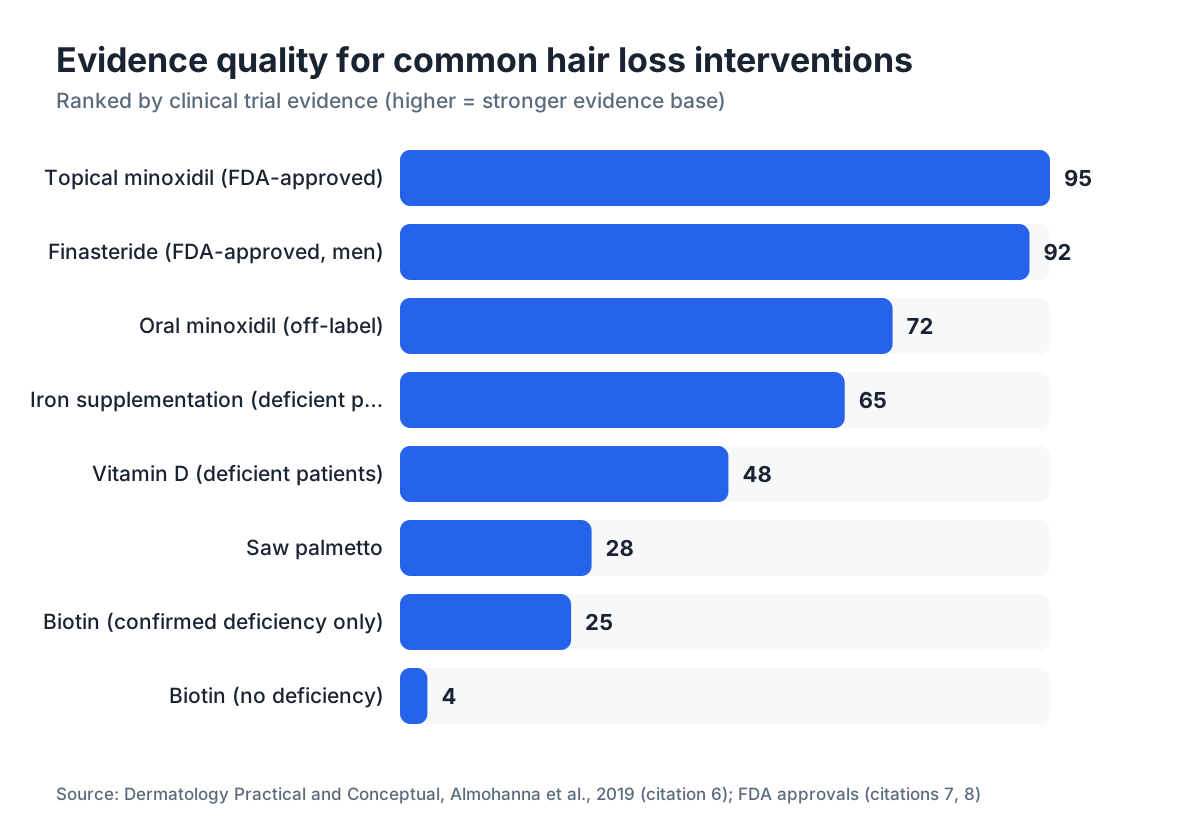
If the goal is actually stopping or reversing hair loss, the comparison is stark. Biotin doesn't belong in the same conversation as minoxidil or finasteride unless you're genuinely deficient.
| Treatment | Evidence level | Typical effect | FDA status |
|---|---|---|---|
| Minoxidil (topical) | Multiple RCTs, decades of data | Slows loss, modest regrowth | FDA-approved |
| Finasteride | Multiple RCTs, Phase III trials | Stops loss, regrowth in ~65% of men | FDA-approved |
| Oral minoxidil | Growing RCT evidence | Effective at low doses (0.25-2.5 mg) | Off-label |
| Biotin (in deficiency) | Case reports, no RCTs | Resolves deficiency-related loss | Not approved |
| Biotin (no deficiency) | No credible evidence | No demonstrated effect | Not approved |
| Hair transplant | Established surgical procedure | Permanent in suitable candidates | Surgical procedure |
Minoxidil has been FDA-approved for hair loss since 1988 for men and 1991 for women [7]. Finasteride has been FDA-approved for male pattern hair loss since 1997 [8]. Both have genuine clinical trial evidence behind them. Biotin has neither the approval nor the trials.
This doesn't mean biotin is useless in every context. If you're deficient, it's exactly what you need. But as a standalone strategy for pattern hair loss, it does nothing. It's also worth knowing that minoxidil for men has a real side effect profile worth understanding before you start, unlike biotin.
Not sure where your hair loss is coming from? Get a proper assessment before spending anything. A free AI-powered hair analysis at MyHairline (/scan) can help identify your pattern and what stage you're at, which points you toward treatments that actually have evidence.
Are there hair loss supplements with better evidence than biotin?
A few nutrients have more credible links to hair shedding than biotin does, though none of them are magic bullets either.
Iron is the strongest candidate for women. Low ferritin is associated with diffuse shedding, and treating iron deficiency anemia does improve hair loss in affected patients. The relationship is better established in women with heavy menstrual cycles [6].
Vitamin D deficiency has been associated with alopecia areata and some forms of diffuse hair loss in observational studies. The mechanistic story involves vitamin D receptors in hair follicles. Evidence is suggestive but not definitive [6].
Zinc deficiency causes hair loss similar to biotin deficiency. It's also uncommon in well-nourished adults but worth checking in people with restricted diets or malabsorption conditions.
Saw palmetto, as a DHT blocker, has some small trial evidence. A 2002 study found modest benefit in men with androgenetic alopecia, though the study was small and the effect much weaker than finasteride [9].
Nutriceutical blends marketed for hair, like Nutrafol and Viviscal, have funded their own small trials. Results are generally positive in those company-sponsored studies, which is always worth noting when interpreting the data. For a broader look at what hair loss supplements do and don't do, read the evidence on each ingredient separately.
The honest summary: if you're eating well and not deficient in anything specific, no supplement is likely to meaningfully change your hair loss trajectory. The things that do work, minoxidil, finasteride, and in the right candidates a hair transplant, work through different mechanisms entirely.
Can biotin cause any side effects or problems?
At doses under a few thousand mcg, biotin is generally well tolerated. There are no established toxic effects from oral biotin supplementation at the doses found in commercial hair products [1].
The real concern is diagnostic interference, covered earlier. But there are a couple of other things worth knowing.
Some people report acne breakouts with high-dose biotin supplements, particularly in the 5,000 to 10,000 mcg range. The mechanism isn't well understood, and this is mostly based on anecdotal reports and one small observational paper. If you start high-dose biotin and notice new or worsening breakouts, that's a plausible connection.
Biotin can also compete for absorption with other B vitamins, particularly pantothenic acid (B5), when taken in very large amounts. This is more theoretical than clinically documented at typical supplement doses.
For the lab interference issue specifically: the FDA warning covers a real range of affected tests, and the potential consequences are serious enough that anyone taking biotin above the multivitamin level should disclose it to their physician before any bloodwork.
What should you actually do if your hair is falling out?
Start by figuring out what's actually happening, because that determines what will and won't help.
Diffuse shedding across the scalp, especially sudden onset after illness, stress, crash dieting, or childbirth, points toward telogen effluvium. This is largely self-resolving once the trigger is gone. Nutritional deficiencies (iron, zinc, protein, vitamin D) can extend it, so bloodwork is useful here.
A receding hairline at the temples, thinning crown, or widening part line typically means androgenetic alopecia. This is where minoxidil and finasteride have decades of evidence. A receding hairline doesn't fix itself, and biotin won't touch it.
Patchy circular bald spots suggest alopecia areata, an autoimmune condition that needs dermatologist input, not supplements.
Scaling, redness, or significant itch alongside shedding warrants a dermatology appointment regardless of what supplements you're considering.
For most people, the practical sequence is: identify the pattern, rule out correctable deficiencies with a basic panel (ferritin, TSH, vitamin D, CBC), and then choose a treatment with actual evidence for the specific cause. Biotin fits into step two only if your levels are actually low. For everything else, look at treatments with real clinical backing.
MyHairline's free AI scan (/scan) can help you identify your hair loss pattern before you spend money on anything, which at least tells you which category of cause you're dealing with.
The bottom line on biotin for hair loss
Biotin deficiency causes hair loss. Correcting that deficiency reverses it. That's well established.
For everyone else, which is most people reading this, there's no meaningful clinical evidence that biotin supplements grow hair or slow hair loss. The supplement industry has built a large business on the legitimate biology of biotin's role in keratin metabolism without the clinical trials to show that extra biotin translates to extra hair.
The 2017 Skin Appendage Disorders review [2] remains the most thorough summary of the evidence, and its conclusion is clear: no evidence supports supplementation without deficiency or an underlying metabolic disorder.
If your hair is falling out and you want to actually do something about it, get your ferritin, thyroid, and vitamin D checked. Understand whether you have pattern hair loss or shedding. Look at minoxidil or finasteride if the pattern fits, and understand finasteride and minoxidil together if you want to know what combination therapy looks like. Consider a dermatology consult if the picture is unclear.
Biotin at 30 mcg in a multivitamin is fine and cheap. Biotin at 10,000 mcg for hair growth, without a deficiency diagnosis, is expensive false hope.
Sources
- NIH Office of Dietary Supplements, Biotin Fact Sheet for Health Professionals
- Skin Appendage Disorders, 2017: Biotin for the treatment of nail disease and hair disease (Patel et al.)
- U.S. Food and Drug Administration, Safety Communication on Biotin Interference with Lab Tests
- American Journal of Clinical Nutrition: Marginal biotin deficiency in healthy pregnancy (Mock et al., 2002)
- Journal of Clinical and Aesthetic Dermatology, 2015: Marine protein supplement trial for hair growth
- Dermatology Practical and Conceptual: The role of vitamins and minerals in hair loss (Almohanna et al., 2019)
- FDA Drug Database: Minoxidil approval history
- FDA Drug Database: Finasteride (Propecia) approval
- Journal of Alternative and Complementary Medicine: Saw palmetto vs finasteride for androgenetic alopecia (Prager et al., 2002)
- American Academy of Dermatology: Hair loss diagnosis and treatment overview