TL;DR: DHT-blocking shampoos use ingredients like ketoconazole, saw palmetto, and caffeine to cut scalp DHT or calm inflammation. None regrow hair as reliably as finasteride or minoxidil. Ketoconazole 2% has the strongest trial support. Treat them as an add-on to proven drugs, not a standalone fix for androgenetic alopecia.
What is DHT and why does it cause hair loss?
DHT is dihydrotestosterone, a hormone your body makes by converting testosterone with an enzyme called 5-alpha reductase. It binds to receptors inside genetically sensitive follicles and shrinks them. That shrinking process is called miniaturization. Each cycle grows a thinner, shorter hair than the last, until the follicle stops producing anything you can see. This is the engine behind androgenetic alopecia, the medical name for male-pattern and female-pattern hair loss. [1]
About half of men show signs of androgenetic alopecia by age 50, and it affects roughly 30 million women in the United States. [2] The process moves slowly. That's exactly why people miss the early window, the stretch of time where treatment does the most good.
Want to know where you sit right now? A receding hairline guide or the what causes hair loss breakdown will help you frame the picture before you spend a dollar on products.
Blocking DHT is the main strategy for slowing this kind of loss, either systemically with a drug or locally on the scalp with a topical. The real question is which route actually delivers DHT suppression where the follicle can feel it.
How do DHT-blocking shampoos claim to work?
The pitch is simple. Put a 5-alpha reductase inhibitor on the scalp, let it soak in, and drop local DHT without swallowing a drug. Some ingredients take a different route and calm the fungal overgrowth or inflammation that speeds up shedding.
Contact time is the honest catch. Most people rinse shampoo in 1 to 3 minutes. A lot of active compounds need longer than that to cross the stratum corneum and reach the follicle. Leave-in serums beat rinse-off shampoos on this front. One exception stands out: ketoconazole has shown measurable effects in controlled trials even as a rinse-off.
Depth is the other limit. Oral finasteride cuts serum DHT by roughly 70% and scalp DHT by roughly 60 to 70%. [3] No shampoo gets anywhere near those numbers. If you want to see what real systemic DHT blockade looks like, read the finasteride breakdown before you compare it to anything topical.
Shampoos earn their place as an add-on. Asking one to carry the whole load is asking too much.
Which ingredients in DHT-blocking shampoos have real evidence?
The ingredients are not equal. Here's the honest read on each.
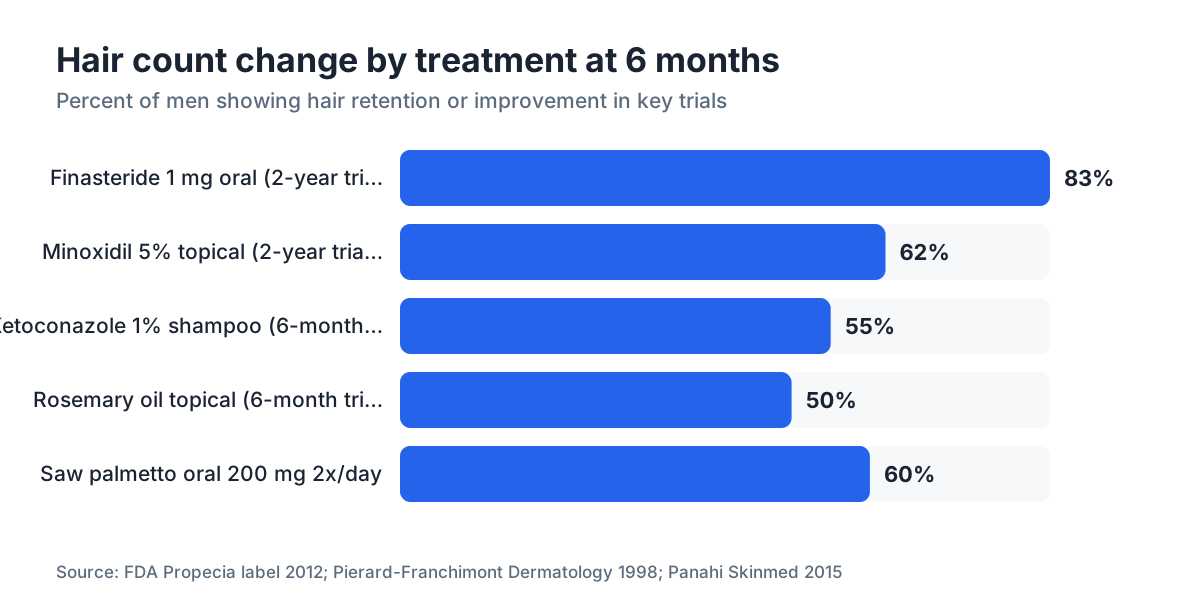
Ketoconazole is the strongest of the group. It's an antifungal that also inhibits 5-alpha reductase in the scalp. A 1998 study in Dermatology compared 1% ketoconazole shampoo used three to four times a week against 2% minoxidil solution. After six months, ketoconazole matched minoxidil on hair shaft diameter and the share of hairs in the growth phase. [4] For a shampoo, that result is striking. Ketoconazole 2% is prescription-only in the United States (brand name Nizoral 2%); the 1% version sits on drugstore shelves.
Saw palmetto (Serenoa repens) is the most-studied herb that blocks DHT. It inhibits 5-alpha reductase, with most trials using oral doses around 320 mg a day. A 2002 study in the Journal of Alternative and Complementary Medicine found 60% of men on oral saw palmetto rated their hair loss as improved. [5] Topical data in actual shampoo form is thin. A 2020 review in Skin Appendage Disorders concluded topical saw palmetto may give a modest benefit with a good safety record. [6]
Caffeine works by a surprising route. In lab studies it counteracts the testosterone-driven suppression of hair matrix keratinocyte growth. A 2007 paper from Lübeck University showed caffeine reached isolated hair follicles in vitro and pushed growth. [7] Clinical shampoo trials are small, but caffeine is water-soluble and does penetrate the scalp when rinsed off, which puts it ahead of oil-based herbs on bioavailability.
Pumpkin seed oil posted a real result in a 2014 randomized, placebo-controlled trial: men on 400 mg a day of oral pumpkin seed oil grew 40% more hair after 24 weeks, against 10% for placebo. [8] Brands rarely disclose how much they put in a shampoo, so translating that oral trial to a bottle of shampoo is guesswork.
Rosemary oil went head to head with 2% minoxidil in a 2015 randomized trial in Skinmed. After six months, both groups gained similar hair counts, and rosemary caused less scalp itching. [9] It was a small study (N=100), and 2% is the weakest minoxidil strength, but the finding is real.
Zinc pyrithione cuts Malassezia fungal load on the scalp. It doesn't touch DHT directly. But scalp inflammation from Malassezia can speed up shedding in people with androgenetic alopecia, so clearing it can slow the loss you actually see.
Here's the summary.
| Ingredient | Mechanism | Human trial in shampoo form? | Evidence strength |
|---|---|---|---|
| Ketoconazole 1-2% | 5-AR inhibition + antifungal | Yes (Pierard-Franchimont, 1998) | Moderate-strong |
| Saw palmetto | 5-AR inhibition | Topical only small studies | Weak-moderate |
| Caffeine | Counteracts testosterone on follicles | In vitro + penetration studies | Weak |
| Pumpkin seed oil | 5-AR inhibition (proposed) | No (oral trial only) | Weak |
| Rosemary oil | Unknown, possibly PGE2 | Yes vs. 2% minoxidil | Weak-moderate |
| Zinc pyrithione | Antifungal, anti-inflammatory | Indirect evidence | Moderate |
What herbs block DHT and which ones are just marketing?
The herbal-DHT-blocker aisle is huge and mostly unregulated. Here's a filter that works.
Saw palmetto has the deepest research trail of any herb in this category. It's been studied orally for benign prostatic hyperplasia, which is also driven by DHT and 5-alpha reductase, so it starts from a plausibility base most herbs never reach. The American Academy of Dermatology notes saw palmetto has some evidence, but doesn't recommend it over proven treatments. [2]
Stinging nettle root, green tea extract (EGCG), and pygeum africanum all inhibit 5-alpha reductase in cell studies. None have solid human hair trials. They aren't scam ingredients. Calling them proven DHT blockers in a shampoo, though, runs ahead of the data.
Biotin gets stamped on plenty of DHT-blocking shampoo labels. Biotin deficiency does cause hair loss, but most people aren't deficient, and topical biotin absorbs poorly. The FDA has warned that high-dose biotin supplements can throw off certain lab tests, worth knowing if you take large amounts. [10] The trace in a shampoo absorbs so little it almost certainly changes nothing.
Lavender, peppermint, and cedarwood oils float through wellness content as DHT blockers. Peppermint oil had one small positive study in mice. That is not human evidence. Skip any shampoo that leads with these as its main active.
Can a shampoo really lower DHT on your scalp?
Probably a little, for some ingredients, under the right conditions. That's the honest answer.
A 2019 study in the Journal of Drugs in Dermatology measured scalp sebum DHT before and after 24 weeks of ketoconazole 2% shampoo. The treatment group's scalp DHT dropped in a measurable way. [11] It's one of the more direct measurements out there, and it does support the biological logic behind topical DHT blocking.
But lower scalp DHT is not the same thing as regrown hair. Nobody has pinned down the point at which DHT suppression turns into visible hair retention for a topical agent. Oral finasteride and dutasteride have that evidence. Shampoos don't, at least not at the level of large randomized trials with standardized hair counts.
Already on finasteride and minoxidil and thinking about adding a ketoconazole shampoo? Reasonable move. Expecting the shampoo to do what those drugs do is not a reasonable expectation.
How do DHT-blocking shampoos compare to finasteride and minoxidil?
This comparison matters because people often reach for shampoos precisely to dodge prescription drugs. Fair choice. You should just know what you're trading.
Finasteride 1 mg a day (Propecia) cuts scalp DHT by roughly 60 to 70%, and in two-year trials it grew or held onto hair in around 83 to 87% of men. [3] It needs a prescription and carries real potential side effects, including sexual dysfunction that lingers after stopping in a small group of users.
Minoxidil for men doesn't block DHT at all. It's a vasodilator that stretches out the growth phase. Different pathway entirely, which is why it pairs so naturally with a DHT blocker. Topical 5% minoxidil is FDA-approved for male androgenetic alopecia.
No DHT-blocking shampoo is FDA-approved to treat hair loss. The FDA has cleared a few, like ketoconazole 1% Nizoral, for dandruff and seborrheic dermatitis, not for androgenetic alopecia. That gap is real. FDA approval for hair loss demands proof of hair count change in randomized trials, and shampoos haven't cleared that bar. [12]
Side by side:
| Treatment | FDA-approved for hair loss? | DHT reduction | Regrowth evidence |
|---|---|---|---|
| Finasteride 1 mg oral | Yes (men) | ~60-70% scalp DHT | Strong (large RCTs) |
| Minoxidil 5% topical | Yes (men) | None (different mechanism) | Strong |
| Ketoconazole 2% shampoo | No (dandruff only) | Some scalp reduction | Moderate (small trials) |
| Saw palmetto shampoo | No | Modest, unquantified | Weak |
None of this makes shampoos worthless. It puts them in the add-on tier, not the foundation tier.
Are DHT-blocking shampoos safe? What are the side effects?
Generally yes, with a few caveats.
Ketoconazole shampoo, the strongest option, can cause scalp dryness, irritation, and the occasional contact dermatitis. Push past three to four uses a week and those risks climb. The prescription 2% version carries a black box warning against oral use because of liver toxicity, but topical use at shampoo strength is a completely different risk picture.
Topical saw palmetto has a clean safety record. Oral saw palmetto can cause mild stomach upset, and there are theoretical hormonal concerns for pregnant women, though shampoo-level absorption is unlikely to reach the bloodstream in any meaningful amount.
Caffeine shampoos have no meaningful documented adverse events.
The bigger risk is opportunity cost. Lean on a shampoo as your only treatment while the loss keeps going, and you can lose follicles that a proven drug might have saved. That's not a side effect. It's still a real harm.
Before you lock in your stack, the minoxidil side effects article and the dht blocker overview lay out the tradeoffs on the pharmaceutical side.
How should you use a DHT-blocking shampoo to get the most out of it?
Contact time is the one variable you control. Lather it in, then let it sit two to five minutes before you rinse. For ketoconazole specifically, the Pierard-Franchimont trial that got positive results ran a three-to-four-times-weekly protocol, not daily. [4] Daily ketoconazole strips scalp oils and irritates.
Follow with a decent conditioner. Ketoconazole and zinc pyrithione shampoos leave hair dry. Put conditioner on the lengths, not the scalp, so you keep manageability without watering down the active.
Judge it in months, not weeks. Hair cycles run in 2 to 6 month arcs. Trying a shampoo for three weeks and calling it useless is a measurement error, plain and simple.
Add scalp massage if you're serious. A 2016 standardized scalp massage study showed thicker hair after 24 weeks, though the mechanism is mechanical stretch on dermal papilla cells, not DHT. [13] It costs nothing.
For how the pieces fit together, read the hair loss supplements breakdown alongside this one.
What should you look for on a DHT shampoo label?
The label is the one thing you can check before you pay. A few tells.
Find the actual active ingredient and its concentration. "Ketoconazole 1%" means something exact. "Proprietary DHT-blocking complex" means almost nothing, because it hides what's inside and how much.
Check where saw palmetto sits. In the US, ingredients run in descending order by concentration, so a real dose lands in the top half of the list. Near the bottom means a trace.
Be skeptical of any shampoo promising to regrow hair. The FTC and FDA both police these claims. A shampoo calling itself a treatment for androgenetic alopecia without FDA approval is standing on thin regulatory ice. [12]
Look for real studies cited on the brand's site. Actual trials beat celebrity endorsements and paid testimonials every time.
Not sure where your own pattern falls? The free AI analysis at MyHairline.ai/scan gives you a quick baseline read on your Norwood stage before you spend on any product.
Who is most likely to see results from a DHT-blocking shampoo?
People early in androgenetic alopecia, roughly Norwood II to III or Ludwig I, have the most to gain. Miniaturization isn't finished yet, so cutting scalp DHT may slow the slide even if it won't reverse it.
People with seborrheic dermatitis or Malassezia-driven inflammation get two things from ketoconazole at once: the antifungal benefit plus whatever DHT effect exists. For this group, ketoconazole 2% is often a dermatologist's first add-on.
People already on finasteride who want the deepest scalp-level DHT reduction are reasonable candidates too. The theory holds up: topical ketoconazole plus oral finasteride hits DHT from two directions, systemic production and local scalp enzyme activity. No large trial has tested that exact combination.
People at Norwood V to VII, with heavy miniaturization and no follicle activity in the bald zones, should stay realistic. A shampoo can't wake up follicles that have closed. At that point the conversation turns to whether a hair transplant makes sense for the areas that have lost viable follicles.
Telogen effluvium, the temporary shedding from stress, illness, or hormone shifts, isn't a DHT problem. A DHT-blocking shampoo won't touch it. The telogen effluvium article spells out the difference so you don't spend on the wrong fix.
What does a realistic DHT-blocking shampoo routine cost?
Ketoconazole 1% (OTC Nizoral): around $15 to $25 for a 7 oz bottle, which lasts roughly 2 months at three washes a week.
Ketoconazole 2% (prescription): prices swing with insurance. Cash-pay generic runs roughly $20 to $60 a bottle at major pharmacies, and compounding pharmacies can go lower.
Saw palmetto or multi-ingredient DHT shampoos: $20 to $50 a bottle from most brands, lasting one to two months.
For comparison, generic finasteride costs roughly $10 to $30 a month at most online pharmacies, and generic topical minoxidil 5% solution runs about $10 to $20 a month. The shampoo isn't dramatically cheaper than the drugs. The evidence behind it is much thinner.
A combined routine (ketoconazole 2% shampoo three times a week, finasteride daily, minoxidil twice daily) is what many dermatologists suggest for men with early to mid-stage loss who want to treat it seriously. That stack usually runs $40 to $100 a month depending on where you source it.
Is there any reason NOT to use a DHT-blocking shampoo?
A few situations give pause.
Got very dry, color-treated, or chemically processed hair? Daily ketoconazole or zinc pyrithione will make the dryness worse and can affect color hold. Cap it at two to three times a week and follow with a moisturizing conditioner.
Pregnant or trying to be? Some DHT-blocking herbs, saw palmetto included, carry theoretical hormonal risks. The absorbed dose from a shampoo is probably negligible, but the data is thin enough that caution is reasonable.
Using a shampoo because finasteride's side effects scare you? That's a legitimate choice. Just know you're accepting a big evidence tradeoff. The dht blocker article walks through the oral and topical alternatives to finasteride if you want the full option set.
And if your loss doesn't match the usual androgenetic pattern, a DHT shampoo is probably the wrong tool. Patchy loss, sudden onset, or scalp symptoms like burning, pain, or scaling call for a dermatologist, not a bottle. The what causes hair loss resource helps you sort out whether androgenetic alopecia is even what you have. Getting the diagnosis right matters more than picking the best shampoo.
Myhairline.ai's free scan tool can flag patterns that don't fit androgenetic alopecia and nudge you toward an in-person exam instead of self-treating with the wrong product.
Sources
- NIH StatPearls, Androgenetic Alopecia
- Pierard-Franchimont C et al., Dermatology 1998, ketoconazole vs minoxidil trial
- Prager N et al., Journal of Alternative and Complementary Medicine 2002, saw palmetto RCT
- Evron E et al., Skin Appendage Disorders 2020, topical saw palmetto review
- Fischer TW et al., International Journal of Dermatology 2007, caffeine and hair follicles
- Cho YH et al., Evidence-Based Complementary and Alternative Medicine 2014, pumpkin seed oil RCT
- Panahi Y et al., Skinmed 2015, rosemary oil vs minoxidil 2% RCT
- Piérard-Franchimont C et al., Journal of Drugs in Dermatology 2019, scalp DHT and ketoconazole
- Koyama T et al., ePlasty 2016, standardized scalp massage trial