

TL;DR: DHEA is an androgen precursor. Taken as a supplement, it raises testosterone and DHT in women, which can trigger or speed up androgenetic alopecia. Women who already have high androgens or a genetic sensitivity to DHT face the biggest risk. Most dermatologists don't recommend DHEA for hair concerns in women, and several safer, better-studied options exist.
What is DHEA and why do women take it?
DHEA stands for dehydroepiandrosterone. Your adrenal glands make most of it, and by circulating concentration it's the most abundant steroid hormone in the human body [1]. Your body turns DHEA into both estrogen and testosterone, which is exactly why it gets sold as a broad anti-aging hormone.
Women take it for libido, energy, mood, bone density, and menopause relief. DHEA sold over the counter in the United States is a dietary supplement under the Dietary Supplement Health and Education Act of 1994, so it skips the pre-market safety review a prescription drug goes through [2]. You can buy 25 mg to 100 mg capsules at any vitamin shop, no prescription needed.
There is one FDA-approved prescription form: prasterone (Intrarosa), a vaginal insert approved for dyspareunia (pain during sex) due to menopause. That's a localized, low-dose product. The oral capsules on retail shelves are a different animal, often dosed far above what your body makes on its own.
Natural DHEA production peaks in your mid-20s and falls steadily after that. By age 70, most people sit at roughly 20 to 30% of their peak levels [1]. That decline is why the supplement industry markets DHEA so hard to women over 40, promising to bring youthful hormones back. The appeal is real. So are the risks, and hair is one of the first places they show up.
How does DHEA actually cause hair loss in women?
The pathway is short and direct. When you swallow oral DHEA, your liver and peripheral tissues convert part of it into testosterone. An enzyme called 5-alpha reductase then converts some of that testosterone into dihydrotestosterone, or DHT [3]. DHT is the androgen most responsible for androgenetic alopecia, the pattern hair loss that hits both men and women.
In women whose follicles are sensitive to DHT (a genetic trait), rising DHT shrinks follicles over time. Each growth cycle makes a thinner, shorter hair until the follicle stops producing a visible strand at all. That's why androgenetic alopecia in women usually shows as diffuse thinning across the crown and a widening part, rather than the receding frontal hairline men tend to get.
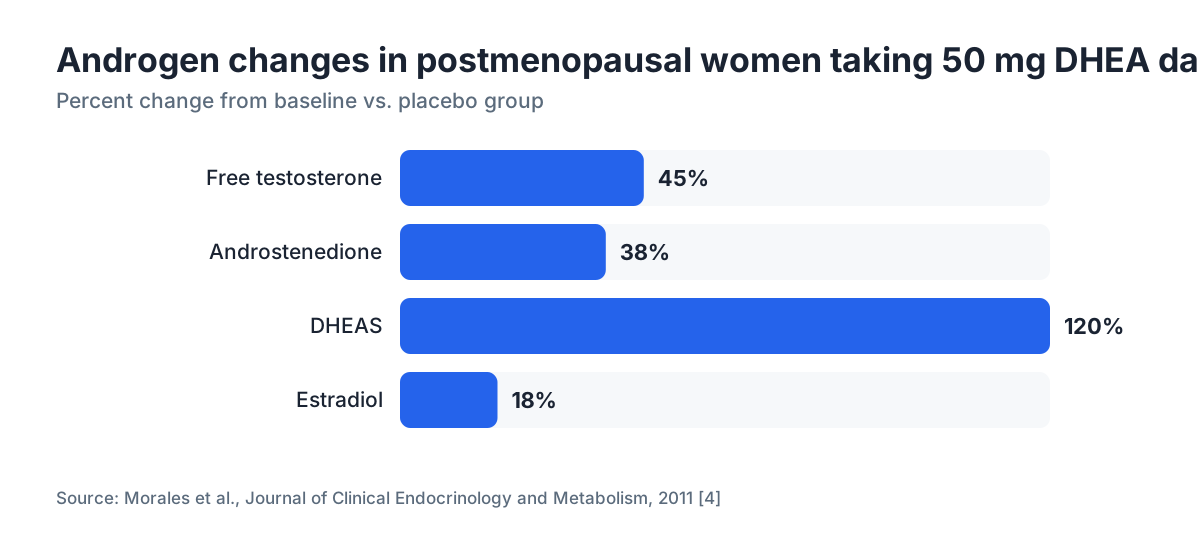
A 2011 study in the Journal of Clinical Endocrinology and Metabolism found that 50 mg of DHEA daily for 12 months significantly raised free testosterone and androstenedione in postmenopausal women [4]. Both feed the DHT pathway. The size of that increase varied a lot between women, which explains a real puzzle: some take DHEA for years with no hair change while others shed within weeks.
The sensitivity piece is inherited. If your mother or grandmother has female-pattern hair loss, you probably carry some androgen receptor sensitivity at the follicle. Taking DHEA in that situation is pouring fuel on a slow fire.
Women with polycystic ovary syndrome (PCOS) are especially exposed. PCOS already runs high on androgens, and adding DHEA on top can push levels high enough to cause more than diffuse thinning, sometimes a frontal recession that looks male-pattern. If you have PCOS and hair loss, bring DHEA up directly with your endocrinologist or dermatologist before you keep taking it.
Which women are most at risk for DHEA-related hair loss?
Risk isn't the same for everyone. The women most likely to notice hair loss from DHEA fall into a few clear groups.
First, women with a personal or family history of androgenetic alopecia. If pattern hair loss runs in your family on either side, your follicles are more likely androgen-sensitive [5]. Even a modest bump in DHT from DHEA conversion can push those follicles into earlier miniaturization.
Second, women with PCOS or other high-androgen conditions. Adding more androgen precursor to a system already flooded with androgens is a predictable problem.
Third, women in perimenopause and early menopause. This one matters. Estrogen drops sharply during the transition, and estrogen normally counterbalances androgens at the follicle. When estrogen falls, androgens dominate more even without any supplement. Taking DHEA in that window amplifies the androgenic shift at exactly the wrong moment. Female hair loss in your 40s is common partly for this reason, and DHEA speeds up what the hormonal transition already started.
Fourth, women on higher doses. Retail supplements run from 10 mg to 100 mg per capsule. The 100 mg doses produce androgen spikes well above anything physiologic. A physician-prescribed 5 to 10 mg dose, tracked with bloodwork, is a completely different risk than self-prescribing 50 to 100 mg tablets.
If you're in any of these groups and you're already taking DHEA, get a full androgen panel (total testosterone, free testosterone, DHEAS, androstenedione, and DHT) before and after starting. Most primary care doctors can order it.
What does the research say about DHEA for women's hair specifically?
Honest answer: the research on DHEA and female hair specifically is thin. No large randomized controlled trial has looked at female hair as a primary endpoint for DHEA supplementation. Most of what we know comes from androgen physiology, case reports, and studies that measured hormone levels as their outcome.
What exists points one direction. A randomized trial by Baulieu and colleagues (2000) in the Proceedings of the National Academy of Sciences followed 280 adults taking 50 mg DHEA daily for a year. In women, androgen levels rose and sebum production increased, a skin-level sign of androgen activity [6]. More scalp sebum is a known correlate of androgenetic alopecia progression.
One small study did apply topical DHEA cream to the scalp in women with female-pattern hair loss and reported some gain in hair density. That study was tiny (fewer than 30 subjects), had no placebo arm, and used a custom compounded cream at a very low dose. It tells you nothing about swallowing oral capsules.
Nobody has clean data comparing oral DHEA to placebo in women with hair density as the outcome. The closest evidence is the pharmacology itself: oral DHEA raises androgens, elevated androgens shrink androgen-sensitive follicles, and that process is documented across dozens of studies [3][5]. The mechanistic chain holds even without a direct hair-endpoint trial.
The American Academy of Dermatology's guidelines on female pattern hair loss don't include DHEA as a treatment and don't list it as a safe adjunct [5]. That silence says something.
Can DHEA cause telogen effluvium (sudden shedding) in women?
Yes, and this gets overlooked. DHEA can damage hair two different ways in women: the slow miniaturization of androgenetic alopecia described above, and a faster, more dramatic shed called telogen effluvium.
Telogen effluvium happens when a big hormonal shift shoves a large share of follicles out of the growth phase (anagen) and into the resting phase (telogen) all at once. Two to four months later those follicles shed together, and you're pulling alarming handfuls out in the shower.
Hormone swings are a known trigger. Starting DHEA is a hormonal event, especially at higher doses, and it can set off exactly this kind of synchronized shed. The delay is what fools people. Start DHEA in January, shed heavily in March or April, and you may never connect the two.
So here's the practical move: if you started DHEA and then noticed heavy diffuse shedding a few months later, stop it, tell your doctor, and get hormones checked. Telogen effluvium from DHEA usually reverses once the androgen stimulus is gone. The chronic miniaturization of androgenetic alopecia is much harder to undo.
How do you know if your hair loss is from DHEA or something else?
Fair question, because female hair loss has many causes and DHEA is only one. Thyroid disease, iron deficiency, celiac disease, nutritional gaps, other medications, and pattern alopecia unrelated to any supplement can all look similar.
The workup starts with bloodwork. A dermatologist or endocrinologist evaluating female hair loss usually orders a complete blood count, thyroid-stimulating hormone (TSH), ferritin (better than total iron), DHEAS, total and free testosterone, and sometimes trichoscopy or a follicular biopsy to classify the type of loss.
DHEAS, the sulfated form of DHEA, is a direct marker of adrenal androgen output. If your DHEAS is high, it points to either adrenal overproduction or the supplement itself. Elevated free testosterone alongside elevated DHEAS in a woman taking DHEA is a fairly clear signal.
A scalp dermatoscope exam can show the miniaturization pattern of androgenetic alopecia (variation in hair shaft diameter, thinner central scalp density) versus the uniform thin shafts of telogen effluvium. Experienced dermatologists often tell these apart without cutting anything, but biopsy stays the gold standard for the ambiguous cases.
Want a quick first look at your pattern before the appointment? The free AI scan at MyHairline gives you a Norwood/Ludwig classification from photos in a few minutes. Useful framing to bring in, not a replacement for bloodwork.
The single most useful step when DHEA is the suspect: stop the supplement and recheck androgen levels and shedding rate at 3 to 4 months. If androgens drop back and shedding slows, that's strong evidence of causation.
What are the proven treatments for female hair loss if DHEA is contributing?
Step one is obvious. Stop taking DHEA, or at minimum cut the dose hard and move to physician-supervised use with regular bloodwork. After that, several treatments have real evidence behind them.
Minoxidil is the most evidence-backed topical for female pattern hair loss. The 2% solution is FDA-approved for women; the 5% foam gets used off-label and looks more effective in several studies [7]. Minoxidil lengthens the anagen phase and enlarges follicles, partly offsetting the miniaturization androgens cause. It's not a cure, it needs continued use to keep results, and it has side effects worth understanding before you start.
Low-dose oral minoxidil (0.25 to 1.25 mg daily in women) is gaining ground as an off-label once-daily pill. A 2020 study in the Journal of the American Academy of Dermatology found meaningful improvement in female pattern hair loss at 1 mg daily [10]. If you're weighing it, read up on oral minoxidil first, because its side effect profile differs from the topical.
Spironolactone is an anti-androgen prescribed off-label in the US for female pattern hair loss and androgen-linked loss including PCOS. It blocks androgen receptors at the follicle, which is precisely what you need when DHEA has driven androgens up. It's not FDA-approved for hair loss, but dermatology uses it widely for this with a long safety record in women [5]. It's not for women who are pregnant or planning to be.
Finasteride is FDA-approved for male pattern baldness and used off-label in some postmenopausal women. It blocks 5-alpha reductase, shutting down the testosterone-to-DHT step, the exact enzymatic move that makes DHEA dangerous for hair. Finasteride has far more evidence in men than women, and it's flatly contraindicated in premenopausal women who could become pregnant because of the risk of feminizing a male fetus. Postmenopausal women are a different conversation to have with a dermatologist.
Platelet-rich plasma (PRP) injections show up as an adjunct for female pattern hair loss, with modest support and no large trials. Cost runs high, roughly $1,500 to $3,500 per treatment course, and the evidence is spotty. I'd exhaust the proven first-line options before spending here.
For severe or long-standing cases where miniaturization has gone far, a hair transplant is an option, though most surgeons won't operate until the underlying hormonal driver is controlled.
Does stopping DHEA reverse the hair loss it caused?
Partly. It depends on how long you took it and whether the loss is telogen effluvium or established androgenetic alopecia.
If the main mechanism was DHEA-triggered telogen effluvium (the sudden hormonal shift causing a synchronized shed), stopping usually allows full recovery. Telogen effluvium is generally reversible. Expect shedding to slow within 2 to 3 months of stopping and density to visibly improve over the following 6 to 9 months [8].
If DHEA sped up androgenetic alopecia, the story gets messier. Miniaturization that already happened doesn't just undo itself when you pull the androgen stimulus. Follicles that have shrunk significantly may not bounce back on their own. You'd typically need an active treatment like minoxidil or an anti-androgen to try rehabilitating them, and results vary.
That's why timing is everything. Stop DHEA early, before years of miniaturization pile up, and you have a much better shot at real recovery without extra intervention. Wait until the thinning is severe and your options narrow fast.
Should women take DHEA at all if they're worried about hair?
This belongs in a conversation with your doctor, not a solo decision. There are cases where a physician prescribes DHEA at a monitored low dose for a specific reason (adrenal insufficiency, for one). That's a world apart from self-dosing retail capsules.
For most women without a documented DHEA deficiency, the risk-to-benefit math for hair is bad. The wellness benefits of DHEA in women with normal baseline levels are modest and inconsistent across trials. The hair risk is real, especially if you're susceptible to androgenetic alopecia.
Taking DHEA for menopause symptoms? Ask your gynecologist about better-studied alternatives. For vaginal atrophy specifically, the FDA-approved vaginal prasterone insert acts far more locally than oral DHEA and carries a better safety profile for anyone worried about systemic androgens [11].
For libido and energy, the evidence for oral DHEA in women with normal baseline DHEAS is genuinely weak. A 2006 Cochrane review found insufficient evidence to support routine DHEA use for menopausal symptoms [9]. That doesn't mean it never helps a single person. It means you're taking real androgen risks for benefits that may never show up.
If you do take DHEA under medical supervision, start low (5 to 10 mg), check DHEAS and free testosterone every few months, and watch your scalp. Take before-and-after photos of your part and crown so changes are documented, not guessed.
DHT blockers and other approaches to androgen-sensitive hair loss are worth reading up on if this is your situation. You can also scan hair loss supplements to sort what has evidence from what's pure marketing.
How is DHEA-related hair loss different from other hormone-related hair loss in women?
Female hair loss is hormonally complicated, and DHEA is one of several androgen pathways. Seeing where it fits among the others helps you ask sharper questions.
The table compares the most common hormonal causes of hair loss in women:
| Cause | Primary Mechanism | Onset | Reversible? | Common Age |
|---|---|---|---|---|
| DHEA supplementation | Raises testosterone/DHT via conversion | Weeks to months | Often yes if caught early | Any, especially 40+ |
| PCOS | Chronic elevated androgens, insulin resistance | Gradual | Partial with treatment | 20s-40s |
| Menopausal transition | Falling estrogen, relative androgen dominance | Gradual | Partial with treatment | 45-55 |
| Postpartum telogen effluvium | Estrogen crash post-delivery | 2-4 months postpartum | Usually fully reversible | Childbearing age |
| Thyroid disease | Disrupts hair cycle directly | Gradual | Yes with thyroid treatment | Any |
| High-dose corticosteroids | Hormonal dysregulation | Variable | Usually yes | Any |
DHEA supplementation sits in a spot the others don't: it's a modifiable, self-administered cause. Unlike the menopausal transition or PCOS, you can just stop it. That makes it one of the more actionable diagnoses in female hair loss, which is a big part of why catching it matters.
The overlap with perimenopause deserves its own flag. A woman in her 40s who's both going through the menopausal transition and taking DHEA gets hit from two sides at once: falling estrogen removes the protective balance at the follicle, and rising androgens from the supplement drive the system further toward DHT-fueled miniaturization. That double mechanism can produce hair loss that looks and feels far worse than either factor alone.
What should you tell your doctor if you suspect DHEA is causing your hair loss?
Be specific. Doctors see a lot of female hair loss, and the list of causes is long. Walk in with this ready.
Tell them exactly what DHEA product you take: brand, dose in milligrams, and how long you've been on it. Bring the bottle if you can. Over-the-counter supplements vary in actual content (third-party testing has found products holding anywhere from 50% to 150% of the labeled dose), so treat the label as a starting point, not a precise number.
Note when the shedding started relative to when you started DHEA. The 2 to 4 month lag common in telogen effluvium is easy to miss if you're not looking for it.
Describe the pattern. Is it diffuse thinning across the top, a widening part, frontal recession, or shedding all over? Different patterns point to different mechanisms and steer the dermatologist toward the right tests.
Ask specifically for DHEAS, free testosterone, and DHT if your doctor doesn't already plan to order them. A CBC and TSH help rule out anemia and thyroid disease, but they won't capture the androgen picture on their own.
Ask about a referral to a dermatologist or trichologist if your primary care doctor isn't confident with hair loss workups. The MyHairline AI scan can document your current pattern before the visit, giving you a timestamped baseline that's genuinely useful for tracking progression or recovery.
And don't leave without a plan. Whether it's stopping DHEA, starting minoxidil, adding spironolactone, or watchful waiting with repeat labs in 3 months, walk out with something to act on.
Sources
- NIH National Institute on Aging, hormone research overview
- FDA, Dietary Supplement Health and Education Act of 1994 overview
- Endocrine Society, Endocrinology journal: DHEA metabolism and androgen conversion
- Journal of Clinical Endocrinology and Metabolism, Morales et al. 2011, DHEA in postmenopausal women
- American Academy of Dermatology, clinical guideline on female pattern hair loss
- Baulieu et al. 2000, Proceedings of the National Academy of Sciences, DHEA 50 mg RCT
- FDA, minoxidil prescribing information and approved labeling
- American Academy of Dermatology, telogen effluvium patient information
- Cochrane Database of Systematic Reviews, Kronenberg and Fugh-Berman 2006, DHEA for menopausal symptoms
- Journal of the American Academy of Dermatology, Sinclair et al. 2020, oral minoxidil in women
- FDA, Intrarosa (prasterone) approval and prescribing information
- National Institutes of Health, MedlinePlus, DHEAS blood test information