
TL;DR: A facial hair transplant moves hair follicles from your scalp (or body) to your beard, mustache, sideburns, or eyebrows. Most procedures use FUE and take 4 to 8 hours. Costs run $3,000, $15,000 depending on graft count and location. Transplanted hairs shed within weeks, then regrow permanently over 9 to 12 months. Results depend heavily on surgeon skill and donor hair quality.
What is a facial hair transplant and who is it for?
A facial hair transplant is a surgical procedure that harvests individual hair follicles, usually from the back or sides of the scalp, and implants them into areas of the face where hair is thin, patchy, or completely absent. The procedure follows the same core biology as any hair transplant: follicles taken from a donor site keep the growth characteristics of where they came from, so once they establish in the new location they grow permanently.
The candidates who tend to get the best outcomes fall into a few clear groups. Men with naturally patchy beards or sparse mustaches who want more density. Men and women with scarring from burns, surgery, or injury who have lost facial hair. Transgender men who want to support or speed up beard development alongside hormone therapy. People born with conditions like alopecia areata that have caused focal beard loss.
The procedure is not for everyone. If your scalp donor area is already thin or depleted from previous hair transplants, there simply may not be enough good follicles to spare for your face. Body hair, including chest or leg hair, can occasionally substitute as a donor source, but growth rate and texture often differ noticeably from scalp hair, and most surgeons treat it as a second choice. A thorough pre-surgical consultation that assesses donor density is non-negotiable before you commit.
Age matters too, though not in a simple way. Surgeons typically prefer to wait until a man's beard pattern has fully matured, usually mid-twenties or later, so they are not filling in areas that would have filled in on their own. Younger patients who jump in early sometimes end up with grafts placed in zones that later grow natural hair, creating an uneven look that is difficult to correct.
How does the facial hair transplant procedure actually work?
Almost all facial hair transplants today use Follicular Unit Extraction, or FUE [1]. The surgeon uses a small punch tool, typically 0.7 to 1.0 mm in diameter, to extract individual follicular units one by one from the donor area on the scalp. Each unit contains one to four hairs. Those grafts sit in a chilled holding solution while the surgeon creates tiny recipient sites on the face, angled and spaced to match natural beard or brow growth direction. Then each graft is placed by hand.
The older method, Follicular Unit Transplantation (FUT), involves removing a strip of scalp and dissecting follicles from it under a microscope [1]. FUT can yield more grafts in a single session and leaves no scattered punch scars, but it does leave a linear scar at the donor site. For scalp hair transplants that trade-off can make sense. For facial hair transplants specifically, FUE wins almost every time because the graft numbers needed are lower (most beard procedures need 500 to 3,000 grafts vs. 2,000 to 5,000+ for a full scalp restoration), and the scattered tiny FUE scars at the back of the scalp are essentially invisible at normal hair length.
The skill-intensive part is creating the recipient sites at precisely the right angle and depth to mimic natural beard growth. Beard hairs on the chin typically emerge at a very acute angle to the skin, sometimes almost flat. Getting that angle wrong means hairs that stick straight out instead of lying flat, which looks unnatural immediately. This is genuinely one of the places where a surgeon's experience with facial work specifically matters more than their general hair transplant volume.
Total procedure time depends on graft count. A mustache fill of 300 to 500 grafts might take 3 to 4 hours. A full beard from jaw to cheek covering sparse areas with 2,000 to 3,000 grafts can run 7 to 9 hours. Some patients need two sessions to reach their goal, either because donor supply limits a single harvest or because the surgeon wants to see how the first round settles before placing more grafts.
How much does a facial hair transplant cost?
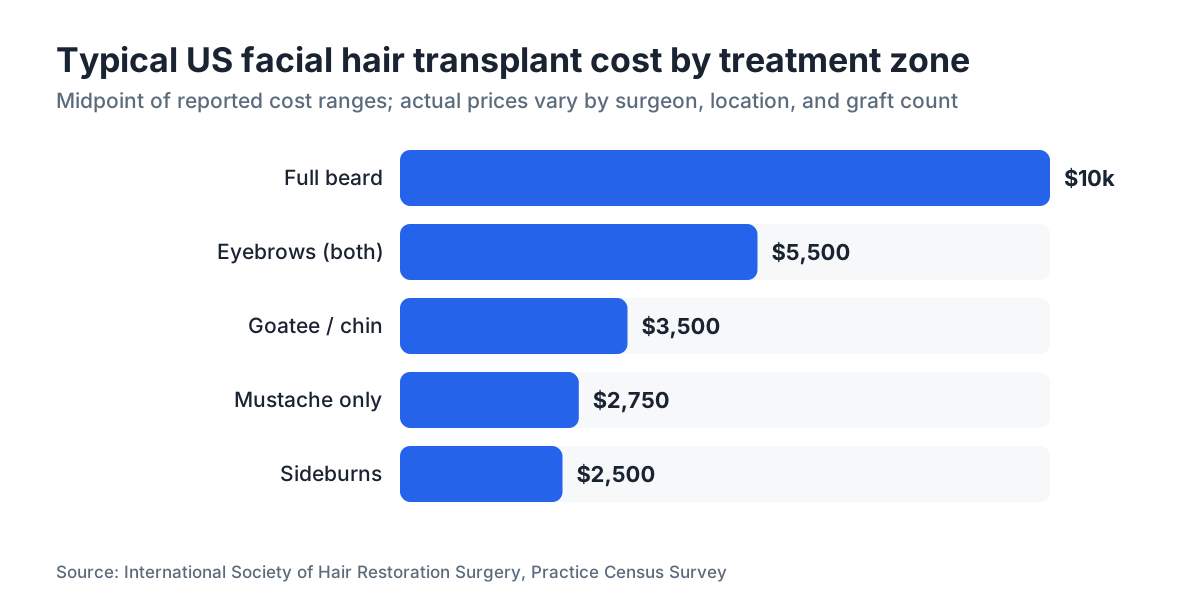
Facial hair transplant cost in the United States typically falls between $3,000 and $15,000, with the majority of full-beard procedures landing in the $5,000, $10,000 range [2]. Prices are almost never quoted per-graft the way scalp transplants are. Most clinics either set a flat package price based on the treatment zone (mustache only, full beard, eyebrows) or quote a per-session fee after an in-person consultation.
Several factors push that number up or down. Surgeon experience and reputation is the biggest lever. A well-known facial specialist in New York, Los Angeles, or Miami charges more than a general hair transplant clinic in a mid-size market, sometimes two to three times more for nominally similar graft counts. Geographic cost-of-living differences are real. A 2,000-graft beard transplant quoted at $8,000 in Manhattan might cost $4,500, $5,500 from a comparably skilled surgeon in Phoenix or Dallas.
For Canadians researching hair transplant cost in Canada, facial hair transplants generally run CAD $5,000, $15,000, reflecting both the procedure's complexity and the smaller number of specialist clinics. Toronto and Vancouver have the highest price points. Because hair transplant procedures are cosmetic, provincial health insurance plans do not cover them, making out-of-pocket cost the full reality for almost everyone [3].
Medical tourism is a real option some patients pursue. Clinics in Turkey, in particular Istanbul, have built large industries around both scalp and beard transplants, with prices sometimes 70 to 80% lower than North American rates. That is not inherently unsafe, but it creates practical complications: you cannot easily follow up if something goes wrong, revision surgery becomes very expensive if needed, and verifying a foreign surgeon's credentials takes real diligence. Nobody has published rigorous comparative outcome data that I am aware of. The closest systematic review of hair transplant outcomes does not break results down by country of procedure.
Health savings accounts (HSA) and flexible spending accounts (FSA) in the US generally cannot pay for cosmetic procedures, and facial hair transplants, being elective cosmetic surgery in nearly all cases, fall outside what qualifies [4]. Financing through the clinic or third-party medical lenders like CareCredit is how most patients spread the cost.
| Treatment zone | Typical US cost | Approximate Canadian cost (CAD) | Approximate graft count |
|---|---|---|---|
| Mustache only | $1,500, $4,000 | $2,000, $5,500 | 200 to 600 |
| Goatee / chin | $2,000, $5,000 | $2,500, $6,500 | 400 to 1,000 |
| Full beard | $5,000, $15,000 | $6,500, $18,000 | 1,500 to 3,500 |
| Sideburns | $1,500, $3,500 | $2,000, $5,000 | 200 to 500 |
| Eyebrows (both) | $3,000, $8,000 | $4,000, $10,000 | 200 to 500 total |
What does recovery look like after a facial hair transplant?
The first few days are the roughest cosmetically. The face is red, slightly swollen, and the implanted areas have tiny scabs or crusts at each graft site. Most people take a week off work, not because they feel terrible, but because they look like they have a bad rash. Sleeping with your head elevated for the first few nights reduces swelling, which is more pronounced on the face than on the scalp because the skin is thinner and has more vascular activity.
By day 7 to 10, the crusts start to fall off. You are told not to pick them, which sounds easy and is not. Scratching or rubbing too early can dislodge grafts before they have anchored into the tissue. Most surgeons allow gentle washing by day three or four using a diluted baby shampoo or a specific post-op wash they provide.
Then comes the part nobody talks about enough: the shed. Somewhere between weeks two and eight, the transplanted hairs fall out. Almost all of them. This is normal, expected, and does not mean the procedure failed. The follicle is still alive under the skin. The hair shaft it was attached to has entered a dormant telogen phase as a response to surgical trauma [5]. New growth from those same follicles starts appearing around months three to four. By month six you can see meaningful progress. Full density and final appearance take 9 to 12 months.
Shaving is one of the more counterintuitive parts of beard transplant recovery. You need to let the hairs grow for at least three to four weeks before shaving, partly to protect the new grafts and partly because the hairs themselves guide you on where growth is coming in. After that, shaving normally is fine. Transplanted beard hairs grow like scalp hair, which means they grow faster than native beard hair and need trimming and shaping more frequently than a natural beard might. Some patients find this annoying at first. Others adjust quickly.
Sun exposure to the recipient sites is worth avoiding during the first month or two. Hyperpigmentation at graft sites is a real risk if you get significant UV exposure before the skin has fully healed.
Are facial hair transplant results permanent?
Yes, with one important qualifier. Transplanted follicles are permanent in the sense that they keep the genetic programming of their origin site. Scalp hair follicles moved to the face will keep growing scalp-style hair indefinitely, because the characteristic that makes a follicle DHT-resistant (when taken from the occipital scalp, which is the standard donor zone) is coded into the follicle itself, not decided by where it lives. This principle, called donor dominance, is the entire biological foundation of hair transplantation and has been understood since the work of Norman Orentreich in the 1950s [6].
The qualifier is this: if you have an underlying condition that is actively destroying follicles, such as active alopecia areata, lichen planopilaris, or frontal fibrosing alopecia, those same processes can attack transplanted follicles too. A transplant into actively inflamed skin is likely to fail. Surgeons with experience in scarring alopecia or autoimmune conditions typically want to see at least six to twelve months of disease stability before operating.
For men with patchiness due to genetics or hormonal patterns rather than autoimmune disease, long-term results are generally very good. A 2022 systematic review of beard and mustache hair transplantation published in the Journal of Cosmetic Dermatology found patient satisfaction rates above 85% in the studies it analyzed, though the authors noted that most studies were small and lacked standardized outcome measures [7].
What are the risks and complications of facial hair transplants?
Like any surgical procedure, a facial hair transplant carries real risks. Most are manageable and temporary. A few are not.
Infection at graft sites is possible but relatively rare when post-op care instructions are followed carefully. The face has excellent blood supply, which actually makes it heal faster than the scalp in most cases, but it also means swelling can be more dramatic in the first days. Folliculitis, which is inflammation of hair follicles that looks like small pimples, can appear during the first few weeks and usually clears on its own or with a short course of topical antibiotics.
Graft failure, meaning grafts that simply do not survive and produce no hair, happens to some percentage of grafts in every procedure. An experienced surgeon expects some failure and accounts for it by placing slightly more grafts than the target density strictly requires. Failure rates above 10 to 15% suggest something went wrong with technique, handling, or post-op care.
The angle and direction problem mentioned earlier deserves its own emphasis as a risk category. An unnatural growth angle is not a complication that heals or resolves. It requires corrective surgery to fix. This is why choosing a surgeon who specifically does a lot of facial hair work, more than scalp work, genuinely matters.
Scarring at the donor site is a risk, though FUE punch scars at the back of the scalp are typically invisible once hair grows back to a few centimeters of length. The recipient site on the face generally heals without visible scarring because the implant sites are so small.
For anyone on blood thinners, aspirin, or supplements like fish oil, vitamin E, or certain herbal compounds, there is an increased bleeding risk. Surgeons routinely ask patients to stop these for one to two weeks before the procedure. Talk this through honestly with your prescribing doctor before stopping any medication.
The FDA has not specifically cleared any device or drug for facial hair transplantation as a procedure category. The FUE and FUT devices used are regulated as surgical instruments under broader classifications [8].
How do I choose a surgeon for a facial hair transplant?
The honest answer is that this is harder than it should be, because the field is not tightly regulated and the title 'hair transplant surgeon' has no single licensing body behind it in the US or Canada.
Board certification in dermatology (American Board of Dermatology) or plastic surgery (American Board of Plastic Surgery) is a reasonable baseline [9]. The International Society of Hair Restoration Surgery (ISHRS) has its own fellowship and membership structure, and its annual meeting proceedings are one of the better publicly available sources of peer-reviewed data on technique outcomes [10]. Membership in ISHRS does not guarantee quality, but it signals someone who is engaged with the field's science.
For facial hair specifically, ask during consultation how many beard or eyebrow transplants the surgeon has performed in the past year, not their career total. Ask to see before-and-after photos of patients at 12 months post-procedure, more than three to six months. Ask what happens if you are not satisfied and whether revision is included or priced separately.
Be skeptical of clinics that use non-physician technicians to make recipient site incisions. In many US states this is a legal gray area. In some it is explicitly prohibited. The recipient site creation step, where angle, depth, and density are all determined, is the highest-skill part of the procedure.
Consultations should be free or very low cost. A clinic that charges a significant consultation fee before you have seen a single photo of their work is a yellow flag. A clinic that pressures you to book during the consultation without giving you time to compare quotes is a red flag.
If you want an early read on whether your hair loss pattern or facial patchiness is worth pursuing treatment for, tools like the free AI hair analysis at MyHairline can give you a starting orientation before you spend time booking and traveling to in-person consults.
How is a beard transplant different from an eyebrow transplant?
Technically they use the same tools and the same FUE or FUT extraction process. The differences are in anatomy, graft source options, and the margin for error.
Eyebrow transplants are more technically demanding per graft than beard transplants. The eyebrow has a very specific growth direction that changes across different zones: hairs on the medial brow point slightly upward and outward, those near the arch point more directly outward, and tail hairs angle downward. Getting this wrong is immediately visible. The density required is also relatively high for a very small area, about 20 to 40 grafts per square centimeter in a good result.
Donor hair for eyebrows is almost always scalp hair, which grows differently than natural brow hair. Natural brow hairs have a short anagen (growth) phase, which means they stay short. Scalp hair has a long anagen phase, so transplanted eyebrow hairs need trimming regularly, often every two to three weeks. This is not a complication. It is just the reality, and patients need to know it upfront.
Beard transplants allow more flexibility. There is more surface area, natural variation in beard density is well-understood culturally, and small imperfections are less immediately visible than they would be in an eyebrow. That said, the chin and mustache areas have their own strict angulation requirements.
Cost-wise, eyebrow transplants are often priced separately from beard work, typically $3,000, $8,000 for both brows in the US, reflecting the higher per-graft precision required rather than a high total graft count.
Can women get facial hair transplants, and what about transgender patients?
Women get facial hair transplants, primarily for eyebrow restoration. Eyebrow thinning in women can result from over-plucking over many years (a very common reason), autoimmune conditions like alopecia areata, thyroid disorders, or aging. Eyebrow transplants for women are among the most common facial hair procedures globally, and outcomes are generally strong when the underlying cause of loss has been addressed first.
For transgender men, beard transplants are a meaningful part of gender-affirming care for many patients. Testosterone therapy promotes beard growth, but the distribution and density of beard development on HRT varies substantially between individuals, just as it does between cisgender men. Some trans men reach a plateau of beard growth that still leaves significant patches or very sparse coverage. A transplant can fill those areas in. Most surgeons recommend waiting until a patient has been on testosterone for at least one to two years to let natural beard development stabilize before planning a transplant, so the surgeon is not designing around a beard that will still change.
Coverage for gender-affirming procedures has expanded under some state Medicaid programs and private insurance plans following changes to ACA implementation guidance, but coverage of facial hair transplants specifically as gender-affirming care is not consistent across plans or states. Have a direct conversation with your insurer and get a letter from your physician supporting the medical necessity.
For anyone experiencing unexpected or sudden facial hair changes, which can signal hormonal shifts, reading more about what causes hair loss can help you understand whether the pattern warrants investigation before surgery.
What non-surgical options exist for facial hair before committing to a transplant?
If your beard is patchy but growing, it may just need time. Male beard development often continues into the late twenties and occasionally into the early thirties. A 22-year-old with a patchy beard who books a transplant may be operating too soon.
Minoxidil applied topically to the face has meaningful evidence behind it for beard growth. A randomized controlled trial published in the Journal of Dermatology in 2016 found that 3% minoxidil lotion applied twice daily to the beard area produced statistically significant increases in beard hair count versus placebo over 16 weeks [11]. This is an off-label use. Minoxidil is FDA-approved for scalp hair loss, not facial hair growth, but off-label dermatological use is common and legal [8]. Oral minoxidil at low doses is also being used off-label. You can read more about the specifics of oral minoxidil and minoxidil for men in separate guides.
Finasteride, which blocks DHT, comes up in the context of beard transplants because some patients worry it might affect beard growth. The evidence on finasteride's direct effect on beard density is limited and somewhat mixed. The primary concern is preventing scalp hair loss so the donor area stays healthy and dense long-term. You can read the full picture on finasteride separately.
Tattooing techniques like micropigmentation can simulate beard stubble on the face, similar to scalp micropigmentation for the head. This gives the appearance of a shaved beard rather than actual growing hair, which is not what most patients want, but it is a non-surgical option that some men choose for scar coverage.
If you are losing facial hair unexpectedly, rather than just having sparse growth, addressing the root cause first is essential. Telogen effluvium can temporarily affect facial follicles too, and understanding whether you have an active shedding condition changes the treatment calculus entirely.
How should you prepare for a facial hair transplant consultation?
Come in with photos. Front-facing, good light, neutral expression. If you have old photos that show what your beard looked like before any changes, those are useful too. If you have reference photos of beard styles or densities you are aiming for, bring those, with the clear understanding that your surgeon will tell you honestly what is achievable given your donor supply.
Have a list of every medication, supplement, and herbal product you take. This matters more than most patients expect, because blood thinners, certain supplements, and some antidepressants affect surgical risk and recovery.
Ask specifically about the surgeon's infection control protocols and whether the procedure happens in an accredited surgical facility or an office setting. Both can be appropriate, but you want to know.
Get at least two consultations with different surgeons before booking. Graft count estimates should be roughly similar across surgeons for the same zones. If one surgeon quotes 500 grafts and another quotes 3,000 for the same area and the same goal, ask both of them to explain why. One of them is probably wrong, or they are working toward different outcome expectations.
Ask your surgeon whether maintaining scalp hair density with treatments like finasteride and minoxidil post-transplant is something they recommend, specifically to preserve the donor area for potential future procedures. The answer is nuanced, but a surgeon who has a thoughtful answer is one who has thought carefully about your long-term hair picture, more than this one procedure.
Sources
- American Academy of Dermatology, Hair Loss: Diagnosis and Treatment
- International Society of Hair Restoration Surgery, Practice Census Survey
- IRS, Publication 502: Medical and Dental Expenses
- National Institutes of Health, StatPearls: Hair Transplantation
- Orentreich N, Annals of the New York Academy of Sciences, 1959 (donor dominance principle)
- Journal of Cosmetic Dermatology, Systematic review of beard and mustache hair transplantation, 2022
- US Food and Drug Administration, Devices and Drug Approvals
- American Board of Medical Specialties, Board Certification Verification
- International Society of Hair Restoration Surgery, Membership and Fellowship
- Ingprasert S et al., Journal of Dermatology, 2016: Efficacy and safety of minoxidil 3% lotion for beard enhancement