
TL;DR: Hair loss has more than a dozen distinct causes. Genetics and DHT sensitivity drive most male pattern baldness, but thyroid problems, low iron, physical or emotional stress, certain medications, and autoimmune disease each cause heavy shedding on their own. Your specific cause decides your treatment, because the fixes barely overlap. Many causes reverse on their own. Androgenetic alopecia generally does not, without ongoing treatment.
Why does hair fall out in the first place?
Hair loss is not one disease. It's a symptom, and at least a dozen separate biological processes can produce it. The right treatment depends almost entirely on which process is running in your body right now.
Every follicle cycles through three phases: anagen (active growth, 2 to 7 years), catagen (transition, about 2 weeks), and telogen (rest and shedding, about 3 months) [1]. Losing 50 to 100 hairs a day is normal, because roughly 10 to 15 percent of your follicles sit in telogen at any moment. Trouble starts when more follicles than usual shift into telogen at once, when follicles shrink and stop making visible hair, or when follicles get destroyed outright.
Those three mechanisms map onto the big categories: effluvium (excess shedding), androgenetic alopecia (miniaturization), and scarring alopecias (destruction). Most people searching for answers are dealing with the first two. That's lucky, because both respond to treatment.
The hard part is that causes stack. Someone can carry a genetic sensitivity to DHT and then shed fast after a bad illness. Treat one factor, ignore the other, and you get half a result. A real workup, more than a glance in the mirror, is what changes outcomes.
How much of hair loss is genetic?
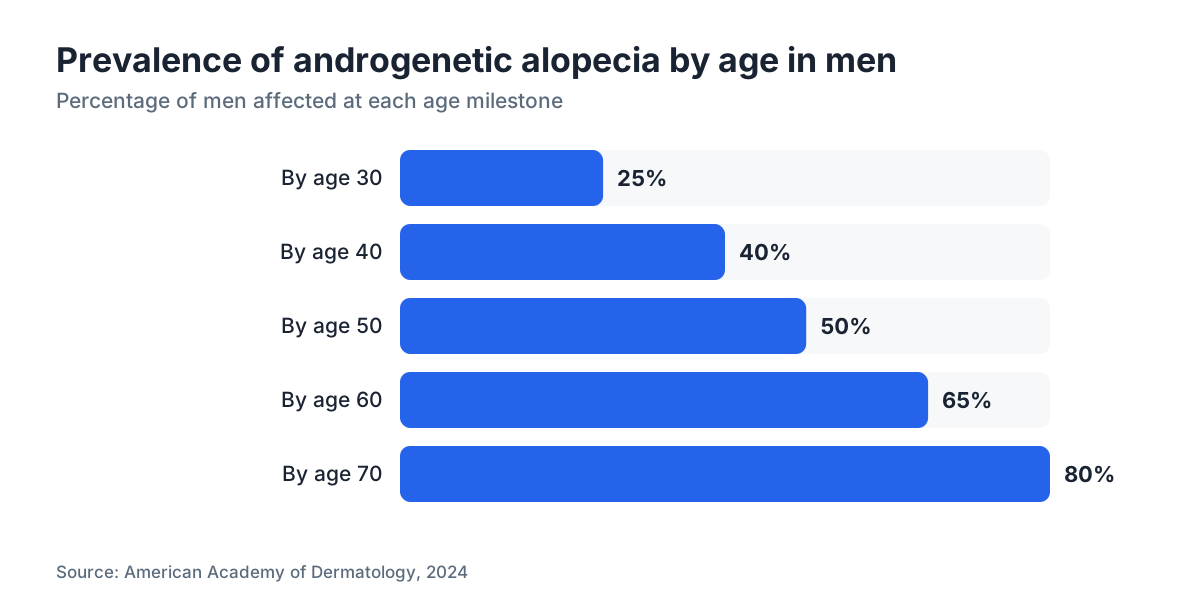
Genetics is the single largest factor in androgenetic alopecia, which affects roughly 50 percent of men by age 50 and about 25 percent of women by age 50 [2]. The old line that the gene comes only from your mother's side is wrong. Androgenetic alopecia is polygenic. Dozens of variants from both sides of your family combine to set your risk.
The most important gene encodes the androgen receptor (AR), which sits on the X chromosome. Variants here make follicles more sensitive to dihydrotestosterone (DHT), the androgen that shrinks scalp follicles in susceptible people [3]. But AR variation explains only part of it. A 2017 genome-wide association study in PLOS Genetics identified 63 loci tied to male pattern baldness, and many were autosomal, meaning they can come from either parent [3].
So what does that mean for you? If your father and his father were both bald by 40, your risk is high but not a guarantee. If neither parent shows much loss, you can still develop it. Genetics sets the ceiling on your susceptibility. The other factors below decide how fast you reach it.
If your genetics have already pushed you toward visible thinning, see the overview of androgenetic alopecia and DHT blockers and the evidence behind finasteride, the most effective drug we have for slowing genetically driven loss.
What role do hormones play in hair loss?
DHT is the main hormonal driver of androgenetic alopecia. The enzyme 5-alpha reductase converts testosterone into DHT, and follicles on the top and front of the scalp carry far more androgen receptors than those on the sides and back. That's why male pattern baldness follows the predictable paths mapped by the Norwood scale, and why the sides and back hang on.
Women have lower DHT levels but still get androgenetic alopecia, because estrogen normally offsets androgen effects on follicles. After menopause, estrogen drops and androgens exert more pull, which is why female hair loss often speeds up in the 40s and 50s [2]. Polycystic ovary syndrome (PCOS), which raises androgen levels, does the same thing in younger women.
Thyroid hormones are a separate story with equal weight. Both an underactive and an overactive thyroid disrupt the follicle cycle and cause diffuse shedding that can look scary. Here's the good news: thyroid-related hair loss usually reverses within 6 to 12 months once levels normalize [4]. A single TSH blood test rules it in or out, which is why dermatologists order one during almost any hair loss workup.
Cortisol matters too. Chronically high cortisol appears to suppress hair follicle stem cell activity, based on mouse work from Harvard published in Nature in 2021 [5]. Whether the same mechanism runs at the same scale in humans is still being sorted out. The clinical link between stress and shedding, though, is old news to any dermatologist.
Does diet or nutrition deficiency cause hair loss?
Yes, and more often than most people think. Iron deficiency is probably the most common nutritional cause, especially in premenopausal women with heavy periods. Ferritin (stored iron) below roughly 30 ng/mL is linked to increased telogen shedding, though the exact cutoff is debated and lab ranges vary [6]. The reason is simple: hair matrix cells divide fast, and fast-dividing cells are picky about iron.
Zinc deficiency causes a similar diffuse shed and shows up with restrictive diets, malabsorption conditions like Crohn's disease, or bariatric surgery. Biotin deficiency causes hair loss in the textbooks but is genuinely rare in anyone eating a mixed diet. Most biotin supplements sold for hair do nothing if your biotin level is already normal [6]. The AAD also warns that biotin supplements can throw off certain thyroid and troponin lab tests, which is a concrete reason to skip them without a confirmed deficiency.
Protein gets ignored. Hair is almost pure keratin, a protein. Crash diets and very low-protein eating can push follicles into telogen within 2 to 3 months. That's why heavy calorie restriction or weight-loss surgery sometimes triggers dramatic shedding. When protein runs short, the body drops hair down the priority list.
Vitamin D deficiency has been tied to alopecia areata and telogen effluvium in observational studies, though nobody has nailed down cause and effect [6]. Deficiency is common and the supplement is cheap, so testing and correcting it is a fair move.
For which supplements actually have evidence behind them, the hair loss supplements article breaks it down ingredient by ingredient.
How does stress cause hair loss?
Stress-related hair loss is called telogen effluvium, and it runs on a delay that confuses almost everyone who gets it. A major stressor (a high fever, surgery, childbirth, severe emotional trauma, big weight loss) pushes an unusually large share of follicles into telogen at once. The shed doesn't come right away. It hits 2 to 3 months later, when those follicles finish their rest phase and let go of the hairs [1].
That delay is why people can't connect the dots. Someone had COVID-19 in January, watches their hair pour out in April, and asks what they're doing wrong now. The answer is three months back.
Acute telogen effluvium almost always fixes itself. Once the trigger clears, follicles re-enter anagen and density returns to baseline within 6 to 12 months for most people. Chronic telogen effluvium, running past 6 months, needs a look for something ongoing: persistent stress, a continued deficiency, thyroid trouble, or a medication.
The Harvard Nature study found that a stress-linked hormone, adrenocorticotropic hormone (ACTH), directly inhibits a signaling molecule called GAS6 in the hair follicle, holding follicles in a longer resting state [5]. It gave a molecular explanation for what clinicians had watched for decades.
Which medications cause hair loss?
Drug-induced hair loss is more common than the warning labels let on. It shows up two ways: a telogen effluvium pattern (diffuse shed starting weeks to months after you begin the drug) or an anagen effluvium pattern (rapid loss during active growth, seen at its worst with chemotherapy).
The medications most often linked to hair loss [4]:
| Drug Class | Examples | Typical Onset |
|---|---|---|
| Anticoagulants | Warfarin, heparin | 3-4 months |
| Beta-blockers | Metoprolol, propranolol | 2-4 months |
| Retinoids | Isotretinoin, acitretin | 1-3 months |
| Antidepressants | Sertraline, fluoxetine | 2-4 months |
| Mood stabilizers | Lithium, valproic acid | Variable |
| Hormonal contraceptives | Some pills, Depo-Provera | Varies |
| Chemotherapy agents | Cyclophosphamide, doxorubicin | Days to weeks |
| Cholesterol drugs | Statins (less common) | Variable |
If you started a new drug and noticed shedding a few months later, tell the prescribing doctor before you stop anything. Many drug classes have alternatives that cause less hair loss. Never quit something like warfarin or an antidepressant on your own.
Chemotherapy hair loss sits in its own category. Anagen effluvium from cytotoxic drugs hits actively growing hairs fast and can cause near-total loss within weeks. It's generally reversible after treatment ends, though the texture of the regrowth sometimes changes.
Can autoimmune disease cause hair loss?
Alopecia areata is the main autoimmune hair loss condition, affecting about 2 percent of people at some point in their lives [7]. The immune system attacks hair follicles by mistake and leaves round or oval patches of sudden, complete loss. Nails often show pitting or ridging as a side clue.
It can stay as small patches (patchy alopecia areata), spread across the whole scalp (alopecia totalis), or rarely take all body hair (alopecia universalis). It's unpredictable: patches can regrow on their own, hold steady, or expand. About 50 percent of people with patchy disease recover within a year without treatment, though it often comes back [7].
Until recently, treatment meant corticosteroid injections, topical immunotherapy, or systemic immunosuppressants with real side effects. That shifted with the FDA approval of baricitinib (Olumiant) in 2022 and ritlecitinib (Litfulo) in 2023, both JAK inhibitors that produced meaningful regrowth in trials [8]. The FDA cleared ritlecitinib specifically for adults and adolescents 12 years and older with severe alopecia areata.
Lupus is another autoimmune cause. It produces both non-scarring diffuse loss from disease activity and, through discoid lesions, scarring that can destroy follicles for good. Treating the lupus itself comes first.
Scarring alopecias as a group (lichen planopilaris, frontal fibrosing alopecia, central centrifugal cicatricial alopecia) kill follicles permanently. Catching them early and halting progression is the whole game, because scarred follicles don't come back.
Does scalp health and hair care affect hair loss?
Traction alopecia is completely preventable and completely caused by hairstyling. Tight braids, weaves, extensions, and ponytails worn for months or years pull on follicles, cause inflammation, and eventually kill hair along the hairline and temples [9]. The American Academy of Dermatology recommends avoiding styles that tug on the scalp, loosening braids, and moving your part around to spread the tension.
Seborrheic dermatitis and scalp psoriasis cause shedding through inflammation, not direct follicle damage, and the loss usually reverses once you control the inflammation. Mild dandruff doesn't cause hair loss. Severe, untreated seborrheic dermatitis absolutely can.
Fungal infection (tinea capitis, or scalp ringworm) causes patchy loss that can look like alopecia areata but comes with scale, redness, and sometimes broken hairs. It's most common in children and needs an oral antifungal, more than a topical one, because topical drugs can't reach the fungus living inside the follicle.
Over-processing with bleach, relaxers, and heat does not cause permanent hair loss, because it damages the hair shaft, not the follicle. But breakage from that damage can mimic thinning. If your "hair loss" is mostly short broken hairs with no thinning at the scalp, damage is the likelier answer.
What hair loss factors are specific to women?
Women lose hair from all the same causes as men, but the mix looks different. Androgenetic alopecia in women usually shows as diffuse thinning across the crown with the frontal hairline kept, a pattern mapped by the Ludwig scale. Female pattern hair loss is driven hard by post-menopausal hormone shifts, but it also hits younger women with androgen excess from PCOS or congenital adrenal hyperplasia.
Postpartum telogen effluvium is one of the most common forms of hair loss anywhere. During pregnancy, high estrogen stretches out anagen and cuts normal shedding, so hair looks thicker. After delivery estrogen falls fast, the hairs held in anagen flip to telogen, and they shed 2 to 4 months later. It can rattle you, but it almost always resolves within 12 months [1].
Iron deficiency deserves extra attention here. Premenopausal women with heavy flow are at real risk even without full anemia. Ferritin can sit low while hemoglobin reads normal, so a standard blood count can miss it. Ask for a ferritin level specifically if you're shedding diffusely.
Female pattern hair loss responds to minoxidil (the 2% and 5% topicals, and increasingly oral low-dose versions). Finasteride and dutasteride get used off-label in postmenopausal women with some evidence of benefit, but they're off the table for women who could become pregnant because of the risk of fetal harm [10]. Spironolactone, an antiandrogen, is the more common choice in premenopausal women with androgenetic alopecia or PCOS-related loss.
If you're a woman seeing loss along your part or at your temples, the receding hairline article covers how female hairline loss differs from male recession and what options you have.
How do age and lifestyle factors contribute?
Hair changes with age no matter your genetics. Anagen shortens, so hairs don't grow as long. Follicle density drops. Shaft diameter thins. This is separate from androgenetic alopecia, though the two overlap and get hard to tell apart in older adults.
Smoking is linked to worse androgenetic alopecia in men, probably through oxidative stress that damages follicle DNA and chokes off scalp microcirculation [11]. A 2007 study in Archives of Dermatology found smoking associated with significantly higher rates of moderate to severe hair loss in men, even after adjusting for age.
Alcohol's effect is murkier, but heavy chronic use causes nutritional gaps (zinc, B vitamins) and raises estrogen in men through liver metabolism, both of which can feed loss.
Exercise has no established downside for hair. The recurring worry about creatine and hair loss traces to one small 2009 study where creatine raised DHT by about 56 percent over three weeks in college rugby players [12]. Whether that translates to real hair loss in genetically susceptible people is unknown. The does creatine cause hair loss article breaks down exactly what that study measured and what it didn't.
Poor sleep raises cortisol and lowers growth hormone, both of which could in theory drag on hair growth. The evidence is observational and thin, but the direction fits.
Want to understand your own pattern before you pick a treatment? A baseline read helps. MyHairline's free AI scan at myhairline.ai/scan assesses your current hairline stage and gives you sharper questions for a dermatologist.
What can actually be done about each factor?
Treatment has to match the cause. Get this wrong and you burn money and months.
For androgenetic alopecia in men, finasteride 1mg daily (FDA-approved for men) cuts scalp DHT by roughly 70 percent and slows or stops progression in about 90 percent of men who take it consistently, with visible regrowth in about 66 percent at two years, based on the original Merck trials [10]. Minoxidil, topical or oral, wakes up follicle activity through a different mechanism and works independently of DHT, which is why the two together often beat either one alone. See the evidence behind finasteride and minoxidil combined for the trial data.
For telogen effluvium, the fix is finding and removing the trigger. No drug speeds recovery once the trigger's gone. Follicles return on their own clock. Minoxidil might shorten the trip back to anagen, but the evidence for that specific use is limited.
For nutritional deficiencies, correcting the gap is the treatment. Iron supplementation, thyroid hormone replacement, zinc repletion. Recovery takes 3 to 6 months after correction, because follicles need time to re-enter anagen.
For alopecia areata, JAK inhibitors (baricitinib, ritlecitinib) are the first drug class with strong Phase 3 data for real regrowth in severe cases [8]. Intralesional corticosteroid injections stay the standard for limited patchy disease.
For scarring alopecias, the goal is stopping progression, not regrowth. Anti-inflammatory treatments, sometimes systemic, do the work. Once follicles scar, the only way to restore density is a hair transplant into the area, and even that waits until disease activity is stable.
For traction alopecia caught early, dropping the tension lets hair recover. Caught late with scarring, transplant is again the only restorative option.
If you're weighing minoxidil for men, reading the full list of possible minoxidil side effects first is worth your time.
MyHairline's free scan at myhairline.ai/scan gives you a starting read on your pattern and stage. That's a reasonable first step before you book a dermatologist or commit to treatment.
Sources
- American Academy of Dermatology, Hair Loss Overview
- Heilmann-Heimbach S et al., PLOS Genetics 2017, Meta-analysis identifies novel risk loci and yields systematic insights into the biology of male-pattern baldness
- MedlinePlus (U.S. National Library of Medicine), Drug information and hair loss
- Choi S et al., Nature 2021, Corticosterone inhibits GAS6 to govern hair follicle stem-cell quiescence (Harvard stress and hair follicle stem cells study)
- Almohanna HM et al., Dermatology and Therapy 2019, The Role of Vitamins and Minerals in Hair Loss: A Review
- National Institute of Arthritis and Musculoskeletal and Skin Diseases (NIAMS), Alopecia Areata
- FDA, Drug approvals for baricitinib (Olumiant, June 2022) and ritlecitinib (Litfulo, June 2023) for severe alopecia areata
- American Academy of Dermatology, Hairstyles That Pull Can Lead to Hair Loss
- FDA, Propecia (finasteride) prescribing information
- Su LH & Chen TH, Archives of Dermatology 2007, Association of Androgenetic Alopecia with Smoking and Its Prevalence among Asian Men
- van der Merwe J et al., Clinical Journal of Sport Medicine 2009, Three weeks of creatine monohydrate supplementation affects dihydrotestosterone to testosterone ratio in college-aged rugby players