

TL;DR: There's no permanent cure for female hair loss. The most common cause, female pattern hair loss, is chronic and needs ongoing treatment to hold results. FDA-approved minoxidil is the first-line option. Hormonal therapies, PRP, and low-level laser therapy show real but modest evidence. Reversible causes like thyroid disease or iron deficiency can be fully corrected.
What do we actually mean by a 'cure' for female hair loss?
A cure means the problem goes away for good with no ongoing treatment. For most causes of female hair loss, that doesn't exist. What exists instead are treatments that slow, stop, or partly reverse hair loss for as long as you keep using them.
The distinction matters because women spend billions of dollars a year on products that promise a cure and deliver almost nothing. The American Academy of Dermatology avoids the word 'cure' in its patient guidance. So should anyone giving you straight information.
There's a real exception. If your hair loss comes from a reversible cause, like a thyroid disorder, iron deficiency, or a medication you can switch, treating the root problem can return your hair to baseline. That's as close to a cure as this field gets. For genetic or hormonal hair loss, the honest word is 'management.'
This article covers both: the reversible causes you can genuinely fix, and the chronic conditions where the goal is to keep what you have and, ideally, get some back.
What are the most common reasons women lose hair?
Female hair loss isn't one condition. It's a symptom with a long list of causes, and the right treatment depends entirely on which one you have. Guessing wrong is the single most common reason women waste money for years.
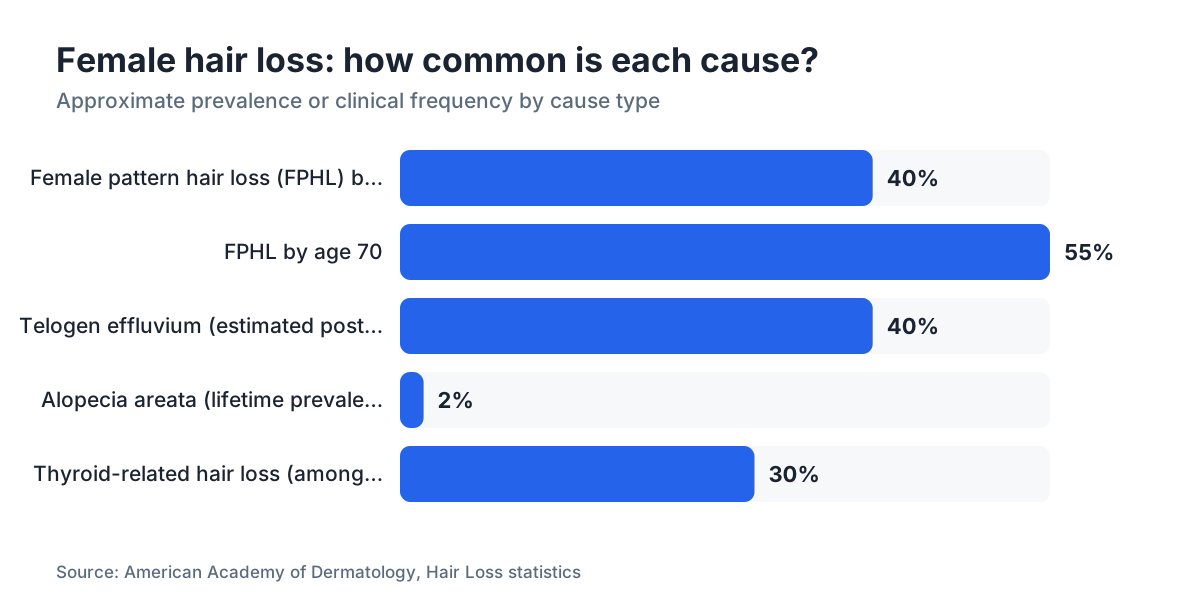
Female pattern hair loss (androgenetic alopecia, or FPHL) is the most common cause, affecting roughly 40% of women by age 50 and up to 55% by age 70 [1]. It's driven by a genetic sensitivity to androgens (male-type hormones women also produce) and shows up as gradual diffuse thinning at the crown and a widening part, not the receding hairline men get.
Second most common is telogen effluvium, a temporary shedding condition triggered by physical or emotional stress, childbirth, rapid weight loss, surgery, or illness. Follicles shift from growth into rest all at once, and three to four months later you shed heavily. It usually resolves on its own within six to twelve months once the trigger is gone.
Other causes worth knowing:
| Cause | Typical pattern | Reversible? |
|---|---|---|
| Androgenetic alopecia (FPHL) | Diffuse crown thinning, widening part | Partially (managed, not cured) |
| Telogen effluvium | Diffuse all-over shedding | Yes, if trigger is removed |
| Thyroid disease (hypo or hyper) | Diffuse shedding | Yes, with thyroid treatment |
| Iron deficiency | Diffuse thinning, fatigue | Yes, with supplementation |
| Alopecia areata | Patchy, circular bald spots | Sometimes (unpredictable) |
| Traction alopecia | Hairline recession from tight styles | Early stages: yes |
| Scalp scarring (cicatricial) | Permanent loss at affected site | No |
| Medications (chemo, some hormones) | Variable | Often yes, after stopping |
Knowing what causes hair loss in your case comes before every other decision. A dermatologist can usually sort these out with a scalp exam, a pull test, a blood panel, and sometimes a biopsy.
Which treatments have real FDA approval or solid clinical evidence?
Short answer: minoxidil is the only FDA-approved topical treatment for female pattern hair loss [2]. Everything else is off-label, investigational, or unsupported.
Minoxidil 2% solution was FDA-approved for women in 1991, and 5% foam followed. It works by lengthening the anagen (growth) phase and increasing follicle size. In clinical trials, roughly 40 to 60% of women using 2% minoxidil showed minimal to moderate regrowth compared with placebo, and the 5% foam matched or slightly beat that [3]. The catch: you keep using it indefinitely. Stop, and the hair you gained goes back to baseline within three to six months.
Oral minoxidil at low doses (0.25 to 1.25 mg daily for women, versus 2.5 to 5 mg for men) is prescribed off-label more and more. A 2020 study in the Journal of the American Academy of Dermatology found significant improvement in hair density with low-dose oral minoxidil, and many dermatologists now offer it to women who find topical application messy or irritating [4]. Blood pressure effects are real but modest at these doses. It's off-label, so insurance rarely covers it.
Spironolactone is an anti-androgen prescription drug used off-label for FPHL in women. It blocks androgen receptors in the scalp. The evidence comes from retrospective studies and small trials, not large randomized ones, but clinical experience is deep. Doses usually run 100 to 200 mg daily. It's not appropriate for women who may become pregnant. Spironolactone plus minoxidil is a common pairing in dermatology practice.
Finasteride, which blocks the enzyme that converts testosterone to DHT, is FDA-approved only for men. The evidence in women is genuinely mixed. A 2023 Cochrane review found limited, low-quality evidence for finasteride in postmenopausal women with FPHL, with modest effect sizes [5]. Most US dermatologists use it cautiously, if at all, and only in postmenopausal women, because it causes birth defects.
Low-level laser therapy (LLLT) devices (combs, helmets, caps) hold FDA 510(k) clearance, which is a safety clearance, not proof they work. Several small trials show modest gains in density. The effect is generally smaller than minoxidil. These devices cost $200 to $1,000 and need consistent use three to four times a week. Not a waste if you're motivated, but not the first thing to try.
Does PRP actually work for female hair loss?
Platelet-rich plasma (PRP) therapy means drawing your own blood, spinning it to concentrate growth factors, and injecting it into the scalp. It's spread through dermatology offices over the last decade, and the evidence is interesting without being conclusive.
A 2019 meta-analysis in Dermatologic Surgery, covering 19 studies and 460 patients, found PRP significantly increased hair density and thickness compared with baseline in androgenetic alopecia [6]. The trouble is that most of those studies lack rigorous placebo controls, and PRP protocols vary so much between clinics (how the blood is processed, how many injections, how often) that comparing results is hard.
Cost is a real barrier. A typical initial course of three to four sessions runs $1,500 to $4,000, with maintenance every six to twelve months. Insurance doesn't cover it.
If you've run minoxidil for a year and want to add something, PRP is a defensible choice. As a first and only intervention, it's expensive for what the evidence supports.
Can hair transplants cure female hair loss permanently?
A hair transplant is the closest thing to a permanent fix for localized hair loss, but it's wrong for most women with diffuse thinning.
Transplant surgery relocates follicles from a donor zone (usually the back and sides, where follicles resist shedding) to thinning areas. The moved follicles keep their genetic programming and keep growing in the new spot. If the donor follicles truly resist androgens, the transplanted hair can last a lifetime.
Here's the problem for women with FPHL. Many have diffuse thinning across the whole scalp, including the back. If the donor area is thinning too, those transplanted follicles will thin eventually, which makes the procedure less effective and harder to plan. A good surgeon checks donor density carefully and turns down patients who aren't candidates. That's the ethical move.
Women who do well tend to have stable, localized loss. Traction alopecia caught early enough to preserve donor hair, a receding hairline with a strong occipital donor zone, or loss from prior surgery or trauma all fit.
Costs in the US typically run $4,000 to $15,000 depending on graft count. Results take 12 to 18 months to fully show. Nobody should rush this decision.
What about supplements: biotin, viviscal, nutrafol?
Supplements are heavily marketed and lightly regulated. Here's an honest read on the main ones.
Biotin is the most overhyped. Biotin deficiency does cause hair loss, but real deficiency is rare in healthy adults eating a normal diet. The FDA has warned that high-dose biotin can interfere with thyroid and troponin lab tests, throwing off the results [7]. Taking biotin without a deficiency does nothing documented for hair. If you get regular blood work, tell your doctor you're taking it.
Nutrafol is a proprietary blend of marine collagen, ashwagandha, biotin, and other ingredients. A company-funded randomized controlled trial in the Journal of Cosmetic Dermatology (2018) showed improvement in hair growth parameters versus placebo over 24 weeks in women with self-perceived thinning [8]. The trial was small (n=40) and funded by the maker. Nobody has replicated it independently. It costs about $90 a month. It probably does something in some women, but the evidence isn't strong.
Viviscal (marine collagen and AminoMar complex) has slightly more independent research behind it than most supplements. A small 2012 randomized trial found significant increases in terminal hair count versus placebo. Same caveats: small, company-involved, not FDA-evaluated.
Iron and ferritin genuinely matter. Research suggests serum ferritin below 30 ng/mL may impair hair growth even without clinical anemia [9]. If your ferritin is low, iron supplementation can make a real difference. This is the one supplement category most worth a blood test.
For the wider picture, see our roundup of hair loss supplements. Short version: check your ferritin and thyroid before spending on any pill.
Are there hormonal treatments that work for female hair loss?
Hormones drive a lot of female hair loss, and addressing them can help, though the right approach depends on your hormonal status and overall health.
Spironolactone is the most-used anti-androgen in the US for FPHL. It blunts the effect of androgens on the scalp without shifting serum hormone levels much. Retrospective studies show meaningful improvement in a good share of women, though large randomized trials are thin. Most dermatologists start at 50 to 100 mg daily and titrate up based on response and tolerance.
Oral contraceptives with low-androgen or anti-androgen progestins (like norgestimate or desogestrel) are sometimes used in premenopausal women with FPHL, the idea being to lower free androgens. The evidence is mostly observational. High-androgen progestins (norgestrel, levonorgestrel) can worsen androgenetic hair loss, so the pill you pick matters.
After menopause, estrogen drops sharply, which can unmask or speed up FPHL. Hormone replacement therapy (HRT) with estrogen sometimes slows postmenopausal hair loss, though the evidence is weak. HRT carries cardiovascular and cancer risk considerations far beyond hair, so it's a conversation for your gynecologist or internist, not a reason to start HRT on its own.
Pairing a DHT blocker approach (spironolactone, or finasteride in postmenopausal women) with topical minoxidil is the most common evidence-informed combination in practice for FPHL.
What reversible causes of female hair loss can be fully fixed?
This is the good-news section.
Thyroid dysfunction, both hypothyroidism and hyperthyroidism, commonly causes diffuse shedding. Treating the thyroid condition usually restores hair, though it can take six to twelve months after levels normalize before you see obvious change [10].
Iron deficiency is very common in women of reproductive age. Menstrual blood loss leaves many women low on iron and ferritin without being frankly anemic. Studies link ferritin below 30 ng/mL to impaired hair cycling. Many dermatologists aim to push ferritin above 70 ng/mL. This is fully reversible.
Medication-induced hair loss is common and underrecognized. Valproate, isotretinoin, some blood thinners, certain antidepressants, and high-dose vitamin A can all trigger shedding. Switching or stopping the drug usually allows recovery.
Telogen effluvium after childbirth, major illness, or surgery is self-limiting. The follicles aren't damaged. They went dormant and will cycle back into growth. Most women see noticeable recovery by month nine to twelve after the trigger, though the wait can feel alarming. Minoxidil can speed things modestly, but many dermatologists watch a good recovery happen without any treatment once the trigger clears.
Traction alopecia from tight braids, weaves, or ponytails reverses in the early stages if you drop the tension before scarring sets in. Once follicles scar, that hair is gone. This one has a real time window.
How do you figure out which type of female hair loss you have?
You need a diagnosis before you spend a dollar. Doing it backwards is exactly how women burn eighteen months on three shampoos, two supplements, and a laser cap when the actual problem was low ferritin the whole time.
A dermatologist (ideally one who focuses on hair, or a trichologist) is the right person to evaluate this. The workup usually includes:
- A physical scalp exam and hair pull test
- Dermoscopy (a magnified look at the scalp surface and follicle patterns)
- Blood tests: CBC, ferritin, thyroid panel (TSH, free T4), DHEA-S, total and free testosterone, zinc, vitamin D, sometimes prolactin
- Sometimes a scalp biopsy under local anesthesia, which can definitively separate FPHL from alopecia areata and rule out scarring alopecia
If a specialist appointment is hard to get soon, or you want a first look at your pattern before it, the free AI scan at MyHairline can map your hairline and thinning against known loss patterns and give you a visual starting point to discuss with your dermatologist. It's not a diagnosis. It's a structured way to see what you're dealing with.
The pattern tells you a lot. Diffuse crown thinning with a preserved frontal hairline is classic FPHL. Patchy circular bald spots point to alopecia areata. Hairline recession with scalp scaling can be frontal fibrosing alopecia, a scarring condition that needs fast intervention.
What's a realistic timeline for treatment to show results?
Patience isn't optional here. Every effective treatment takes months to show visible change, and that's why so many women quit working treatments too early.
Minoxidil takes three to six months for an initial response and up to twelve months for full results. The first two to six weeks often bring extra shedding, which is normal and reflects follicles cycling. That shedding phase spooks people and triggers early quitting more than anything else.
Spironolactone usually shows meaningful clinical improvement after six to twelve months of consistent use at therapeutic doses.
PRP injections show measurable density changes at three to six months after a series.
Hair transplant results take longest: transplanted follicles shed first (shock loss), regrowth starts around three to four months, and full density typically shows at twelve to eighteen months.
For reversible causes, timelines track the cause. Thyroid: six to twelve months after levels normalize. Iron deficiency: three to six months after ferritin recovers. Postpartum telogen effluvium: nine to twelve months after delivery, typically.
Documenting your hair with consistent photos every three months, same light, same angle, is the only reliable way to measure progress. What you see in the mirror day to day is too noisy to trust.
What treatments are not worth your money?
Ketoconazole shampoos have some evidence for mild benefit as an add-on in androgenetic alopecia, mostly by cutting scalp inflammation. As a standalone primary treatment, the effect is small. Use it if you want, but don't lean on it.
Caffeine shampoos have interesting lab (in vitro) data and almost no convincing human trial evidence. The shampoo sits on your scalp a couple of minutes and rinses off. Whatever mechanism might work needs sustained exposure it never gets.
Essential oils (rosemary, peppermint): a small 2015 trial compared rosemary oil with minoxidil 2% and found similar hair count improvement at six months [11]. The trial is small and hasn't been replicated at scale. Rosemary oil is cheap and low-risk, so it's fine to try, but calling it equal to minoxidil on the strength of one small trial is a stretch.
Microneedling (dermarolling) alone has modest evidence. As an add-on to minoxidil, a 2013 study in the International Journal of Trichology found that combining weekly microneedling with minoxidil produced significantly more hair growth than minoxidil alone [12]. Worth considering if you're already on minoxidil and want better penetration.
Stem cell and exosome therapies run thousands of dollars per session at some clinics. The evidence is preliminary. Proceed with real caution.
What's the honest outlook for women with pattern hair loss?
Female pattern hair loss moves slowly in most women, but it does move without treatment. Starting early leaves you more to work with.
The practical reality: minoxidil (topical or low-dose oral) plus an anti-androgen like spironolactone, started early and used consistently, can stabilize loss and produce meaningful regrowth in a good share of women. It's not a cure. It's maintenance. The hair you gain is yours only as long as you keep treating.
If you want to track progress systematically, MyHairline's AI scan gives you a visual baseline and helps you compare photos over time in a structured way. It's free and takes about two minutes at /scan.
The women who do best get diagnosed accurately, pick evidence-based treatments, and stay consistent for the eighteen to twenty-four months it takes to honestly judge whether something works. Hair loss is slow. Treatment is slow. Bouncing between products to beat that timeline just doesn't work.
For combination guidance and how finasteride and minoxidil interact (mostly studied in men but increasingly relevant off-label for women), the evidence points to additive benefit when both pathways are addressed. Talk to a dermatologist before combining.
Sources
- American Academy of Dermatology, Hair Loss: Who Gets and Causes
- FDA, Drugs@FDA Approval Database: topical minoxidil for women
- Olsen EA et al., J Am Acad Dermatol 2002: Minoxidil 5% foam vs 2% solution in women
- Sinclair RD, J Am Acad Dermatol 2020: Low-dose oral minoxidil for female pattern hair loss
- Cochrane Database of Systematic Reviews 2023: Interventions for female pattern hair loss
- FDA, Safety Communication: Biotin may interfere with lab tests
- Ablon G, J Cosmet Dermatol 2018: Randomized trial of Nutrafol in women with self-perceived thinning hair
- Rushton DH, Clin Exp Dermatol 2002: Nutritional factors and hair loss
- American Thyroid Association, Hair Loss and Thyroid Disease patient information
- Panahi Y et al., SKINmed 2015: Rosemary oil vs minoxidil 2% for androgenetic alopecia
- Dhurat R et al., Int J Trichology 2013: Microneedling with minoxidil vs minoxidil alone for alopecia