

TL;DR: More than half of women over 60 have some degree of hair loss, mostly from androgenetic alopecia (female pattern hair loss), but thyroid disease, nutritional deficiencies, and medication side effects also drive significant thinning at this age. Minoxidil 2% is the only FDA-approved topical treatment for women. Several other options have real evidence behind them. A few are mostly hype.
How common is hair loss in women over 60?
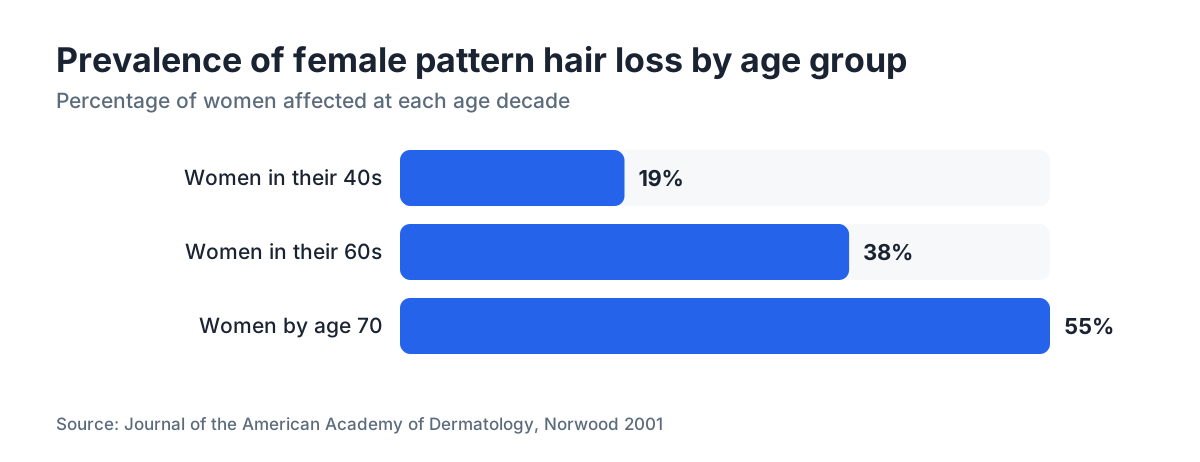
Very common. Studies consistently show that female pattern hair loss affects around 38 to 55 percent of women by age 70, with prevalence climbing sharply after menopause. A large 2001 population study published in the Journal of the American Academy of Dermatology found that androgenetic alopecia affected approximately 19 percent of women in their 40s and roughly 38 percent by their 60s, rising further with each decade [1]. That makes it one of the most common skin conditions in older women, yet it still gets far less clinical attention than male hair loss.
The thinning tends to be diffuse rather than patchy. Most women notice their part widening, their ponytail shrinking, or more scalp visible under overhead light. A sudden clump in the shower drain is usually something different, telogen effluvium, which can happen alongside pattern hair loss and sometimes triggers a woman to notice both at once.
The short version: if you're over 60 and your hair is thinning, you are not unusual and you are not imagining it.
What causes hair loss in women over 60?
Several things happen at once after menopause, and they often stack on each other.
Androgenetic alopecia (female pattern hair loss) is the single most common cause. Estrogen partially counteracts androgens during reproductive years. After menopause, estrogen drops sharply, which lets dihydrotestosterone (DHT) act more freely on hair follicles that are genetically sensitive to it. Those follicles miniaturize over years, producing progressively finer, shorter hairs until some stop producing visible hair at all. This is a slow process, not an overnight event, which is why many women don't notice it until significant density is already gone. You can read more about the underlying mechanism in our piece on what causes hair loss.
Thyroid dysfunction is the second thing any clinician worth seeing will check. Both hypothyroidism and hyperthyroidism cause diffuse shedding, and thyroid disease becomes more common with age. The American Thyroid Association estimates that one in five women over 60 has some degree of thyroid dysfunction [2]. A TSH test costs almost nothing and can rule this out in a single blood draw.
Nutritional deficiencies are more common in this age group than most people realize. Iron deficiency (even without frank anemia), low ferritin, vitamin D insufficiency, and low zinc all correlate with increased shedding. Older adults absorb B12 less efficiently, and B12 deficiency can contribute to diffuse hair loss. Dietary intake often drops with age, and some medications (metformin, proton pump inhibitors) deplete these nutrients further.
Medications are an underappreciated culprit. Blood pressure drugs, particularly beta-blockers and ACE inhibitors, are associated with hair shedding. Statins, anticoagulants, and some antidepressants appear on case-report lists as well, though the evidence for individual drugs varies. If your hair loss started within a few months of a new prescription, tell your prescribing doctor. Stopping or switching is sometimes an option.
Chronic illness and inflammation including autoimmune conditions (lupus, alopecia areata), diabetes, and chronic stress all affect the hair cycle. Alopecia areata specifically becomes more common in older women and produces patchy rather than diffuse loss, which is a key visual distinction.
The practical takeaway: a good workup for a 60-year-old woman with hair loss includes TSH, a complete blood count, ferritin, vitamin D, B12, zinc, and a careful medication review. Pattern hair loss may well be the primary driver, but fixing a concurrent thyroid problem or iron deficiency often produces meaningful improvement on its own.
What does female pattern hair loss actually look like?
The classic presentation is diffuse thinning over the crown and top of the scalp, with the frontal hairline largely preserved. That's the key visual difference from male pattern baldness, where the hairline recedes first. Women rarely go completely bald even with severe androgenetic alopecia, but the density loss can be dramatic.
Dermatologists use the Ludwig scale to classify severity in women [3]. Ludwig I is mild: a widened part with some thinning visible on the crown. Ludwig II is moderate: clearly sparse on the crown, part much wider. Ludwig III is severe: diffuse loss over the top with near-total scalp visibility in the affected zone. Most women who seek treatment are Ludwig I or II, and treatment works best at those stages. Waiting until Ludwig III means fewer living follicles to rescue.
A less common pattern in postmenopausal women is frontal fibrosing alopecia, a slow scarring alopecia that actually does recede the hairline, sometimes by several centimeters, along with loss of eyebrows. If your hairline is moving backward and the skin at the edge looks slightly pale or scarred, see a dermatologist promptly. Scarring alopecias require different treatment and are time-sensitive because once a follicle scars over, it doesn't come back.
Which treatments have real evidence for women over 60?
The honest answer is that most large clinical trials of hair loss drugs enrolled younger patients, and older women are underrepresented in the literature. That said, the available evidence points clearly in a few directions.
Minoxidil 2% topical is the only topical treatment the FDA has approved for female pattern hair loss [4]. The main 1994 trial published in the Journal of the American Academy of Dermatology showed that 2% topical minoxidil produced significantly greater hair regrowth than placebo in women, with 60 percent of participants reporting moderate to minimal regrowth versus 40 percent in the placebo group [5]. The drug works by prolonging the anagen (growth) phase and may increase follicle size. You apply it twice daily to a dry scalp. It's available over the counter. The main catch: it takes at least four months to see results, and you have to keep using it or any gained hair falls out within a few months of stopping.
The 5% foam (originally formulated for men) is used in women off-label and applied once daily. Some dermatologists prefer it for convenience. Our full breakdown of minoxidil side effects is worth reading before you start, particularly around the initial shedding phase that worries many women in the first six weeks.
Oral minoxidil at low doses (0.25 to 1 mg daily for women) has been gaining real traction since a 2020-2021 review in the Journal of the American Academy of Dermatology found it effective and reasonably well-tolerated in women [12]. It avoids the scalp application that some women find greasy or inconvenient. Side effects include fluid retention and, rarely, unwanted facial hair. It requires a prescription. Our oral minoxidil article covers the dosing details.
Low-level laser therapy (LLLT) has FDA clearance (not approval, a meaningful regulatory distinction) as a medical device for hair loss. The evidence is positive but modest. A randomized controlled trial in the American Journal of Clinical Dermatology found statistically significant improvement in hair density with an LLLT device versus sham [7]. The effect size is smaller than minoxidil. Devices are expensive, around $200 to $600 for a cap or comb, and sessions take time. It's a reasonable add-on if you can afford it; it's not a replacement for proven drug therapy.
Spironolactone is an off-label option that many dermatologists use in postmenopausal women. It's an androgen blocker that reduces DHT activity at the follicle level. The evidence in women is mostly observational but consistent: a retrospective review of 100 women with female pattern hair loss showed improvement in 74 percent with spironolactone at 100-200 mg daily [6]. Blood pressure and potassium levels need monitoring. It's not a good choice if you have low blood pressure or kidney problems. Our explainer on dht blockers covers how this class of drugs works.
Finasteride and dutasteride block 5-alpha reductase, the enzyme that converts testosterone to DHT. Both are FDA-approved for male pattern hair loss only. In premenopausal women they are contraindicated due to fetal risk. In postmenopausal women the risk-benefit calculus is different, and some dermatologists do prescribe finasteride off-label. A 2000 trial found finasteride at 1 mg daily was no better than placebo in postmenopausal women when used alone, but higher doses and combination approaches have shown more promise in some smaller studies [8]. If a dermatologist recommends it for you, ask specifically about the dosing rationale. Our finasteride article explains the full mechanism and evidence base.
Platelet-rich plasma (PRP) injections are increasingly offered at dermatology offices. The procedure draws your own blood, concentrates the platelets, and injects them into the scalp. Several small randomized trials show meaningful improvement in hair density, but study sizes are small and protocols vary widely. Cost runs $500 to $2,000 per session and usually requires multiple sessions. Insurance almost never covers it. The evidence is genuinely promising but not yet conclusive enough to call it standard of care.
Hair transplant surgery is an option for women with stable pattern hair loss and adequate donor density at the back and sides of the scalp. It tends to work best in women with Ludwig II or III who have good donor hair. The key constraint is that women lose hair more diffusely than men, so the donor zone is not always dense enough to supply meaningful grafts. A consultation with a board-certified hair restoration surgeon is the only way to know if you're a candidate. More on what's involved in our hair transplant overview.
What's a waste of money for women with hair loss after 60?
Most shampoos, serums, and supplements marketed specifically for hair loss have little to no clinical backing. Biotin is the clearest example. Biotin supplementation is beneficial if you have an actual biotin deficiency, which is rare in otherwise healthy adults, but large controlled studies show no benefit in biotin-sufficient people. The AAD explicitly states there is no good evidence supporting biotin for hair loss in those without a deficiency [9]. The supplement industry has nonetheless built a multi-hundred-million-dollar market around it.
Ketoconazole shampoo gets mentioned frequently and does have some anti-androgenic properties at the scalp, with small studies showing a modest effect on hair density. It's cheap and low-risk. But calling it a treatment is generous. Think of it as a potentially useful adjunct, not a solution.
Collagen powders, castor oil, rosemary oil, and similar products have either no rigorous evidence or very preliminary data. One small 2015 study compared rosemary oil to 2% minoxidil over six months and found similar hair counts at the endpoint, but the study had major methodological limitations and hasn't been replicated at meaningful scale [10]. That single study gets cited constantly in supplement marketing as if it settles the question. It doesn't.
The hair loss supplements page has a full breakdown of what's been tested and what hasn't.
How does menopause specifically affect the hair cycle?
The hair follicle is directly responsive to sex hormones. Estrogen receptors are present in follicular cells, and estrogen generally promotes the anagen (growth) phase and slows follicle miniaturization. When estrogen and progesterone drop sharply at menopause, this protective effect disappears.
At the same time, relative androgen levels rise because estrogen was partially suppressing them. Women also experience rising levels of follicle-stimulating hormone (FSH) and luteinizing hormone (LH) as the pituitary gland tries to stimulate ovaries that are no longer responding. The net effect on hair follicles sensitive to DHT is accelerated miniaturization.
Hormone replacement therapy (HRT) is a reasonable question at this point. The evidence is mixed. Some studies suggest HRT, particularly preparations containing estrogen, may slow hair loss progression or partially reverse it in postmenopausal women. But HRT carries its own risk-benefit profile that is entirely individual, involving cardiovascular history, breast cancer risk, and other factors. This is a conversation for your OB-GYN or internist, not a decision driven by hair concerns alone. If HRT is appropriate for you for other reasons (vasomotor symptoms, bone density), any hair benefit is a bonus.
The perimenopause years, roughly 45 to 55, are when many women first notice increased shedding. What often happens is a bout of telogen effluvium triggered by hormonal fluctuation, on top of slowly developing pattern hair loss that was already in progress. The effluvium resolves on its own in a few months. The pattern hair loss does not, which is why women in their early 60s who "recovered" from perimenopausal shedding sometimes still notice continued thinning.
What blood tests should a woman over 60 get for hair loss?
A complete workup typically includes:
- TSH (thyroid stimulating hormone)
- Free T4
- Complete blood count (CBC)
- Serum ferritin (more sensitive than hemoglobin for hair-relevant iron status)
- Serum iron and total iron binding capacity
- 25-hydroxyvitamin D
- Serum B12
- Zinc
- Fasting glucose or HbA1c if diabetes risk is present
- Total testosterone and free testosterone if androgen excess is suspected
- DHEA-S in cases where adrenal androgen excess is possible
Ferritin is the one most commonly missed. Normal hemoglobin doesn't rule out low ferritin, and a ferritin below 30 ng/mL is associated with diffuse shedding in some studies even without anemia. Some dermatologists aim for ferritin above 70 ng/mL in women with hair loss, though this threshold is debated and not universally agreed upon in the literature.
If you see a general practitioner who orders only a CBC and says everything is fine, it's worth asking specifically for ferritin. It's not always included by default.
Can a scalp biopsy or dermoscopy help with diagnosis?
Yes, in cases that aren't straightforward. Dermoscopy is a noninvasive tool a dermatologist uses to examine the scalp under magnification. It can show characteristic findings of androgenetic alopecia (variability in hair shaft diameter, peripilar signs) versus alopecia areata (yellow dots, broken hairs) versus scarring alopecias. An experienced dermatologist can often diagnose and distinguish these conditions with dermoscopy alone, without a biopsy.
A scalp biopsy is the gold standard when the diagnosis is genuinely unclear, particularly if a scarring alopecia is suspected. Two small punch biopsies from affected areas, processed for horizontal sectioning, are the standard approach. The histological findings can confirm androgenetic alopecia, identify inflammation suggesting an autoimmune process, or diagnose frontal fibrosing alopecia. If you're not responding to minoxidil after a year and your dermatologist hasn't done a biopsy or dermoscopy, it's reasonable to ask whether one is warranted.
If you want a quicker first look at your pattern before a clinic visit, the free AI scan at MyHairline can help you characterize your hairline and thinning zones, though it's a screening tool, not a replacement for clinical evaluation.
How long does treatment take to work, and what results are realistic?
This is where many women get frustrated, because the timeline is slow and the ceiling is limited.
Minoxidil requires at least 4 months of consistent use before you'll see any change, and full assessment of response takes 12 months. A successful response means slowing or stopping further loss and, for some women, modest regrowth. Complete restoration of prior density is rare. The goal of treatment at Ludwig II or III is stabilization with incremental improvement, not reversal.
Oral minoxidil tends to show earlier signs of response in some patients, around 3 to 4 months, but the same 12-month evaluation timeline applies for full response.
Spironolactone also has a slow onset. Most practitioners give it at least 6 to 12 months before concluding it's not working.
PRP results are often visible sooner, sometimes at 3 to 6 months, because it's working through a different mechanism (growth factor release rather than direct follicle signaling). But results fade without maintenance sessions.
The honest ceiling: if you start treatment at Ludwig I with mostly miniaturized but still-living follicles, you have a real chance of meaningful regrowth. At Ludwig II, stabilization with some improvement is more likely than full regrowth. At Ludwig III, the primary realistic goal is stopping further loss. This isn't pessimism; it reflects the biology. Miniaturized follicles can be rescued; follicles that have been gone for years cannot.
Combination therapy, typically minoxidil plus spironolactone or an oral anti-androgen, tends to outperform single agents in clinical practice, though head-to-head trials comparing combinations specifically in women over 60 are scarce.
Are there hairstyling or cosmetic options that help while treatment works?
Several, and they're worth taking seriously because treatment takes a long time and the psychological toll of hair thinning is real and documented.
Toppik and similar keratin fiber concealers work immediately. They cling to existing hair shafts and make thin areas look denser. They wash out. They're inexpensive. Many women use them daily while waiting for treatment to take effect.
Scalp micropigmentation is a tattooing technique that creates the appearance of hair follicles on a thinning scalp. It's semi-permanent (fades over several years), costs $1,500 to $4,000 depending on the area treated, and looks most natural on women with very short hair or shaved heads. For women with diffuse thinning who wear their hair longer, it can create the illusion of density.
Hair systems and wigs have improved dramatically in quality and naturalness. Medical-grade human hair toppers that clip or bond to existing hair are nearly undetectable, and options exist at every price point. The stigma around them is much lower than it was a generation ago.
For styling, a volumizing dry shampoo at the roots, a side part rather than a center part (which exposes less scalp), and a diffuser on low heat rather than a flat iron all help preserve density and reduce visible scalp. Heat damage accelerates the appearance of thinning even in otherwise healthy hair, and older hair shafts are more fragile.
When should a woman over 60 see a dermatologist versus her primary care doctor?
Start with your primary care doctor if you want a basic blood panel and to rule out systemic causes. They can order all the relevant labs and manage any thyroid or iron deficiency they find.
See a dermatologist, ideally one who specializes in hair loss, if:
- The pattern is atypical (patchy, hairline receding, eyebrow loss)
- Basic labs come back normal but loss is continuing
- You've tried minoxidil for 12 months without meaningful change
- You want to discuss spironolactone, oral minoxidil, or PRP
- Scarring alopecia is a possibility
Dermatologists who specialize in hair (trichologists with MD training, or dermatologists with a hair loss sub-focus) are meaningfully better at pattern diagnosis and treatment optimization than general dermatologists, who may have limited exposure to hair disorders in training. The American Academy of Dermatology has a Find a Dermatologist tool on their website [11].
If you go to a clinic that leads with selling you PRP or supplements before doing any diagnostic workup, leave. A good hair loss consultation starts with assessment, not sales.
Sources
- Journal of the American Academy of Dermatology, Norwood 2001 - prevalence of androgenetic alopecia in women
- American Thyroid Association - thyroid disease prevalence
- U.S. Food and Drug Administration - minoxidil topical label and approval
- Journal of the American Academy of Dermatology, DeVillez et al. 1994 - minoxidil 2% in women randomized controlled trial
- Journal of the American Academy of Dermatology, Sinclair et al. 2011 - spironolactone in female pattern hair loss retrospective review
- American Journal of Clinical Dermatology, Leavitt et al. 2009 - LLLT randomized controlled trial for hair loss
- Journal of the American Academy of Dermatology, Price et al. 2000 - finasteride in postmenopausal women randomized trial
- American Academy of Dermatology Association - hair loss diagnosis and treatment guidance
- Skinmed Journal, Panahi et al. 2015 - rosemary oil versus minoxidil 2% for hair regrowth
- American Academy of Dermatology Association - Find a Dermatologist tool
- Journal of the American Academy of Dermatology, Randolph and Tosti 2021 - oral minoxidil for hair loss in women
- ePlasty / PubMed - scalp massage and hair thickness, Koyama et al. 2016