

TL;DR: The only FDA-approved over-the-counter treatment for female hair loss is 2% or 5% topical minoxidil. Prescription options include spironolactone, low-dose oral minoxidil, and platelet-rich plasma. Most women see modest but real regrowth by 4 to 6 months. No treatment cures the problem. Stop taking any of them and the gain reverses.
Why do women lose hair in the first place?
Female hair loss is not one condition. It has at least a dozen causes, and the treatment that fixes one does nothing for another. Get the diagnosis wrong and you burn money.
The most common pattern is female-pattern hair loss (FPHL), also called androgenetic alopecia. It affects roughly 40% of women by age 50 [1] and shows up as diffuse thinning across the crown and top of the scalp, with the frontal hairline usually staying put. That is the main visual difference from a receding hairline in men.
Then there is telogen effluvium, the sudden shedding that starts 2 to 4 months after a stressor like childbirth, surgery, crash dieting, thyroid disease, or a bad illness. Our article on telogen effluvium goes deeper. This type often resolves on its own once the trigger clears, which is exactly why throwing expensive treatments at it right away is usually premature.
Alopecia areata is an autoimmune condition that causes patchy loss and has its own path entirely. JAK inhibitors like baricitinib are now FDA-approved for severe cases. Traction alopecia from tight hairstyles, scarring from lichen planopilaris, and plain nutritional deficiencies each follow their own logic too.
So before you buy anything, figure out which type you have. A board-certified dermatologist can usually tell from a visual exam and basic bloodwork. Spending on minoxidil when your hair is falling out from low ferritin or an uncontrolled thyroid is money down the drain. Our guide on what causes hair loss walks through the full list.
What is the best hair loss treatment for women overall?
For female-pattern hair loss, topical minoxidil is the first-line treatment most dermatologists reach for, and it is the only over-the-counter option the FDA has approved for women. The American Academy of Dermatology recommends starting there before moving to prescriptions [2].
The "best" treatment still depends on what is driving your loss and whether you have other factors like elevated androgens or polycystic ovary syndrome. Here is a quick map:
| Cause | First-line treatment | Evidence level |
|---|---|---|
| Female-pattern hair loss (FPHL) | Topical minoxidil 2% or 5% | FDA-approved, multiple RCTs |
| FPHL with elevated androgens | Spironolactone or finasteride (off-label) | Good observational data |
| Telogen effluvium | Address the trigger (nutrition, thyroid, stress) | Strong consensus |
| Alopecia areata (moderate-severe) | Corticosteroids or baricitinib | FDA-approved for severe |
| Traction alopecia | Stop the traction, early intervention | Clinical consensus |
Nothing on this list is a cure. Every drug on it needs ongoing use to hold the result. That is not a marketing caveat. It is the biology: these treatments shift your growth cycle while you take them, and the cycle shifts back when you stop.
Does minoxidil work for women, and how well?
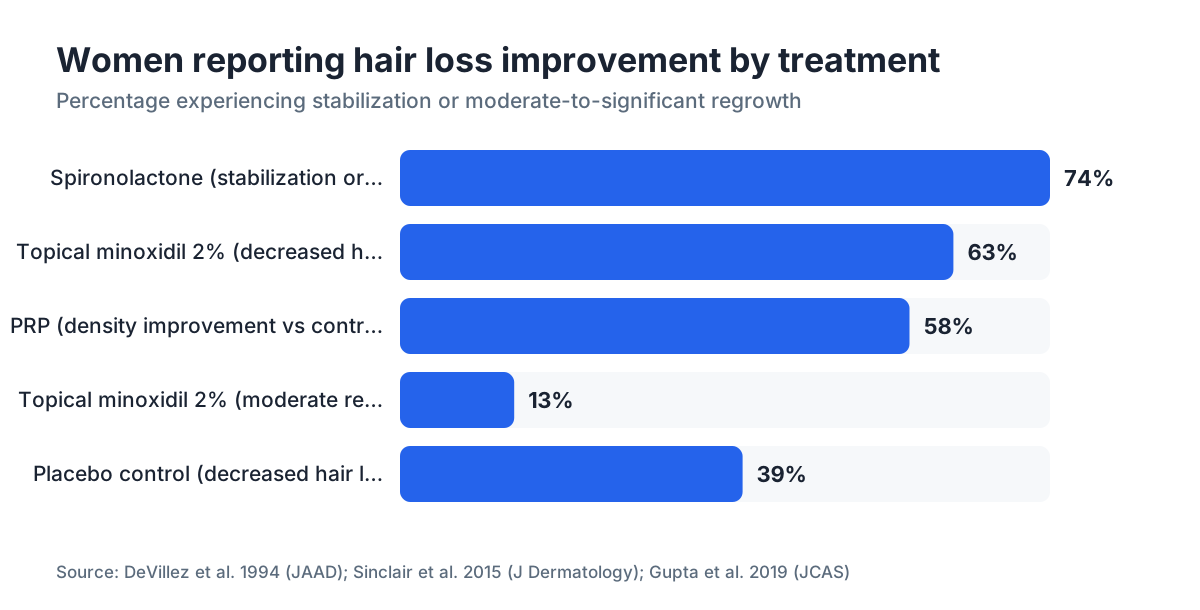
Yes, with real but modest results. The most-cited trial comparing 2% minoxidil to placebo in women with FPHL found that 63% of women on minoxidil reported decreased hair loss versus 39% on placebo, and 13% reported moderate regrowth versus 6% on placebo [3]. Meaningful. Not dramatic.
The 5% foam formulation was later approved for women. A randomized trial found it produced significantly more hair growth than 2% solution applied twice daily, with the bonus of once-daily dosing [4]. Most dermatologists now start women on 5% foam once a day for the convenience and slightly better outcomes.
Our article on whether minoxidil works breaks the data down further.
Minoxidil takes time. Most women see extra shedding in the first 4 to 8 weeks as the drug pushes follicles out of a resting phase into an active one. That early shed is normal, not a sign of failure. Real density changes usually show up at 4 to 6 months, and peak results land around 12 months of steady use.
The main side effects for women are scalp irritation and, less often, unwanted facial hair from the solution running down the forehead. The 5% foam has a lower reported rate of facial hypertrichosis than the 2% solution in some users, probably because it is easier to apply without dripping [4]. Our page on minoxidil side effects covers the full list.
Cost: generic topical minoxidil runs roughly $10 to $20 a month. Brand-name Rogaine for Women costs more, around $30 to $50 a month, but the active ingredient is identical.
What prescription treatments do dermatologists use for female hair loss?
When topical minoxidil is not enough, or when a woman has signs of hormonal loss like elevated androgens or a PCOS diagnosis, several prescription options carry good evidence.
Spironolactone is an anti-androgen blood pressure drug used off-label for FPHL in women. A retrospective study of 1,111 women with FPHL found that 74.4% saw stabilization or improvement on spironolactone [5]. Hair-loss doses run 100 to 200 mg a day. It requires monitoring of potassium and blood pressure, and it is absolutely contraindicated in pregnancy.
Oral minoxidil at low doses (0.25 to 2.5 mg a day for women) is catching on fast. A randomized trial published in JAMA Dermatology in 2022 found that 1 mg oral minoxidil matched 5% topical for women with FPHL, with better tolerability [6]. Our full article on oral minoxidil covers the evidence and the cardiovascular cautions you need to know.
Finasteride is FDA-approved for male-pattern baldness but sometimes used off-label for postmenopausal women. It is contraindicated for women of childbearing potential because of documented harm to male fetal genitalia. The finasteride label spells out that warning. In the right candidate, observational data suggest it reduces shedding. Our article on finasteride and minoxidil compares how the two get combined.
Platelet-rich plasma (PRP) means drawing your own blood, spinning it to concentrate growth factors, and injecting it into the scalp. A meta-analysis of 19 studies found PRP produced statistically significant increases in hair density versus controls [7]. Sessions run $500 to $2,000, usually 3 of them upfront, with maintenance every 6 to 12 months. The results are real, but protocols across clinics are all over the place.
Ketoconazole shampoo (prescription 2%) has some evidence as an add-on. It lowers scalp DHT locally, and one small trial found it raised hair density on par with 2% minoxidil over 21 months in men. The women-specific data is thinner. Over-the-counter 1% ketoconazole is easier to get but less studied.
What is the best shampoo for hair loss in women?
No shampoo regrows hair. That is the honest answer, and any product claiming otherwise is making a claim the FDA has not approved.
Some shampoo ingredients can still calm scalp inflammation, lower surface DHT, or make existing hair look thicker, which is useful as part of a bigger plan.
Ketoconazole 1% (over-the-counter): the best-studied shampoo ingredient for hair loss. It is an antifungal that also blocks DHT at the scalp. Nizoral 1% is the recognized brand. Studies back it as an add-on, not a standalone treatment.
Caffeine shampoos: a few small studies suggest caffeine reaches the scalp and may slightly extend the growth phase. The evidence is nowhere near minoxidil's level, but the side-effect profile is basically zero.
Biotin-infused shampoos: biotin deficiency is genuinely tied to hair loss, but biotin does not absorb meaningfully through the scalp. Taking oral biotin if you are actually deficient makes sense. Rinsing it over your hair does not.
Thickening shampoos with niacinamide or saw palmetto: these can improve scalp circulation or mildly block DHT. They make hair look fuller short term by swelling the shaft. They are not treatments.
My honest pick for the best adjunct shampoo: ketoconazole 1% two or three times a week, with a gentle, sulfate-free shampoo on the other days. Do not expect miracles. Expect slightly better scalp conditions and a little less shedding at best.
If you want to weigh oral supplements alongside topical care, our guide on hair loss supplements covers what the actual evidence says.
Does low-level laser therapy (LLLT) work for female hair loss?
Possibly, and the FDA has cleared several devices for this use. Worth understanding what that means. FDA clearance for a device is not the same as FDA approval for a drug. Clearance means the device is substantially equivalent to a legally marketed one and safe for its intended use. It does not mean efficacy was proven to the drug standard.
The randomized trials are real, though. A sham-controlled trial of a 272-diode laser cap in women with FPHL found a 51% increase in hair count after 26 weeks versus a 23% increase in the sham group, and the difference was statistically significant [8]. The devices (HairMax, iRestore, and others) usually retail for $300 to $900. Once you own one, the running cost is close to nothing.
Most dermatologists treat LLLT as a legitimate add-on, not a first choice. It seems to work better in early-stage loss than in advanced thinning. The proposed mechanism is stimulation of mitochondrial activity in follicle cells, though the exact pathway is still argued over.
The catch is commitment. Most trials run 25 minutes of use, three times a week, for at least six months before you judge results. Plenty of people quit before then.
When should a woman consider a hair transplant?
Transplants work for women in specific situations and fail badly in the wrong ones.
Women with FPHL are usually not ideal candidates unless they have a stable donor area, meaning hair at the back and sides that is not thinning. FPHL causes diffuse thinning, so many women lose donor density too, which makes transplanted follicles unreliable. A surgeon who is honest about that up front is worth finding.
Better candidates include women with traction alopecia where the donor area is healthy, women with a stable localized pattern similar to male-pattern baldness, and women who want to restore a surgically altered hairline after cosmetic surgery.
US costs range from $4,000 to $20,000 depending on graft count and technique. Our dedicated article on hair transplant costs breaks down what drives that range, and our hair transplant overview explains FUT versus FUE and what recovery looks like.
For most women with FPHL, a transplant is a last resort after medical management has been tried and optimized for at least 12 to 18 months. It is not a starting point.
Can nutrition and supplements help with female hair loss?
When a deficiency is driving the loss, correcting it works. That is a fairly strong claim, and the data backs it.
Iron deficiency is common in pre-menopausal women and clearly linked to telogen effluvium. Ferritin below 30 ng/mL is often cited as the threshold where hair loss risk climbs, though some dermatologists target above 70 ng/mL for women with active shedding. One review in the Journal of Korean Medical Science noted the association but admitted randomized trials of iron supplementation for hair loss are limited [9].
Vitamin D deficiency is tied to alopecia areata in several studies, with lower levels in affected people than in controls [10]. Fixing a deficiency is sensible. Megadosing when your levels are already fine is not.
Biotin deficiency is real but rare in healthy adults who eat a varied diet. Biotin supplements get marketed hard for hair. Most dermatologists are skeptical of biotin without a proven deficiency, partly because high biotin intake skews certain thyroid and cardiac lab tests.
Zinc, selenium, and protein round out the common culprits. Protein restriction is a well-documented trigger for telogen effluvium, so eating enough is basic. Overdoing zinc can actually worsen hair loss by crowding out copper absorption.
The practical move: get bloodwork first (iron, ferritin, vitamin D, thyroid panel, zinc) before buying any supplement. Fix what is low. Do not spend money supplementing normal levels.
How do treatments for female hair loss compare head to head?
There is no single mega-trial pitting every option against the others in women, so any ranking mixes clinical judgment with extrapolation. Here is what the evidence actually supports:
| Treatment | Regrowth evidence | Speed | Monthly cost (approx.) | Prescription needed? |
|---|---|---|---|---|
| Topical minoxidil 5% | FDA-approved, strong RCT data | 4-12 months | $10-50 | No |
| Oral minoxidil (1-2.5 mg) | Strong, comparable to topical | 4-12 months | $10-30 | Yes |
| Spironolactone | Good observational data | 6-12 months | $10-30 | Yes |
| PRP injections | Moderate, growing evidence | 3-6 months | $500-2000/session | Yes |
| LLLT devices | Moderate RCT evidence | 6 months | $300-900 upfront | No |
| Ketoconazole shampoo (adjunct) | Weak adjunct data | N/A | $10-20 | No (1%) |
| Hair transplant | Permanent if donor stable | 12-18 months to see | $4,000-20,000 total | Yes (procedure) |
| Baricitinib (alopecia areata only) | FDA-approved for severe AA | Months | $2,000+/month (insurance varies) | Yes |
Most dermatologists treating FPHL start with topical or oral minoxidil, add spironolactone if there is an androgen component, and bring up PRP or LLLT as add-ons after 6 to 12 months if the response is only partial. That ladder reflects how most academic hair clinics actually work.
If you are trying to place yourself on the severity spectrum before you start, the free AI hair analysis at MyHairline can give you a rough map of your pattern. It does not replace a dermatologist's diagnosis.
What treatments do not work for female hair loss?
The hair loss supplement market is enormous and barely regulated. A few things are worth calling out by name:
Viviscal and similar "hair growth" supplements contain a proprietary marine protein complex. Company-funded trials show some benefit. Independent replications are thin. If it works for you the risk is low, but the evidence is not in the same universe as minoxidil.
Topical caffeine and rosemary oil have small supportive studies and zero head-to-head data against FDA-approved treatments. They are cheap and safe, so running them alongside proven treatments is fine. Using them instead of proven treatments when you have significant loss is a bad trade.
DHT-blocking shampoos marketed as primary treatments with dramatic before-and-after photos live in a regulatory gray zone. DHT reduction from shampoo contact time is real in theory, but the washout period is very short. Ketoconazole is the most studied. Most others ride on that data without producing their own.
Collagen supplements get marketed relentlessly. There is no strong evidence that oral collagen reaches the follicle in amounts that matter for hair growth. Eating enough protein does everything collagen powder claims to.
Scalp massage has one small pilot study (Koyama et al., 2016) showing increased hair thickness with 4 minutes of daily massage over 24 weeks. The study had 9 participants. It is harmless and free, so do it if you like, but do not lean on it as a treatment.
How do I know if my hair loss is serious enough to treat?
More shedding than usual is scary but does not automatically mean you need treatment. Humans normally shed 50 to 100 hairs a day [2]. Seasonal swings are real. Stress, illness, and diet changes all cause temporary spikes.
Signs that warrant a dermatology visit instead of waiting it out: shedding that has run past 3 months, visible scalp through the hair on top (especially under bright light), a part line noticeably wider than a year ago, or clumps on the pillow or in the shower drain bigger than what you have historically seen.
The Ludwig scale is the standard classification for female hair loss. It has three stages. Stage I is minimal thinning. Stage II is a clearly wider part with less volume. Stage III is near-complete loss on top with a thin band preserved along the hairline. Earlier stages respond better to medical treatment than Stage III, which is one of the strongest reasons to act sooner rather than later.
A hair-pull test done by a dermatologist, or a trichoscopy (dermoscopy of the scalp), gives objective data on miniaturization and shedding rate. These tests are not expensive, and they make the treatment decision far cleaner than guessing.
Are there treatments specifically for postmenopausal female hair loss?
Yes, and the approach shifts after menopause because the hormonal picture changes. Estrogen drops sharply, and androgens become relatively more dominant even if their absolute levels barely move. This is why so many women with decades of thick hair start thinning in their 50s.
Topical and oral minoxidil stay first-line no matter your menopausal status. The evidence base does not split pre- and post-menopausal women cleanly, but both groups appear in the major trials.
Finasteride comes up more often in postmenopausal women specifically because the teratogenicity concern is gone. Some dermatologists use 1 mg daily (the male dose) and some use 2.5 mg. The evidence for women is almost entirely observational, but several large retrospective studies show benefit.
Hormone replacement therapy (HRT) is sometimes noted to help preserve density by partly restoring estrogen, but HRT for hair loss alone is not recommended given its wider risk profile. If a woman is already on HRT for menopausal symptoms, her hair may benefit as a side effect.
Spironolactone gets used less after menopause because its anti-androgen benefit may matter less when androgen levels are low, though some clinicians still reach for it. Its blood-pressure-lowering effect can be a problem in older women who already run low.
Sources
- American Academy of Dermatology, Hair Loss in Women
- American Academy of Dermatology, Hair Loss Overview
- DeVillez RL et al., Topical minoxidil 2% in female FPHL, Journal of the American Academy of Dermatology, 1994
- Blume-Peytavi U et al., 5% minoxidil foam vs 2% minoxidil solution in women, JAMA Dermatology, 2011
- Sinclair R et al., Spironolactone for female-pattern hair loss retrospective study, Journal of Dermatology, 2015
- Randolph M et al., Oral minoxidil 1 mg vs 5% topical minoxidil in women, JAMA Dermatology, 2022
- Gupta AK et al., Platelet-rich plasma meta-analysis 19 studies, Journal of Cutaneous and Aesthetic Surgery, 2019
- Lanzafame RJ et al., 272-diode laser cap sham-controlled RCT in women, Lasers in Surgery and Medicine, 2014
- Rushton DH, Iron deficiency and hair loss review, Journal of Korean Medical Science, 2002
- Banihashemi M et al., Vitamin D and alopecia areata, International Journal of Trichology, 2016
- FDA, Minoxidil Topical Solution and Foam Drug Label
- FDA, Baricitinib (Olumiant) Approval for Alopecia Areata, June 2022