
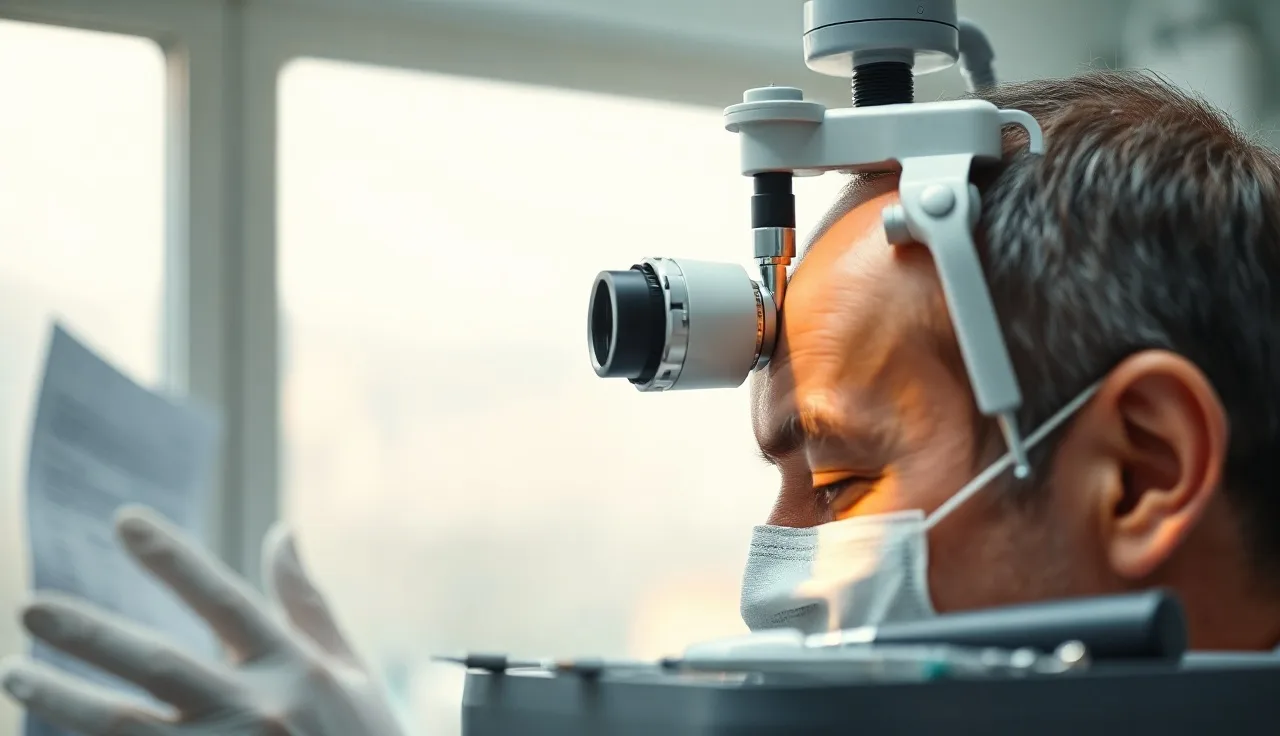
TL;DR: FUT (follicular unit transplantation) cuts a thin band of scalp from the back of your head, splits it into individual grafts under a microscope, then implants those grafts into thinning areas. One session usually moves 2,000 to 4,000+ grafts and costs $4,000 to $15,000 in the US. The trade-off is a permanent linear scar at the donor site.
What is FUT and how does the procedure actually work?
FUT stands for follicular unit transplantation. Surgeons have used it since the early 1990s, when it replaced the older "plug" method that left obvious, doll-like clusters of hair. The idea is simple. Move genetically permanent hair from the back and sides of your scalp, where follicles resist DHT, to wherever you are losing hair.
Here is what happens on procedure day.
The surgeon marks the donor area first, usually a horizontal strip across the mid-occipital scalp, roughly 1 to 1.5 cm wide and anywhere from 15 to 30 cm long depending on the graft count planned. Local anesthetic goes in next. That injection is the most uncomfortable part for most people. Then the strip comes out with a scalpel.
The wound gets closed with sutures or staples, leaving one linear scar that sits under your existing hair. Good surgeons use a trichophytic closure, where one wound edge is beveled so hair grows up through the scar line. That makes the scar harder to spot. It matters a lot if you ever want to wear your hair short.
Now the slow part. A team of technicians, often two to four people, spends several hours dissecting the strip under high-magnification stereomicroscopes, separating it into individual follicular units. A follicular unit is the natural grouping of one to four hairs as they exit the scalp. This step is where the quality gap between clinics shows up hardest. Transection rate, meaning how often a follicle gets accidentally cut and killed, runs about 3 percent at top clinics and over 15 percent at bad ones [1].
Then the surgeon creates recipient sites, tiny incisions in the thinning area, at angles and densities that copy your natural growth pattern. The technicians place grafts into those sites one at a time.
The whole thing runs 4 to 8 hours depending on graft count. You go home the same day.
FUT vs FUE: which one is actually better for you?
This is the most-searched question in transplant research, and the honest answer is that it depends on what you care about most.
FUE (follicular unit extraction) removes grafts one at a time with a small punch tool instead of cutting a strip. No linear scar. It does leave hundreds of tiny round scars, invisible at normal hair lengths. FUE recovery is quicker and you can buzz down to skin without visible scarring. FUT leaves one line that hides under hair longer than about a number-3 guard but shows if you shave to the skin.
Yield is where FUT has a real technical edge. Because the strip is dissected under a microscope in a controlled setting, follicle survival in well-run FUT runs 90 to 95 percent [1]. FUE survival is more scattered, roughly 80 to 95 percent, depending on punch diameter, surgeon skill, and how deep the follicles sit in that person's scalp. Over thousands of grafts, that gap adds up.
FUT also pulls more grafts in a single session. Need 3,500 or more grafts? FUT is often the more reliable way to get there in one day. FUE at that volume drags on, and some clinics split it across two days.
FUE preserves more of the donor area for later, because it never removes a strip. If you are young, at an early Norwood stage, and likely to need several procedures over your life, some surgeons argue you should protect the strip option and start with FUE. There is no universal right answer. A good surgeon will tell you which fits your scalp laxity, your hair, and your long-term loss pattern.
Here is a side-by-side on the variables that matter.
| Factor | FUT | FUE |
|---|---|---|
| Scarring | Single linear scar | Multiple small round scars |
| Grafts per session | 2,000 to 4,500+ | 1,500 to 3,500 (varies by clinic) |
| Follicle survival rate | ~90 to 95% | ~80 to 95% |
| Recovery time (return to desk work) | 7 to 10 days | 3 to 5 days |
| Suitable for very short haircuts | No (scar visible) | Yes |
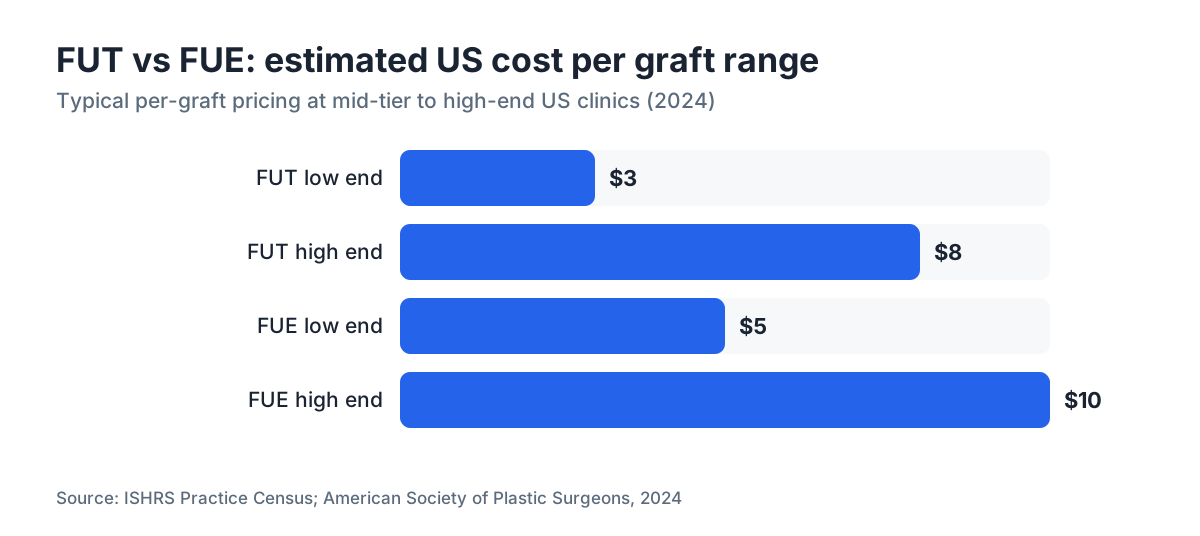
| Cost per graft (US average) | $3 to $8 | $5 to $10 |
| Future donor availability | Slightly reduced (strip removed) | Better preserved |
How much does a FUT hair transplant cost?
In the US, a FUT hair transplant runs roughly $4,000 on the low end to $15,000 or more for large sessions at high-end clinics. Most reputable mid-tier clinics charge $5,000 to $10,000 for a typical 2,000 to 3,000 graft procedure [2].
Pricing structures are all over the place. Some clinics charge per graft, usually $3 to $8 for FUT, so a 2,500-graft session might land between $7,500 and $20,000 depending on tier. Others charge a flat session fee. A few sell tiered packages.
Geography moves the number a lot. New York, Los Angeles, and Miami sit at the top. Clinics in smaller US cities often charge 20 to 40 percent less for comparable quality. Medical tourism to Turkey, India, and Thailand has pushed prices as low as $1,500 to $3,000 for the full job, but that gap buys you thin follow-up care, harder recourse if something goes wrong, and quality control you cannot count on.
What the price includes is the real question. Ask every clinic: is the quote all-in for the estimated graft count? What if the surgeon harvests more grafts than planned? Is post-op medication in there? Is a follow-up visit? Some clinics dangle a low per-graft fee, then pile on facility fees, anesthesia fees, and a mandatory PRP add-on that swells the final bill.
Cost calculators help you get a ballpark. They ask your Norwood stage, target area, and hair type, then estimate a graft count and multiply by regional per-graft rates. Fine for budgeting. No substitute for a consultation where the surgeon looks at your actual donor density.
Insurance almost never covers this, because it is classified as cosmetic. Some clinics offer financing through third-party lenders, often 0 percent for 12 to 24 months if you qualify, or longer plans at 10 to 20 percent APR.
Who is a good candidate for FUT?
The best FUT candidates share a few things.
Stable hair loss comes first. If your hairline is still actively receding, a transplant can look strange within a few years as the native hair around it keeps falling. Most surgeons want your loss stable for at least one to two years, or held steady by finasteride or minoxidil. Knowing your receding hairline pattern and Norwood stage sets honest expectations.
Second, enough donor density. The back and sides need enough hair to give without leaving a visibly thin donor zone. Surgeons check this with a dermoscopy tool or a density count. You generally want donor density above 60 to 70 follicular units per square centimeter to be a solid candidate [1].
Third, scalp laxity. FUT needs the scalp loose enough to close the donor strip without heavy tension. A very tight scalp limits how wide a strip you can take, which caps graft yield. Some surgeons prescribe scalp stretching exercises for weeks before surgery to loosen things up.
Fourth, realistic expectations. A transplant redistributes hair you already have. It does not grow new follicles or add to your total count. If you have advanced loss (Norwood 6 or 7) and limited donor density, no technique gives you a full head of hair.
Who usually should not go ahead: anyone under 25 whose pattern is still shifting, anyone with active scalp disease like alopecia areata or scarring alopecia, people on blood thinners who cannot safely pause them, and anyone expecting more density than their donor supply can cover.
What is the recovery like after FUT surgery?
Recovery runs on two clocks: the donor site healing and the recipient site growth cycle.
The donor site. Sutures or staples usually come out 10 to 14 days after surgery. The area stays tender for the first week. Most people are back at desk work in 7 to 10 days. Strenuous exercise, heavy lifting, and anything that spikes blood pressure should wait at least 2 to 3 weeks to cut the risk of bleeding and swelling.
The recipient sites. Tiny scabs form at each graft and drop off over 1 to 3 weeks. The transplanted hair shafts shed in the first 2 to 6 weeks. This is normal. The follicle stays put; the shaft falls because the shock of transplanting pushes it into the telogen (resting) phase. New hair starts pushing out at roughly 3 to 4 months.
Visible results take patience. At 3 months you see a few early thin hairs. At 6 months the change is clear. Full thickness, mature hair does not show until 12 to 18 months after surgery. It is a long wait, and plenty of patients hit an ugly stretch around months 2 to 4 where everything looks worse before it turns.
Shock loss sometimes hits in the weeks after surgery, where native hairs near the transplant zone shed from surgical trauma. Usually temporary, occasionally distressing. If it worries you, ask your surgeon about your personal risk before you commit.
Pain is manageable with over-the-counter analgesics. Most people describe the post-op feeling as tight and sore, not sharp.
What results can you realistically expect from FUT?
Peer-reviewed literature reports follicular unit survival of 90 to 95 percent for FUT when experienced surgeons work under good conditions [1]. That is the best-case technical benchmark, not a promise from any one clinic.
Real-world results swing for a few reasons. Technique quality is the big one. A clinic with a high transection rate delivers fewer living grafts no matter what the per-graft price says. Your own healing matters too. Poor circulation, diabetes, or certain medications can drop survival. And recipient site creation is huge. Angle and depth decide whether the result looks natural or planted.
What a good FUT can actually do: rebuild a natural hairline, add density across the crown or mid-scalp, and change the look of moderate loss (roughly Norwood 3 to 5) in a big way. Clinic before-and-after galleries show strong transformations in exactly these cases.
What it cannot do: stop the miniaturization of the follicles it did not touch. Hair loss keeps going in non-transplanted areas after surgery unless you are on medication. That is why most transplant surgeons push hard to keep you on or start you on finasteride and minoxidil for men afterward. The transplanted grafts are permanent because they came from DHT-resistant zones. The hair around them may keep thinning for years.
Unrealistic expectations are the top source of patient regret in hair restoration surveys. A single 2,500-graft session cannot give a Norwood 5 the density of a full head of hair. It can make a real cosmetic difference. Both things are true.
How do you choose a qualified FUT surgeon?
This is where research time pays off more than anywhere else in the process.
Board certification in the US means the surgeon is certified by the American Board of Hair Restoration Surgery (ABHRS) or is a Fellow of the International Society of Hair Restoration Surgery (ISHRS). Neither credential is legally required to perform transplants, but having one signals the surgeon met peer-reviewed standards and logged a minimum number of documented procedures [3].
Patient results beat marketing photos. Ask to see unedited before-and-after shots of patients whose hair looks like yours, photographed at 12 months or later. Then ask directly: who does the graft dissection, who creates the recipient sites, and who places the grafts? At some high-volume clinics the surgeon makes the recipient sites and untrained techs do the rest. Hands-on surgeon time matters.
Read patient forums like the Hair Restoration Network (hairrestorationnetwork.com), where people post photo diaries of their results over years. It is one of the best unfiltered data sources out there and has been running for over two decades.
Consult at least two or three clinics before you commit. A reputable surgeon will tell you flat out if you are not a good candidate or if your expectations are off. A surgeon who promises a specific numerical outcome without examining your scalp in person or through high-resolution photos is a red flag.
The ISHRS publishes a patient guide and a physician locator on its site to help narrow the search [3].
Do you still need medication after a FUT transplant?
For most people, yes. This is the part that surprises patients.
The transplanted follicles are permanent. They came from the DHT-resistant donor zone and they keep growing hair in their new spot for life, barring other conditions. But the follicles already sitting in the recipient area, the ones you did not transplant, stay sensitive to DHT and can keep shrinking.
So a patient who skips medication may look great at year one or two, then find the native hair around the grafts has thinned badly by year five. The transplanted hair can end up looking like isolated islands if everything around it falls.
Finasteride, the only FDA-approved oral treatment for male pattern hair loss, lowers DHT and has slowed or halted progression in most men who take it consistently in randomized trials [4]. If you are male and tolerate it, most transplant surgeons call it the single best thing you can do to protect the investment over time. You can read more about finasteride and minoxidil combinations if you want to see how the two work together.
Minoxidil can also hold and sometimes improve density in non-transplanted areas. The FDA has approved topical minoxidil for androgenetic alopecia in both men and women [5].
For women, finasteride is not FDA-approved for hair loss, and it is contraindicated in women of childbearing potential because of teratogenicity [4]. Women considering a transplant should talk through hormonal and non-hormonal options with their surgeon. Understanding what causes hair loss in the first place shapes the right strategy.
What are the risks and complications of FUT?
FUT is generally safe in trained hands and a proper facility, but no surgery is risk-free. Here is what the evidence shows.
Linear scar. Not a complication in the usual sense, but a guaranteed outcome. How visible it ends up depends on closure technique, your skin healing, and whether you ever cut your hair very short. Hypertrophic (raised, thickened) scarring hits a minority of patients and often responds to steroid injections or laser resurfacing.
Infection. Reported infection rates for scalp transplant surgery run roughly 0.1 to 1 percent [6]. Surgeons usually prescribe a short course of prophylactic antibiotics.
Temporary numbness. Tingling and numbness at the donor site are common in the first few months and usually clear within 6 to 12 months as nerves regrow.
Cyst formation. Small inclusion cysts can appear at recipient sites and usually resolve on their own or with minor treatment.
Graft failure. In the rare worst case, a big share of grafts never survives. This is more common at low-quality clinics with high transection rates and poor graft storage during surgery. Dead grafts are invisible on the day, so the patient only learns the truth when growth fails to show at 6 to 12 months.
Shock loss of existing hair. Covered above. Usually temporary, permanent in a small percentage.
Serious adverse event. Extremely rare, but like any procedure with local anesthesia and sedation, systemic events are possible. That is one reason this belongs in a real medical setting, not a non-clinical medspa.
If you get telogen effluvium after surgery, a stress-triggered shed of existing hair, it is usually temporary and clears within 3 to 6 months.
How should you prepare for a FUT procedure?
Most surgeons hand you a pre-op checklist 2 to 4 weeks out. The common items:
Stop blood thinners. That means aspirin, ibuprofen, fish oil, vitamin E, and prescription anticoagulants. Your surgeon sets the exact washout window. Staying on them can cause heavy bleeding during harvesting and implantation.
Skip alcohol for at least 3 to 5 days before surgery. It affects both bleeding and anesthesia.
No smoking. Nicotine tightens blood vessels and hurts wound healing and graft survival. Most surgeons want 2 weeks off cigarettes before and after, and some ask for longer.
Wash your hair the morning of surgery with regular shampoo. No conditioner, no styling products.
Arrange a driver. You cannot drive yourself home after local anesthesia and sedation.
Wear a loose button-down shirt you can take off without pulling it over your head, since fresh grafts cannot be disturbed.
Settle in for a long day. The procedure eats most of it. Bring headphones and something to watch or listen to. Most clinics have a reclining chair with breaks built in.
If you are not already tracking where your loss stands, the free AI hair analysis at MyHairline gives you a baseline Norwood estimate before your first clinic consultation, so you understand what the surgeon is telling you.
Is FUT worth it? How to think about whether to proceed
This is the question sitting under all the others.
A hair transplant is permanent cosmetic surgery. Once the money is spent and the procedure is done, you live with the result and the donor scar for the rest of your life. That is not a reason to skip it. For men whose hair loss dents their confidence, the results can change how they feel every day. But be hard-headed about the decision.
What predicts satisfaction: realistic expectations, a surgeon whose patient results you have studied over multiple years, a stable loss pattern, and a commitment to medication afterward. What predicts regret: rushing in young before the pattern is clear, picking a clinic on price alone, expecting density your donor supply cannot cover, and dropping medication after surgery.
One honest frame. A transplant is a redistribution operation, not a creation operation. You have a fixed number of donor follicles. Spending them is a one-way door. The best surgeons talk about "banking" donor hair, planning each session around your whole future of possible procedures instead of just today's result.
Before you commit, ask whether you have really exhausted the non-surgical options. For many men at Norwood 2 or 3, a steady regimen of finasteride and minoxidil gives real results at a fraction of the cost. If you want to understand DHT blockers inside a broader plan, start there before you reach for surgery.
The MyHairline AI scan at myhairline.ai/scan gives you a clearer read on your current loss pattern and stage before you see a surgeon, so you walk in knowing what you are dealing with.
Sources
- International Society of Hair Restoration Surgery (ISHRS), Practice Census and Outcomes Data
- American Society of Plastic Surgeons, Procedural Statistics and Cost Data
- American Board of Hair Restoration Surgery (ABHRS), Certification Standards
- FDA, Drug Label: Propecia (finasteride) 1 mg
- FDA, Drug Label: Rogaine (minoxidil) topical solution
- American Academy of Dermatology (AAD), Hair Loss Patient Information
- National Library of Medicine / PubMed, Follicular Unit Transplantation Review, Bernstein RM et al.
- JAMA Facial Plastic Surgery, Randomized Trial of Finasteride After Hair Transplant
- Hair Restoration Network (patient outcomes forum)