
TL;DR: Growplex is an over-the-counter hair supplement sold as a DHT blocker, built around saw palmetto, biotin, and zinc. None of its ingredients have FDA approval for hair loss. Saw palmetto has some limited clinical data, but the effect is small next to finasteride. If you're losing hair to androgenetic alopecia, proven options exist before you spend money on supplements.
What is Growplex DHT blocker and what does it claim to do?
Growplex is a dietary supplement sold online, usually in capsule form, positioned as a natural DHT blocker for hair loss. The marketing targets people with androgenetic alopecia (pattern hair loss) and promises to slow shedding or thicken existing hair by cutting dihydrotestosterone (DHT) activity at the scalp.
Those are real goals. DHT is genuinely the hormone that shrinks follicles in pattern baldness, so blocking it is a legitimate strategy. The problem is the gap between "this ingredient theoretically affects DHT" and "this product will stop your hair from falling out." Supplements sit in that gap.
Growplex is not approved by the FDA to treat hair loss. As a dietary supplement, it is regulated under DSHEA (the Dietary Supplement Health and Education Act of 1994), which means the manufacturer does not have to prove the product works before selling it [1]. The FDA only steps in after a safety problem surfaces. That is a very different bar than what a drug like finasteride had to clear.
So when you read Growplex's label claims, you are reading what the company believes or wants you to believe. You are not reading what a randomized controlled trial established.
How does DHT cause hair loss in the first place?
DHT is made from testosterone by an enzyme called 5-alpha reductase (5-AR). In people genetically prone to pattern hair loss, DHT binds to androgen receptors in follicles and shortens the anagen (growth) phase over successive cycles. The follicle shrinks. The hair it produces gets finer and shorter until, eventually, it stops making a visible hair at all. This process is well established in the dermatology literature [2].
The scalp has more 5-AR activity than most other body regions, which is why the effect concentrates there. Frontal and vertex follicles are more androgen-sensitive than occipital follicles, which is why the back of the head usually survives even in advanced baldness.
Blocking 5-AR, or blocking the androgen receptor directly, interrupts this process. That is the mechanism behind finasteride (a 5-AR inhibitor) and behind the weaker, less consistent activity of saw palmetto. Learn more about what causes hair loss.
A product that genuinely blocks enough DHT will slow the shrinking. The question for any supplement is always the same: does it block enough, reliably enough, in humans, measured in a real trial?
What ingredients are in Growplex and do any of them actually block DHT?
Growplex's formula varies by version, but the common ingredients across most "natural DHT blocker" supplements in this category are saw palmetto extract, biotin, zinc, pumpkin seed oil, and sometimes nettle root or pygeum. Here is what the evidence says for each.
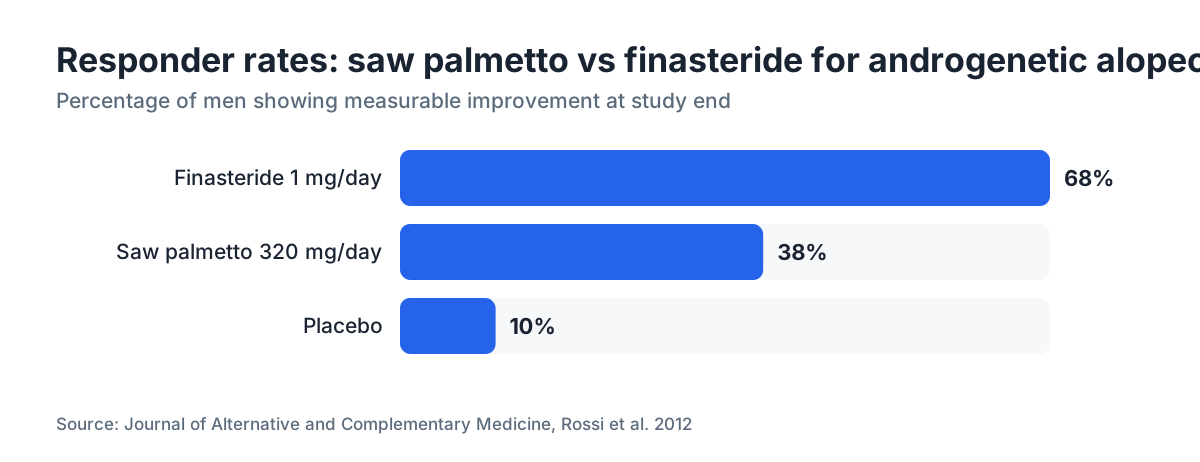
Saw palmetto. The most studied natural 5-AR inhibitor. A 2020 systematic review in JAMA Dermatology found saw palmetto "modestly improved" hair density and reduced hair loss in some studies, but noted the evidence quality was low to moderate and effect sizes were much smaller than finasteride [3]. A 2012 randomized trial comparing saw palmetto to finasteride in men with androgenetic alopecia found 38% of saw palmetto users showed improvement versus 68% in the finasteride group [4]. Saw palmetto does something. It does meaningfully less than the drug.
Biotin. There is essentially no good clinical evidence that biotin helps hair loss unless you have a documented biotin deficiency, which is rare. The FDA has warned that high-dose biotin supplements can interfere with certain lab tests, including thyroid and cardiac troponin assays [5]. If you take biotin and go in for bloodwork, tell your doctor.
Zinc. Zinc deficiency is linked to hair shedding, and correcting a deficiency helps. If you are not deficient, supplementing zinc does not appear to add benefit. A 2013 study in the Annals of Dermatology found serum zinc was lower in androgenetic alopecia patients than in controls, but that correlation does not mean zinc supplements reverse the condition [6].
Pumpkin seed oil. One small 2014 randomized controlled trial in 76 men showed a 40% increase in hair count after 24 weeks versus 10% with placebo [7]. One trial, 76 people. Interesting, not settled.
Nettle root and pygeum. Lab data suggest some 5-AR inhibitory activity. Human hair loss trials are missing.
The short version: saw palmetto and possibly pumpkin seed oil have some real (if modest) data. The rest are either irrelevant to DHT blocking or only matter if you have a specific deficiency. No single ingredient in this category matches prescription finasteride's evidence base. See the full picture on DHT blockers.
How does Growplex compare to finasteride and minoxidil?
This is the comparison to make before you spend anything.
| Treatment | Mechanism | Evidence level | Avg. hair count change | FDA approved for hair loss? |
|---|---|---|---|---|
| Finasteride 1 mg/day | 5-AR inhibitor, cuts scalp DHT ~70% | Level 1 (multiple RCTs) | +10-15% hair count at 2 years | Yes (men) |
| Minoxidil 5% topical | Vasodilator, prolongs anagen | Level 1 | +15-20% terminal hair count at 48 weeks | Yes (men and women) |
| Saw palmetto (best estimate) | Partial 5-AR inhibitor | Level 2-3 (mixed small RCTs) | ~38% responders vs 68% for finasteride | No |
| Pumpkin seed oil | Unclear mechanism | Level 3 (one small RCT) | +40% hair count vs +10% placebo in one trial | No |
| Biotin | Cofactor in keratin synthesis | No RCT evidence for AGA | No meaningful change shown | No |
Finasteride at 1 mg daily cut scalp DHT by roughly 64-69% in the phase III trials that led to FDA approval [8]. Saw palmetto does not come close to that in any human trial done to date.
Minoxidil works by a completely different mechanism (it does not block DHT at all) and is proven for both men and women with pattern loss. Read more about minoxidil for men.
Using Growplex instead of proven treatments has a real cost, and it is bigger than the dollars. Follicle miniaturization that keeps running for another 12 to 18 months while you test a supplement is follicle damage you may never get back.
If you want to add saw palmetto on top of proven treatment, that is a reasonable low-risk experiment. Using it as a replacement is where the math stops working.
Are there any side effects or safety concerns with Growplex?
The ingredients in most products like Growplex are generally well tolerated at label doses, but "natural" does not mean zero risk.
Saw palmetto at standard doses (320 mg/day) has been linked to mild GI upset, headache, and rarely a small effect on bleeding time. There are case reports of liver toxicity at high doses. For most people at label doses, it is safe.
Biotin interference with lab tests is a documented FDA safety issue, not a theoretical one [5]. If you are on high-dose biotin and need a troponin test in an emergency, it can produce a falsely low result. That matters.
Zinc in excess (above the tolerable upper intake level of 40 mg/day for adults) can suppress copper absorption and cause neurological problems over time [9]. Add up your total zinc across every supplement you take.
For people worried about finasteride's sexual side effect profile, a supplement like Growplex feels safer. That is understandable. The trade-off is efficacy. If those side effects worry you, there are real conversations to have with a dermatologist about dosing, topical finasteride, or other approaches. Skipping treatment out of fear is worth thinking through carefully rather than defaulting to a product with much weaker effects.
How much does Growplex cost and is it worth it?
Growplex usually sells for roughly $30 to $50 per month depending on the retailer and whether you are on a subscription. Online pricing shifts often, so confirm before buying.
For comparison: generic finasteride costs roughly $15 to $30 per month from most online pharmacies as of 2024, and generic topical minoxidil 5% solution costs under $15 per month. Both have decades of trial data behind them.
That means you can get the two most evidence-backed hair loss treatments for the same cost or less than a supplement with modest supporting data. Finasteride and minoxidil are often studied together as a dual approach. See how those two treatments interact.
If you have already started prescription treatment and want to add saw palmetto or pumpkin seed oil for a little extra, the cost is low enough that it is not unreasonable. As a primary strategy, though, the cost-to-evidence ratio is poor.
One more thing. The supplement market has recurring quality problems. Third-party testing by groups like NSF International or USP verifies that what the label says is actually in the bottle. Check whether Growplex or any supplement you buy carries one of those seals. Many do not.
Who is most likely to see any benefit from a DHT-blocking supplement?
If you have early-stage androgenetic alopecia (Norwood 1-2 in men, Ludwig 1 in women), are not a good candidate for prescription treatment, or simply want to start with the lowest-risk option first, a saw palmetto-based supplement might slow progression modestly. The keyword is modestly.
Women with pattern hair loss face a different landscape. Finasteride is not FDA-approved for women and carries teratogenic risk in women who may become pregnant. Minoxidil is the standard first-line treatment. Some women reach for natural supplements specifically because the prescription options are narrower. That makes some sense, but the evidence gap does not close just because the alternatives are fewer. Understanding your receding hairline and what stage you are at is a useful starting point before deciding on any treatment.
People with hair loss driven by something other than DHT, like telogen effluvium from stress, illness, or crash dieting, will not benefit from a DHT blocker at all, because DHT is not what is causing their shedding. Telogen effluvium resolves with time and by addressing the underlying trigger, not with 5-AR inhibitors.
If you are not sure whether your hair loss is androgenetic or something else, sort that out before buying anything. A free AI hair analysis at MyHairline can help you see what pattern you are dealing with as a first step, before you commit to a treatment approach.
What does the FDA say about supplement-based DHT blockers?
The FDA has not approved any dietary supplement to treat, cure, or prevent hair loss [1]. A company selling a supplement can make "structure/function" claims (for example, "supports healthy hair") without FDA review, but it cannot legally claim the product treats androgenetic alopecia.
The only FDA-approved oral drug for male pattern hair loss is finasteride 1 mg (Propecia, and generics). The only FDA-approved topical treatment for pattern hair loss in both men and women is minoxidil [11]. Low-level laser devices have FDA 510(k) clearance as a device for hair loss, though the evidence is weaker than for the drugs.
The FDA's Office of Dietary Supplement Programs monitors for illegal drug ingredient spiking in supplements. Some hair supplements have been found to contain undisclosed drug ingredients, though this is more common in the weight loss and sexual enhancement categories than in hair supplements.
When a supplement brand says its product is "clinically tested" or "clinically proven," read those words carefully. They often mean an in vitro test on cells, or a study funded by the company, or a study that measured a surrogate marker rather than actual hair growth. None of that is the same as the placebo-controlled human trials that back finasteride and minoxidil.
Are hair loss supplements in general worth trying?
A fair question with a mixed answer. The broader evidence base for hair loss supplements is thin, but not empty.
Saw palmetto has the best natural DHT-blocking data. Pumpkin seed oil has one intriguing small trial. Marine collagen peptides (in products like Viviscal) have a few small trials suggesting a bump in hair density. None of these have been tested in large, long-duration, independently funded RCTs.
The honest position: supplements are probably fine to use alongside proven treatment if you want to feel like you are covering your bases. They are a poor substitute for proven treatment when your hair loss is active and getting worse.
Some people have real reasons to avoid finasteride: documented sexual side effects, personal medical history, worry about post-finasteride syndrome (which the FDA added to the label in 2022 as a potential persistent adverse effect [10]). For those people, stacking the best-evidenced natural options makes more sense. Even then, topical minoxidil is still on the table without any 5-AR inhibition concern.
At MyHairline, the view is simple: start with what works, understand what you are adding and why, and do not let supplement marketing put a false ceiling on your options.
If you want to understand your actual hair loss pattern before spending anything, the free AI scan at MyHairline (/scan) gives you a starting point.
What should you actually do if you want to block DHT for hair loss?
Here is the practical decision tree.
-
Confirm the type of hair loss you have. DHT-blocking strategies only help with androgenetic alopecia. If you have sudden diffuse shedding, rule out telogen effluvium, thyroid issues, iron deficiency, and other systemic causes first.
-
If you have androgenetic alopecia and no contraindications, finasteride 1 mg/day is the most evidence-backed oral DHT blocker available. See a doctor or dermatologist to discuss whether it fits you. The evidence for it is not subtle: in the original phase III trials, 83% of men taking finasteride showed no further hair loss at two years versus 28% in the placebo group [8]. Read the full finasteride overview.
-
Add topical minoxidil. It works through a different mechanism, and the two treatments are generally used together for better results than either alone.
-
If you want to add saw palmetto (320 mg/day standardized extract) as a low-cost adjunct, the risk is low and there is some rationale. But track whether you are actually getting results, and do not let it push out the treatments with real trial data behind them.
-
If you are looking at a hair transplant because medical treatment has not been enough, understand that transplants do not stop ongoing shrinking in non-transplanted follicles. Medical treatment is still usually continued after surgery. Here is what a hair transplant actually involves.
The main thing is not to lose 12 or 24 months to a supplement while active follicle damage is happening. Time matters with androgenetic alopecia. The earlier you start effective treatment, the more follicles you keep.
Sources
- FDA, Dietary Supplements overview
- American Academy of Dermatology, Hair Loss overview
- JAMA Dermatology, Saw Palmetto systematic review 2020
- Journal of Alternative and Complementary Medicine, Rossi et al. 2012 RCT saw palmetto vs finasteride
- FDA, Biotin (Vitamin B7) Safety Communication
- Annals of Dermatology, Zinc and androgenetic alopecia 2013
- Evidence-Based Complementary and Alternative Medicine, Pumpkin seed oil RCT 2014
- FDA, Propecia (finasteride) prescribing information
- NIH Office of Dietary Supplements, Zinc fact sheet
- FDA, Propecia label update on persistent sexual dysfunction
- American Academy of Dermatology, Androgenetic alopecia clinical review