

TL;DR: Most hair loss supplements do nothing unless you're deficient in something. The exceptions with real evidence are iron (for women with low ferritin), vitamin D, and zinc, and only when a blood test confirms a gap. Biotin helps solely in true deficiency, which is rare. Saw palmetto has modest trial data. Save your money until you know what's actually low.
Why do hair loss supplements exist, and do they actually do anything?
Most hair supplements do nothing for most people. The ones that work only work when a specific nutritional gap is driving the loss, and you find that gap with a blood test, not a shelf label.
Hair loss is scary, and the supplement industry knows it. Walk into any pharmacy and you'll find rows of capsules promising thicker, fuller hair, backed by celebrity faces and before-and-after photos that may or may not be real. The honest version is less flattering to the marketing.
Hair follicles are among the fastest-dividing cells in the body. They need a steady supply of micronutrients to keep that division going. When you're low on iron, vitamin D, zinc, or certain B vitamins, the follicle can shift early from the growth phase (anagen) into the resting phase (telogen), which shows up weeks to months later as shedding. This is called telogen effluvium, and it's one of the most common reasons women find clumps of hair in the shower drain [1].
The problem is that most people buying supplements aren't deficient at all. If your ferritin, vitamin D, and thyroid markers are all normal, swallowing extra biotin or collagen won't grow more hair. It just makes expensive urine. So before we go nutrient by nutrient, the first move is a blood panel, not a shopping cart.
Which nutrients are most commonly linked to hair loss?
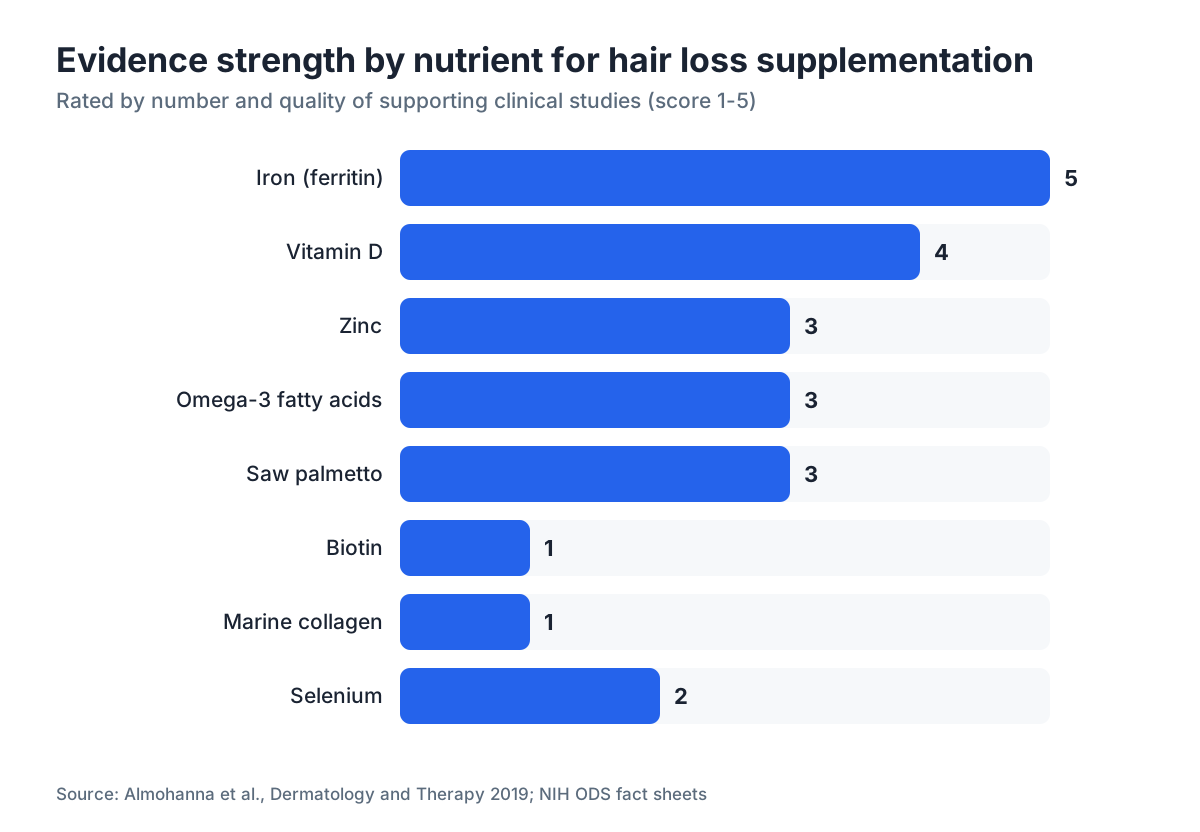
Iron, vitamin D, and zinc have the strongest evidence for affecting hair growth when they're low. Selenium and the B vitamins riboflavin (B2), biotin (B7), folate, and B12 matter to a lesser degree [2]. A 2019 review in Dermatology and Therapy analyzing the vitamin and mineral literature found that low serum ferritin and low vitamin D were the two deficiencies most consistently tied to non-scarring alopecia in women [2].
Here's how each one breaks down:
Iron (ferritin): The big one for women. Ferritin is the storage form of iron, and levels below roughly 30 ng/mL are linked to increased hair shedding in multiple studies [3]. Some dermatologists aim for 70 ng/mL or higher for hair concerns, though the exact threshold is still argued over. Heavy periods are a common cause. Iron deficiency without full-blown anemia can still tank your hair.
Vitamin D: Hair follicle keratinocytes carry vitamin D receptors. Low vitamin D (below 20 ng/mL is clinically deficient, and many dermatologists treat 30 ng/mL as a better floor) correlates with alopecia areata and female pattern hair loss in observational studies [4]. Vitamin D doesn't directly grow hair, but deficiency seems to push follicles out of anagen early.
Zinc: Zinc deficiency causes a diffuse shedding that looks a lot like telogen effluvium. It's more common than people expect, especially on plant-based diets, because phytates in grains cut zinc absorption. Serum zinc below 70 mcg/dL is the standard deficiency marker [5].
Biotin (B7): The most over-marketed supplement in the hair space. True biotin deficiency is rare. It can happen with prolonged raw egg consumption (avidin in raw egg white blocks biotin absorption), some anticonvulsants, or biotinidase deficiency. The FDA warns that high-dose biotin can throw off thyroid and troponin lab tests, producing false results [6]. If your doctor orders a thyroid panel and you take biotin, say so and stop it for a few days first.
Selenium: Both too little and too much selenium cause hair loss. High-dose selenium (above 400 mcg per day) is tied to selenosis, a toxicity syndrome where hair shedding is itself a symptom [5]. Don't megadose this one.
And the biggest caveat: what causes hair loss is often nothing to do with nutrition. Supplements won't touch androgenetic alopecia.
What does the evidence say about vitamin D specifically for female hair loss?
Low vitamin D shows up repeatedly in women with hair loss, but no one has proven that fixing it regrows hair. The association is strong; the cause-and-effect is not settled. Correcting a deficiency is still cheap, safe at standard doses, and worth doing.
A study in Skin Pharmacology and Physiology (2013) found serum vitamin D significantly lower in women with female pattern hair loss and alopecia areata than in age-matched controls [4]. A 2022 meta-analysis covering 14 studies confirmed the link between low 25(OH)D and alopecia areata, with mean vitamin D levels running roughly 7 ng/mL lower in affected people than in controls [7].
What the data doesn't cleanly show is whether correcting a deficiency reverses the loss, or whether the two just travel together. Most of these studies are observational. Still, follicle keratinocytes express vitamin D receptors, the biology is plausible, and most dermatologists would tell you to fix a deficiency either way.
For the best vitamin D supplement for female hair loss, the form matters less than the dose and your baseline blood level. D3 (cholecalciferol) raises serum 25(OH)D more effectively than D2 (ergocalciferol) [8]. A standard correction dose for mild deficiency runs 1,000 to 2,000 IU per day, and physicians sometimes prescribe 50,000 IU weekly (prescription D2) for severe deficiency. Don't guess the dose. Test first.
The NIH Office of Dietary Supplements sets the tolerable upper intake level for vitamin D at 4,000 IU per day for adults [5]. Going far above that without medical supervision risks hypercalcemia.
Are there hair supplements specifically for women that work differently than for men?
Yes, because the causes of hair loss split by sex. Women lose hair more from iron deficiency, dieting, postpartum shifts, and thyroid trouble, all of which respond to fixing the underlying gap. Men lose hair mostly from DHT-driven androgenetic alopecia, where nutrition barely matters.
Women are more likely to shed from iron deficiency (menstruation), nutritional restriction (dieting, eating disorders), postpartum hormonal drops, and thyroid dysfunction. So the deficiency story is genuinely more relevant for hair loss supplements female use cases than for men.
For women with female pattern hair loss (androgenetic alopecia), the picture gets murkier. The treatments that reliably work are topical minoxidil and, in some cases, hormonal therapy. A supplement that blocks DHT at the follicle, like saw palmetto, has some trial data, but it's thin.
A 2021 randomized controlled trial in JAAD International found that a supplement combining 160 mg saw palmetto extract, melatonin, and other ingredients produced meaningful reductions in shedding versus placebo over 24 weeks in women with androgenetic alopecia [9]. That's useful, but one RCT is not the evidence base behind minoxidil.
For women shedding after a stressor (crash diet, illness, surgery), iron, vitamin D, and zinc are the place to start. If you suspect hormonal-pattern loss, see a dermatologist before spending on supplements marketed at androgenetic alopecia. You may need a DHT blocker approach, not a vitamin bottle.
What about saw palmetto, marine collagen, and other popular ingredients?
The market runs well ahead of the science. Saw palmetto has the best data of the botanicals. Everything else on this list ranges from thin to nonexistent. Here's what the evidence actually says:
Saw palmetto: The most credible botanical. It partly inhibits 5-alpha reductase, the enzyme that converts testosterone to DHT. A 2002 study in the Journal of Alternative and Complementary Medicine found that 60% of men with mild-to-moderate androgenetic alopecia on 200 mg saw palmetto daily improved, versus 11% on placebo [10]. The effect is smaller than finasteride, but so are the reported side effects. Worth knowing before you commit to a DHT blocker medication.
Marine collagen: Marketed hard for hair. Hair is keratin, not collagen, so the direct logic is off. Collagen may supply amino acids (glycine, proline) the body uses to build keratin precursors and support the tissue around the follicle. Human evidence is limited and mostly industry-funded. I wouldn't prioritize it.
Biotin in multivitamins: Standard multivitamin doses (30 mcg, the adequate intake) are fine. The problem is bottles selling 5,000 to 10,000 mcg with zero evidence that supraphysiologic biotin does anything for hair in people who aren't deficient.
Omega-3 fatty acids (fish oil): A 2015 randomized trial in the Journal of Cosmetic Dermatology found women taking omega-3 and omega-6 fatty acids with antioxidants over 6 months had reduced hair loss and higher hair density than placebo [11]. The catch: 120 women, and it used a combination product, so isolating the omega-3 effect is hard. No realistic downside at standard doses.
Niacin: Some researchers report low niacin in women with hair loss, but supplementation trials are minimal. Not enough to recommend standalone niacin.
Ashwagandha, collagen peptides, and horsetail extract: No clinical trial evidence of sufficient quality to recommend.
How do you know if a deficiency is causing your hair loss?
A blood test. There's no shortcut, and no supplement company will tell you this, because the honest answer might be "you don't need our product."
Ask your doctor or dermatologist for:
- Serum ferritin (more useful than hemoglobin or hematocrit, which can read normal even when ferritin is low)
- 25-hydroxyvitamin D (the correct form to test)
- Serum zinc
- Complete blood count
- TSH (thyroid stimulating hormone), since thyroid dysfunction causes hair loss and mimics nutritional deficiency
- A hormonal panel in women if pattern loss is suspected
Once you have numbers, you can make a targeted call. Treating a real deficiency with the right supplement often shows noticeable improvement in 3 to 6 months, because that's how long the hair cycle takes to reflect changes at the follicle. If you've supplemented for 6 months and seen nothing, either the deficiency is corrected and wasn't the driver, or something else is causing the loss.
Want a starting point before the appointment? The free AI hair analysis at MyHairline can flag whether your pattern looks more like androgenetic loss, diffuse shedding, or something else, which at least tells you which direction to chase.
What are the best supplement formulations and doses supported by evidence?
Here's a straight comparison of the nutrients with real evidence, how strong that evidence is, and what reasonable dosing looks like. These are reference ranges, not prescriptions.
| Nutrient | Evidence quality | Condition it addresses | Target range / dose | Upper safe limit |
|---|---|---|---|---|
| Iron (ferritin) | Strong (observational, plausible mechanism) | Telogen effluvium, female hair loss | Ferritin target 30-70+ ng/mL; supplement only if deficient | Don't supplement without confirmed deficiency |
| Vitamin D3 | Moderate (observational + mechanistic) | All alopecia types, especially in women | Serum 25(OH)D 30-50 ng/mL; 1,000-2,000 IU/day typical | 4,000 IU/day (NIH) |
| Zinc | Moderate | Diffuse shedding, especially plant-based eaters | Serum zinc >70 mcg/dL; 8-11 mg/day RDA | 40 mg/day (NIH) |
| Saw palmetto | Weak-moderate (limited RCTs) | Androgenetic alopecia | 160-320 mg/day standardized extract | Not established |
| Omega-3 (fish oil) | Weak-moderate (1 RCT) | Diffuse shedding | 1-3 g EPA+DHA/day | Generally safe |
| Biotin | Very weak (case reports only) | Only true deficiency | 30 mcg/day (adequate intake) | No set UL, but high doses interfere with lab tests [6] |
| Selenium | Low (deficiency only) | Diffuse shedding if deficient | 55 mcg/day RDA | 400 mcg/day (NIH) [5] |
The FDA does not evaluate most hair supplement claims, and the NIH Office of Dietary Supplements takes the same cautious stance on nutrients and hair that it takes across the board: evidence has to exist before a claim holds up [5]. Most bottles clear that bar on marketing copy alone.
For women, the combination of iron (if ferritin is low) and vitamin D (if below 30 ng/mL) is where the real signal sits. Fixing both at once, under a doctor's guidance, gives you the best shot at seeing something.
Are combination hair supplements like Nutrafol or Viviscal worth it?
Both are the most heavily marketed multi-ingredient hair supplements, and both have run actual clinical trials, which puts them ahead of most competitors. The catch is that those trials are industry-funded, and neither product will outperform minoxidil for pattern loss.
Viviscal has several sponsored trials showing increased hair count and thickness at 6 months in women with self-perceived thinning [11]. The active ingredient is a marine protein complex called AminoMar. The trials are industry-funded, which is a real limit, but they're randomized and controlled.
Nutrafol has run sponsored trials too. A 2018 pilot study in the Journal of Drugs in Dermatology found improvements in hair growth and quality at 6 months versus placebo in women with self-perceived thinning. Industry-funded again.
My honest read: both cost roughly $79 to $90 a month. If your iron and vitamin D are replete and your hair is still thinning, trying one for 6 months is reasonable before prescription treatments. But they won't beat minoxidil for androgenetic alopecia, and they'll do nothing if an untreated deficiency is the real driver. Fix the basics first.
For men with pattern loss, the evidence favors proven treatments like minoxidil for men and finasteride over any supplement.
Can too many supplements make hair loss worse?
Yes, and it's underappreciated, so let me say it plainly. Stacking supplements can cause the exact shedding you're trying to stop.
Vitamin A toxicity (hypervitaminosis A) is a documented cause of hair loss. The tolerable upper intake level for preformed vitamin A is 3,000 mcg RAE per day for adults [5]. Many hair supplements and multivitamins add vitamin A on top of what you already get from food. Stack a few products and the combined load can blow past the safe limit.
Selenium, as I mentioned, causes hair loss at high doses. Supplementing it when you're not deficient is a bad bet.
Iron overload (hemochromatosis, or supplementing without deficiency) damages organs over time and can hit hair too. Never take iron without a confirmed low ferritin.
High-dose biotin scrambles lab tests, which can delay the correct diagnosis of something more serious [6].
Then there's plain polypharmacy: eight supplements at once make it nearly impossible to tell what's helping or hurting. Pick the ones your bloodwork supports, take them for 6 months, and retest.
When should you move beyond supplements to clinical treatments?
Supplements fix nutritional gaps. They don't treat androgenetic alopecia, alopecia areata, or scarring alopecias. If you've corrected your deficiencies and the loss keeps going, you're probably looking at something that needs a clinical intervention.
For androgenetic alopecia, the treatments with the strongest FDA backing are minoxidil (topical and oral) and finasteride for men. The combination of finasteride and minoxidil is what most dermatologists treat as the standard for male pattern loss. Women have fewer options (finasteride is off-label for women, and finasteride carries pregnancy risk), but topical minoxidil 2% or 5% is FDA-approved for women.
For loss that's progressed a lot, hair transplant surgery is the only way to move follicles permanently. No supplement stops androgenetic alopecia once it's actively moving.
A receding hairline that's worsening over years is almost certainly androgenetic, and reading your receding hairline pattern is the first step to knowing what intervention makes sense.
The end of a supplement trial is also a good moment to use MyHairline's free AI scan to photograph and track your hairline over time, since visual change is hard to judge on your own.
What's the realistic timeline for seeing results from hair supplements?
Six months, minimum. Giving up too early is the single most common reason people abandon a supplement that would have worked.
The hair cycle runs in three phases: anagen (growth, 2 to 6 years), catagen (transition, a few weeks), and telogen (resting and shedding, roughly 3 months). When you correct a deficiency, follicles that shifted into telogen don't snap back to anagen. They finish telogen, shed, and only then start a new growth cycle. That new growth takes months to become visible.
In practice: you might fix your ferritin in 8 to 12 weeks of supplementing, but the hair response lags another 3 to 4 months behind that. So the full timeline from "start supplement" to "see real improvement" is often 5 to 7 months.
Some people see early improvement at 3 months. Some take 9. If you're seeing nothing by 6 months despite confirmed correction of the deficiency, the deficiency probably wasn't the main driver, and it's time to revisit the diagnosis with a dermatologist.
Sources
- Almohanna HM et al., Dermatology and Therapy 2019, The Role of Vitamins and Minerals in Hair Loss
- Trost LB et al., Journal of the American Academy of Dermatology 2006, The diagnosis and treatment of iron deficiency and its potential relationship to hair loss
- Rasheed H et al., Skin Pharmacology and Physiology 2013, Serum ferritin and vitamin D in female hair loss
- NIH Office of Dietary Supplements, Nutrient Fact Sheets (selenium, zinc, vitamin D, vitamin A)
- Lee S et al., Journal of the European Academy of Dermatology and Venereology 2022, Vitamin D and alopecia areata meta-analysis
- NIH Office of Dietary Supplements, Vitamin D Fact Sheet for Health Professionals
- Goltz C et al., JAAD International 2021, Randomized trial of nutraceutical supplement for androgenetic alopecia in women
- Prager N et al., Journal of Alternative and Complementary Medicine 2002, Randomized trial of saw palmetto for androgenetic alopecia
- Le Floc'h C et al., Journal of Cosmetic Dermatology 2015, Omega-3 and antioxidant supplementation randomized trial in women with hair loss
- American Academy of Dermatology, Hair loss types and treatments