
TL;DR: Scalp massage, correcting nutrient deficiencies, cutting mechanical damage, and managing stress can slow shedding and support regrowth in mild, reversible cases. None of them match minoxidil or finasteride for genetic hair loss. But they're cheap, low-risk, and worth doing before or alongside clinical treatment. Give any of them 6 months before you judge.
What does 'natural' hair regrowth actually mean?
People use 'natural' to mean two different things, and the gap between them costs money. One meaning is 'no prescription drugs.' The other is 'no side effects.' Neither guarantee comes automatically.
Some natural approaches, like iron supplementation when you're genuinely deficient, have solid trial data. Others, like rosemary oil, rest on one small pilot study and years of social media amplification. Most sit in the middle: biologically plausible, under-researched, and almost certainly weaker than the FDA-approved options.
That's not a reason to dismiss them. If your hair loss comes from a correctable cause (a nutrient gap, chronic stress, or a hairstyle that yanks on your follicles all day), fixing that cause can stop shedding and let hair grow back. Here's the honest ceiling. Natural approaches work best on reversible hair loss. For androgenetic alopecia, the genetic kind, they slow things down but rarely reverse them on their own [1].
Working out what causes hair loss in your specific case comes first, because the right move depends entirely on the type you have.
Which types of hair loss actually respond to natural treatment?
Not all hair loss is the same, and this is where most articles mislead you. The type you have decides whether natural approaches do anything at all.
Telogen effluvium responds best. It's diffuse shedding triggered by a physical or emotional shock, a nutritional gap, a hormonal shift, or illness. The follicles stay intact, so fixing the trigger usually restarts normal growth. Telogen effluvium typically resolves within 3 to 6 months once the cause is gone [2].
Androgenetic alopecia (AGA) is the genetic, DHT-driven thinning behind roughly 95% of male pattern baldness and a large share of female hair loss. Natural approaches slow it marginally in some people. They don't reliably reverse it. If you've watched a receding hairline creep back for years, natural-only won't cut it.
Traction alopecia comes from ponytails, braids, weaves, or extensions pulling on the follicle. Stop the tension early and hair returns. Wait too long and the follicles scar for good.
Alopecia areata is autoimmune. It doesn't respond to nutrition or scalp massage in any clinical sense.
The table shows rough response by type:
| Hair loss type | Responds to natural approaches | Expected timeline |
|---|---|---|
| Telogen effluvium (nutritional) | Yes, high response | 3-6 months after correction [2] |
| Telogen effluvium (stress) | Yes, if stress resolves | 3-6 months |
| Androgenetic alopecia (early) | Partial, slowing only | Ongoing |
| Traction alopecia (early) | Yes, if tension removed | 3-6 months |
| Alopecia areata | No meaningful response | N/A |
| Scarring alopecias | No | N/A |
Does scalp massage actually help hair grow?
Scalp massage is one of the few natural approaches with a real, peer-reviewed trial behind it. A 2016 study in Eplasty had nine healthy men do a standardized 4-minute daily scalp massage for 24 weeks. Hair shaft thickness rose significantly, and the researchers found gene expression changes in the dermal papilla cells consistent with stretch-induced growth [3].
The catch: nine men, no control group, and none of them had AGA. Promising, not proven.
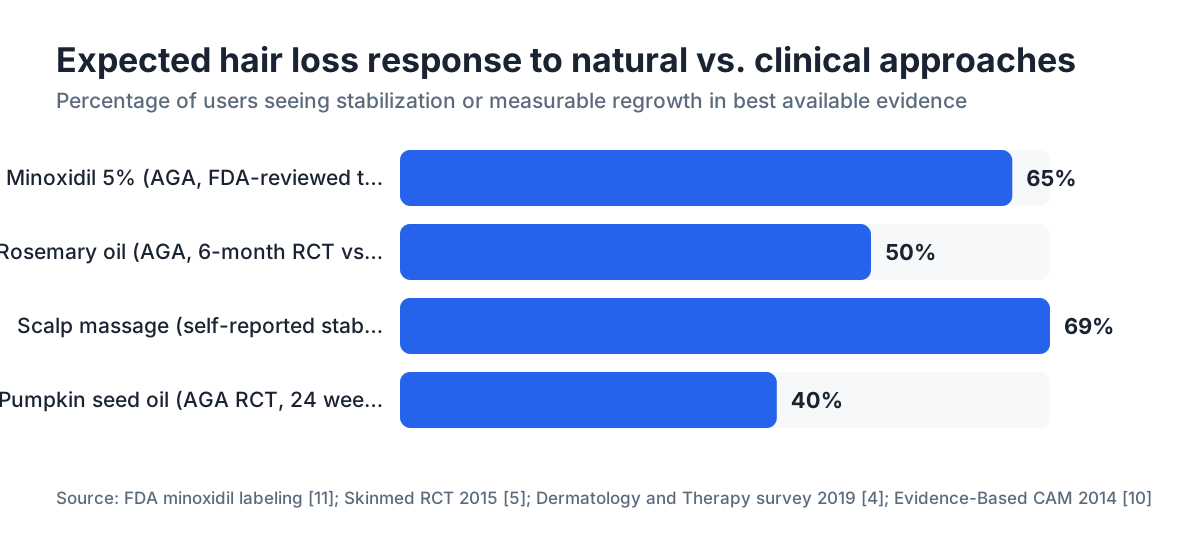
A 2019 survey of 327 people who self-reported daily scalp massage found 68.9% saw stabilization or regrowth at an average of 6.4 months [4]. Survey data is weak because of selection bias. People who improve report back; people who see nothing often go quiet. Still, the mechanism holds up: mechanical stimulation raises blood flow and may stretch dermal papilla cells in a way that switches on growth factors.
Ten to twenty minutes of firm fingertip pressure a day costs nothing. The 2019 study used a device for consistency, but fingertips do the job. The risk of harm is basically zero unless you're clawing at an inflamed scalp. So do it. Just don't expect it to hold back a decade of AGA by itself.
Can rosemary oil actually regrow hair?
Rosemary oil has the most credible clinical comparison of any natural remedy. A randomized controlled trial in Skinmed in 2015 pitted 2% minoxidil against rosemary oil in 100 patients with androgenetic alopecia over 6 months. Both groups saw similar hair count increases by month 6, and the rosemary group had less scalp itching [5].
Before you cancel your minoxidil, some context. The trial used 2% minoxidil, the older, weaker formula. The current standard is 5%, often paired with topical finasteride. The study was small, and the same group's work hasn't been widely replicated. A 2023 systematic review in the Journal of Cosmetic Dermatology looked at phytotherapy for AGA and called the rosemary evidence "promising but insufficient for clinical recommendations" [6].
The active compound is thought to be rosmarinic acid, which may block 5-alpha reductase (the enzyme that turns testosterone into DHT) and improve scalp circulation. If that mechanism is real, it works the same way pharmaceutical DHT blockers do, just far more weakly.
How to use it: mix a few drops of rosemary essential oil into a carrier like jojoba or coconut (roughly 2-3% dilution, about 6 drops per tablespoon), massage it in, leave it 30 minutes, then wash it out. Rosemary shampoos exist, but rinse-off products sit on the scalp for minutes and carry less evidence.
Which nutrient deficiencies cause hair loss, and how do you fix them?
This is where natural treatment has its clearest evidence, because you're correcting a measurable deficiency that's directly driving the shedding.
Iron and ferritin. Low ferritin (stored iron) is one of the most common fixable causes of diffuse shedding, especially in women with heavy periods. A 2006 review in the Journal of the American Academy of Dermatology found ferritin below 30 ng/mL was consistently linked to telogen effluvium [7]. Some dermatologists push the target to 70 ng/mL for hair-loss patients. Get a blood test. Don't supplement on faith.
Vitamin D. Vitamin D receptors sit inside hair follicles, and deficiency tracks with alopecia areata and general shedding across several studies. The American Academy of Dermatology notes serum 25-hydroxyvitamin D below 20 ng/mL counts as deficient [8]. Supplementing when you're low can cut shedding. It won't grow hair on someone whose levels are already fine.
Zinc. Zinc deficiency causes diffuse hair loss. It's also easy to overdo. High-dose zinc actually triggers hair loss and blocks copper absorption, so more is not better.
Biotin. The internet worships biotin. The evidence for supplementing it in people who aren't deficient is essentially zero, and true deficiency is rare. Unless a blood test confirms you're low, biotin pills for hair loss waste your money. The hair loss supplements overview breaks down the real data on each.
Protein. Hair is mostly keratin. Crash diets and very low-protein eating (under roughly 40 to 50 grams a day) can set off telogen effluvium within 2 to 3 months. Adequate protein (at least 0.8 grams per kilogram of body weight, more if you're active) is a baseline, not a cure.
Does reducing stress help stop hair loss?
Yes, in the specific case of stress-triggered telogen effluvium. Not for genetic pattern loss.
The mechanism is documented. A severe psychological or physical shock pushes a larger-than-normal share of follicles into the telogen (resting and shedding) phase at once. The shedding usually starts 2 to 3 months after the trigger, which is why people rarely connect cause and effect. Once the stressor lifts and the body settles, follicles cycle back into anagen (the growth phase) and shedding drops.
The problem is that "manage your stress" is useless as advice. What actually has data: regular aerobic exercise (which lowers cortisol over time), a consistent sleep schedule (sleep loss raises cortisol and prolactin, both of which can disrupt follicle cycling), and evidence-based psychology like cognitive behavioral therapy for chronic anxiety.
Chronic cortisol probably doesn't drive AGA directly, but the evidence that it worsens inflammatory scalp conditions and telogen shedding is reasonably strong. If you're shedding diffusely after a brutal year, stress reduction is real treatment, not a platitude.
What hairstyle and mechanical habits should you stop if you want to keep your hair?
Some hair loss is entirely self-inflicted through styling, and quitting those habits is one of the cleanest reversible wins you'll get.
Tight hairstyles (high ponytails, cornrows, tight braids, heavy extensions) put constant tension on the follicle root. Early traction alopecia shows up as miniaturized hairs and broken edges along the hairline. Catch it early, drop the tension, and follicles recover. Leave it for years and they scar.
Heat styling above roughly 180C (365F) doesn't hurt the follicle under the scalp, but it fractures the shaft again and again, so hair snaps off above the skin. That reads as thinning because you see less length and density, even though the follicle is fine.
Harsh chemical treatments, bleaching worst of all, weaken the shaft and cause breakage. Same story: the follicle is intact, the hair just looks thinner.
Aggressive brushing on wet hair, which stretches and snaps more easily, is a real contributor to perceived thinning in people with fine hair.
Fix the mechanics and what looks like thinning often improves within a few months as your existing follicles grow in healthy again.
Can diet changes regrow hair?
Diet changes help when the diet was the problem. They're not a general growth hack.
The Mediterranean diet shows up in hair loss research more than any other pattern. A 2017 cross-sectional study in Archives of Dermatological Research found that higher adherence to the Mediterranean diet was linked to lower risk of AGA onset or progression in men [9]. The protective link was strongest for raw vegetables and fresh herbs eaten more than 3 days a week.
The likely mechanism is antioxidant load and reduced oxidative stress at the follicle, not any single nutrient. So a diet heavy on vegetables, with adequate protein, healthy fats (especially omega-3s from fish or flax), and little processed food, looks modestly protective.
Will switching to a Mediterranean diet grow back hair you've already lost to AGA? Almost certainly not. Will it cut oxidative damage that feeds ongoing miniaturization and maybe slow progression? Possibly.
Two foods keep surfacing in the literature. A small 2014 RCT in 76 men with AGA found 40% more hair count in the pumpkin seed oil group versus 10% in placebo after 24 weeks [10]. Green tea's EGCG inhibits 5-alpha reductase in cell studies, though human trials are thin.
When do natural approaches stop being enough?
If you've stuck with the approaches above for 6 months and the hairline keeps moving, or if you started out able to see scalp through thinning hair, natural-only probably isn't your primary treatment anymore.
The two FDA-approved treatments for androgenetic alopecia carry decades of clinical data. Minoxidil for men (topical, OTC) is the easiest first step. 5% topical minoxidil applied twice daily produced regrowth or stabilization in roughly 60 to 70% of men across FDA-reviewed trials [11]. Finasteride (oral, prescription) hits the hormonal driver directly by blocking DHT production. The two together beat either alone, which is why finasteride and minoxidil combination therapy is now standard.
If you want to understand your pattern before deciding, the free AI hair analysis at MyHairline (/scan) gives you a Norwood or Ludwig staging estimate from a photo in seconds. That helps you calibrate how much intervention your situation really calls for.
For loss that's progressed a long way, hair transplant surgery is the option that gives permanent coverage, though it works best once you've stabilized ongoing loss first.
What is the realistic timeline for seeing results from natural approaches?
This is the part that trips people up most, so read it before you buy anything.
Hair grows roughly 0.5 to 1.5 cm a month. The anagen (growth) phase lasts 2 to 7 years; telogen lasts 3 to 4 months. So if you correct a deficiency or drop a stressor today, you won't see real density change for at least 3 to 6 months, and full recovery from a telogen effluvium episode can take 12 to 18 months.
Scalp massage: if it's going to help, expect 3 to 6 months before you can photograph a difference.
Rosemary oil: the Skinmed RCT ran 6 months before hair count changed meaningfully [5].
Iron correction: ferritin climbs slowly even on supplements. Shedding often won't ease until ferritin passes 30 to 70 ng/mL.
Here's the rule. Three months of trying something proves nothing. Give any approach 6 months minimum, and photograph your hairline or parting in the same lighting every month so you have data instead of a mood.
What natural approaches are overhyped or a waste of money?
Honest opinion, because this is where people burn cash.
Onion juice. One small uncontrolled 2002 study showed benefit for alopecia areata specifically, not AGA. It enrolled 23 people. For 20 years the internet has spun it into a cure for all hair loss. Skip it.
Caffeine shampoos. Caffeine has interesting effects on follicles in a dish (it counters DHT's growth-inhibiting effect in cell cultures). But rinse-off shampoos sit on the scalp for minutes, and the evidence that scalp caffeine reaches the follicle in useful amounts isn't there. The most-cited human trial used leave-on caffeine at far higher concentration than any shampoo delivers.
Biotin supplements (without confirmed deficiency). Covered above. Stop buying them unless a blood test says otherwise.
Castor oil. No human clinical trials for castor oil and hair loss exist as of this writing. It conditions the shaft and may make hair feel thicker. A follicle effect has never been shown.
"Thickening" shampoos. Most coat the shaft to make strands feel or look bulkier. That's cosmetic, not follicle-level. Fine to buy if you know what you're getting, but it isn't treatment.
For an evidence-based breakdown of every supplement category, the hair loss supplements article covers the real data on each one.
What is the right order of steps if you want to start today?
Here's the practical sequence if you want to be methodical without overspending.
Step 1: Get a blood panel. At minimum: ferritin, serum iron, vitamin D (25-OH), thyroid (TSH and free T4), and a complete metabolic panel. Treating a deficiency you don't have is pointless. Missing one you do have costs you months.
Step 2: Stop mechanical damage. Audit your hairstyle, heat tools, and chemical treatments. Fix what's fixable now. Cost: zero.
Step 3: Start daily scalp massage. Ten to twenty minutes, firm fingertip pressure. Do it while watching TV. Cost: zero.
Step 4: Try rosemary oil if you want a topical natural option. Two to three percent dilution in a carrier, daily. Give it 6 months before judging.
Step 5: Tighten your diet. Adequate protein, vegetables, omega-3s. Mediterranean pattern as a rough template. No crash diets.
Step 6: Address stress if it's a real driver. Exercise, sleep, and professional help when warranted.
Step 7: Reassess at 6 months. Photograph and compare. If loss continues and the pattern points to AGA, this is where you seriously weigh minoxidil, finasteride, or both. The evidence gap between natural approaches and clinical treatment for AGA is wide. Running MyHairline's free AI scan (/scan) before that conversation gives you a clearer read on your stage and trajectory.
Nobody has to pick between natural and clinical. Most people who keep their hair use both.
Sources
- American Academy of Dermatology, Hair Loss Overview
- American Academy of Dermatology, Hair Loss Types and Treatment
- Eplasty 2016, 'Standardized Scalp Massage Results in Increased Hair Thickness by Inducing Stretching Forces to Dermal Papilla Cells in the Subcutaneous Tissue'
- Dermatology and Therapy 2019, 'Self-Assessments of Standardized Scalp Massages for Androgenic Alopecia'
- Skinmed 2015, 'Rosemary Oil vs Minoxidil 2% for the Treatment of Androgenetic Alopecia'
- Journal of Cosmetic Dermatology 2023, systematic review of phytotherapy for androgenetic alopecia
- Journal of the American Academy of Dermatology 2006, 'Diffuse hair loss: its triggers and management' / iron and ferritin analysis
- American Academy of Dermatology, Vitamin D and skin health guidance
- Archives of Dermatological Research 2017, 'Mediterranean diet and androgenetic alopecia'
- Evidence-Based Complementary and Alternative Medicine 2014, 'Effect of Pumpkin Seed Oil on Hair Growth in Men with Androgenetic Alopecia'
- FDA, Drug Approvals and Databases (minoxidil topical labeling)