

TL;DR: Mounjaro hair loss in women is almost always telogen effluvium triggered by rapid weight loss and caloric stress, not a direct drug effect. Most shedding peaks around 2-4 months after starting the drug and resolves on its own within 6-12 months. Adequate protein, micronutrient monitoring, and minoxidil can shorten the timeline. No single fix works overnight.
What is causing hair loss on Mounjaro?
The short answer: rapid weight loss is almost certainly the main driver, not tirzepatide itself. When your body loses significant weight quickly, it reads that as a physiological stressor. A large proportion of your hair follicles simultaneously shift from the active growth phase (anagen) into a resting phase (telogen), then shed roughly 2-4 months later. This is called telogen effluvium, and it is the same pattern seen after bariatric surgery, crash dieting, major illness, or childbirth [1].
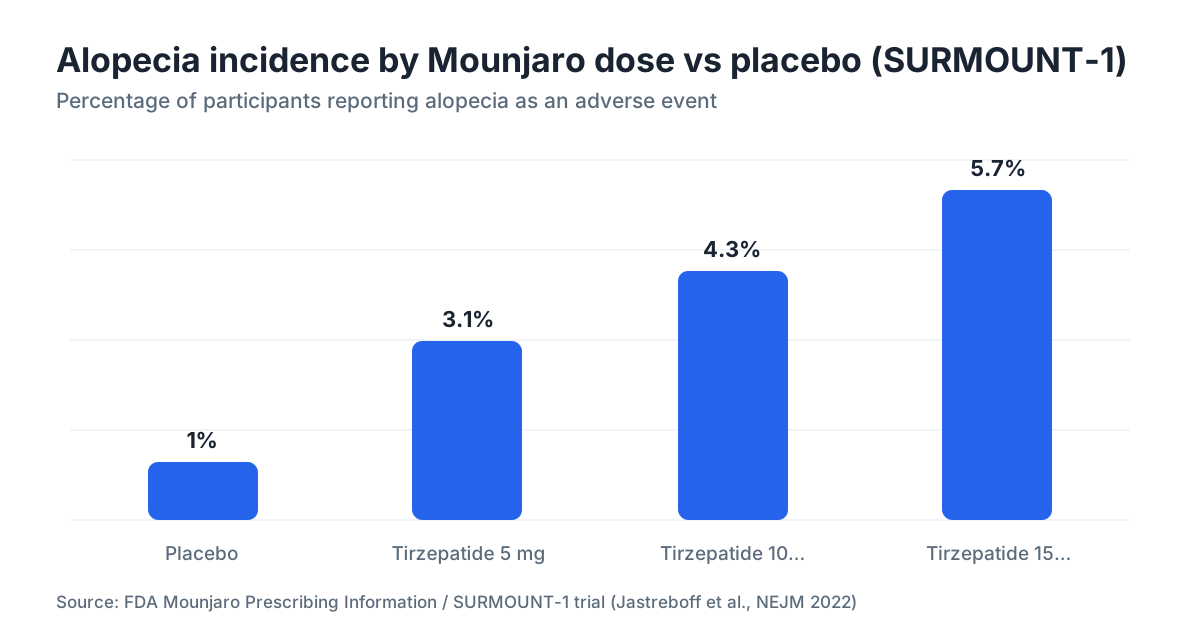
In the Mounjaro (tirzepatide) phase 3 SURMOUNT-1 trial, alopecia was reported as an adverse event in roughly 5.7% of participants on the highest dose (15 mg), compared to 1.0% in the placebo group [2]. That gap is real, but it likely reflects the weight loss itself rather than any hair-follicle toxicity from the molecule. People losing 20+ pounds in a few months on almost any intervention see similar shedding rates.
The FDA label for Mounjaro lists alopecia as a reported adverse reaction, though it does not characterize the mechanism or severity [2]. What that label does not say is that the shedding is permanent, because for the vast majority of women it is not.
Hormonal shifts add a layer of complexity for women specifically. Significant fat loss changes circulating estrogen, cortisol, and sometimes thyroid hormones, all of which affect the hair cycle. If you were already in a borderline hormonal hair loss situation before starting Mounjaro, the added stress of rapid weight change can push you over the threshold into noticeable shedding. That is not the same as what causes hair loss from androgenetic alopecia, though the two can overlap.
How long does Mounjaro hair loss last?
For most women, shedding peaks somewhere between 2 and 4 months after the physiological stressor (the rapid weight loss phase) and then gradually slows. Regrowth typically begins within 3-6 months of the peak shed, and most people have visibly normal density again by 9-12 months [1].
That timeline assumes the underlying stressor has stabilized. If you are still losing weight rapidly, or if your caloric intake is severely restricted, the follicles do not get a clear signal to re-enter anagen. That is why some women on GLP-1 medications report shedding that seems to stretch past the typical telogen effluvium window: the body perceives ongoing caloric restriction as ongoing stress.
A small number of women find that what they thought was telogen effluvium is actually unmasked androgenetic alopecia. Rapid weight loss can reveal a genetic predisposition that was not visibly apparent before. In that case, the diffuse shedding settles but a pattern of thinning at the crown or temples persists. That distinction matters because it changes what you do next. If shedding has not improved at all after 12 months, or if it follows a distinct pattern rather than diffuse loss across the whole scalp, it is time to see a dermatologist for a scalp biopsy or trichoscopy.
How much hair loss is normal on Mounjaro?
Humans shed roughly 50-100 hairs per day normally [3]. In active telogen effluvium, that can jump to 150-300 hairs per day and look alarming in the shower or on your pillow. That number is still not enough to cause visible baldness in someone with average density, but it feels dramatic because it is concentrated and sudden.
The SURMOUNT-1 trial reported alopecia in 5.7% of the 15 mg tirzepatide group vs 1.0% of placebo [2], meaning the overwhelming majority of Mounjaro users do not experience clinically noticeable hair loss at all. If you are in the minority who do, it is worth knowing the severity in trials was generally mild to moderate. No trial participant discontinued Mounjaro because of hair loss alone.
One reasonably reliable self-check: run your fingers through your hair from root to tip and count what comes out. More than about 6 hairs in one gentle pull (the "pull test") suggests active, significant shedding and is worth documenting for a doctor. A dermatologist can also do a formal trichogram or scalp biopsy if the diagnosis is unclear [4].
What steps actually help stop Mounjaro hair loss?
Here are the steps that have real mechanistic or clinical support, roughly in order of evidence strength.
Get your protein intake above the minimum. This is the single most actionable change for GLP-1 users. Mounjaro suppresses appetite aggressively. Many women end up eating 800-1,100 calories a day without trying, and protein intake drops below 50g. Hair is made of keratin, a protein, and follicles are among the first tissues to be deprioritized when amino acid availability is low. Current clinical guidance for people using GLP-1 agonists typically recommends a minimum of 1.2g of protein per kilogram of body weight per day, though some obesity medicine specialists push higher [5]. Track it for a week. Most women who think they are eating enough are not.
Check ferritin, more than hemoglobin. Iron deficiency is one of the most common reversible causes of diffuse hair loss in women, and it frequently worsens during caloric restriction [4]. The problem is that standard blood panels check hemoglobin for anemia, and you can have depleted iron stores (low ferritin) with normal hemoglobin. Most dermatologists treating hair loss want to see ferritin above 40-70 ng/mL, more than in the "normal" lab range which can extend down to 12 ng/mL [4]. Ask your doctor for a ferritin level specifically.
Check thyroid function. TSH, free T3, and free T4. Significant caloric restriction can suppress thyroid function, and low thyroid is a well-established cause of diffuse hair loss in women [3]. This is also a reversible cause, so missing it wastes months.
Consider topical minoxidil. Minoxidil is the only topical treatment with FDA approval for female hair loss. The 2% solution and 5% foam are both approved for women [3]. It works by prolonging the anagen phase and increasing follicle size. It does not cure the underlying telogen effluvium, but it can accelerate re-entry into the growth phase and reduce the visible thinning while you wait. The main side effect to know about is initial increased shedding in the first few weeks, because it pushes resting follicles into a new cycle. Check our overview of minoxidil side effects if that concerns you. You need to use it consistently; stopping causes shedding to return.
Consider oral minoxidil at low doses. Off-label low-dose oral minoxidil (0.25-1 mg/day in women) has growing evidence for diffuse hair loss and is increasingly used by dermatologists when topical application is impractical [6]. It carries more systemic considerations than the topical form, so this is a prescription conversation, not a pharmacy aisle decision. See our deeper look at oral minoxidil for what the data actually says.
Avoid additional stressors to the hair. Tight hairstyles, aggressive heat styling, and chemical treatments all add mechanical and oxidative stress to already-fragile telogen-phase hairs. This is not the time for a keratin treatment or bleach. Low-manipulation styles and a gentle sulfate-free shampoo are genuinely useful, more than wellness advice.
Reassess whether continuing Mounjaro makes sense for your specific situation. This is a conversation only you and your doctor can have. For most people, the weight-loss benefit is substantial and the hair loss is temporary, so stopping the drug is not the obvious answer. But if your shedding is severe, your weight loss has plateaued, and you are already at a healthy weight, it is a real conversation worth having.
Does stopping Mounjaro stop the hair loss?
Maybe, and not necessarily right away. If you stop the drug and your body stabilizes at a consistent weight and caloric intake, the physiological stress signal stops. Follicles gradually re-enter anagen. But because of the 2-4 month lag between stress and shedding, you may not see the hair loss slow down for 2-3 months after stopping, and you will not see obvious regrowth for another 3-6 months after that.
Stopping Mounjaro also typically leads to weight regain for most people, which introduces its own bodily stress response. There is not a clean answer here. The honest truth is that the shedding usually stops when the body stabilizes, whether that is on the drug, off the drug, or at a maintenance dose where weight is no longer actively falling quickly.
If stopping feels drastic but the hair loss feels severe, some women find that slowing down the titration schedule (spending longer at a lower dose rather than escalating toward 15 mg) reduces the rate of weight loss enough to dampen the hair stress signal without abandoning treatment entirely. Talk to your prescribing physician about titration pace.
Is Mounjaro hair loss the same as hormonal hair loss in females?
They overlap but are not the same thing. How to stop hormonal hair loss in females involves addressing the hormonal driver directly: low estrogen (menopause, postpartum), elevated androgens (PCOS), or thyroid dysfunction. Mounjaro hair loss is primarily a nutritional and mechanical stress response.
That said, the two can occur at the same time in the same woman. Tirzepatide has some effects on insulin sensitivity and body composition that can indirectly affect sex hormone levels. Losing a large amount of weight reduces peripheral estrogen production from adipose tissue, which can lower circulating estrogen in premenopausal women. That hormonal shift, layered on top of telogen effluvium, can make shedding worse and recovery slower.
If you have been diagnosed with PCOS or are perimenopausal, tell your dermatologist. The workup and treatment approach differs. A DHT blocker like spironolactone, which is commonly used for androgenetic alopecia in women, may be worth discussing if the hair loss pattern looks more patterned than diffuse. Finasteride is used in women in specific clinical contexts, though it is not FDA-approved for female hair loss and requires conversation about contraception in women of childbearing age.
Which nutrients should women on Mounjaro monitor for hair loss?
The appetite suppression from tirzepatide makes nutritional deficiency a real and underappreciated risk. These are the ones with the clearest connection to hair loss:
| Nutrient | Target range for hair health | Why it matters |
|---|---|---|
| Ferritin | >40-70 ng/mL (more than "normal") | Iron depletion is one of the most reversible causes of diffuse hair loss in women [4] |
| Vitamin D | 40-60 ng/mL (25-OH vitamin D) | Deficiency linked to telogen effluvium; common in people on caloric restriction [8] |
| Zinc | 70-120 mcg/dL | Deficiency causes diffuse shedding; easy to deplete on low-calorie diets |
| Protein/amino acids | >1.2g/kg/day total intake | Keratin synthesis requires adequate amino acid supply [5] |
| Biotin | Deficiency is rare but check if using supplements that interfere with thyroid labs | Supplementation rarely helps unless you are actually deficient [10] |
| B12 | >300 pg/mL | Metformin and low-calorie diets both deplete B12; relevant if you take metformin alongside GLP-1 |
A quick note on biotin supplements: they are massively overhyped for hair loss. Unless you have a confirmed deficiency (genuinely rare), biotin supplements do not regrow hair. They can also interfere with thyroid function tests and troponin assays, which is a real clinical problem [10]. Stop biotin for at least 3-5 days before any blood draw.
A metabolic panel plus ferritin, vitamin D, zinc, and TSH is a reasonable baseline bloodwork request when you start a GLP-1 medication, and again at 3-6 months in.
Are there hair loss supplements that help with GLP-1 shedding?
Probably some, under specific circumstances. The supplement industry around hair loss is full of products with minimal evidence. But a few have decent mechanistic rationale when the hair loss is tied to nutritional deficiency.
Iron supplementation genuinely helps when ferritin is low. The dosing and form matter (ferrous sulfate is the most studied; take it with vitamin C and away from calcium) and you should not supplement iron without a confirmed deficiency [7]. Vitamin D supplementation corrects a deficiency that independently associates with telogen effluvium [8]. Zinc supplementation at appropriate doses (not megadoses) can help when deficiency is confirmed.
Beyond correcting deficiencies, the data gets thin fast. Saw palmetto, pumpkin seed oil, and various proprietary hair blends have some small trial evidence but mostly in androgenetic alopecia, not telogen effluvium. They are unlikely to hurt and unlikely to dramatically help. Our full breakdown of hair loss supplements goes through the evidence for each ingredient if you want more detail.
Spending money on a fancy "hair growth" blend while eating 900 calories a day and skipping protein is a bad trade. Fix the foundation first.
Can minoxidil and other treatments speed up hair regrowth after Mounjaro?
Topical minoxidil is the most evidence-backed option. The FDA approved 2% topical minoxidil solution for women in 1991, and the 5% foam formulation has also been approved for female use [3]. In randomized controlled trials, topical minoxidil increases hair count and shaft diameter compared to placebo, and it works in telogen effluvium as well as androgenetic alopecia, partly because it is not mechanism-specific: it just keeps follicles in anagen longer.
Expect 3-4 months of consistent use before you see any visible change. Some women see a brief increase in shedding in weeks 2-6, which is follicles being pushed into a new cycle. If that happens, stick with it. Stopping causes everything you gained to reverse within a few months.
Low-dose oral minoxidil (0.25-1 mg in women) is gaining real traction as a once-daily alternative that bypasses the scalp application hassle. A retrospective study of 100 women found hair density improvements comparable to topical forms at these low doses, with fewer scalp-related side effects [6]. The systemic concerns (fluid retention, facial hair at higher doses) are dose-dependent and much less common at the low doses used for hair loss than at the cardiovascular doses.
For women whose Mounjaro hair loss reveals underlying androgenetic alopecia, spironolactone (25-200 mg/day) is widely used off-label. It blocks androgen receptors at the follicle level. It requires monitoring for potassium and blood pressure. A dermatologist who specializes in hair loss can help you sort out whether this is your situation.
If you want a baseline picture of your shedding pattern and density before committing to treatment, MyHairline's free AI hair scan (/scan) can give you a preliminary read in minutes. It does not replace a dermatologist but it can help you document what you are seeing and track change over time.
For now, combining adequate nutrition, ferritin correction, and topical or oral minoxidil is the combination most dermatologists would recommend for Mounjaro-related shedding that is not self-resolving.
When should you see a doctor about hair loss on Mounjaro?
See a dermatologist (ideally one who specializes in hair or a trichologist) if:
- Shedding has not slowed at all after 6 months of weight stabilization and good nutrition
- You are losing hair in a distinct pattern (crown thinning, hairline recession, patches) rather than diffuse all-over shedding
- The pull test yields more than 6 hairs per gentle pass consistently
- You notice scalp inflammation, scaling, or visible bald patches, which suggest conditions like alopecia areata or seborrheic dermatitis rather than telogen effluvium
- Your bloodwork shows a significant deficiency that is not improving with supplementation
A dermatologist can do trichoscopy (dermoscopy of the scalp) to distinguish telogen effluvium from androgenetic alopecia or other conditions without a biopsy in most cases. A scalp biopsy is the gold standard when the picture is genuinely unclear [4].
The American Academy of Dermatology publishes clinical guidance on evaluating hair loss in women and recommends a structured workup including a detailed history, scalp exam, and targeted labs before starting any treatment [4]. That structure matters because treating the wrong diagnosis wastes time and money.
If a receding hairline specifically is part of your concern alongside diffuse shedding, that is a different pattern worth flagging to your doctor separately.
What does recovery from Mounjaro hair loss actually look like?
Recovery is slow and non-linear. Most women notice that shedding rate decreases first, usually 1-3 months after whatever was driving the stress stabilizes. Then the scalp looks "thinner" for a while but hair is not actively falling as fast. Then short, fine regrowth hairs appear (often called "baby hairs") at the hairline and crown, typically 3-6 months after the shedding peaks. These take another 6-12 months to grow to normal shaft length and diameter.
Total timeline from peak shed to restored density: expect 9-18 months if the underlying cause has resolved. That is a long time to be patient, which is why many women choose to support recovery with minoxidil rather than just waiting.
Photographs beat your perception in the mirror. Take a consistent, well-lit top-of-head photo every 4 weeks. Month-to-month changes are almost invisible subjectively but obvious in side-by-side photos over 6 months.
If after 12-18 months you still have noticeably reduced density, a consultation about whether you are a candidate for a hair transplant may become relevant. That said, hair transplant surgeons generally will not operate on active telogen effluvium, and they want to see stable loss before assessing candidacy. It is a last-resort option, not a first response to GLP-1 shedding. The MyHairline scan tool (/scan) can help you track density over time so you have objective documentation if you get to that point.
Sources
- StatPearls (NCBI Bookshelf), Telogen Effluvium
- FDA, Drugs@FDA database, Mounjaro (tirzepatide) prescribing information
- American Academy of Dermatology, Hair loss patient resources
- American Academy of Dermatology, Hair loss diagnosis and treatment resources
- Obesity Medicine Association, Clinical Practice Statements
- Journal of the American Academy of Dermatology, low-dose oral minoxidil research
- NIH Office of Dietary Supplements, Iron Fact Sheet for Health Professionals
- NIH Office of Dietary Supplements, Vitamin D Fact Sheet for Health Professionals
- NEJM, Tirzepatide SURMOUNT-1 trial (Jastreboff et al., 2022)