

TL;DR: Postpartum hair loss is normal shedding set off by the hormonal crash after delivery. Estrogen kept your follicles in a growth phase during pregnancy. When it drops sharply after birth, huge numbers of follicles enter the shedding phase at once. Peak shedding hits between 3 and 6 months postpartum. Most women fully recover by 12 months. No treatment is required.
What is postpartum hair loss and is it actually normal?
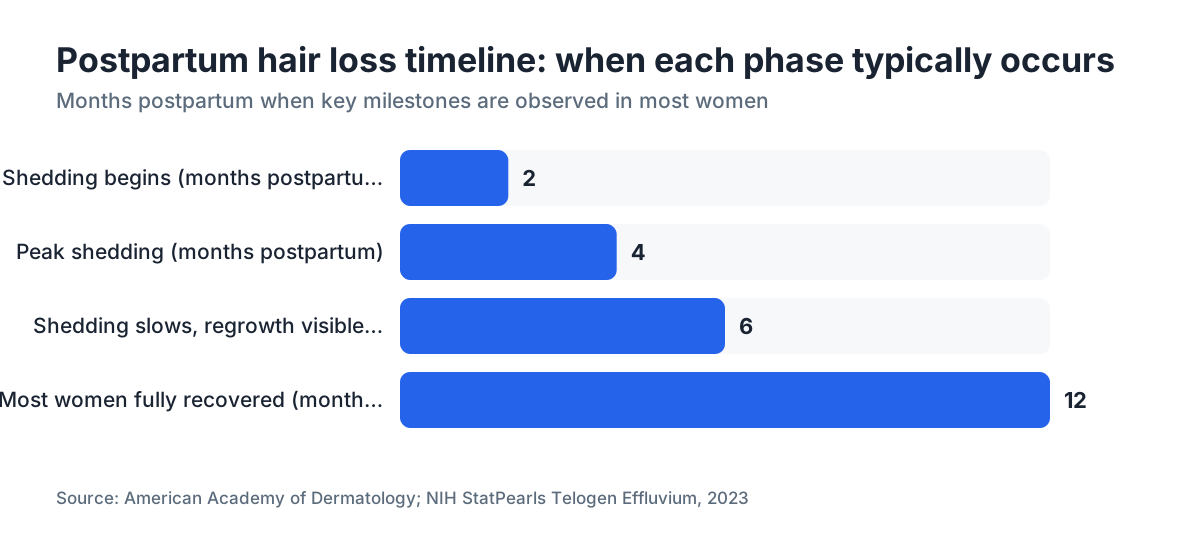
Postpartum hair loss is the sudden, heavy shedding that usually starts 2 to 4 months after giving birth. The clinical name is telogen effluvium. It is completely normal. The American Academy of Dermatology says many new mothers see far more shedding after delivery than they ever expected [1].
Here is what trips most people up. This is not a disease. It is a delayed correction.
During pregnancy, high estrogen and progesterone hold an unusually large share of your hair in the anagen phase, which is active growth. Hair that would normally cycle out and shed just stays put. You get thick, full pregnancy hair, which feels great. Then estrogen falls off in the days after delivery, and every follicle that had been held in place gets the signal to move into telogen (the resting and shedding phase) at the same time.
That synchronized exit is what fills your shower drain and covers your pillow. It is not new hair leaving. It is old, overdue hair catching up all at once.
Studies estimate 40% to 50% of postpartum women shed enough to worry about it [2]. That is the majority, not a fringe experience.
What causes postpartum hair loss at a biological level?
The cause is the hormonal crash after delivery. During pregnancy, estradiol climbs to roughly 100 times its baseline level, and progesterone rises sharply too. Both hormones, estrogen most of all, keep the hair follicle in its anagen growth phase longer and delay the normal shift into catagen and then telogen [11].
At delivery, estrogen and progesterone drop off a cliff, often reaching pre-pregnancy levels within 72 hours. That plunge is the trigger. Follicles that were held in anagen shift into telogen all together. Telogen lasts about 2 to 3 months before the hair physically sheds, so the visible loss shows up 2 to 4 months after birth, not at delivery. That lag is why so many new mothers get blindsided. The worst shedding lands right when they thought the hard part was behind them.
Prolactin, the hormone that sustains breastfeeding, may play a part too. It stays elevated during nursing, and some research suggests it can affect hair cycling, though the evidence is thinner than it is for estrogen [3]. This is one reason some breastfeeding mothers report slightly longer shedding than mothers who do not nurse. The data are not solid enough to make that a firm rule.
Iron deficiency is a second, separate factor worth knowing. Iron stores often drop during pregnancy and recovery. Low ferritin (the storage form of iron) is independently linked to telogen effluvium, and a postpartum woman can have both problems feeding each other [4]. The practical takeaway: if your shedding drags on longer than expected, get a ferritin level checked first.
For the full biology of why hair sheds in cycles, the telogen effluvium explainer covers the mechanism in detail.
When does postpartum hair loss start and how long does it last?
Most women notice the first real jump in shedding between 2 and 4 months after delivery. The worst of it, peak shedding, usually hits around months 3 through 6 [1]. By month 6, most women are past the peak. By 12 months postpartum, the AAD says most women see their hair return to its pre-pregnancy fullness [1].
There is real variation, though. Some women are largely done by month 6. Others still shed above normal at 9 or 12 months. A few things seem to change the duration:
- How steep the individual hormonal shift is
- Whether iron and ferritin stores get replenished
- Whether pregnancy triggered or exposed an underlying thyroid problem
- Nutrition and sleep deprivation, which both affect hair cycling
- Stress, which is rarely in short supply with a newborn
If shedding is still heavy past 12 months, see a dermatologist and get bloodwork. You are now outside the expected window, and something else may be driving it. Postpartum telogen effluvium should not permanently damage follicles. If hair has not recovered at 12 to 15 months, rule out thyroid disease, iron deficiency anemia, and other conditions before writing it off as simple postpartum shedding.
How much shedding is normal versus too much?
Normal daily shedding for most adults is roughly 50 to 100 hairs [1]. At the peak of postpartum telogen effluvium, many women shed 3 to 5 times that. That is why it looks so alarming.
The shedding shows up in predictable spots: the shower drain, the hairbrush, the pillow, and around the hairline. The hairline and temples take the biggest visible hit because the hair there is finer and the change stands out more. Some women also see diffuse thinning across the top of the scalp.
A few signs point to something beyond normal postpartum shedding:
- Shedding that does not slow or stabilize by 6 months
- Patchy loss rather than diffuse thinning (patches suggest alopecia areata, which the postpartum immune shift can trigger)
- Heavy loss before 6 to 8 weeks postpartum (too early for classic telogen effluvium; likely a different trigger)
- Shedding past 12 months with no regrowth
- Symptoms like fatigue, weight change, cold intolerance, or skin changes, which point toward thyroid issues
If any of those fit, see a dermatologist and get a basic panel that includes thyroid-stimulating hormone (TSH) and ferritin.
Does postpartum hair loss happen with every pregnancy?
Not always, but often. Every pregnancy runs the same hormonal cycle, so many women who shed after a first baby shed again after later pregnancies. The severity can swing between pregnancies for reasons nobody fully understands.
Timing can shift a little too. Some women notice shedding slightly earlier or later with a second or third baby. Age, nutrition going into the pregnancy, and the gap between pregnancies probably all play small parts.
One thing worth knowing. If your hair density had not fully recovered before a second pregnancy, your starting point is already lower. A second round of postpartum shedding can feel worse even when the actual amount shed is about the same.
What actually helps with postpartum hair loss?
Honest answer: nothing stops it. The follicles will finish their telogen cycle no matter what you do. But a few things set up better conditions for recovery.
Nutrition first. This has the strongest rationale of anything here. Iron deficiency and low ferritin are common postpartum and are independently linked to prolonged telogen effluvium [4]. Get a ferritin level checked. Most dermatologists who treat hair loss want ferritin above 40 ng/mL, ideally closer to 70 ng/mL. If yours is low, replenishing it through food or supplements (with a doctor's guidance) is the single most evidence-backed thing you can do.
Zinc and biotin deficiencies can affect hair in theory, but real deficiency is uncommon in anyone eating a reasonable diet. Biotin gets marketed hard for hair, and the evidence supports it only in people who are actually deficient [5]. Most women are not. A postpartum multivitamin or a continued prenatal covers your nutritional bases without turning this into a project. The hair loss supplements article breaks down what the evidence really supports.
Minoxidil: the complicated option. Topical minoxidil is FDA-approved for female pattern hair loss at 2% and used off-label at 5% [6]. Some dermatologists use it off-label for telogen effluvium, including postpartum, to push recovering follicles back into growth. But postpartum telogen effluvium usually resolves on its own, so the benefit over just waiting is unclear. There is also a real practical concern: minoxidil passes into breast milk in small amounts, and the FDA label advises against use during breastfeeding [6]. If you are nursing, talk to your OB or dermatologist before starting anything. The minoxidil side effects article covers what to expect.
Finasteride and other DHT blockers: not for this. Finasteride blocks 5-alpha reductase and is approved for androgenetic alopecia in men. It is not indicated for postpartum hair loss. It is also contraindicated in pregnancy and breastfeeding because of teratogenic risk [7]. Some women with female pattern hair loss use it off-label, but that is a separate conversation from postpartum telogen effluvium. The finasteride and DHT blocker articles cover when it makes sense.
Gentle hair care. Loose styles, less heat, and less chemical processing will not stop the shed, but they cut down on mechanical breakage on top of it. Breakage and telogen shed look alike but come from different causes. Reducing damage while the scalp recovers is just sensible.
Scalp massage. A 2019 study found that daily standardized scalp massage increased hair thickness in a small group over 24 weeks [8]. It is not a cure, the study was small, and it was not specific to postpartum women. But it carries no downside, and some women find it helps with stress too.
If you want an objective read on where your hairline and density actually stand, MyHairline's free AI scan (/scan) maps your scalp and gives you a baseline to track against as you recover.
Can breastfeeding make postpartum hair loss worse?
This is a common worry. The honest answer is: possibly, and modestly. Prolactin stays elevated during breastfeeding and may keep estrogen suppressed longer, which could stretch out the shedding window. Some observational data and clinical experience suggest nursing mothers shed a bit longer on average.
But if the difference is real, it is small. And breastfeeding carries clear benefits that outweigh an extra month or two of shedding. Weaning to speed hair recovery is not a trade most clinicians would recommend, and the evidence for it is thin.
The practical note: if you are nursing, any treatment plan, minoxidil, high-dose vitamins, or anything else, has to account for what crosses into breast milk. Stick to established nutrients at reasonable doses and clear anything else with your provider first.
Is postpartum hair loss the same as female pattern hair loss?
No, and telling them apart matters. Postpartum telogen effluvium is diffuse, temporary shedding from a specific hormonal trigger. Female pattern hair loss (androgenetic alopecia) is progressive and chronic, driven by genetic sensitivity to androgens, especially DHT. The two can overlap, and that is where it gets tricky.
For some women, the postpartum shed is the first time they notice thinning at the crown or temples, and they chalk it all up to the birth. Sometimes that is right. Sometimes the postpartum shed exposes underlying female pattern hair loss that was already there but hidden. Losing overall density makes the pattern thinning suddenly visible.
How to tell them apart: postpartum telogen effluvium thins the whole scalp evenly and follows no pattern. Female pattern hair loss thins the top and crown (the Ludwig scale) while usually sparing the sides and back. If your thinning sits on top of the scalp rather than spreading everywhere, get it evaluated.
The what causes hair loss article lays out the full range of reasons hair sheds.
Women worried about female pattern hair loss on top of postpartum recovery should know the treatments differ, and some, like finasteride, cannot be used while breastfeeding. The finasteride and minoxidil article covers how combination therapy works in the right candidates.
What should I actually do at each stage after delivery?
Here is a practical, timeline-based plan.
Weeks 1 to 8: Do not panic about the timing. Shedding has not started yet, or is barely beginning. Focus on nutrition: keep taking a prenatal or a good postpartum multivitamin, load up on iron-rich foods (lean red meat, lentils, dark leafy greens), and stay hydrated. Sleep is nearly impossible with a newborn, but chronic severe deprivation does stress the body, and the hair cycle along with it.
Months 2 to 4: Shedding ramps up. This is expected. Track it loosely and do not obsess. If you are worried, ask your provider to check ferritin and TSH at your next visit. Keep hair care gentle.
Months 4 to 6: Peak shedding for most women. It should start slowing around month 5 or 6. You may also spot short, wispy regrowth around the hairline that looks like baby hair. That is a good sign. Follicles are cycling back into anagen.
Months 6 to 12: Recovery. Density slowly rebuilds and the baby hairs lengthen. Hair should look noticeably better by month 9 to 12.
Past 12 months with no change: See a dermatologist. Get ferritin, TSH, a complete blood count, and consider a scalp exam. You are past the expected natural course, and it deserves a look.
When should I see a doctor about postpartum hair loss?
Most postpartum shedding needs no doctor at all. A few situations do.
See a dermatologist or your OB/GYN if:
- Shedding is still severe past 9 months postpartum
- Hair has not noticeably improved by 12 to 15 months
- You have patchy, asymmetric loss rather than diffuse thinning (this suggests alopecia areata)
- You notice signs of thyroid trouble: fatigue, temperature intolerance, weight changes, mood changes, or changes in skin or nails
- Your ferritin comes back low and you need supplementation guidance
- You want to talk through medication options
A dermatologist can do a pull test, review your bloodwork, and sometimes run a trichoscopy (dermoscopy of the scalp) to check follicle density and health directly. These are low-cost, non-invasive checks that either confirm plain postpartum shedding or catch something else.
Hair transplants have no place here. Postpartum telogen effluvium resolves. The hair transplant option only enters the picture for women with proven, stable pattern hair loss where medication has not been enough and the loss is permanent. Temporary shedding does not come close to that bar.
Does diet or stress affect postpartum hair loss?
Diet genuinely matters, mostly through the iron and ferritin pathway. Severe calorie restriction, crash dieting to drop pregnancy weight fast, is a real risk factor for stretching out or worsening telogen effluvium. The hair follicle is metabolically busy and reacts to nutrient shortage. Losing pregnancy weight gradually while keeping protein and micronutrients up beats aggressive restriction for hair recovery every time.
Hair is almost entirely keratin, a protein, so adequate dietary protein matters for building new hair. The National Academies' Dietary Reference Intakes put the recommended protein allowance for lactating women at about 71 grams per day, though individual needs vary [9].
Stress is harder to measure but worth naming. Severe physical or psychological stress can set off its own telogen effluvium, separate from hormones. New parenthood is one of the more physically and mentally taxing things adults go through. Pulling apart the hormonal trigger from the stress stacked on top of it is genuinely hard. The practical upshot: anything that lowers physiological stress, decent nutrition, recovery sleep when you can get it, help from a partner or family, also points toward better hair recovery.
Sources
- American Academy of Dermatology, Hair loss in new mothers
- NIH National Library of Medicine, PMC: Postpartum telogen effluvium prevalence
- NIH National Library of Medicine, StatPearls: Telogen effluvium
- NIH National Library of Medicine, PMC: Serum ferritin and hair loss
- NIH Office of Dietary Supplements, Biotin fact sheet for health professionals
- FDA, Drugs at FDA (minoxidil labeling)
- NIH National Library of Medicine, DailyMed: Finasteride labeling
- NIH National Library of Medicine, PMC: Standardized scalp massage results in increased hair thickness (2019)
- NIH National Library of Medicine, Bookshelf: Dietary Reference Intakes for Energy, Carbohydrate, Fiber, Fat, Protein and Amino Acids
- American Academy of Dermatology, Causes of hair loss
- NIH National Library of Medicine, PMC: Hair disorders in pregnancy