TL;DR: Pura d'or DHT Blocker shampoo contains botanical ingredients like saw palmetto and biotin but no FDA-approved hair loss drugs. Rinse-off shampoos have weak evidence for blocking DHT at the follicle. It's unlikely to stop androgenetic alopecia on its own. Think of it as a scalp-care product, not a treatment, and pair it with proven options if hair loss is your real concern.
What is Pura d'or DHT blocker shampoo?
Pura d'or is a California-based personal care brand that sells a shampoo marketed as a DHT-blocking, hair-thinning-reduction formula. The product's full name varies slightly across retailers (sometimes listed as "Pura d'or Original Gold Label Anti-Thinning Shampoo" or "Pura d'or DHT Blocking Shampoo"), but the formula is essentially the same. It runs roughly $28 to $35 for a 16 oz bottle on Amazon and in chain pharmacies as of mid-2025, though prices fluctuate.
The shampoo is not a drug. The FDA classifies it as a cosmetic, which means the company cannot legally claim it treats, cures, or prevents hair loss [1]. What you'll see instead are carefully worded phrases like "helps reduce hair thinning" and "nourishes the scalp" that stay on the cosmetic side of the line.
The formula lists more than 20 active botanical ingredients including saw palmetto extract, nettle extract, pumpkin seed oil, he shou wu (fo-ti), biotin, black cumin seed oil, and tea tree oil, alongside a base of argan oil and aloe vera. It's sulfate-free, which matters mainly for people with color-treated or chemically processed hair. The ingredient list is genuinely long and reads impressively. The harder question is whether any of those ingredients, delivered in a rinse-off shampoo, actually reach the hair follicle at a meaningful concentration before they wash down the drain.
How does DHT cause hair loss, and can a shampoo block it?
Dihydrotestosterone (DHT) is a hormone the body makes from testosterone using an enzyme called 5-alpha reductase. In people genetically predisposed to androgenetic alopecia (the medical name for pattern hair loss), DHT binds to androgen receptors in hair follicles and triggers a process called miniaturization: follicles gradually shrink, produce thinner and shorter hairs, and eventually stop producing terminal hairs altogether [2]. That is the engine behind male pattern baldness and female pattern hair loss.
For a shampoo to "block DHT" in any meaningful sense, its ingredients would need to inhibit 5-alpha reductase or occupy androgen receptors inside the follicle. That requires the active compound to penetrate the scalp, reach a therapeutic concentration at the follicle, and stay there long enough to do something. A shampoo you rinse out after two to five minutes has a narrow window to pull that off.
This is not speculation. A 2018 review in the Journal of the American Academy of Dermatology noted that cosmetic shampoos have poor follicular penetration compared to leave-on formulations, and that the contact time of rinse-off products is generally insufficient to deliver pharmacologically relevant concentrations of most botanicals [3]. That doesn't make the shampoo worthless. It does put a hard ceiling on what it can accomplish at the follicle.
For a deeper look at the DHT mechanism and which interventions actually disrupt it, see our guide to dht blockers.
What ingredients in Pura d'or are supposed to block DHT?
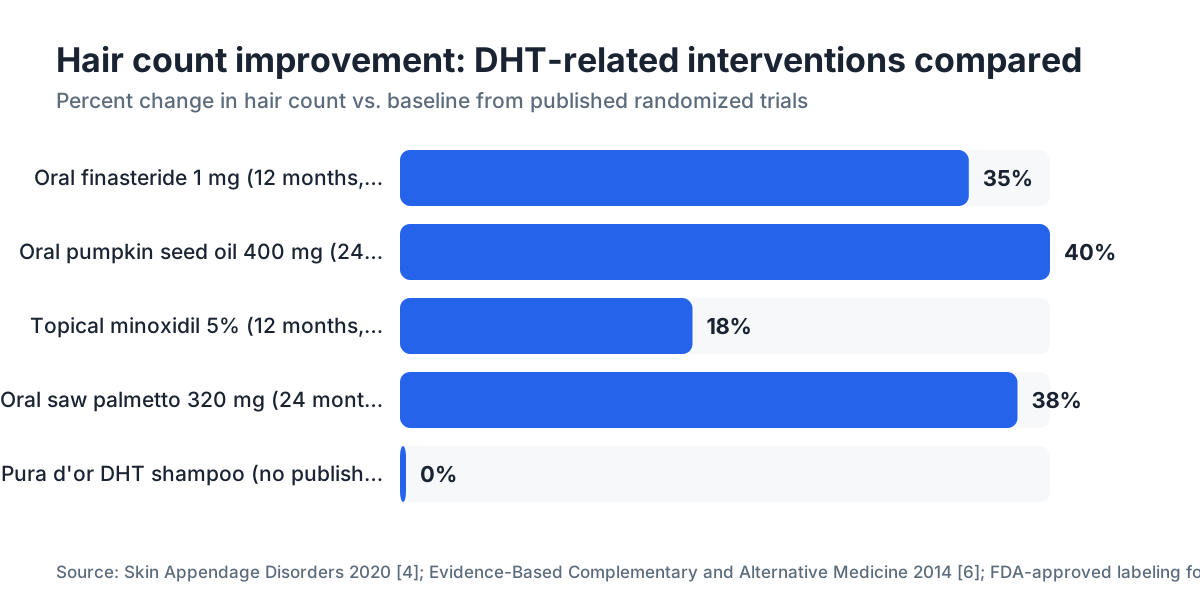
The brand leads with saw palmetto as its primary DHT-blocking ingredient. Saw palmetto (Serenoa repens) does have real evidence behind it. A 2020 randomized controlled trial published in Skin Appendage Disorders found that oral saw palmetto at 320 mg/day produced a 38% improvement in hair count after two years in men with mild to moderate androgenetic alopecia [4]. That's oral supplementation though, not a topical rinse.
A small number of studies have looked at topical saw palmetto. A 2023 study in the Journal of Cosmetic Dermatology tested a leave-on serum containing 2% saw palmetto and found a modest improvement in hair density over 24 weeks [5]. Leave-on is the key word there. Whatever concentration reached the follicle in a leave-on product cannot be assumed to transfer to a rinse-off format.
Here's a quick look at the other major claimed DHT-blocking ingredients in Pura d'or's formula and what the evidence actually shows:
| Ingredient | Proposed mechanism | Evidence quality (topical) |
|---|---|---|
| Saw palmetto | 5-alpha reductase inhibition | 1 small positive RCT (leave-on serum) [5] |
| Pumpkin seed oil | 5-alpha reductase inhibition | 1 oral RCT (400 mg caps), no topical RCT [6] |
| Nettle extract | Possible androgen receptor binding | In vitro only; no topical human trials found |
| He shou wu (fo-ti) | Unclear; antioxidant | Hepatotoxicity risk documented; no hair RCT [7] |
| Biotin | Keratin synthesis support | Only shown effective in biotin deficiency [8] |
| Black cumin seed oil | Antioxidant, some anti-inflammatory data | No peer-reviewed hair RCT found |
The pumpkin seed oil evidence deserves a mention because it's one of the better-supported items on the list. A 2014 randomized trial in Evidence-Based Complementary and Alternative Medicine found that 400 mg oral pumpkin seed oil daily produced a 40% increase in hair count after 24 weeks in men with androgenetic alopecia [6]. Again: oral, not topical rinse-off.
He shou wu deserves its own flag. The FDA and several international health agencies have documented cases of hepatotoxicity (liver damage) linked to products containing fo-ti [7]. In a rinse-off shampoo the systemic absorption is likely minimal, but you should know it's in there, particularly if you're sensitive or have liver concerns.
Is there any clinical evidence that Pura d'or shampoo reduces hair loss?
Pura d'or has funded some internal testing. The brand has cited a clinical study showing a reduction in hair breakage, and some marketing materials reference a consumer perception survey where a high percentage of users reported less hair shedding. Consumer perception surveys are not clinical trials. They measure how people feel about their hair, which is influenced heavily by expectation and placebo.
As of mid-2025, there is no published, peer-reviewed, independently funded randomized controlled trial testing Pura d'or's shampoo formula against a placebo for androgenetic alopecia. That's not unusual for a cosmetic product. The FDA does not require cosmetics to prove efficacy before sale [1]. It does mean you're taking the brand's word for it.
The honest summary: the ingredients in Pura d'or have some individual evidence, mostly from oral supplementation studies rather than topical use, and none of that evidence has been tested together in this specific rinse-off formulation. The scalp-care benefits (reduced irritation, sulfate-free cleansing, some anti-inflammatory effect from botanicals) are more plausible than the DHT-blocking claims.
If you want to understand the broader landscape of what causes hair loss and which categories of treatments have real evidence, the what causes hair loss guide is a solid starting point.
How does Pura d'or compare to other DHT-blocking shampoos?
The shampoo market is full of products making similar claims. The main competitors in the same price range and category include Nizoral (ketoconazole), Revita, Alpecin (caffeine-based), and Nioxin. They are not all equal.
Ketoconazole shampoo (Nizoral) is the one product in this category with genuine peer-reviewed support for androgenetic alopecia. A 1998 study in Dermatology and a follow-up in 2005 both found that 1 to 2% ketoconazole shampoo reduced hair loss and improved hair density in men with androgenetic alopecia, with effects comparable to 2% minoxidil in one arm of the 1998 study [9]. The mechanism is thought to involve anti-androgenic and anti-inflammatory action more than antifungal activity. Nizoral 1% is available over the counter for around $15 to $20. Nizoral 2% requires a prescription in the US.
Caffeine shampoos (Alpecin is the best-known) rely on a different proposed mechanism: caffeine may counteract testosterone-induced suppression of hair follicle growth in vitro. The in vitro data exists [10], but translating that into meaningful scalp penetration from a rinse-off product remains unproven in large-scale human trials.
| Shampoo | Key active | Peer-reviewed RCT evidence | Price (16 oz approx.) |
|---|---|---|---|
| Pura d'or DHT Blocker | Saw palmetto, botanicals | None specific to product | $28-$35 |
| Nizoral 1% | Ketoconazole 1% | Yes (1998, 2005 studies) [9] | $15-$20 |
| Alpecin Caffeine | Caffeine | In vitro only | $12-$18 |
| Revita | Ketoconazole + caffeine + biotin | Limited; partly industry-funded | $30-$40 |
| Nioxin | Niacinamide, biotin | No androgenetic alopecia RCT | $25-$35 |
If you're going to spend money on a DHT-adjacent shampoo, ketoconazole has the most honest claim to real evidence. That doesn't mean Pura d'or is ineffective at everything it does. The marketing positioning just runs ahead of what the science supports.
What do real users experience with Pura d'or DHT blocker shampoo?
The product has thousands of reviews on Amazon, consistently averaging around 3.8 to 4.1 out of 5 stars across different product variants. That's useful signal even if individual reviews can't be independently verified.
Positive patterns in reviews: people mention that it lathers well despite being sulfate-free, that their hair feels fuller after use (likely a cosmetic volumizing effect from the botanical oils), and that shedding seems reduced in the first few weeks. The reduced shedding in early use is plausible without any DHT blocking. Switching from a harsh sulfate shampoo to a gentler formula can cut mechanical breakage and scalp irritation in the short term.
Negative patterns: people who hoped to stop or reverse hairline recession report disappointment, usually within three to six months. Some note a slight residue. A smaller number report scalp irritation, though this seems less common than with medicated shampoos.
The honest takeaway is that Pura d'or probably works reasonably well as a scalp care product and a gentle cleanser. If your goal is keeping a healthy scalp while proven treatments do the heavy lifting, it's a fine choice. If you're hoping it replaces finasteride or minoxidil, the user evidence and the clinical evidence both say it won't.
What are the proven alternatives that actually treat DHT-driven hair loss?
Two FDA-approved treatments dominate the evidence base for androgenetic alopecia: finasteride and minoxidil. They work through completely different mechanisms, and the data behind them is in a different league from any shampoo.
Finasteride (Propecia, or generic finasteride 1 mg) is an oral 5-alpha reductase inhibitor. It reduces serum DHT by roughly 70% [11]. Clinical trials show it halts progression in about 83% of men and produces measurable regrowth in a meaningful proportion with consistent use over 12 to 24 months. It requires a prescription and has real side effects worth understanding. See the full breakdown in our finasteride guide.
Minoxidil (Rogaine and generics) is a topical vasodilator approved by the FDA for hair loss at 2% (women) and 5% (men) concentrations [11]. It doesn't block DHT. It extends the anagen (growth) phase of hair follicles. Two-percent topical minoxidil twice daily produced significantly greater hair regrowth than placebo across multiple trials cited by the FDA. Oral minoxidil at low doses (0.25 to 5 mg) is increasingly used off-label with good results; see our oral minoxidil overview for more.
Used together, finasteride and minoxidil beat either one alone, which is why many dermatologists recommend the combination for men. Our guide to finasteride and minoxidil covers how to stack them and what timeline to expect.
Want to use Pura d'or alongside proven treatments? There's no obvious reason not to. It's unlikely to interfere with finasteride or topical minoxidil. Just don't expect it to carry the load.
For people whose hair loss isn't androgenetic, the calculus is different. Telogen effluvium, for example, often resolves on its own once the trigger is addressed, and no shampoo speeds that up meaningfully.
Is Pura d'or DHT blocker shampoo safe?
For most people, yes, the safety profile is reasonable. The formula is free of sulfates, parabens, and artificial fragrances, which puts it on the gentler end of the spectrum. The botanical ingredients are generally regarded as safe for topical use at typical cosmetic concentrations.
The he shou wu (fo-ti) ingredient warrants attention. The FDA has flagged liver damage associated with oral fo-ti products [7]. In a rinse-off shampoo, systemic absorption is expected to be low, but if you have a liver condition or take medications metabolized by the liver, mention it to your doctor before regular use.
Biotin in shampoos is largely a marketing play. Biotin is water-soluble and not meaningfully absorbed through the scalp. The only documented cases where biotin supplementation helped hair were in people with actual biotin deficiency, a relatively rare condition [8]. Eating it, taking it orally, or washing it onto your scalp makes no meaningful difference in outcome for someone with normal biotin levels.
If you develop scalp irritation, increased shedding, or any allergic reaction, stop using it and check with a dermatologist. Increased shedding in the first few weeks of any new shampoo routine can be a transition effect rather than a sign of damage, but a persistent change warrants evaluation.
Who should consider using Pura d'or, and who should skip it?
Consider it if you want a gentle, sulfate-free daily shampoo with a better-than-average ingredient list for scalp health, if you're already on proven treatments and want a complementary product, or if you have mild scalp irritation and need to switch away from harsher formulas.
Skip it, or at least don't rely on it alone, if you have noticeable hairline recession, visible thinning at the crown, or a family history of significant pattern baldness. Pura d'or's DHT blocking shampoo formula is not going to stop those processes. Waiting six months to find that out is six months of potential follicle miniaturization.
At that point, a conversation with a board-certified dermatologist is the real move. Checking your receding hairline progression and getting an honest read on which Norwood stage you're at costs less long-term than cycling through expensive shampoos.
If cost is the constraint, generic finasteride runs around $15 to $30 per month through several telehealth platforms, and generic 5% minoxidil foam runs about $20 to $30 per month. That's the same or less than Pura d'or, with decades of trial data behind it.
Not sure what type of hair loss you're dealing with? The free AI hair analysis at MyHairline can give you a starting point based on your photos before you make any spending decisions.
How long should you try Pura d'or before deciding if it works?
Hair growth cycles run in phases lasting roughly two to six years for anagen (growth), a few weeks for catagen (transition), and two to three months for telogen (rest and shedding). Any intervention that genuinely affects the follicle takes at least three to six months to show up as visible density changes [2].
If you're going to give Pura d'or a fair trial, three months is the minimum. Six months is more honest. Take photos in consistent lighting at the start. Parting photos and overhead photos in natural light, taken monthly, beat mirror impressions every time.
Hair naturally sheds roughly 50 to 100 hairs per day [2], so seeing hair in the shower or on a brush is not automatically a sign of accelerating loss. Patterned thinning, a visibly receding hairline, or a widening part are the reliable indicators.
If after six months you don't see meaningful improvement in density or reduction in shedding, that's useful information. The product isn't doing what you need for your specific type of hair loss, and it's time to escalate to a clinician-reviewed approach.
Does Pura d'or work for women with hair thinning?
Female pattern hair loss (FPHL) also involves DHT sensitivity in predisposed follicles, though the presentation is different from male pattern baldness. In women it typically shows as diffuse thinning across the crown and a widening part rather than hairline recession, and Norwood-Hamilton staging doesn't apply the same way.
The same logic about rinse-off shampoos applies regardless of sex. If the shampoo's DHT-blocking claims are weak for men, they're equally weak for women. Women with hair thinning face an added wrinkle: many causes of thinning in women aren't androgenetic at all. Iron deficiency, thyroid dysfunction, postpartum shifts, polycystic ovary syndrome, and telogen effluvium can all cause shedding that looks like pattern loss but needs completely different treatment.
FDA-approved topical minoxidil 2% is specifically labeled for women with FPHL [11]. For women who want to understand what's actually driving their hair loss, bloodwork (ferritin, TSH, free T4, DHEA-S, total testosterone, complete blood count) is often more informative than any product trial.
Pura d'or markets the shampoo to both men and women, and the safety profile is similar across sexes. As a gentle daily shampoo, it's fine for women. As a hair loss treatment, the same limits apply.
Sources
- FDA, Overview of Cosmetics Regulation
- American Academy of Dermatology, Hair Loss Overview
- Journal of the American Academy of Dermatology, Cosmetic shampoo penetration review (2018)
- Skin Appendage Disorders, Saw palmetto RCT (2020)
- Journal of Cosmetic Dermatology, Topical 2% saw palmetto leave-on serum study (2023)
- Evidence-Based Complementary and Alternative Medicine, Pumpkin seed oil RCT (2014)
- FDA, MedWatch Safety Alerts on He Shou Wu (Fo-Ti)
- NIH Office of Dietary Supplements, Biotin Fact Sheet
- Dermatology journal, Ketoconazole shampoo and androgenetic alopecia (1998, 2005 studies)
- International Journal of Trichology, Caffeine and hair follicle in vitro data
- FDA, Approved Drug Products for Hair Loss (Minoxidil and Finasteride labels)