
TL;DR: Scratching your scalp rarely destroys follicles outright. The condition causing the itch (seborrheic dermatitis, scalp psoriasis, or tinea capitis) usually does more damage than the nails. Repeated trauma also breaks hair shafts and inflames follicles. Most itch-related hair loss reverses once you treat the root cause. Persistent itching with visible scaling or shedding means it's time for a dermatologist.
Does scratching your scalp actually cause hair loss?
Scratching is almost never the primary cause of hair loss, but it can make existing loss dramatically worse.
Here's the more precise picture. Hair follicles sit a few millimeters below the scalp surface [1]. Normal fingernail scratching doesn't reach them directly. What scratching does do is create surface trauma: broken blood vessels, micro-lacerations in the epidermis, and chronic low-grade inflammation. That inflammation is the real problem. Prolonged inflammatory signaling around a follicle can push hairs from their growing phase (anagen) into their resting phase (telogen) early, a process called telogen effluvium [2].
Scrubbing hard enough to break the skin adds another risk: secondary bacterial or fungal infection, which can scar on its own if left untreated. Scarring alopecia, where the follicle gets permanently replaced by fibrous tissue, is rare from scratching alone. It happens when deep infections go untreated for months.
The other mechanism is mechanical. Vigorous scratching snaps hair shafts above the scalp, creating the look of thinning even when the follicles are healthy. You're not losing hair at the root. You're breaking it mid-shaft. Treat the itch, break the habit, and most of that visual thinning reverses within a few months.
So think of scratching as a symptom delivery mechanism. Fix the itch source, stop the scratching, and the hair loss picture usually improves fast.
What conditions cause an itchy scalp that leads to hair loss?
Most scalp itching traces back to one of five conditions. They look similar on the surface but call for very different treatments, which is why self-diagnosis usually wastes time and money.
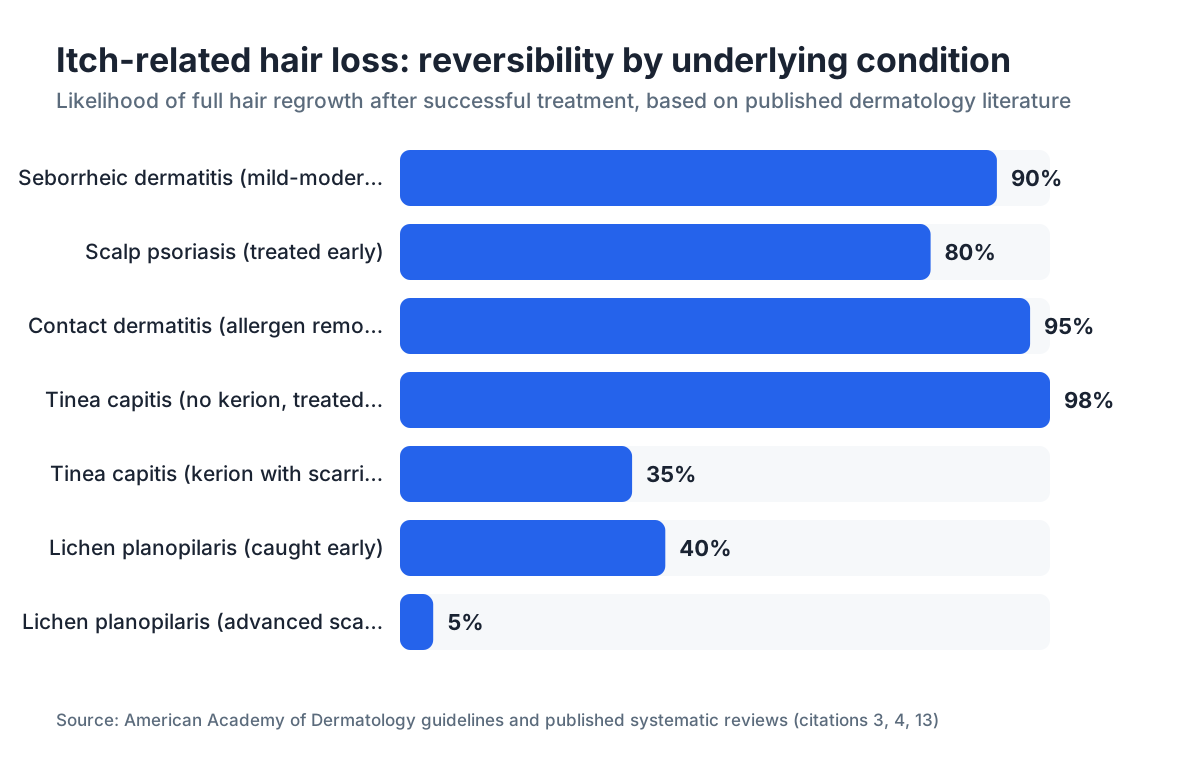
Seborrheic dermatitis is the most common. It's a chronic inflammatory condition driven by the yeast Malassezia, and the American Academy of Dermatology estimates it affects up to 50% of adults in a mild form (dandruff) and around 3-5% in a more severe form [3]. The itch tends to be moderate, with greasy yellow or white flakes. It doesn't destroy follicles on its own, but years of uncontrolled inflammation can thin hair in affected areas.
Scalp psoriasis produces a thicker, silvery scale and often extends past the hairline. It's an autoimmune condition affecting about 2-3% of the U.S. population, with roughly 50-80% of people with psoriasis having scalp involvement at some point [4]. The intense itch drives aggressive scratching, and the resulting excoriation can cause temporary shedding.
Tinea capitis (scalp ringworm) is a fungal infection most common in children, though adults aren't immune. It causes patchy hair loss with a distinct scaly, sometimes boggy look. The AAD notes it requires oral antifungal therapy, more than topical treatment, because topical agents don't penetrate the hair shaft well enough [3].
Contact dermatitis from hair dyes, shampoo preservatives, or scalp treatments causes localized itching and inflammation. Hair dye allergy (usually to paraphenylenediamine, or PPD) is a documented cause of acute scalp inflammation [5].
Lichen planopilaris is rarer but more serious. It's a scarring alopecia where the immune system attacks the follicle itself. Itching and burning at the scalp margin, often with redness at the follicle opening, are the giveaway signs. Once scarring sets in, that hair loss is permanent.
For a broader look at what drives shedding beyond scalp conditions, see our article on what causes hair loss.
How bad does the scratching have to be before follicles are damaged?
Here's where honest uncertainty matters. There's no clean clinical threshold of "X minutes of scratching per day equals Y% follicle damage." What the research does show is that the duration and intensity of inflammation around the follicle matters far more than the mechanical act of scratching itself [2].
In animal models, sustained perifollicular inflammation lasting 4-6 weeks consistently disrupts the hair cycle [6]. Human studies are harder to design and control, but dermatology practice generally treats any scalp condition causing visible shedding for more than 8-12 weeks as worth intervention rather than watchful waiting.
Mechanical trauma from nails breaks shafts but rarely reaches follicles unless someone is drawing blood repeatedly. People with obsessive-compulsive scalp picking (a condition called excoriation disorder) can and do cause follicular scarring over years, but that's a distinct clinical situation from ordinary itch-driven scratching.
One practical signal: if you're seeing short, broken hairs (not tapered ends) in your brush or on your pillow, shaft breakage from scratching or manipulation is likely. If you're seeing hairs with a small white bulb attached, that's a telogen hair and the loss pattern is more systemic. The difference tells you where to look next.
Can scalp inflammation from scratching trigger telogen effluvium?
Yes, and it's one of the more underappreciated mechanisms.
Telogen effluvium is diffuse shedding triggered when a big chunk of your follicles enter the resting phase at once. The classic triggers are physiological stress, nutritional deficiency, or hormonal shifts. But localized chronic inflammation is also a documented trigger, especially when it covers a large surface area of the scalp [2].
A 2022 review in the Journal of the American Academy of Dermatology reported that scalp inflammatory conditions, including seborrheic dermatitis and psoriasis, were independently associated with increased telogen hair counts in affected patients [7]. The review stopped short of calling the relationship causal in every case, because the same systemic factors that drive inflammatory skin conditions (stress, poor sleep, nutritional gaps) also cause telogen effluvium on their own. Separating the threads is genuinely difficult.
What's practically useful: if you've had three or more months of active scalp itch and you're also noticing diffuse shedding (more than in the itchy area), treating the scalp condition aggressively often cuts the shedding within 2-4 months. The response timeline mirrors what you'd expect if inflammation was a contributing driver.
How do you treat an itchy scalp that's causing hair to fall out?
Treatment follows the diagnosis. Getting that diagnosis right, ideally from a board-certified dermatologist, is faster and cheaper than cycling through drugstore products that target the wrong condition.
For seborrheic dermatitis: First-line treatment is antifungal shampoo. Ketoconazole 2% (prescription in the U.S., though a 1% version is available OTC) and zinc pyrithione are the most studied options [3]. The FDA-approved ketoconazole 2% shampoo label specifies twice-weekly use for initial control, then as-needed for maintenance [8]. Ciclopirox 1% shampoo is a solid alternative. For resistant cases, short courses of topical corticosteroids (like fluocinolone acetonide 0.01% in oil) knock down inflammation fast.
For scalp psoriasis: Topical corticosteroids are the usual starting point, sometimes combined with vitamin D analogues like calcipotriene. Tar-based shampoos reduce scaling and itch with reasonable tolerability. For moderate to severe cases, biologics targeting IL-17 or IL-23 pathways have become the standard of care, though that's a specialist conversation [4].
For tinea capitis: Oral griseofulvin has been used for decades and still works; terbinafine is a newer alternative with potentially shorter courses. The AAD is clear that topical antifungals alone won't cut it here [3].
For contact dermatitis: Stop the offending agent, apply a mid-potency topical corticosteroid for acute flares, and consider patch testing to pin down the specific allergen if reactions recur.
While you're managing the scalp condition, being deliberate about not scratching with nails helps a lot. Some people find keeping nails short or wearing soft gloves at night (when unconscious scratching peaks) genuinely cuts morning scalp damage.
If you've been dealing with significant shedding alongside scalp itch and want an objective baseline before seeing a doctor, the MyHairline free AI hair scan can give you a documented picture of your hairline and density to bring to that appointment.
Does minoxidil help when hair loss is from scalp inflammation?
Minoxidil addresses androgenetic alopecia (pattern hair loss), not inflammation-driven loss. That said, the two often coexist, and treating both at once is a common and reasonable approach.
If your hair loss is purely from an inflammatory scalp condition like seborrheic dermatitis, resolving the inflammation comes first. Applying minoxidil to an actively inflamed scalp can increase local irritation and, in some people, make the itch worse [9]. The minoxidil vehicle (propylene glycol in most topical formulas) is a known irritant on compromised skin barriers.
Once the scalp is under control, if pattern hair loss is also present, minoxidil for men is a well-supported addition. For people who get persistent irritation from topical minoxidil, oral minoxidil sidesteps the scalp contact issue entirely, though it carries its own side effect profile worth reviewing separately.
If you're weighing minoxidil alongside other treatments, the finasteride and minoxidil combination article covers what the evidence says about using both together for pattern loss.
Is hair loss from scalp scratching permanent or reversible?
For most people, it's reversible. That's the reassuring part of this topic.
Hair shaft breakage from mechanical scratching reverses completely as new growth cycles proceed, usually within 3-6 months. Telogen effluvium triggered by scalp inflammation resolves within 3-6 months of controlling the inflammation [2]. Even more advanced cases of seborrheic dermatitis or scalp psoriasis, where diffuse thinning has developed over years, frequently show meaningful regrowth once the condition comes under control.
The exceptions are scarring alopecias. Lichen planopilaris, frontal fibrosing alopecia, and folliculitis decalvans can cause permanent follicle loss if allowed to progress. These are clinically distinct from ordinary itch-driven damage, and they come with specific signs: burning more than itching, perifollicular redness, and hair loss that spreads outward from the margins of an already-bald patch rather than following a typical pattern.
If a dermatologist confirms your hair loss is non-scarring and you've controlled the underlying itch condition, give the regrowth time. Most follicles pushed temporarily into telogen will cycle back into anagen on their own schedule.
What's the difference between dandruff itch and something more serious?
Dandruff (mild seborrheic dermatitis) has a pretty characteristic presentation: diffuse fine white or yellowish flaking, mild to moderate itch, no hair loss patches, and a tendency to flare with stress or certain foods. It responds to over-the-counter antifungal shampoos within 2-4 weeks.
You should see a dermatologist rather than self-treat if you notice any of these:
- Patchy hair loss with distinct, often circular, areas of scalp showing through
- Thick, adherent silvery scales that bleed slightly when removed
- Burning or tenderness rather than simple itch
- Pustules, boggy swellings, or crusting
- Hair loss that spreads to eyebrows, eyelashes, or other areas
- No response to 4-6 weeks of consistent antifungal shampoo use
Patchy loss with scaling in a child is tinea capitis until proven otherwise and needs prompt treatment. In an adult, that same pattern could be alopecia areata (autoimmune, not itch-driven) or discoid lupus affecting the scalp, both of which need a diagnosis before treatment begins.
A general rule from dermatology practice: itch that wakes you from sleep, itch that comes with burning, and itch with visible skin changes beyond simple flaking are all signals to get examined rather than experiment with shampoos.
Do hair loss treatments like finasteride or DHT blockers help with itch-related shedding?
Not directly, no. Finasteride reduces dihydrotestosterone (DHT) to slow androgenetic (pattern) hair loss in men. It has no meaningful anti-inflammatory or antifungal activity [10]. If your hair loss is driven by scalp inflammation from seborrheic dermatitis or psoriasis, finasteride won't touch it.
The clinical relevance is that pattern hair loss and inflammatory scalp conditions frequently show up together, especially in men in their 30s and 40s. Someone might start finasteride for a receding hairline while also carrying uncontrolled seborrheic dermatitis that's causing extra shedding. In that case, both conditions need treatment. One drug handles one problem.
DHT blockers work on the same hormonal axis as finasteride. None of the clinically used DHT blockers have evidence for reducing inflammatory scalp itch or the hair loss that comes with it.
For inflammatory itch specifically, anti-inflammatory treatments (topical corticosteroids, antifungals, immunomodulators for autoimmune cases) are the right category of intervention.
How can you stop the itch-scratch cycle before it damages your hair?
Breaking the cycle is partly behavioral and partly pharmacological. Both matter.
On the pharmacological side, treating the underlying cause is the single biggest lever. An itch you can barely feel is an itch you're unlikely to scratch hard. Getting there usually takes consistent use of the right medicated shampoo or topical treatment for 4-8 weeks, not a single application.
Behavioral moves that actually help:
Keep nails trimmed short. It dramatically cuts the trauma any single scratching episode causes. Use a soft-bristle scalp brush instead of fingernails for any deliberate scalp massage or product distribution. At night, if unconscious scratching is a problem (you wake with scalp tenderness or find scale under your nails), a soft cotton sleep cap builds a physical barrier.
Cold water rinses calm itch quickly by quieting sensory nerve activity. Hot water dilates blood vessels and often makes inflammatory itch worse for a while. Switching from hot to lukewarm showers is a small change with a noticeable payoff for many people with seborrheic dermatitis.
Antihistamines get tried a lot for scalp itch but usually don't help inflammatory itch (which is histamine-independent in seborrheic dermatitis and psoriasis). They work better for allergic contact dermatitis.
Some people pick at their scalp compulsively in ways that feel hard to stop even without much itch. Tell a doctor if that's you. Excoriation disorder responds well to specific behavioral therapies (habit reversal training) and sometimes to SSRIs, and treating it has real hair preservation payoff.
When should you see a doctor versus trying OTC treatments first?
OTC first is reasonable if the itch is mild, there's no patchy loss, no skin breaks or crusting, and flaking looks like ordinary dandruff. Use a zinc pyrithione or ketoconazole 1% shampoo consistently (twice weekly) for 4-6 weeks. If the itch resolves and no further shedding happens, you're done.
See a dermatologist if:
- You've tried 6 weeks of OTC antifungal shampoo with no real improvement
- You have any patchy, circular, or asymmetric hair loss pattern
- The scalp is breaking down: pustules, crusting, bleeding from scratching, or tender areas
- Loss is spreading beyond the scalp (eyebrows, beard, body hair)
- You suspect a hair dye or product triggered the reaction (patch testing is the only reliable way to confirm the allergen)
- The itch is bad enough to wreck your sleep
Dermatologists can run a dermoscopy exam, a scalp swab or KOH preparation for fungal infections, and a scalp biopsy if scarring alopecia is suspected. These tools change the treatment plan significantly and aren't available at home.
If you want to track whether your hair density is changing while you manage a scalp condition, the MyHairline AI scan gives you a standardized way to photograph and compare your scalp over time, which is genuinely useful for monitoring treatment response between dermatology visits.
What does the research actually say about scalp health and hair density?
The research is more developed in some areas than others. Be appropriately skeptical of confident claims.
For seborrheic dermatitis and hair loss, a 2019 study in Skin Appendage Disorders found that patients with seborrheic dermatitis had significantly higher telogen hair counts and lower anagen-to-telogen ratios than controls, suggesting chronic inflammation does affect the hair cycle even in a condition classically considered cosmetic [11]. The study was small (n=80) and cross-sectional, so causality is inferred, not proven.
For scalp psoriasis, the relationship is better established. A 2020 systematic review in JAMA Dermatology found that patients with moderate-to-severe scalp psoriasis had measurably reduced hair density in affected areas, with density improving after successful treatment, which supports the inflammation-causes-loss direction [4].
The American Academy of Dermatology's published guidance on seborrheic dermatitis and psoriasis both list hair loss as a common associated finding but note that controlled trials specifically measuring hair regrowth as an outcome are sparse [13]. Most of what we know comes from observational data and the logic of follicle biology.
For tinea capitis, the evidence is clearest: prompt antifungal treatment leads to full regrowth in cases without scarring (kerion formation), which can scar if untreated [3].
The honest summary: inflammation from common scalp conditions does appear to drive thinning and shedding beyond just mechanical breakage, treating the underlying condition helps, and the hair usually grows back. The exact mechanisms and the dose-response relationship between inflammation duration and permanent follicle loss are still being worked out.
Sources
- Gray's Anatomy (41st ed.) via StatPearls, NCBI Bookshelf – Hair Follicle Anatomy
- StatPearls, NCBI Bookshelf – Telogen Effluvium
- American Academy of Dermatology – Seborrheic Dermatitis and Tinea Capitis guidance
- JAMA Dermatology – Systematic Review on Scalp Psoriasis and Hair Density, 2020
- StatPearls, NCBI Bookshelf – Paraphenylenediamine (PPD) Allergic Contact Dermatitis
- Journal of Investigative Dermatology – Inflammation and Hair Cycle Disruption (animal model review)
- Journal of the American Academy of Dermatology – Seborrheic Dermatitis and Telogen Counts, 2022 review
- FDA – Ketoconazole 2% Shampoo Prescribing Information (Nizoral label)
- FDA – Minoxidil Topical Solution Prescribing Information
- FDA – Finasteride (Propecia) Prescribing Information
- Skin Appendage Disorders – Seborrheic Dermatitis and Hair Cycle Parameters, 2019
- ePlasty – Effect of Scalp Massage on Hair Thickness, 2016
- American Academy of Dermatology – Hair Loss Overview