

TL;DR: A receding hairline usually starts at the temples or along the frontal hairline, often before most men notice it. The Norwood scale sorts this from Stage 1 (no loss) through Stage 7 (extensive loss). Stages 2 and 3 are the early window when finasteride and minoxidil work best. Catching it early makes a real difference.
What does a receding hairline actually look like in the early stages?
Most men don't catch it on a random Tuesday morning. They catch it in a harsh bathroom light, or in a photo someone else took, and suddenly the hairline looks higher than it used to be. That gap between what you expect and what you see is often the first real signal.
Early recession almost always starts at the temples. The corners of the hairline pull backward, creating a slight "M" shape where there used to be a straight or gently curved line. The hairline at the front center (called the frontal midpoint) usually holds longer than the temples do, which is why the M-shape is such a common early warning sign [1].
Miniaturization is another early sign. The hairs at the frontal hairline don't all fall out at once. They get progressively finer, shorter, and lighter in color before they disappear. You might still have coverage, but the hairs feel thin and wispy compared to the rest of your scalp. This process, driven by the androgen dihydrotestosterone (DHT), is called follicular miniaturization, and it's the underlying mechanism in androgenetic alopecia [2].
Some men also notice a slow widening of the part, or a general drop in density above the forehead, even when the hairline itself hasn't visibly moved. That's worth paying attention to, because it can signal diffuse thinning at the vertex (crown) starting alongside frontal recession.
Not sure what you're seeing? Try this. Press your index finger flat against your hairline at the temple and look in a mirror. If you can see visible scalp underneath your finger that wasn't there a year or two ago, recession has likely started.
What is the Norwood scale and how does it classify male hair loss?
The Norwood scale (formally the Hamilton-Norwood scale) is the standard system doctors use to describe the pattern and extent of male pattern hair loss. James Hamilton developed it in the 1950s, and O'Tar Norwood revised and expanded it in 1975 [1]. Clinicians still use it today when planning treatment or assessing candidates for hair transplants.
The scale runs from Stage 1 to Stage 7, with a separate "A" variant pattern that tracks differently across the top of the scalp rather than leaving a central island of hair.
Stage 1: No significant recession. The hairline is at or near where it was in early adulthood. This is the baseline.
Stage 2: Slight recession at the temples. The corners pull back just a little, forming the early M shape. Many men in their 20s assume this is just a mature hairline (more on that distinction below), but for some it's the true start of androgenetic alopecia.
Stage 3: Deeper recession at the temples, with the curved areas extending further back. This is the first stage the Norwood scale classifies as clinically significant hair loss [1]. There's also a Stage 3 Vertex variant where the crown begins to thin even while the frontal hairline is still relatively intact.
Stage 4: Pronounced frontal recession combined with a bare or thinning patch at the crown, with a band of dense hair still separating the two areas.
Stage 5: The band of hair between the frontal zone and crown narrows.
Stage 6: The two thinning areas merge. Most of the top of the scalp is bare or very sparse.
Stage 7: Only a horseshoe-shaped band of hair remains along the sides and back. This is the most advanced stage.
For most men reading this, the relevant territory is Stages 2 and 3. That's the window where the visual changes are subtle enough to second-guess but the biology is already moving.
How common is early-stage hair loss, and at what age does it usually start?
Male pattern hair loss (androgenetic alopecia) affects roughly 50% of men by age 50, and about 25% of men begin showing signs before age 21 [2]. By their 30s, around one in three men have some noticeable recession.
Age of onset has a strong genetic component, but you can't read it off your father or maternal grandfather with any precision. The genetics of hair loss are polygenic, meaning many genes contribute, and the trait doesn't follow a simple inheritance pattern [3].
Progression rates vary widely. Some men move from Stage 2 to Stage 5 in five years. Others sit at Stage 2 for decades. A 2005 study following men with early androgenetic alopecia found that roughly 14% progressed by at least one Norwood stage within two years without treatment [4]. That number sounds modest, but it means real changes are underway in a meaningful fraction of young men over a short window.
The honest read on timing: if you're seeing early signs in your 20s, take them seriously. Starting treatment at Norwood 2 gives you far more to work with than waiting until Stage 4.
What's the difference between a maturing hairline and actual recession?
This is one of the most common sources of confusion, and it matters because the answer changes what you should do next.
A mature hairline is a normal developmental change. Between the ages of 17 and 29, most men's hairlines move slightly upward from their adolescent position, typically by about 1 to 1.5 cm [5]. The juvenile hairline is flat and low. The mature hairline sits a little higher but stays relatively even across the forehead, without deep notches at the temples.
A receding hairline, by contrast, shows asymmetric or progressive temple recession that forms that M shape, often with visible miniaturization of hairs along the new hairline margin. The corners are the tell.
If your temples are pulling back while your frontal midpoint stays put, that's recession, not maturation. If the whole hairline has simply moved up a touch but stays even and the hairs along it are full and thick, that's probably a mature hairline.
No blood test definitively separates the two. A dermatologist can sometimes use a dermatoscope to spot miniaturized hairs at the hairline, which would confirm early androgenetic alopecia. If you're genuinely unsure and want to track it yourself, take a standardized photo in the same lighting once a month for six months. Progression shows up in photos before it looks obvious in the mirror.
What causes a receding hairline in men?
The short answer: DHT acting on genetically susceptible hair follicles. The longer answer has a few moving parts.
Androgenetic alopecia is driven by dihydrotestosterone, an androgen made from testosterone by the enzyme 5-alpha reductase. In follicles with a genetic sensitivity to DHT, repeated exposure shortens the growth phase (anagen) cycle by cycle, and the follicle produces progressively finer, shorter hairs until it stops producing a visible hair at all [3]. That's follicular miniaturization.
Genetics decide which follicles are sensitive. The frontal and vertex scalp follicles are usually the most vulnerable. The occipital (back and sides) follicles are largely DHT-resistant, which is why that horseshoe fringe survives even in Stage 7 loss and why donor hair from the back of the scalp works so well in transplants.
Other factors can speed things up or muddy the picture. Chronic stress and poor nutrition can push more follicles into the shedding phase (telogen effluvium), making loss look faster than the underlying androgenetic alopecia alone would produce. See telogen effluvium for how that differs from pattern loss. Certain medications, thyroid disorders, and iron deficiency can also cause hair loss that mimics or compounds a receding hairline, which is why a blood panel is a reasonable step if your loss seems sudden or severe.
For a fuller breakdown, what causes hair loss covers the major categories in detail.
Creatine is a commonly googled trigger. The evidence is thin. A single 2009 study found that creatine supplementation raised DHT levels by about 56% in college rugby players over three weeks [6]. Whether that translates to measurable hair loss in men already prone to androgenetic alopecia is unknown. No controlled trial has shown creatine directly causes visible recession. See does creatine cause hair loss for the full picture.
How do you check which Norwood stage you're in?
You can run a reasonable self-assessment with a mirror, good lighting, and a few photos.
First, look at the temple angles. Draw an imaginary line straight back from the outer corner of each eyebrow. If your hairline sits noticeably behind that line on both sides, you're likely at Stage 2 or beyond.
Second, check the depth of the recession. If the bare triangle at each temple is shallow (under about 2 cm deep from the original hairline), you're probably Stage 2. If it's deeper and the two sides are starting to push the frontal forelock into a narrower island, you're at Stage 3.
Third, check the crown. Part your hair in the back and look at the top of your head in a hand mirror. A circular or oval zone of thinning there, even with a mostly intact frontal hairline, puts you in Stage 3 Vertex territory.
A dermatologist or hair loss specialist can give you a more reliable staging, especially using dermoscopy to assess hair caliber and density per square centimeter. Some clinics use phototrichograms or digital scalp analysis tools for tighter measurement. If you want a starting point without a clinic visit, the free AI scan at MyHairline reads your photos and gives you a Norwood stage estimate.
Be honest during the self-assessment. The most common mistake is handing yourself the most flattering read ("it's just my mature hairline") and checking again in two years, once several treatment options have already closed.
When should you start treating a receding hairline?
The earlier the better, and that's not a sales pitch. It's how the biology works.
Both FDA-approved medical treatments for male pattern hair loss, finasteride (oral) and minoxidil (topical), do a better job holding onto the hair you still have than regrowing hair from follicles that have been miniaturized for years [7][8]. Finasteride blocks the conversion of testosterone to DHT; it's better at halting progression than regrowing lost hair. Minoxidil extends the growth phase and increases follicle size; it can produce some regrowth, but its main value is slowing loss.
At Norwood Stage 2 or early Stage 3, you have a lot of borderline follicles that are miniaturizing but not yet gone. Stepping in here can preserve them. By Stage 5 or 6, many of those follicles are permanently dormant, and no medication brings them back reliably.
The American Academy of Dermatology recommends finasteride and minoxidil as first-line treatments for male androgenetic alopecia [7]. Finasteride 1 mg daily (Propecia) is FDA-approved for men for this indication. Topical minoxidil 2% and 5% solutions are FDA-approved as OTC treatments. Oral minoxidil at low doses is increasingly used off-label; see oral minoxidil for what's different about that route.
Using both together is an option many dermatologists recommend. A 2022 meta-analysis in the Journal of the American Academy of Dermatology found combined finasteride and minoxidil produced greater hair count increases than either alone [9]. More detail at finasteride and minoxidil.
On the fence? Look at the lopsided bet. Starting treatment at Stage 2 and not needing it costs you a modest amount of money and time. Not starting it and finding yourself at Stage 5 at 35 costs you options that don't come back.
What treatment options are available for early Norwood stages?
For early-stage recession (Norwood 2 to 3), you have a real menu.
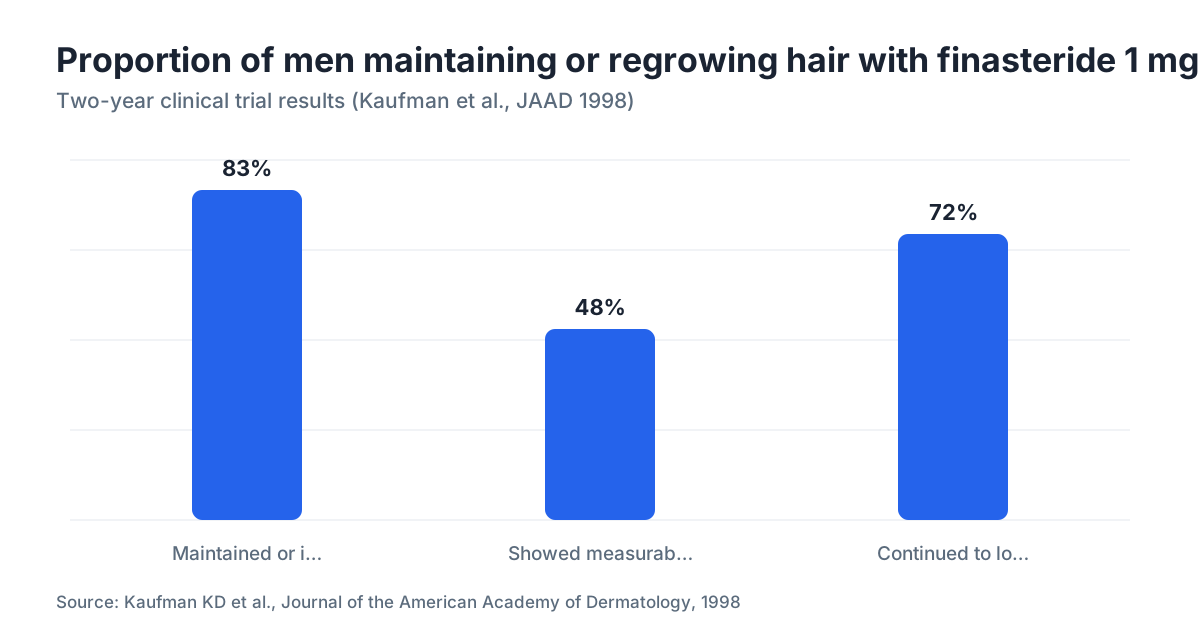
Finasteride 1 mg/day (oral): The most studied medical treatment for male pattern hair loss. A clinical trial published in the Journal of the American Academy of Dermatology found that 83% of men taking finasteride maintained or increased their hair count over two years, compared to 72% who continued losing hair in the placebo group [10]. It needs a prescription and is not appropriate for women of childbearing potential. Sexual side effects were reported in roughly 2 to 3.8% of users in clinical trials, though post-marketing reports suggest they persist in some men after stopping [10]. Read the full picture at finasteride.
Minoxidil 5% topical (OTC): Applied once or twice daily to the scalp. FDA-approved for men. It won't stop the hormonal driver of loss, but it can hold density and produce modest regrowth in early stages. Common side effects include scalp irritation and an initial shedding period that scares a lot of people into quitting too early. See minoxidil for men and minoxidil side effects for what to expect.
DHT blockers (topical finasteride, ketoconazole shampoo, saw palmetto): Topical finasteride 0.25% may deliver local DHT suppression with lower systemic absorption, though long-term data is still building. Ketoconazole shampoo has weak anti-androgenic properties and is sometimes used alongside other treatments. See dht blocker for a rundown of the evidence across categories.
Low-level laser therapy (LLLT): Several FDA-cleared devices exist. Evidence is modest. A 2013 trial in the American Journal of Clinical Dermatology found statistically significant hair count increases versus sham devices, but the effect sizes are generally smaller than with finasteride [11].
Hair supplements: Biotin, saw palmetto, pumpkin seed oil, and various blends are widely sold. Evidence ranges from weak to nonexistent for most. Pumpkin seed oil has one small trial showing modest benefit. See hair loss supplements for an honest look at what's backed and what isn't.
Hair transplant: Not usually recommended at early Norwood stages, because the donor supply is finite and the pattern of future loss is uncertain. Transplanting at Stage 2 and then losing ground behind the transplanted hairline creates a worse cosmetic outcome than waiting. See hair transplant for when it makes sense.
The most cost-effective early-stage protocol, in evidence per dollar, is generic finasteride plus 5% minoxidil foam. That's the combination most hair loss dermatologists would reach for themselves, in my reading of the literature.
Can a receding hairline grow back, or only be slowed?
Some regrowth is possible, especially in early stages, but it's more accurate to think of finasteride and minoxidil as maintenance treatments that also produce regrowth in some users, rather than regrowth treatments that also slow loss.
The clinical trial data for finasteride showed 48% of men had increased hair count (including some clear regrowth) after two years of treatment [10]. Minoxidil's regrowth evidence is more modest and less durable. When you stop either treatment, loss resumes, often catching up to where it would have been without treatment within 6 to 12 months.
Men who start at Norwood 2 and use finasteride consistently for five years often look about the same as when they started, or slightly better. That same man, untreated, might be at Stage 4. The treatment didn't grow back lost hair so much as stop the loss from happening.
If you've already lost ground and want to restore density at the hairline, a hair transplant (follicular unit excision, or FUE) can produce natural results, but it works best when the underlying loss is stabilized medically first. Otherwise the area behind the transplanted hairline keeps thinning.
Nobody has found a way to reliably reactivate follicles that have been dormant for years. Research into JAK inhibitors and hair cloning is ongoing, but nothing in that pipeline is commercially available for androgenetic alopecia as of mid-2025.
How do doctors diagnose early androgenetic alopecia and rule out other causes?
A receding hairline in a man over 20 with a family history of baldness is usually androgenetic alopecia until proven otherwise. But it pays to rule out reversible causes, particularly if the loss is rapid, diffuse, or paired with other symptoms.
A dermatologist will typically take a history (onset, rate, family history, medications, recent illness or stress), examine the scalp visually and sometimes with a dermatoscope, and may order blood tests. Standard labs include thyroid function (TSH, free T4), ferritin, complete blood count, and sometimes total and free testosterone or prolactin if other signs of hormonal imbalance show up.
Dermoscopy can separate androgenetic alopecia from other diagnoses. Signs of AGA under a dermatoscope include hair shaft diameter variability greater than 20% in the affected zone, peripilar signs (brown halos at the follicle opening), and a reduced hair-per-follicular-unit ratio [2].
A punch biopsy is rarely needed for classic presentations but can help when the diagnosis is unclear. Histology in early AGA shows a shift from terminal to vellus follicles and a rising telogen:anagen ratio.
If you had a stressful event in the six months before you noticed shedding, telogen effluvium is worth reading, because that pattern looks different and usually resolves on its own.
For most men in their 20s or 30s with temple recession and a relevant family history, the picture is clear enough that a board-certified dermatologist can confirm androgenetic alopecia in a single visit.
Does the Norwood stage predict how much hair you'll eventually lose?
Not precisely, no. The Norwood stage describes where you are now, not where you'll end up. That said, the pattern of early loss tells you something.
Men who show up at Stage 2 at age 20 tend to progress further, on average, than men who first notice Stage 2 changes at age 45. Earlier onset generally predicts more extensive eventual loss, though there are plenty of exceptions [3].
Family history gives you a rough prior. If your father and his brothers are all at Stage 6 by 50, your odds of reaching that stage are higher than if they hold steady at Stage 3. But you won't inherit the exact same pattern, and you won't hit it at the exact same age.
The best predictor of your future is your own rate of change. If you go from Stage 2 to Stage 3 in 18 months untreated, you're a faster progressor than someone who holds at Stage 2 for five years. Tracking your own pattern with consistent photos every six months is genuinely useful data.
One thing the Norwood scale doesn't capture well is diffuse thinning across the top without classic recession, which is more common in women but also happens in some men. The Ludwig scale gets used more often for that pattern. For a fuller look at the receding hairline as a broader concept, including how women experience it differently, that article covers it.
What Norwood stage is too late for medication to help?
There's no hard cutoff, but the honest answer is that benefits get smaller and less predictable at higher stages.
Finasteride and minoxidil are approved and studied mainly in men with mild to moderate loss, which roughly maps to Norwood Stages 2 through 4 or early 5. Clinical trials have generally enrolled men in this range [10][8]. Men at Stage 6 or 7 have fewer surviving follicles in the affected zone to preserve or stimulate, so the measurable benefit is lower.
That said, medication at Stage 5 or 6 may still be worth using if you have remaining hair worth protecting or if you're planning a hair transplant and want to stabilize the surrounding area. A dermatologist's input is valuable here because the cost-benefit math is genuinely individual.
For men asking specifically about transplant eligibility, most surgeons prefer candidates to be on medical therapy first, especially younger men, to head off the "island" problem where transplanted hair stays while native hair recedes further behind it.
Want a current staging before deciding what to do? Getting an accurate read on where you are is the right first step. You can use the free AI scan at MyHairline as a starting point, then bring that read to a dermatologist for confirmation and a treatment plan.
Sources
- Norwood OT, Southern Medical Journal, 1975 — Hamilton-Norwood classification description
- American Academy of Dermatology — Hair loss overview and dermoscopy signs of androgenetic alopecia
- Vary DA et al., Seminars in Cutaneous Medicine and Surgery, 2015 — Genetics of androgenetic alopecia
- Olsen EA et al., Journal of the American Academy of Dermatology, 2005 — Natural history of androgenetic alopecia
- Rassman WR et al., Dermatologic Surgery, 2006 — Mature vs juvenile hairline in men
- van der Merwe J et al., Clinical Journal of Sport Medicine, 2009 — Creatine supplementation and DHT levels
- American Academy of Dermatology — Clinical practice guidelines for hair loss treatment
- FDA — Minoxidil 5% topical solution drug label (Rogaine)
- Gupta AK et al., Journal of the American Academy of Dermatology, 2022 — Combined finasteride and minoxidil in male AGA
- Kaufman KD et al., Journal of the American Academy of Dermatology, 1998 — Finasteride 1 mg in male pattern hair loss
- Lanzafame RJ et al., American Journal of Clinical Dermatology, 2013 — Low-level laser therapy for male AGA RCT
- Sinclair R et al., British Journal of Dermatology, 1999 — Prevalence of male pattern hair loss