

TL;DR: A receding hairline follows a predictable pattern mapped by the Norwood scale, 7 stages running from a barely-moved hairline at Stage 1 to near-total crown loss at Stage 7. Early signs include temple recession, a widening part, and a thinning crown. Catching it at Stage 2 or 3 gives you the most treatment options and the best odds of keeping what you have.
What is the Norwood scale and why does it matter for hair loss?
The Norwood scale, formally the Hamilton-Norwood scale, is the standard system doctors use to describe male pattern baldness (androgenetic alopecia). James Hamilton published the original framework in 1951. O'Tar Norwood revised it in 1975 into the version dermatologists still use today [1]. It runs from Stage 1 through Stage 7, with a separate "Type A" variant that tracks hairlines receding straight back rather than forming the classic temple pattern.
Why does it matter? Your Norwood stage tells a doctor three things fast: how much loss has already happened, roughly how much is likely coming, and which treatments are still worth trying. A man at Norwood 2 has a completely different realistic menu than a man at Norwood 6. Lumping every "receding hairline" together is how people end up buying supplements that can't touch their stage of loss.
The scale isn't perfect. It misses diffuse thinning across the top, and two men at the same number can look meaningfully different in photos. But for most men with androgenetic alopecia, it lines up with what actually happens over time. The American Academy of Dermatology calls androgenetic alopecia the most common cause of hair loss in men [2], and the Norwood scale is the most practical shorthand for tracking how it moves.
What are the early signs of a receding hairline in men?
Most men miss the earliest signs because they happen slowly and are easy to explain away. Here's what actually signals the start of a receding hairline, roughly in the order it shows up.
The temples move first. The corners of your hairline retreat before the center does. You may notice the gap from eyebrows to hairline growing, or a faint "M" shape forming where the temples used to sit square. That's the shift from Norwood 1 to Norwood 2.
More shedding on the pillow and in the shower. Losing 50 to 100 hairs a day is normal [2]. Consistently more than that, especially coarser hairs with a small white bulb attached, can signal follicle miniaturization driven by dihydrotestosterone (DHT). See what causes hair loss for how the DHT mechanism works.
Temple hair thins before it vanishes. Follicles don't disappear overnight. They shrink over several cycles, pushing out progressively finer, shorter, lighter hairs. Hold your phone camera up in good light and you can sometimes catch this miniaturization before there's a visible gap.
A part that keeps widening. The crown often thins at the same time the hairline recedes. A part that looks wider than it used to is a reliable early clue, though it shows up more in diffuse thinners than in classic Norwood progressors.
Your hair looks wrong in photos shot from above. Overhead light or a camera angle slightly above eye level reveals temple recession and crown thinning long before a straight-on mirror does. Plenty of men first spot their hair loss in a tagged photo, not in their bathroom.
No single sign confirms androgenetic alopecia. Stress-triggered shedding (telogen effluvium) can mimic several of them. A dermatologist can run a simple pull test and dermoscopy to tell the two apart.
What does each Norwood stage look like?
Here's a plain description of every stage, with what a man typically sees in the mirror at that point.
Stage 1. No visible recession. The juvenile hairline is essentially intact. Most men here don't know the Norwood scale exists. It's the baseline.
Stage 2. The hairline has crept back at the temples, forming a slight triangular recession on each side. The forehead looks a touch larger. Many men write this off as a "mature hairline," which is a real thing, but Stage 2 can also be the opening move of progressive loss.
Stage 3. Deep temple recession. The "M" shape is now obvious in a mirror. Stage 3 Vertex (3V) adds thinning at the crown, starting as a small round patch on top. This is where most men first realize something is happening.
Stage 4. Temple recession has pushed further, and the crown patch has grown. A strip of hair still bridges the two across the top, but that bridge is narrowing. The loss is clearly visible from behind.
Stage 5. The bridge between temples and crown is very thin. From above, a horseshoe shape starts to emerge. Scalp shows through the remaining hair in both zones.
Stage 6. The bridge is gone. Temple recession and crown have merged into one large bald zone. What's left forms a horseshoe band running ear to ear around the back and sides.
Stage 7. The most advanced stage. Only a narrow band of hair remains along the sides and back, and even that is often thin. The top of the scalp is bare.
The Type A variant skips the crown-thinning step entirely. The hairline just marches straight back, band by band, without the circular crown patch. It's less common but worth knowing, because it makes staging harder.
How common is each Norwood stage in men?
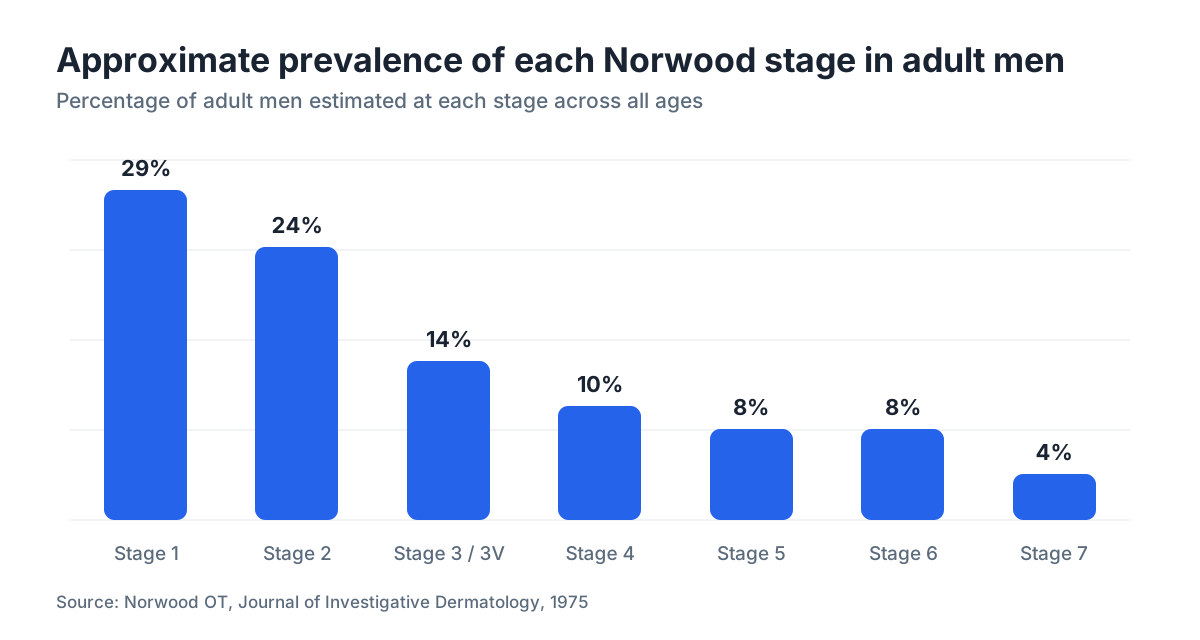
Androgenetic alopecia affects roughly half of men by age 50 [3]. The spread across Norwood stages is far from even. Earlier stages dominate because many men slow or halt their progression with treatment, some men simply never move past Stage 2 or 3, and Stage 7 takes decades of continued loss to reach.
Norwood's 1975 study estimated the approximate prevalence below in white American men across all ages [1]. These numbers predate widespread finasteride and minoxidil use, so real-world distributions today probably skew toward lower stages among men who treat early.
| Norwood Stage | Approximate Prevalence (all adult men) |
|---|---|
| 1 | ~29% |
| 2 | ~24% |
| 3 (including 3V) | ~14% |
| 4 | ~10% |
| 5 | ~8% |
| 6 | ~8% |
| 7 | ~4% |
Ethnicity changes the picture. Research in the dermatology literature reports lower prevalence and later onset in Asian men compared with men of European descent, and lower rates in men of African descent as well [3]. The Norwood scale was built mainly from observations of white men, so its stages may not map as cleanly onto other groups.
Age of onset is one of the strongest predictors of how far loss goes. Men showing clear Norwood 2 recession before age 25 reach higher stages more often than men whose hairline holds steady through their 30s.
What causes the hairline to recede? The DHT and genetics link
Male pattern baldness is a genetically programmed sensitivity to dihydrotestosterone (DHT), a hormone the enzyme 5-alpha reductase makes from testosterone. In men with that sensitivity, DHT binds receptors in scalp follicles and triggers miniaturization: the follicle gradually produces shorter, thinner, lighter hairs over repeated cycles until it stops producing visible hair at all [4].
The genetics are polygenic. Dozens of genes contribute, not one. The androgen receptor gene on the X chromosome has long been discussed (which is why people say you inherit baldness from your mother's father), but large genome-wide association studies show your father's side contributes just as much. A 2017 study in PLOS Genetics identified 63 genetic loci linked to male pattern baldness [5].
DHT levels alone don't tell the story. Two men can carry identical DHT and have very different hairlines because what varies is how sensitive the follicle receptor is. That's why DHT blockers like finasteride help most men but not every man. They lower DHT throughout the body, but they can't change how a given follicle reacts at the receptor.
Diet, stress, thyroid function, and scalp blood flow can speed up or modulate loss on top of the genetic baseline, but none of them produce the classic Norwood pattern on their own. If you're seeing diffuse loss across your whole scalp instead of the temple-and-crown pattern, something other than androgenetic alopecia may be in play. More at what causes hair loss.
How do you tell the difference between a mature hairline and a receding one?
This trips up a lot of men in their early 20s. A mature hairline is a normal, non-pathological shift that happens to roughly 95% of men between adolescence and their mid-20s [2]. The juvenile hairline (the one you had at 15) sits very low, often only about 1 to 1.5 cm above the highest forehead wrinkle. A mature hairline moves up slightly and the corners round off a bit. That's the whole story.
A receding hairline keeps moving. The tell is whether the recession is stable or progressing. Take a photo in consistent light every 3 months. If the hairline has shifted noticeably over 6 to 12 months, it's receding. If it holds, it was probably just normal maturation.
Other clues that point to real recession rather than maturation:
- The temples recede more than the center, cutting a sharp M-shape instead of a gently curved line.
- The hair in the recession zone looks thin and miniaturized (finer, lighter) rather than simply absent.
- You're under 20, which is early for a mature hairline.
- Family members show a clear Norwood progression.
A dermatologist with a dermatoscope can read follicle caliber directly. When more than 20% of hairs at the recession zone are miniaturized, that reliably points to androgenetic alopecia over a mature hairline [6].
Which treatments actually work at each Norwood stage?
What works depends heavily on stage. Here's the honest breakdown.
Norwood 1-3: most options are open.
Minoxidil for men (topical 5% solution or foam) is FDA-approved and the easiest place to start. It extends the growth phase of follicles and increases scalp blood flow. It doesn't block DHT, so it slows cosmetic loss without touching the root cause. Trials show moderate regrowth in roughly 40% of men and stabilization in a larger share [7].
Finasteride is an oral DHT blocker (1 mg/day for hair loss) and the most studied systemic option. A large randomized trial found 83% of men on finasteride had no further hair loss at 2 years, and 66% showed visible regrowth [8]. It works best started early, before follicles die. The FDA label carries a warning about potential sexual side effects; real-world rates run lower than trial numbers but they aren't zero [12]. See finasteride and minoxidil for how combining them stacks up against either alone.
Norwood 4-5: still worth treating, with realistic expectations.
Both minoxidil and finasteride can still slow progression meaningfully here, and some men regain moderate crown density. But areas bare for years hold dead follicles that no drug will revive. A hair transplant becomes a serious conversation. Follicular unit excision (FUE) and follicular unit transplantation (FUT) move permanent donor hair from the back and sides to the front and crown.
Norwood 6-7: transplant is the main play, with real limits.
The donor supply is finite. A man at Norwood 7 may not have enough permanent hair on the back and sides to fill the bald zone at a natural density. Surgeons call this "donor reserve," and it's one of the most important talks to have before committing to surgery. Medical therapy still makes sense to protect what's left.
Some men ask about hair loss supplements. The evidence for most is thin. Saw palmetto shows modest DHT-blocking activity in small trials, nowhere near finasteride's effect. Biotin helps if you're actually deficient and does nothing for androgenetic alopecia if you're not.
Want to map your own stage before choosing a path? MyHairline's free AI hair analysis at myhairline.ai/scan gives you a Norwood estimate from a photo in under a minute.
Can a receding hairline stop on its own?
Rarely, and never predictably. Some men genuinely stabilize at Norwood 2 or 3 for decades. Others slide steadily from their early 20s to Stage 6 by 40. There's no reliable way to know which group you're in ahead of time, though a strong family history of advanced loss on both sides is a real warning sign.
Without treatment, most men with documented androgenetic alopecia keep losing hair. A prospective study following untreated men found progressive loss in a large majority over 5 years [4]. The rate varies, but "my hairline has been the same for 2 years so it must have stopped" is not a safe assumption. Two years sits inside normal fluctuation for a condition that moves over decades.
Stress-triggered shedding (telogen effluvium) can cause sudden, alarming loss that does resolve on its own once the stressor passes. That's a different condition from androgenetic alopecia. Read telogen effluvium for how to tell them apart.
How is a receding hairline diagnosed and when should you see a doctor?
Most cases of male androgenetic alopecia don't need a biopsy. A dermatologist can usually confirm it from the pattern plus a brief medical history in a single visit. Dermoscopy adds detail: it lets the doctor see follicle miniaturization, perifollicular pigmentation, and other microscopic signs that separate androgenetic alopecia from scarring alopecias, which are treated in completely different ways.
Blood tests aren't part of a routine androgenetic alopecia diagnosis. But your doctor may order a thyroid panel, complete blood count, and ferritin level if the shedding is diffuse or unusually fast, to rule out conditions that mimic or speed up loss.
See a dermatologist sooner rather than later if:
- Your hairline is moving fast, meaning visible change in under 6 months.
- You're under 20.
- You have scalp pain, itching, scaling, or redness with the loss.
- You're losing eyebrows or body hair too.
- You had a sudden large shed rather than gradual recession.
The American Academy of Dermatology recommends seeing a board-certified dermatologist for any hair loss that bothers you or keeps progressing, instead of self-diagnosing [2]. Early treatment gives better outcomes because living follicles respond to therapy. Dead ones don't.
Does anything make a receding hairline progress faster?
Several factors speed up the underlying genetic process even though they don't cause it on their own.
Chronic stress. Sustained cortisol can push follicles into the shedding phase early. It doesn't create the Norwood pattern, but it can layer a telogen effluvium on top, making existing recession look worse fast.
Nutritional deficiencies. Low ferritin (iron stores), low vitamin D, and low zinc have all been linked to increased shedding in studies, though the evidence for each isn't equally strong. A very restricted diet is worth addressing.
Scalp tension and hairstyles. Tight styles that pull chronically on the hairline can cause traction alopecia, which compounds the recession in androgenetic alopecia. It comes up more with women but applies to men who regularly wear tight ties or braids.
Smoking. A 2020 meta-analysis found a statistically significant association between smoking and androgenetic alopecia severity [9]. The proposed mechanism is reduced scalp blood flow and increased oxidative stress at the follicle.
Early onset. Men showing clear Stage 2 recession before 25 progress to higher stages more often than later-onset cases.
There's ongoing debate about whether creatine supplementation raises DHT and pushes hair loss along. The mechanism is biologically plausible, but controlled evidence is limited and the question isn't settled. See does creatine cause hair loss for what the research actually shows.
What's the honest prognosis for a man with a receding hairline?
If you have a receding hairline and you leave it alone, you'll probably lose more over the next 10 to 20 years. How much comes down to genetics, age of onset, and some luck. That's the honest answer.
With treatment the picture is genuinely better for men who start early. Finasteride, begun at Norwood 2 or 3, prevents further loss in most men and produces noticeable regrowth in a meaningful minority. Topical minoxidil adds to that. Neither drug works forever in every person, and neither reverses advanced loss. But for a 24-year-old who just caught his temples moving, starting finasteride plus minoxidil and staying on them is probably the single most cost-effective thing he can do for his hair over the next 20 years.
For men at higher stages who never treated, a transplant is real, effective, and far better in technique than it was a decade ago. Donor supply limits how much can be done, costs run from roughly $4,000 to $15,000 or more depending on graft count and location [10], and the surgery demands a realistic talk about what's achievable.
Nobody has clean data on what share of treated men keep their hairline long-term in the real world rather than in trials. The closest we have is the 5-year extension of the original finasteride study, which showed continued benefit versus placebo at 5 years [8]. That's meaningful. It's not a lifetime guarantee.
If you want to know where you actually stand before deciding anything, the MyHairline AI scan at myhairline.ai/scan takes under a minute and gives you a baseline Norwood estimate to bring to a dermatologist or track over time.
Sources
- Norwood OT, Journal of Investigative Dermatology (1975). Original Norwood classification paper.
- American Academy of Dermatology, Hair Loss Overview
- Birch MP et al., Clinical and Experimental Dermatology (2001). Prevalence of male pattern baldness by ethnicity and age.
- Price VH, New England Journal of Medicine (1999). Androgenetic alopecia in men and women.
- Heilmann-Heimbach S et al., PLOS Genetics (2017). Meta-analysis of genome-wide association studies in male pattern baldness.
- Rudnicka L et al., Journal of the American Academy of Dermatology (2008). Dermoscopy in scalp and hair disorders.
- FDA, Rogaine (minoxidil 5%) labeling and approval history
- Kaufman KD et al., Journal of the American Academy of Dermatology (1998) and 5-year extension data. Finasteride 1 mg RCT in men with male pattern baldness.
- Su LH and Chen TH, Archives of Dermatology (2007), and meta-analysis data on smoking and androgenetic alopecia (2020 review).
- International Society of Hair Restoration Surgery (ISHRS), Practice Census 2022
- Koyama T et al., ePlasty (2016). Standardized scalp massage and hair thickness study.
- FDA, Propecia (finasteride 1 mg) prescribing information