
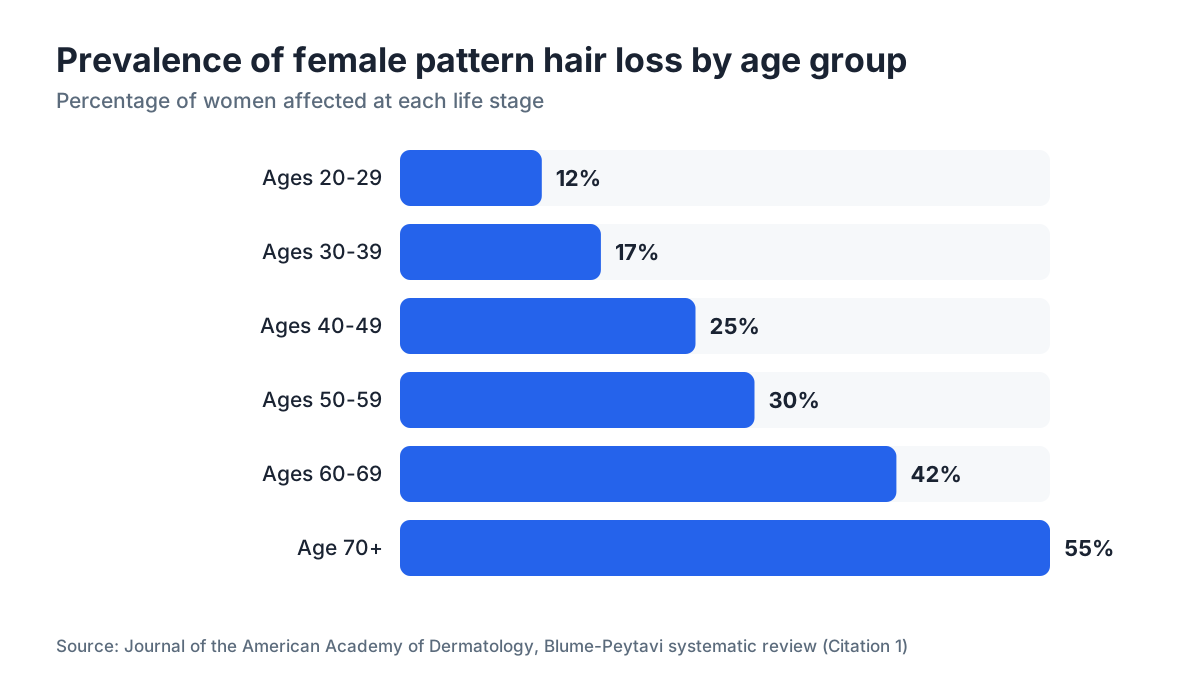
TL;DR: Hair loss in older women is common and underdiagnosed. The most frequent cause is female pattern hair loss (androgenetic alopecia), affecting roughly 30% of women by age 50 and up to 55% by 70. Thyroid disorders, iron deficiency, and medication side effects are also major contributors. Minoxidil 2% is the only FDA-approved topical treatment for women; other options exist but need a doctor's guidance.
How common is hair loss in older women?
Hair loss in senior women is far more common than most people realize, and more common than most doctors think to ask about. Studies put the prevalence of female pattern hair loss (FPHL) at roughly 12% of women in their 20s, climbing to around 30% by age 50 and somewhere between 50-55% by age 70 [1]. Those numbers come from a 2011 systematic review in the Journal of the American Academy of Dermatology, and they hold up reasonably well in later population studies.
The embarrassment factor means women often don't report it. Surveys consistently find that women wait two to five years from first noticing hair thinning before seeing a dermatologist. By that point, a meaningful amount of follicle miniaturization has already happened, which makes treatment harder.
Here's the part most people miss. Hair loss in older women is rarely one thing. A 68-year-old with thinning hair might have genetic FPHL running alongside low ferritin, a thyroid that's slightly off, and a blood pressure medication that lists alopecia in its side effects. Sorting that out matters enormously, because the treatment for each cause is different.
What causes hair loss in senior women?
The causes split into a few big buckets. Figuring out which one applies to you is the whole game.
Female pattern hair loss (androgenetic alopecia) is the most common single cause. It's genetic and driven by the action of androgens (especially dihydrotestosterone, or DHT) on hair follicles that are genetically sensitive to it. After menopause, estrogen drops sharply. Estrogen had been partially offsetting androgen activity at the follicle level, so once it falls away, FPHL that was slow or subclinical can accelerate noticeably. The pattern in women differs from men: women lose density diffusely over the crown and top of the scalp, with the frontal hairline usually preserved. [Learn more about how DHT drives this process in our dht blocker guide.]
Thyroid disorders are the second thing any doctor should check. Both hypothyroidism and hyperthyroidism cause diffuse hair shedding, and the prevalence of thyroid disease in women over 60 runs around 10-15% [2]. The shedding from thyroid imbalance shows up as a telogen effluvium: a diffuse shed that typically starts two to four months after the thyroid problem begins. The good news is that correcting the thyroid usually resolves the hair loss over six to twelve months.
Iron deficiency is chronically under-tested in older women. Ferritin (the storage form of iron) below 30 ng/mL is associated with hair shedding in multiple dermatology studies, even when hemoglobin is still normal [11]. Women who had heavy periods for decades sometimes enter their 60s with depleted iron stores, and dietary iron absorption also drops with age.
Medication side effects are a major and underappreciated cause. Beta-blockers, ACE inhibitors, statins, anticoagulants, and some antidepressants all list alopecia as a possible side effect. If hair loss started or accelerated within a few months of a new prescription, that connection is worth raising with your prescriber [3].
Nutritional deficiencies beyond iron include low zinc, low vitamin D, and low protein intake. Older adults often eat less protein than they used to, and protein is the literal raw material of hair.
Sudden hair loss on the scalp along with sudden loss of hair on legs and arms in older women can signal a systemic condition: autoimmune disease (like lupus or alopecia areata), hypothyroidism, or significant nutritional deficiency. Body hair shedding alongside scalp loss is a reason to see a doctor promptly, not wait it out. [Our broader overview of what causes hair loss covers the full list.]
Alopecia areata becomes more common with age and is worth ruling out if loss is patchy rather than diffuse. It's an autoimmune condition and gets treated very differently from pattern hair loss.
What does the pattern of hair loss tell you about the cause?
The location and shape of thinning is one of the most useful diagnostic clues, and you can observe most of it yourself.
| Pattern | Most likely cause | What to do |
|---|---|---|
| Diffuse thinning over crown, frontal hairline intact | Female pattern hair loss (FPHL) | Dermatologist, minoxidil trial, check androgens |
| Diffuse shedding all over scalp | Telogen effluvium (thyroid, iron, stress, meds) | Blood panel: TSH, ferritin, CBC, B12 |
| Patchy round or oval bald spots | Alopecia areata | Dermatologist urgently; this needs treatment |
| Thinning at temples + crown (more masculine) | Possible androgen excess | Check DHEAS, total/free testosterone, prolactin |
| Hairline recession at temples | Can be FPHL or traction alopecia | Avoid tight styles; see dermatologist |
| Loss of scalp + body hair (legs, arms, eyebrows) | Systemic: thyroid, lupus, nutritional deficit | See physician; full bloodwork |
| Scaling, redness, or scarring at scalp | Scarring alopecia, seborrheic dermatitis | Dermatologist urgently; scarring loss is permanent |
Sudden loss of hair on legs and arms in women over 60 is one of the classic presentations of hypothyroidism. It also shows up in peripheral artery disease (poor circulation to the legs) and in some autoimmune conditions. Don't write it off as aging.
What blood tests should older women get for hair loss?
A good dermatologist or internist will order a panel. Here's what's actually worth checking and why.
The standard workup most dermatology guidelines recommend for women with diffuse hair loss includes: complete blood count (CBC), a metabolic panel, thyroid-stimulating hormone (TSH), free T4, ferritin (more than iron, specifically ferritin), total and free testosterone, DHEAS (dehydroepiandrosterone sulfate), prolactin, and 25-hydroxyvitamin D [4]. Some practitioners also check zinc and B12.
The American Academy of Dermatology (AAD) specifically recommends ferritin testing in women with hair loss, noting that a ferritin below 30 ng/mL may contribute even without overt anemia [4]. This is a commonly missed test because standard iron panels don't always include ferritin.
If the bloodwork comes back normal and the pattern looks like FPHL, the working diagnosis is genetic hair loss and treatment decisions follow from that. If something is off, treating the underlying problem is step one before adding any topical treatment.
A scalp biopsy is the definitive diagnostic tool when the cause is genuinely unclear. Most dermatologists reserve it for cases where the pattern is ambiguous or when scarring alopecia is suspected. It's a small punch biopsy done in-office. Procedurally, it's minor.
What treatments actually work for hair loss in senior women?
Here's the honest picture. A few things have real evidence, a few have modest evidence, and a long tail of supplements and devices mostly runs on weak data.
Topical minoxidil 2% is the only FDA-approved treatment for female pattern hair loss [5]. The approval is specifically for the 2% concentration applied twice daily. Minoxidil prolongs the anagen (growth) phase of the hair cycle and increases follicle size. In the registration trials, roughly 60% of women using 2% minoxidil showed a minimal or better response at 32 weeks, versus about 40% for placebo. That's meaningful but not dramatic. [Full details on side effects are in our minoxidil side effects guide.]
The 5% foam (approved for men) gets used off-label in women by many dermatologists, often with good results, but the FDA label for women is 2% only [5]. The main practical catch with minoxidil: you have to use it indefinitely. Stop, and whatever you gained reverts within three to six months.
Oral minoxidil at low doses (0.25 mg to 2.5 mg daily) is increasingly used off-label for women. A 2021 randomized controlled trial published in JAMA Dermatology found that oral minoxidil 1 mg daily produced significantly greater hair density improvements than 5% topical minoxidil in women with FPHL [6]. Side effects at low doses are usually mild, but fluid retention and increased body hair (hypertrichosis) are real possibilities. Our oral minoxidil article covers the tradeoffs in depth.
Finasteride is approved for men at 1 mg daily but is not FDA-approved for women, and it's contraindicated in women who could become pregnant due to risk of fetal genital malformation [7]. In postmenopausal women, some dermatologists prescribe it off-label, and there's evidence of benefit. A systematic review in the Journal of the American Academy of Dermatology found finasteride 1-5 mg produced hair density improvement in postmenopausal women with FPHL, though effect sizes varied [8]. This is a real off-label option for postmenopausal women, but it needs a prescriber willing to discuss the evidence and monitor you. [See our finasteride article for the full breakdown.]
Spironolactone is an anti-androgen used off-label in women with FPHL, typically at 50-200 mg daily. It blocks androgen receptors and reduces circulating androgens. Evidence is observational rather than from large randomized trials, but many dermatologists consider it first-line for women who show signs of androgen excess.
Low-level laser therapy (LLLT) devices (combs, helmets, caps) carry FDA clearance as a device, which is not the same as drug approval for efficacy. Small trials show modest increases in hair count. The evidence base is thin, and the devices are expensive. Honest read: probably some real effect, probably smaller than the marketing claims.
Platelet-rich plasma (PRP) injections are an emerging in-office treatment. A 2021 meta-analysis in Aesthetic Surgery Journal found significant improvements in hair count in FPHL, but study quality was low and protocols vary widely [9]. It's not a scam, but it's not proven either. Costs run $500-$1,500 per session and usually require three or more sessions.
Hair transplants are an option for women with stable FPHL and enough donor hair density, though women are often worse candidates than men because female pattern loss tends to thin the donor area too. A consultation with a board-certified hair restoration surgeon is the right starting point. [Our hair transplant guide explains candidacy in detail.]
Hair loss supplements: biotin has essentially no evidence for hair growth in people who aren't biotin-deficient, which is most people. Saw palmetto has very limited evidence. Nutrafol and similar formulations have small industry-funded trials showing modest improvement. Nobody has great data here. The closest decent evidence is for iron repletion in deficient women and possibly vitamin D correction.
Does menopause directly cause hair loss?
Menopause doesn't cause hair loss the direct way that, say, chemotherapy does. What it does is remove a protective factor.
Estrogen prolongs the anagen (growth) phase of hair follicles and partially counteracts androgen activity at the follicle. When estrogen falls sharply at menopause, follicles that are genetically sensitive to DHT miniaturize faster. So menopause accelerates FPHL in women who were already predisposed. It also shifts the estrogen-to-androgen ratio in a way that makes androgenic effects more pronounced.
The perimenopause transition itself can also trigger a telogen effluvium, where a larger percentage of hairs enter the resting phase at once and then shed. This acute shedding phase sometimes resolves on its own once hormone levels stabilize, though it can take a year or more.
Hormone replacement therapy (HRT) gets cited as helpful for hair, but the evidence is genuinely mixed. Some women on estrogen-containing HRT see improvement in hair density; others don't. Progesterone type matters: synthetic progestins with androgenic activity (like older norethindrone formulations) can worsen FPHL, while progesterone itself may be neutral or mildly helpful. This is a conversation to have with your gynecologist or menopause specialist, not a reason to self-prescribe.
MyHairline.ai's free AI scan can give you a starting picture of your pattern and severity before you walk into a doctor's office, which helps you ask the right questions.
Can nutritional deficiencies cause hair loss in older women, and how do you fix them?
Yes, and this is one of the most correctable causes. The tricky part: nutritional deficiencies don't always show up in basic bloodwork unless you test the right markers.
Ferritin is the key iron marker. Many labs flag ferritin as "low" only below 12-15 ng/mL, but dermatology guidelines put the threshold for hair-related iron deficiency closer to 30 ng/mL, and some practitioners aim for above 70 ng/mL before ruling iron out [11]. If your ferritin is 18 and your lab report says "normal," that may still be feeding your shedding.
Vitamin D deficiency is common in older adults, partly because skin makes less vitamin D from sunlight as we age. Vitamin D receptors sit in hair follicles, and low vitamin D is associated with alopecia areata and possibly FPHL, though causation isn't fully established [12].
Zinc deficiency causes hair shedding, and zinc absorption drops with age. Worth checking serum zinc if a full panel hasn't been run.
Protein intake gets overlooked constantly. Hair is made of keratin, a protein. Older adults often eat less protein because of reduced appetite or digestive changes, and the recommended protein intake for adults over 65 is around 1.0-1.2 g per kilogram of body weight per day, higher than the 0.8 g/kg recommendation for younger adults. Under-eating protein won't cause FPHL, but it will worsen any shedding already underway.
Fixing a genuine nutritional deficiency resolves the hair loss it caused, but it takes time. Because of how hair cycles, you typically won't see regrowth for three to six months after correcting the deficiency.
What medications cause hair loss in older women?
This list is longer than most people expect, and it's one of the first things worth reviewing when hair loss appears or worsens in someone already on regular medications.
Medications with documented hair loss as a side effect include:
- Beta-blockers (metoprolol, atenolol, propranolol): used for blood pressure and heart conditions. Alopecia is a listed side effect in the prescribing information.
- ACE inhibitors (lisinopril, enalapril): same drug class context.
- Anticoagulants (warfarin, heparin): telogen effluvium is a known effect, likely tied to interference with keratin synthesis.
- Statins (especially simvastatin and atorvastatin): hair loss appears in a minority of users but is real.
- Antidepressants (SSRIs including sertraline and fluoxetine): reported in post-marketing surveillance.
- Retinoids (prescribed vitamin A derivatives): cause hair shedding at high doses.
- Lithium: a well-documented cause of telogen effluvium.
- Some thyroid medications: levothyroxine itself can initially trigger shedding as the thyroid normalizes [3].
The mechanism for most of these is telogen effluvium: the drug pushes a proportion of follicles prematurely into the resting phase. Shedding then shows up two to four months later, which is why people often don't connect the timing to a medication change.
If you suspect a medication, don't stop taking it without talking to your doctor. The condition the medication treats is almost certainly more serious than the hair loss. But alternatives often exist within the same drug class, and it's worth the conversation. [Our article on what causes hair loss has a fuller medication table.]
How is sudden hair loss in older women different from gradual thinning?
Sudden versus gradual is one of the most diagnostically useful distinctions in hair loss.
Gradual thinning over years, especially concentrated on the crown and top of the scalp, strongly suggests FPHL. It's rarely alarming in the acute sense, but it's worth treating because follicle miniaturization eventually becomes irreversible if enough time passes.
Sudden hair loss, meaning a noticeable jump in shedding or visible thinning over weeks to a few months, points toward telogen effluvium. Something physiologically stressful pushed a large number of follicles into the resting phase at once. Common triggers in older women include [3]:
- A serious illness or surgery (the hair loss typically starts eight to sixteen weeks post-event)
- Rapid weight loss (crash dieting or GI problems causing malabsorption)
- A new medication
- A significant change in thyroid status
- Severe emotional or psychological stress
- COVID-19 infection (post-COVID telogen effluvium is well-documented)
Sudden hair loss that hits more than the scalp, also the legs, arms, and eyebrows, is a systemic signal. Hypothyroidism is the most common culprit. The outer third of the eyebrows thinning alongside leg hair loss is a textbook hypothyroid presentation. Alopecia areata can also cause body hair loss, but usually in distinct patches rather than diffuse thinning. Lupus can cause diffuse hair loss with scalp involvement.
If hair loss is sudden and comes with other symptoms (fatigue, weight change, joint pain, skin changes), a prompt physician visit is the right move, not watching and waiting.
What can older women do day-to-day to protect their hair?
Treatment is one piece. Daily habits are another, and some of them genuinely matter.
Heat damage is cumulative. Blow dryers, flat irons, and curling irons at high temperatures weaken the hair shaft over time. Lower heat settings and a heat protectant product won't regrow hair, but they preserve the hair you have.
Tight hairstyles over years can cause traction alopecia, a mechanical hair loss along the hairline and temples. This hits women who've worn tight buns, braids, or extensions regularly for decades. The early stages are reversible if you stop the tension. The later stages, where scarring has set in, are not.
Hair dye and chemical treatments (perms, relaxers) damage the hair shaft but don't directly affect the follicle under normal use. That said, fragile, thinning hair breaks more easily, so aggressive coloring makes thinning more visible even if it's not causing more follicle loss.
Scalp massage has limited but real evidence: a 2016 study published in Eplasty found increased hair thickness in participants after 24 weeks of daily four-minute standardized scalp massage [10]. It's no replacement for proven treatments, but it's free and low-risk.
Sleep, nutrition, and stress management aren't magic hair growth tactics, but chronic sleep deprivation and chronically high cortisol do affect the hair cycle. They're worth managing for a hundred other health reasons anyway.
For women who want to gauge the extent of their hair loss before pursuing treatment, MyHairline.ai's free AI scan analyzes photos of your scalp and gives you a pattern and severity assessment you can bring to a dermatology appointment.
When should an older woman see a dermatologist versus her primary care doctor?
Short answer: see your primary care doctor first for bloodwork, and see a dermatologist if the bloodwork is normal or the pattern is unclear.
Primary care physicians are well-positioned to order and interpret the standard blood panel and to catch medication-related causes. If hypothyroidism, iron deficiency, or a medication is driving the hair loss, your PCP can manage that.
A dermatologist is the right specialist when:
- Bloodwork is normal but hair loss continues or worsens
- The pattern is patchy or unusual (possible alopecia areata or scarring alopecia)
- You want to discuss prescription options like spironolactone or off-label finasteride
- A scalp biopsy might be needed
- You're considering procedures like PRP or want a hair transplant referral
A board-certified dermatologist with specific training in hair disorders (sometimes called a trichologist or hair specialist within dermatology) is ideal. The American Academy of Dermatology has a find-a-dermatologist tool on their website [4].
One thing worth knowing: hair loss counts as a quality-of-life condition for most insurers, not a medical necessity, so coverage for treatments varies enormously. Generic minoxidil 2% solution is cheap (under $20/month at most pharmacies). Prescription treatments require an appointment. Procedures like PRP and hair transplants are almost always out-of-pocket.
Sources
- Journal of the American Academy of Dermatology, Blume-Peytavi et al. 2011 systematic review on FPHL prevalence
- National Institute of Diabetes and Digestive and Kidney Diseases, thyroid disease information
- FDA MedWatch Drug Safety Information and adverse event reporting program
- American Academy of Dermatology, Hair Loss in Women clinical guidance
- FDA, Rogaine (minoxidil) 2% for Women prescribing information / drug label
- JAMA Dermatology, Randolph & Tosti 2021, Oral minoxidil vs topical minoxidil in women with FPHL
- FDA, Finasteride (Propecia) prescribing information / drug label
- Journal of the American Academy of Dermatology, systematic review of finasteride in postmenopausal women with FPHL
- Aesthetic Surgery Journal, 2021 meta-analysis of PRP for female pattern hair loss
- Eplasty, Koyama et al. 2016, standardized scalp massage and hair thickness study
- National Institutes of Health Office of Dietary Supplements, Iron Fact Sheet for Health Professionals
- National Institutes of Health Office of Dietary Supplements, Vitamin D Fact Sheet for Health Professionals