
TL;DR: Severe alopecia areata (more than 50% of the scalp, or total scalp and body hair loss) now has two FDA-approved oral JAK inhibitors: baricitinib (2022) and ritlecitinib (2023). Older options like intralesional steroids, contact immunotherapy (DPCP), and systemic corticosteroids still have a role. Response rates vary widely. No treatment is a guaranteed cure, and relapse after stopping is common.
What makes alopecia areata 'severe' and why does it matter for treatment?
Alopecia areata is an autoimmune condition where T-cells attack hair follicles. Most people get one or two patchy bald spots that grow back on their own within a year. Severe alopecia areata is a different situation.
Dermatologists define severity mainly by scalp coverage. Alopecia totalis (AT) means complete scalp hair loss. Alopecia universalis (AU) means loss of all scalp and body hair, including eyebrows and eyelashes. Anything beyond roughly 50% scalp involvement is generally classified as severe, though the exact threshold varies by trial and guideline. The SALT (Severity of Alopecia Tool) score is the most common research measure: it assigns a percentage from 0 (no loss) to 100 (complete loss), and most FDA trial eligibility required a SALT score of 50 or higher [1].
Why does severity matter so much? Because mild patchy loss often resolves without treatment, and the risk-benefit math of aggressive immunosuppression only tips in your favor once the disease is extensive. The treatments that work best for severe disease, especially the newer JAK inhibitors, carry real systemic risks. Prescribing them for two small patches that might regrow anyway would be hard to justify.
Severity also predicts natural history. Having AT or AU for more than two years, onset in childhood, or nail involvement (pitting, trachyonychia) are all signs that spontaneous remission is unlikely [2]. That context matters when a patient and doctor are deciding whether to accept the side-effect profile of a systemic drug.
One more distinction worth understanding: alopecia areata is not the same as androgenetic hair loss. It is not caused by DHT, so finasteride and DHT blockers are irrelevant here. Minoxidil for men can sometimes support regrowth as an adjunct, but it does nothing to stop the underlying autoimmune attack.
What are the FDA-approved treatments for severe alopecia areata?
For decades, nothing was specifically approved by the FDA for alopecia areata of any severity. That changed fast between 2022 and 2023.
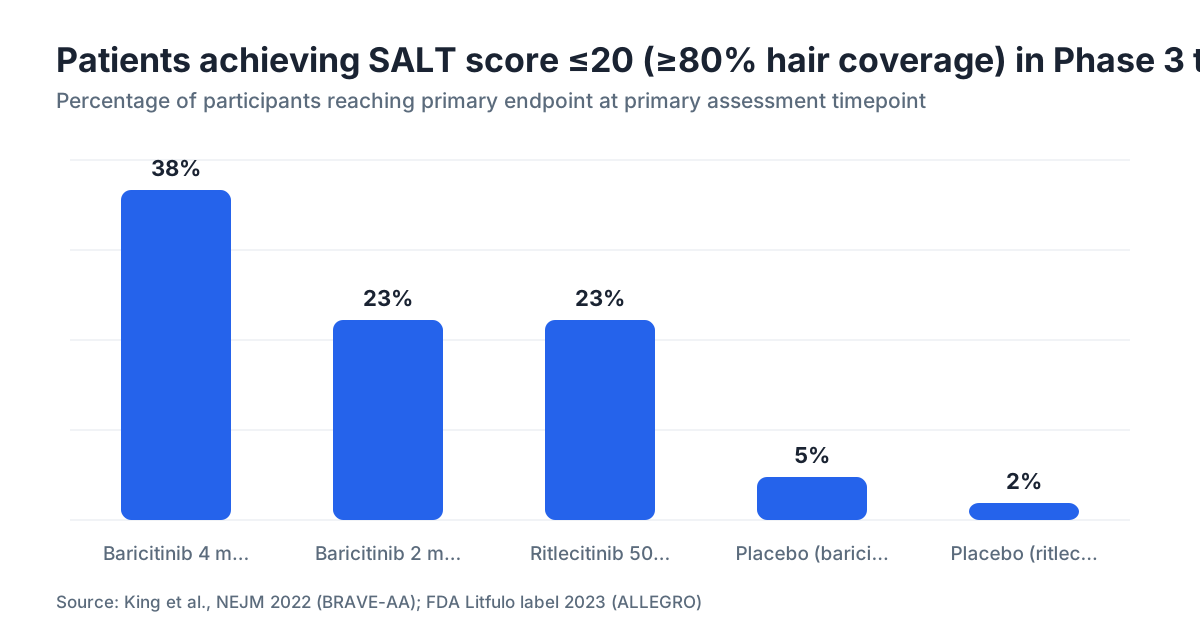
Baricitinib (Olumiant): In June 2022, the FDA approved baricitinib 2 mg daily for adults with severe alopecia areata, the first-ever approval for the condition [3]. Baricitinib is an oral JAK1/JAK2 inhibitor originally developed for rheumatoid arthritis. In the BRAVE-AA1 and BRAVE-AA2 trials, roughly 35% to 40% of patients on 4 mg achieved a SALT score of 20 or less (meaning 80% or more hair coverage) after 36 weeks, compared to about 5% on placebo [4]. The 4 mg dose outperformed 2 mg, but the FDA approved 2 mg as the starting dose with 4 mg available for inadequate responders.
Ritlecitinib (Litfulo): In June 2023, the FDA approved ritlecitinib 50 mg daily for adults and adolescents aged 12 and older with severe alopecia areata [5]. Ritlecitinib is a JAK3/TEC family kinase inhibitor. In the ALLEGRO trial, 23% of patients on 50 mg achieved a SALT score of 20 or less at week 24, compared to 1.6% on placebo. By week 48, response rates climbed higher. The adolescent approval matters because alopecia areata often starts young, and baricitinib is adults-only.
Both drugs carry a boxed warning, the FDA's most serious label warning, covering serious infections, malignancies, major adverse cardiovascular events (MACE), thrombosis, and death. These are class-wide warnings for JAK inhibitors, drawn largely from longer-term data in older rheumatoid arthritis populations. The absolute risk for a healthy 25-year-old with alopecia areata is likely far lower than for a 65-year-old with rheumatoid arthritis and multiple other conditions, but the warnings still demand careful patient selection and monitoring.
No other drug has a specific FDA approval for alopecia areata as of mid-2025. Every other treatment below is used off-label.
How do response rates compare across different treatments?
Here is an honest comparison of the best available evidence for severe or extensive alopecia areata. Response definitions vary between studies, which makes direct comparison imperfect, but this table reflects the numbers most cited in peer-reviewed reviews and trial publications.
| Treatment | Evidence quality | Approx. response rate (substantial regrowth) | Notes |
|---|---|---|---|
| Baricitinib 4 mg oral | RCT (BRAVE-AA1/AA2) | ~35-40% reach SALT ≤20 at 36 weeks [4] | FDA approved 2 mg; 4 mg for non-responders |
| Ritlecitinib 50 mg oral | RCT (ALLEGRO) | ~23% reach SALT ≤20 at 24 weeks [5] | Approved age 12+; higher response by week 48 |
| Contact immunotherapy (DPCP/SADBE) | Retrospective series | ~40-60% partial/full regrowth in AT/AU | Tedious protocol; not commercially available |
| Systemic corticosteroids (oral/IV pulse) | Small RCTs, case series | 30-60% short-term response; high relapse | Relapse common on stopping; long-term use unsafe |
| Intralesional triamcinolone | Routine clinical use | Good for patchy; limited evidence in AT/AU | Not practical for large areas |
| Topical/oral minoxidil (adjunct) | Low; case reports | Modest adjunct benefit; no standalone effect | Addresses density, not immune attack |
| Methotrexate +/- steroids | Small RCTs | ~30-40% response in AT/AU [6] | Requires monitoring; slower than JAK inhibitors |
The honest read: JAK inhibitors are the biggest advance in decades. But a 35-40% response rate still means most people don't get a good outcome at 36 weeks. And "response" in trials (SALT ≤20) still allows up to 20% hair loss, so even responders may fall short of the dense coverage they actually want.
What is contact immunotherapy and does it still have a role?
Contact immunotherapy (CIT) using diphenylcyclopropenone (DPCP) or squaric acid dibutyl ester (SADBE) is the oldest non-steroid treatment for severe alopecia areata with reasonably good evidence behind it. The mechanism is indirect: you deliberately sensitize the scalp to a chemical allergen, creating a controlled local immune reaction that appears to redirect the misfiring T-cell attack away from the follicles.
The protocol takes time. A patient is first sensitized with a high concentration applied to a small patch. Then, over months, progressively stronger concentrations go onto bald areas weekly or biweekly, titrated to keep mild contact dermatitis going without excessive inflammation. A review in the Journal of the American Academy of Dermatology found response rates (defined as more than 50% regrowth) ranging from about 40% to over 60% in patients with AT or AU across multiple case series, though study quality was variable [6].
The downsides are real. DPCP is not commercially manufactured as a product, so it requires compounding. The weekly application schedule demands commitment from patient and clinician alike. The allergen can spread to household members if the treated person sweats or shares towels. And it simply doesn't work for a meaningful fraction of patients, with no reliable way to predict who will respond.
In the era of JAK inhibitors, CIT is still an option for patients who cannot access or afford oral JAK inhibitors, who have contraindications to systemic drugs, or who prefer to avoid the risks of systemic immunosuppression. Some dermatologists now ask whether CIT and a JAK inhibitor might be combined, though no trial data exists on that pairing yet.
What role do corticosteroids play in severe alopecia areata treatment?
Corticosteroids were the main treatment for severe alopecia areata for most of the twentieth century. They're still used, but the story is more complicated than it looks.
For patchy disease, intralesional triamcinolone acetonide injections (10 mg/mL, every 4-6 weeks) are standard of care and reasonably effective. The problem is that injecting triamcinolone across an entirely bald scalp is painful, impractical, and not something most patients tolerate long-term.
For severe or extensive disease, systemic steroids, either oral prednisolone or intravenous methylprednisolone pulse therapy (500 mg to 1 g daily for 3 days, repeated monthly or bimonthly), can produce impressive short-term regrowth. But dermatologists have largely moved away from long-term systemic steroid use because hair loss reliably recurs after stopping, and the side effects of prolonged use, including adrenal suppression, osteoporosis, weight gain, hyperglycemia, and cataracts, are substantial.
A short course of systemic steroids can still make sense as a bridge while waiting for a JAK inhibitor to kick in, or as a one-time attempt to break a severe acute episode. The American Academy of Dermatology guidelines note that systemic corticosteroids are not recommended as long-term maintenance therapy for alopecia areata [2].
For men researching alopecia areata specifically, the approach is the same as for women. Unlike androgenetic alopecia, alopecia areata has no meaningful sex-based differences in treatment options or response rates, so the treatment landscape for alopecia areata in males mirrors what's described here.
What is methotrexate and when is it used for alopecia areata?
Methotrexate is an immunosuppressant and anti-inflammatory drug used for decades in rheumatoid arthritis, psoriasis, and other autoimmune conditions. For severe alopecia areata, it's one of the better-studied off-label options.
A French multicenter trial published in the Journal of the American Academy of Dermatology found that 63% of patients with AT or AU achieved more than 50% regrowth with methotrexate (with or without low-dose prednisone), though full regrowth happened in only about a quarter of patients [6]. Responses tend to be slow, often taking 6 to 12 months before significant regrowth appears.
Methotrexate at low doses (15-25 mg weekly, oral or subcutaneous) requires monitoring with regular complete blood counts and liver function tests because of risks of bone marrow suppression and hepatotoxicity. Folic acid supplementation (1 mg daily) is standard co-prescribing to reduce side effects. Pregnancy must be avoided during treatment and for at least 3 months after.
In practice, methotrexate is most often considered for patients who are not candidates for JAK inhibitors, cannot afford them (the JAK inhibitors are expensive), or who have had partial responses to steroids. Some practitioners pair methotrexate with low-dose corticosteroids for an additive effect.
How much do JAK inhibitor treatments cost and is insurance covering them?
Cost is a real barrier. Baricitinib and ritlecitinib are expensive brand-name drugs with no generics available as of mid-2025.
List price for baricitinib (Olumiant) runs roughly $3,500 to $4,500 per month without insurance. Ritlecitinib (Litfulo) has a comparable list price. Real out-of-pocket cost depends heavily on insurance coverage and manufacturer assistance programs.
Insurance coverage has improved since the FDA approvals, but it's not automatic. Many insurers require prior authorization, documentation of disease severity (often a SALT score above 50), and sometimes proof that other treatments failed first. Eli Lilly (baricitinib) and Pfizer (ritlecitinib) both offer patient assistance programs that can cut costs significantly for eligible patients, including copay cards for commercially insured patients.
For patients without insurance or with weak coverage, access gets hard. Contact immunotherapy with DPCP is far cheaper, though the compounding costs and clinic time add up. Methotrexate is inexpensive as a generic.
If you're trying to figure out the extent of your hair loss before approaching a dermatologist, a tool like the free AI hair analysis at MyHairline can help you document what you're seeing, though it's no substitute for formal diagnosis.
One pricing note: treatment for alopecia areata in males and females costs the same. There's no sex-based pricing difference in these drugs.
What happens when you stop JAK inhibitor treatment for alopecia areata?
This is the most practical question for anyone considering these drugs, and the answer is not encouraging. Hair usually comes back off.
In both the baricitinib and ritlecitinib trials, patients who responded and then stopped treatment almost universally relapsed. In the BRAVE-AA long-term extension, patients who discontinued baricitinib after responding lost most of their regrowth within 3 to 6 months [4]. The disease is still there underneath the pharmacological suppression.
So for most people with severe alopecia areata, effective JAK inhibitor treatment is effectively indefinite. That's a heavy consideration when weighing a drug with a boxed warning covering malignancy and cardiovascular risks. Long-term safety data in the alopecia areata population specifically (generally younger and healthier than the RA populations where safety signals emerged) is still accumulating.
Some patients do keep partial regrowth after stopping, particularly those who reached near-complete regrowth and whose disease may have been drifting toward natural remission anyway. But that is not the norm. Go in expecting to stay on treatment.
This pattern is loosely similar to what happens with telogen effluvium, where hair loss can return if the triggering condition recurs, though the mechanism is completely different.
Is a hair transplant an option for severe alopecia areata?
Short answer: generally no, not while the disease is active.
A hair transplant works by moving follicles from a donor area to a recipient area. In androgenetic alopecia, the donor follicles are genetically resistant to DHT and survive in their new home. In alopecia areata, the problem is the immune environment, not the follicles themselves. Transplant healthy follicles into a scalp that is actively attacking follicles, and those transplanted follicles usually get attacked and lost too.
A few case reports and small series document successful transplants in patients whose alopecia areata has been in stable, full remission for several years (often defined as 2 to 5 years of no new activity). A handful of centers attempt this in that carefully selected subset, but it's far from standard practice.
The American Hair Loss Association and most dermatology consensus statements advise against hair transplantation as a primary treatment for alopecia areata [9]. If you're in remission and have been for years, it's a conversation worth having with a specialist. It should not be on the radar for active severe disease.
What other emerging treatments are being studied for severe alopecia areata?
The success of baricitinib and ritlecitinib opened a pipeline of JAK inhibitor and related drugs for alopecia areata. A few are worth knowing about.
Deuruxolitinib is a selective JAK1/JAK2 inhibitor that showed strong results in Phase 3 trials (THRIVE-AA1 and THRIVE-AA2), with roughly 40% of patients achieving SALT ≤20 at week 24, on par with baricitinib 4 mg. Concert Pharmaceuticals submitted an NDA to the FDA, and results were pending as of early 2025 [7].
Tofacitinib (Xeljanz, a JAK1/JAK3 inhibitor) has been used off-label for alopecia areata longer than the approved drugs, with several open-label trials and retrospective series showing response rates in severe disease around 32-66% depending on the study. It has no FDA approval for alopecia areata, and its approvals for other conditions were narrowed in 2021 over cardiovascular and malignancy signals in the RA population [8].
Biologics targeting the IL-2 pathway are in early trials. The logic: IL-2 signaling helps run T-regulatory cell function, and some researchers think boosting regulatory T-cells rather than broadly suppressing JAK signaling might be safer over the long haul. These are Phase 1/2 studies as of 2025.
ClinicalTrials.gov lists dozens of active alopecia areata trials at any given time. Patients with severe refractory disease who have failed approved treatments may want to check eligibility for these.
How should you actually approach getting treatment for severe alopecia areata?
Most people with severe alopecia areata start with a primary care physician or general practitioner who may not be deeply familiar with the newer options. Getting to someone who regularly treats complex hair disorders makes a real difference.
The practical path looks like this. Get a SALT score documented, since many insurers require it for prior authorization. Get baseline blood work before any systemic treatment, including CBC, a metabolic panel, lipid panel, and tuberculosis screening (required before starting JAK inhibitors per their labels [3][5]). Rule out other causes of hair loss, since alopecia areata can coexist with androgenetic hair loss, and what causes hair loss in any one person can be multifactorial.
In the US, a board-certified dermatologist with a subspecialty interest in hair (a "hair specialist" or trichologist) is the right prescriber for JAK inhibitors. The American Academy of Dermatology (aad.org) has a physician finder that lets you filter for hair disorders.
If cost is a barrier, ask the prescribing office specifically about manufacturer patient assistance programs before giving up on JAK inhibitors. The list price is not what most patients pay, especially with commercial insurance and copay cards.
For men researching treatment for alopecia areata in males, understand that alopecia areata is entirely separate from the much more common male pattern baldness. The receding hairline most men worry about is androgenetic, not autoimmune, and it's treated with finasteride and minoxidil. If your loss is patchy, diffuse, or involves eyebrows and lashes, see a dermatologist before assuming it's pattern baldness.
Document your hair loss with photos over time, or use a tool like MyHairline's free AI scan, to track progression and communicate clearly with your doctor about what you're seeing.
Sources
- National Alopecia Areata Foundation: SALT Score overview
- American Academy of Dermatology: Alopecia areata clinical guidelines
- FDA: Olumiant (baricitinib) approval press release, June 2022
- King B et al., BRAVE-AA1 and BRAVE-AA2 trials, New England Journal of Medicine 2022
- FDA: Litfulo (ritlecitinib) approval, June 2023
- Joly P et al., Journal of the American Academy of Dermatology 2006: methotrexate in alopecia totalis/universalis
- ClinicalTrials.gov: THRIVE-AA Phase 3 trials of deuruxolitinib
- FDA: Xeljanz (tofacitinib) label update and safety communication, 2021
- American Hair Loss Association: alopecia areata treatment guidelines
- NIH National Institute of Arthritis and Musculoskeletal and Skin Diseases: Alopecia areata overview
- Strazzulla LC et al., Journal of the American Academy of Dermatology 2018: Alopecia areata natural history and disease associations