

TL;DR: Androgenetic hair loss (also called female pattern hair loss) is the most common cause of hair loss in women, affecting roughly 12% of women by age 29 and up to 40% by age 70. It's driven by genetic sensitivity to androgens and causes diffuse thinning at the crown, not a receding hairline. Minoxidil is the only FDA-approved topical treatment; other options exist but require more caution.
What is androgenetic hair loss in women?
Androgenetic hair loss, more precisely called female pattern hair loss (FPHL), is the progressive miniaturization of hair follicles driven by a combination of genetic predisposition and androgen sensitivity. It is the single most common form of hair loss in women worldwide [1].
The basic mechanism is the same as in men. Androgens, particularly dihydrotestosterone (DHT), bind to receptors in genetically susceptible follicles and gradually shorten the hair growth cycle. Each successive cycle produces a finer, shorter hair until the follicle eventually stops producing visible hair at all. What differs in women is the pattern, the hormone levels involved, and the degree to which circulating androgens are actually elevated.
Most women with FPHL do not have measurably high androgen levels. The sensitivity lives in the follicle itself, encoded by genetics, not in the bloodstream. That distinction matters enormously for treatment planning. A small subset of women do have an underlying hormonal condition driving the hair loss, and those cases need a different workup entirely.
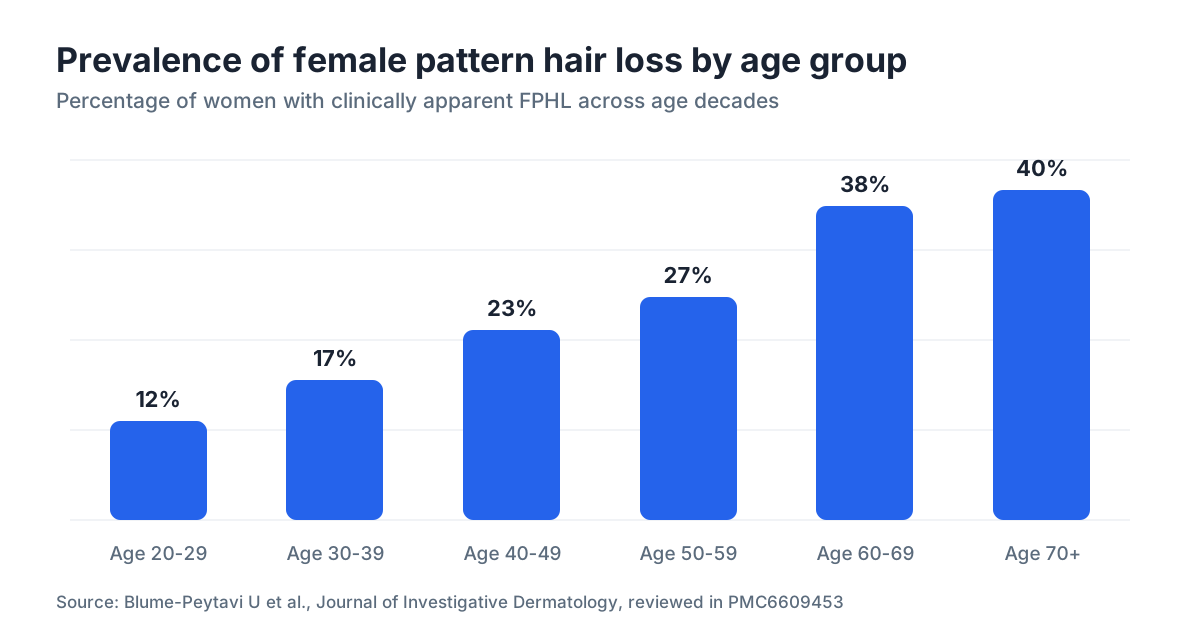
The condition can start surprisingly early. Studies using defined criteria report prevalence of roughly 12% in women aged 20-29, rising to about 25% by age 49 and reaching 40% or higher in women over 69 [1]. Those numbers probably underestimate real-world prevalence because many women notice diffuse thinning without ever seeking a diagnosis.
Understanding the distinction between FPHL and other causes, especially telogen effluvium, is the first step. Shedding episodes caused by stress or nutritional deficiency look similar on the surface but behave completely differently and respond to different interventions. Getting the diagnosis right before spending money on treatments is genuinely the most important thing you can do.
How does female pattern hair loss look different from men's?
In men, androgenetic hair loss follows the classic Norwood scale: a receding hairline at the temples, a thinning crown, and eventual merging of those two zones. Women rarely follow that path.
The Ludwig scale, published in 1977, describes the typical female presentation in three grades [2]. Grade I is a widening of the central part with thinning across the top of the scalp. Grade II shows more pronounced diffuse thinning over the crown. Grade III is marked thinning with significant scalp visibility through the top. The frontal hairline is almost always preserved, which is one of the most reliable ways to distinguish FPHL from other causes on a visual exam.
There is a minority subtype called the Hamilton pattern (or frontally accentuated FPHL) where the hairline does recede. This occurs more often in women with higher androgen activity, including those with polycystic ovary syndrome (PCOS). If you're noticing temple recession alongside crown thinning, that's worth mentioning to a dermatologist because it may flag a hormonal driver.
The "Christmas tree" pattern, described by Olsen, is another recognized variant: when the part is viewed from the front, thinning is wider at the top and narrows toward the back, resembling an inverted triangle [2]. Some dermatologists consider this the most diagnostically reliable visual sign of FPHL.
In practical terms, women often first notice the condition through the width of their part, through ponytail thickness, or through finding more hair in the drain. The change is gradual, which is why many women dismiss it for years before seeking help. By the time thinning is obvious in photographs, the process has usually been underway for a decade.
What causes androgenetic hair loss in women?
The cause is a two-part equation: genetics plus androgens. You need both. Neither alone necessarily produces the condition.
Genetics sets the follicle's sensitivity to DHT through the androgen receptor gene, located on the X chromosome. Because women have two X chromosomes, the inheritance pattern is more complex and harder to predict than in men. Having a first-degree relative with significant hair loss does raise your risk, but it doesn't guarantee the outcome. The genetics of FPHL are genuinely not fully mapped. Multiple genes are likely involved, and the X-linked androgen receptor variant explains only part of the picture [3].
Androgens do the actual damage once genetic sensitivity exists. DHT, converted from testosterone by the enzyme 5-alpha reductase inside the follicle, binds to androgen receptors and sends the signal that shortens growth cycles. In most women with FPHL, total and free testosterone levels fall in the normal range. The follicles are just more reactive to normal androgen exposure.
That said, elevated androgens can absolutely accelerate or trigger FPHL, and some women with FPHL do have measurably elevated androgens. PCOS is the most common culprit, present in roughly 5-10% of reproductive-age women, and hair loss is one of its recognized features [4]. Other causes of androgen excess include congenital adrenal hyperplasia, androgen-secreting tumors (rare), and hyperprolactinemia. Certain medications, particularly anabolic steroids, some progestins in older oral contraceptives, and danazol, can also trigger androgenic hair loss.
Estrogen plays a protective role in normal hair cycling, which is why many women first notice FPHL at perimenopause or after stopping hormonal contraceptives. The drop in estrogen shifts the estrogen-to-androgen balance in the scalp in favor of androgen activity, unmasking a genetic sensitivity that was previously kept quiet.
For more background on the hormonal and genetic drivers across all types of hair loss, see our explainer on what causes hair loss and the dedicated piece on DHT blockers.
How is female androgenetic hair loss diagnosed?
Diagnosis has two steps: confirming FPHL as the pattern and ruling out other treatable causes. Many women skip the second step and end up treating the wrong condition for months.
A dermatologist will typically take a history (when it started, speed of progression, menstrual cycle regularity, recent pregnancies or hormonal changes, medications), examine the scalp visually, and may perform a dermoscopy. Dermoscopy, using a handheld magnifying device, reveals follicle miniaturization, variation in hair shaft diameter, and the ratio of terminal to vellus hairs, all of which can confirm FPHL with high accuracy without a biopsy [12].
Blood work should almost always include ferritin, thyroid function (TSH at minimum), and ideally a complete blood count. Iron deficiency and thyroid disease are extremely common in women and can both cause diffuse thinning that looks clinically identical to FPHL. If there are signs of androgen excess, free and total testosterone, DHEAS, and prolactin are worth checking. The American Academy of Dermatology's guidelines recommend evaluating for androgen excess in women with FPHL who also have irregular periods, acne, hirsutism, or other signs of hyperandrogenism [12].
A scalp biopsy with two 4mm punch specimens is the definitive test, and it's particularly useful when the clinical picture is ambiguous. The pathology will show a characteristic increase in miniaturized follicles and an elevated proportion of catagen/telogen hairs.
What you don't want to do is self-diagnose based on a photo and start treatment. Not because treatment is dangerous (minoxidil is quite safe), but because a reversible underlying cause, like iron deficiency or a thyroid condition, would be missed and the hair loss would continue regardless of what you put on your scalp.
Prevalence of female pattern hair loss by age group
The data on how common FPHL is across different ages comes primarily from cross-sectional studies. The numbers vary somewhat by population and diagnostic criteria used, but the overall picture is consistent: this condition is far more common than most people assume, and it is not primarily a post-menopausal problem.
A widely cited study in the Journal of Investigative Dermatology Supplements found prevalence of approximately 12% in women aged 20-29, approximately 17% in women aged 30-39, approximately 23% in women aged 40-49, approximately 27% in women aged 50-59, approximately 38% in women aged 60-69, and approximately 40% in women over 69 [1].
Those figures reflect diagnosed or clinically apparent cases. Subclinical miniaturization, visible only on dermoscopy or biopsy, is present in a higher proportion. The practical takeaway is that if you're in your late twenties and noticing a widening part, you're not imagining it, and you're not unusually young.
What treatments actually work for female androgenetic hair loss?
Minoxidil is the only treatment with FDA approval specifically for female pattern hair loss [6]. The 2% solution was approved for women; the 5% formulation (foam) was later approved for use once daily. Minoxidil is a vasodilator that was originally developed as an oral antihypertensive. How it stimulates hair growth isn't fully understood, but it appears to prolong the anagen (growth) phase and increase follicle size. In the 32-week trial that led to the 2% approval, about 50% of women reported moderate to dense hair regrowth compared to 33% on placebo [6].
You have to use it indefinitely. Stopping minoxidil typically reverses the benefit within three to six months as the follicles return to their pre-treatment cycling pattern. That's not a failure of the drug, it's just how it works. Before starting, read the full breakdown of minoxidil side effects so you know what to expect, including initial shedding in the first four to eight weeks (which is normal and temporary) and the possibility of unwanted facial hair if the foam or liquid touches the face.
Oral minoxidil at low doses (0.25-2.5 mg daily for women) has emerged as a promising alternative for patients who find topical application inconvenient or irritating. A 2020 retrospective study in the Journal of the American Academy of Dermatology found that 1-2.5 mg oral minoxidil produced clinically meaningful improvement in women with FPHL with a generally manageable side effect profile [7]. The FDA has not approved oral minoxidil for hair loss, so it's used off-label. Our detailed piece on oral minoxidil covers dosing, risks, and what the current data show.
Spironolactone is an androgen-blocking medication used off-label and is probably the most commonly prescribed second-line agent for women with FPHL, especially those with signs of androgen excess. It works by blocking androgen receptors and reducing adrenal androgen production. Doses of 100-200 mg daily are typically used. It requires monitoring for potassium levels and is absolutely contraindicated in pregnancy because of the risk of feminizing a male fetus. There's no large randomized controlled trial specifically for FPHL, but the clinical experience and retrospective data are reasonably convincing.
Finasteride, the 5-alpha reductase inhibitor that works well in men, has a more complicated story in women. In postmenopausal women, studies show meaningful benefit at 1-5 mg daily, but the evidence in premenopausal women is weaker and more mixed [8]. Finasteride is teratogenic and must never be used by women who are pregnant or could become pregnant. For more on how it works and the risks, see the finasteride article. A combination approach using finasteride and minoxidil is increasingly being studied and used in clinical practice, though most published combination data involves male patients.
Low-level laser therapy (LLLT) has FDA clearance (not approval, a meaningful distinction) for hair loss in both men and women. The evidence for FPHL specifically is modest. A 2014 randomized trial found significant improvement in hair density in women using a laser cap device compared to sham, but the absolute differences were small [9]. It's not a primary treatment, but for women who can't tolerate medications or want an adjunct, it's a reasonable option with a low side effect burden.
Platelet-rich plasma (PRP) injections have attracted a lot of attention. The theory is that growth factors in concentrated platelets stimulate follicle activity. The published evidence is mixed and limited by small sample sizes, lack of standardization in PRP preparation, and short follow-up periods. Some randomized trials show improvement in hair density; others show no difference from placebo. The honest position is that PRP may work for some patients, but we don't yet know who, at what dose, or for how long.
Hair transplant surgery is an option for women with stable, well-defined FPHL who have not responded adequately to medical treatment and who have sufficient donor density at the back and sides of the scalp. Women are actually better candidates than many assume, because female pattern hair loss typically does not affect the donor area the way it does in advanced male pattern loss. That said, patient selection is critical. See our hair transplant explainer for what to expect from the process and realistic outcomes.
Does the underlying cause change the treatment approach?
Yes, substantially. This is why diagnosis matters before treatment.
If blood work reveals iron deficiency, treating that deficiency should come first. Ferritin below roughly 30 ng/mL is commonly cited in the dermatology literature as a threshold associated with hair shedding, though the evidence is not completely settled. Correcting iron stores through diet and supplementation sometimes stabilizes shedding without any topical treatment at all. It almost always helps any topical treatment work better.
If thyroid disease is found, treating it is the priority. Both hypothyroidism and hyperthyroidism cause diffuse hair loss, and if the thyroid condition is the primary driver, hair loss usually improves substantially once thyroid function is normalized.
If PCOS is driving elevated androgens, the treatment priorities shift toward addressing the androgen excess directly, often through combined oral contraceptives containing low-androgenic progestins (like norgestimate or desogestrel), spironolactone, or metformin in some cases. Minoxidil can still be used concurrently but the hormonal correction does meaningful work on its own.
For women going through perimenopause or menopause, the role of hormone therapy is genuinely complicated. Some estrogen-containing HRT preparations may help hair by restoring the estrogen-to-androgen balance. Others, particularly those containing androgenic progestins like norethindrone acetate, can worsen hair loss. If you're on HRT and noticing increased hair loss, the progestin component is worth discussing with your prescribing physician.
For general information on supplementation approaches that may support hair health (iron, zinc, biotin), our hair loss supplements article reviews what the evidence actually supports.
Can female androgenetic hair loss be reversed or just slowed?
This is probably the most important question women ask, and the honest answer is: it depends on where the follicle is in the miniaturization process.
Miniaturized follicles that are still producing vellus hairs (thin, light, short hairs) can potentially recover with treatment. Follicles that have been fully inactive for years are unlikely to be reactivated because the follicle structure itself may have been replaced by fibrous tissue. This is why starting treatment earlier, before bald patches become visible to the naked eye, generally produces better outcomes.
In practice, most women on effective treatment achieve stabilization: the progression stops or slows significantly. Some women see genuine regrowth, meaning visible terminal hair density improves. A smaller proportion see dramatic improvement. The 2% minoxidil approval data showed about 13% of women rating their regrowth as dense, with another 50% rating it moderate [6]. Those proportions improve somewhat with the 5% concentration and even more with combination therapy.
The realistic expectation from any single treatment is to slow or stop loss, with modest visible regrowth. Setting that expectation upfront prevents disappointment from treatments that are genuinely working but haven't produced the full density reversal the patient hoped for.
If you want a clear baseline of what's happening before committing to a treatment protocol, tools like the free AI hair scan at MyHairline can map your pattern and give you something concrete to track over time.
What about psychological impact and quality of life?
Hair loss carries a genuinely larger psychological burden in women than in men, at least as measured by validated quality-of-life instruments. This isn't trivial and it's not vanity.
A study published in the Journal of Investigative Dermatology found that women with hair loss scored significantly lower on quality-of-life measures than age-matched controls, with higher rates of anxiety, depression, and reduced self-esteem [10]. The stigma is real. Hair loss in women is less socially expected and therefore often more isolating.
That burden also affects treatment adherence. Women who feel hopeless about outcomes are less likely to stay on a twice-daily topical regimen for the six to twelve months needed to evaluate its effect. Getting good support, whether through a dermatologist, a support group, or even just accurate information about realistic expectations, directly affects how well treatment actually works in practice.
One thing worth saying plainly: a lot of the products marketed directly to women experiencing hair loss are unsupported by evidence. Shampoos, serums, supplements promising growth in 30 days, laser combs sold with celebrity testimonials. They're not going to reverse androgenetic hair loss. Some may modestly support scalp health. None of them replace minoxidil if minoxidil is what the evidence supports for your situation.
Treatment comparison: what to expect from each option
Here's how the main treatments compare across the dimensions that matter most to someone making a real decision.
| Treatment | FDA status for FPHL | Evidence quality | Typical timeline | Key risks/limits |
|---|---|---|---|---|
| Topical minoxidil 2% | Approved | Strong (RCTs) | 4-6 months for initial results | Requires indefinite use; facial hair risk |
| Topical minoxidil 5% | Approved (foam) | Strong (RCTs) | 4-6 months | Same as above |
| Oral minoxidil (0.25-2.5 mg) | Off-label | Moderate (retrospective) | 3-6 months | Fluid retention, facial hair, cardiac monitoring needed |
| Spironolactone | Off-label | Moderate | 6-12 months | Contraindicated in pregnancy; potassium monitoring |
| Finasteride (1-5 mg) | Off-label | Moderate (postmenopausal evidence stronger) | 6-12 months | Absolutely contraindicated in pregnancy |
| Low-level laser therapy | FDA cleared (not approved) | Modest | 6+ months | Cost; modest effect size |
| PRP injections | No FDA status | Mixed, limited | 3-6 months per course | Cost; inconsistent protocols |
| Hair transplant | Surgical procedure | Strong for suitable candidates | 12-18 months for full result | Requires stable loss; significant cost |
The comparison table above reflects published evidence quality as assessed in AAD guidelines and major dermatology review papers [8][12]. Individual responses vary and none of these options constitutes a cure.
For women who want to understand the broader landscape of hormone-related treatments, the DHT blocker article breaks down the mechanism and evidence for spironolactone, finasteride, and related agents in more depth.
Are there things that make female androgenetic hair loss worse?
Yes, and several of them are controllable.
Chronic mechanical tension on the hair, from tight braids, high ponytails, or extensions worn repeatedly, can accelerate miniaturization in follicles that are already genetically susceptible. This condition is called traction alopecia and it overlaps with FPHL in ways that compound damage. Styling changes alone won't reverse FPHL, but removing traction stress is worth doing while other treatments work.
Nutritional deficiencies, particularly iron, zinc, and vitamin D, don't cause androgenetic hair loss but they impair the follicle's ability to maintain healthy cycling and can accelerate thinning. Getting these tested is a low-cost, high-return step.
High-dose biotin supplementation, taken by many women for hair and nail health, can interfere with thyroid lab tests and troponin assays, leading to false results. The FDA issued a safety communication about this in 2019 [11]. It doesn't cause or worsen hair loss, but it can mask thyroid disease on bloodwork if you're taking it at supplementation doses (5 mg or higher) at the time of testing.
Some medications worsen androgenic hair loss in susceptible women: anabolic steroids, certain androgenic progestins, valproate, lithium, and retinoids at high doses. If hair loss started or accelerated after starting a new medication, review that medication with your prescribing doctor.
Chronic severe caloric restriction causes telogen effluvium that piles on top of FPHL, making both conditions harder to manage. Crash diets and very low-protein diets are particular problems. A telogen effluvium episode can masquerade as worsening FPHL and misread the treatment response.
Nobody has perfect data on whether stress directly worsens androgenetic hair loss (as opposed to triggering telogen effluvium). The closest evidence suggests cortisol and stress-related neuropeptides may affect follicle cycling, but the effect size in FPHL specifically is not well quantified.
When should a woman see a dermatologist about hair loss?
Promptly. Not urgently, but without the multi-year delay that many women unfortunately take.
FPHL is most treatable when caught early because follicles that are miniaturizing but not yet dormant can potentially recover. Waiting to see if it gets better on its own is reasonable for a few months after a known trigger (like a pregnancy or a nutritional deficiency being corrected), but waiting years with progressive thinning is not a good strategy.
The specific signs that warrant a dermatology appointment rather than watchful waiting: a noticeably wider part over several months, a ponytail that has decreased by more than a third in diameter, visible scalp through the top of the head in normal lighting, or diffuse shedding lasting more than three months without a clear acute trigger.
A primary care physician can do the initial blood work and rule out thyroid disease and iron deficiency. A board-certified dermatologist, ideally one with a specific interest in hair, is the right person to interpret a scalp exam and dermoscopy, coordinate a biopsy if needed, and prescribe appropriate treatment.
If you want to track progression between appointments or get a baseline before your visit, a consistent photographic record (same lighting, same position, same scalp part) is genuinely useful. The free AI hair scan at MyHairline can also help you document your pattern systematically before a dermatology visit.
Women who also have a receding hairline alongside crown thinning, rather than the preserved frontal hairline typical of FPHL, should mention that specifically because it changes the differential diagnosis and the workup.
Sources
- Norwood OT, Journal of Investigative Dermatology Supplements; Blume-Peytavi U et al. prevalence data
- Ludwig E, British Journal of Dermatology, 1977 (Ludwig Classification); Olsen EA, Journal of the American Academy of Dermatology
- Ellis JA et al., Nature Genetics, androgen receptor gene and androgenetic alopecia
- Azziz R et al., Journal of Clinical Endocrinology and Metabolism; PCOS prevalence in reproductive-age women
- FDA Drug Approval Database, Rogaine (minoxidil) 2% for women labeling and clinical trial data
- Sinclair RD et al., Journal of the American Academy of Dermatology, 2020, oral minoxidil for FPHL
- Price VH et al., JAMA Dermatology, finasteride in postmenopausal women with androgenetic alopecia
- Lanzafame RJ et al., Lasers in Surgery and Medicine, 2014, low-level laser therapy RCT in women
- van der Donk J et al., Journal of Investigative Dermatology; psychological impact of female hair loss
- U.S. Food and Drug Administration, 2019 safety communication on biotin interference with lab tests
- Olsen EA, Journal of the American Academy of Dermatology, female pattern hair loss diagnostic criteria and AAD evaluation guidance