
TL;DR: Androgens, mainly dihydrotestosterone (DHT), are the primary driver of androgenetic alopecia, which affects roughly 50% of men by age 50 and 40% of women by menopause. DHT binds to receptors in genetically sensitive follicles and progressively miniaturizes them. Finasteride and minoxidil are the two FDA-approved first-line treatments. Genetics, not total testosterone level, determines most of your risk.
What are androgens and why do they matter for hair?
Androgens are a family of steroid hormones. Testosterone is the most famous. The one that does the most damage to hair follicles is dihydrotestosterone, or DHT. DHT is converted from testosterone by an enzyme called 5-alpha reductase, mostly in skin, the scalp, and the liver [1].
Here is the counterintuitive part: androgens are necessary for body and facial hair to grow in the first place. During puberty they trigger the coarse terminal hairs on your face and chest. But on the scalp, in people who inherited a sensitivity to DHT, those same hormones do the opposite. They tell follicles to shrink.
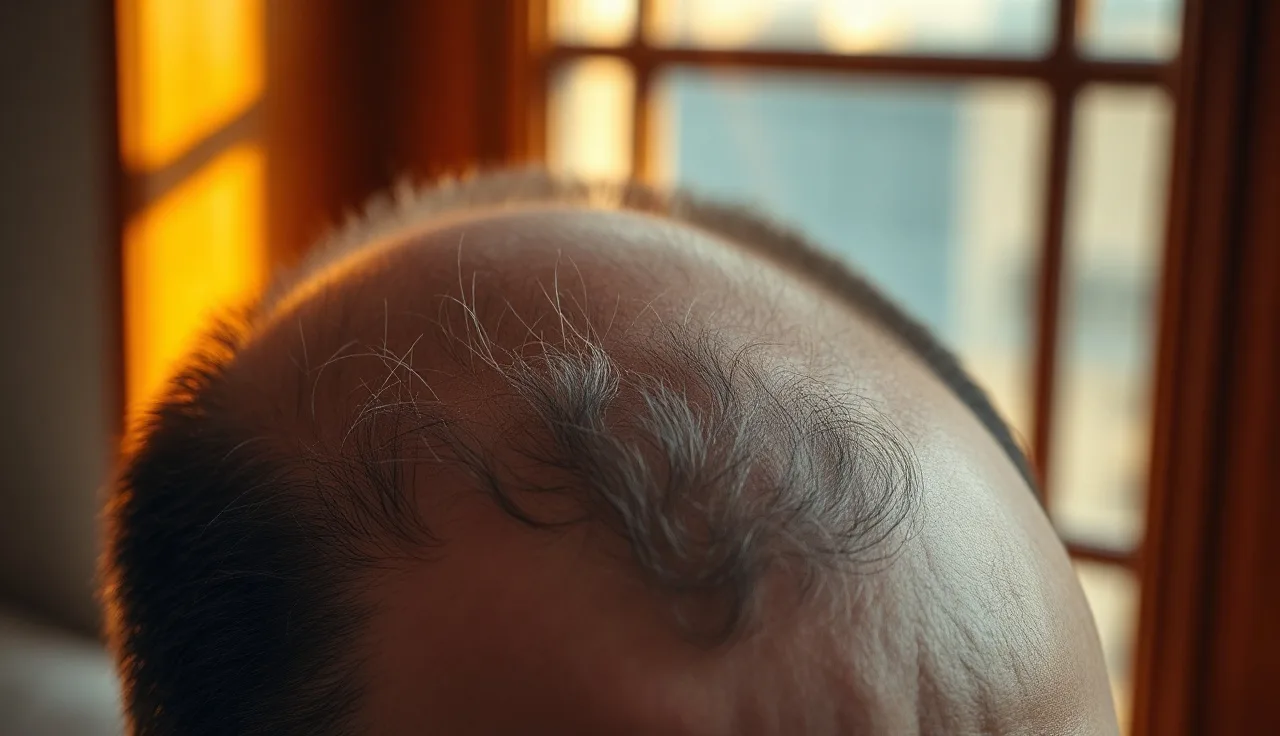
The process is called follicular miniaturization. Each hair cycle, the follicle produces a slightly thinner, shorter, less pigmented hair until it eventually produces nothing at all. Clinically this is androgenetic alopecia, the pattern baldness most people recognize. It accounts for roughly 95% of hair loss in men [2].
High testosterone does not mean you'll go bald. Men with normal or even low testosterone can lose hair aggressively if their scalp follicles are highly sensitive to DHT. The driver is receptor sensitivity and 5-alpha reductase activity, both of which are largely genetic [3].
How exactly does DHT damage hair follicles?
DHT binds to androgen receptors inside dermal papilla cells, which sit at the base of each follicle and control its growth cycle. Once bound, DHT switches on genes that shorten the anagen (growth) phase and stretch out the telogen (resting) phase [3].
Over time the follicle itself physically shrinks, and this takes years. A healthy terminal follicle can reach 4 to 6 mm deep in the dermis. A miniaturized follicle may be less than 1 mm. Below a certain size, the follicle can no longer produce a visible hair, and if that state lasts long enough, the follicle fibroses and becomes non-viable [4].
Timing is everything for treatment. A follicle that is still miniaturizing can often be stabilized or partly recovered. A follicle that has been gone for years is almost certainly gone for good. Dermatologists use dermoscopy or scalp biopsy to check the ratio of terminal to vellus hairs, which tells them how far the process has gone [4].
DHT also nudges the sebaceous glands to make more sebum on the scalp. That contributes to the oily, inflamed scalp environment some people notice as thinning begins, though the sebum itself does not cause the loss.
What is the difference between male and female androgenetic alopecia?
In men, androgenetic alopecia follows the Norwood-Hamilton scale. It starts with recession at the temples and thinning at the crown, then merges into the classic horseshoe pattern. It can start in the late teens and affects about 50% of men by age 50 and roughly 80% by age 70 [2].
In women, the pattern is different. Women rarely develop the total frontal baldness men do. Instead they get diffuse thinning across the crown with the frontal hairline preserved, classified on the Ludwig scale. About 40% of women experience some degree of androgenetic alopecia by menopause [5].
The hormonal picture is also different. Women have much lower circulating androgens, so the mechanism is more subtle. Women with androgenetic alopecia often have normal total testosterone but may show elevated free testosterone, elevated DHEA-S, or increased scalp 5-alpha reductase activity. Conditions like polycystic ovary syndrome (PCOS) that raise androgen levels frequently speed up female pattern hair loss [5].
Women should always get bloodwork before starting any androgen-focused treatment. Thyroid dysfunction, iron deficiency, or telogen effluvium can look identical to androgenetic alopecia on the surface but need completely different management. See the what causes hair loss guide for a broader diagnostic map.
Which genes control androgen sensitivity in hair follicles?
The androgen receptor (AR) gene on the X chromosome is the strongest known genetic contributor to male pattern baldness. Because men inherit their X chromosome from their mother, the maternal grandfather's hairline has long been used as a crude predictor. That rule has a grain of truth to it. It is far from the whole story [6].
A 2017 genome-wide association study in PLOS Genetics identified 63 loci linked to male pattern baldness, with the AR/EDA2R locus on chromosome Xq11-12 showing the strongest signal [6]. The other 62 loci are on autosomes, inherited from both parents. So checking your maternal grandfather's hairline is a starting point, not a verdict.
The 5-alpha reductase genes (SRD5A1 and SRD5A2) also vary between people and affect how aggressively testosterone converts to DHT in scalp tissue. People with high SRD5A2 activity make more DHT locally even with normal circulating testosterone.
Direct-to-consumer genetic tests can flag some of these variants, but their clinical predictive value is still limited. A positive result does not guarantee loss. A negative result does not guarantee safety.
How do androgens cause a receding hairline specifically?
The frontal hairline and the crown are the most androgen-sensitive zones of the scalp. This is not random. Follicles in those regions carry far more androgen receptors and 5-alpha reductase than follicles on the sides and back of the head [3].
That distribution is exactly why hair transplants work. The donor zone at the back and sides is androgen-resistant. Follicles harvested from there and moved to the top keep that resistance after transplantation, a property called donor dominance [7].
For a closer look at early recession patterns and what they mean, see the receding hairline guide. Getting in early, before the follicle has fully miniaturized, gives the best outcome with any treatment.
The temples usually recede before the crown thins in men (Norwood stages 2 to 3). Catching that change early matters because it tells you the process has started, even when total density still looks fine.
What treatments actually target the androgen pathway?
Two drugs have FDA approval for androgenetic alopecia, and both work through the androgen axis in different ways.
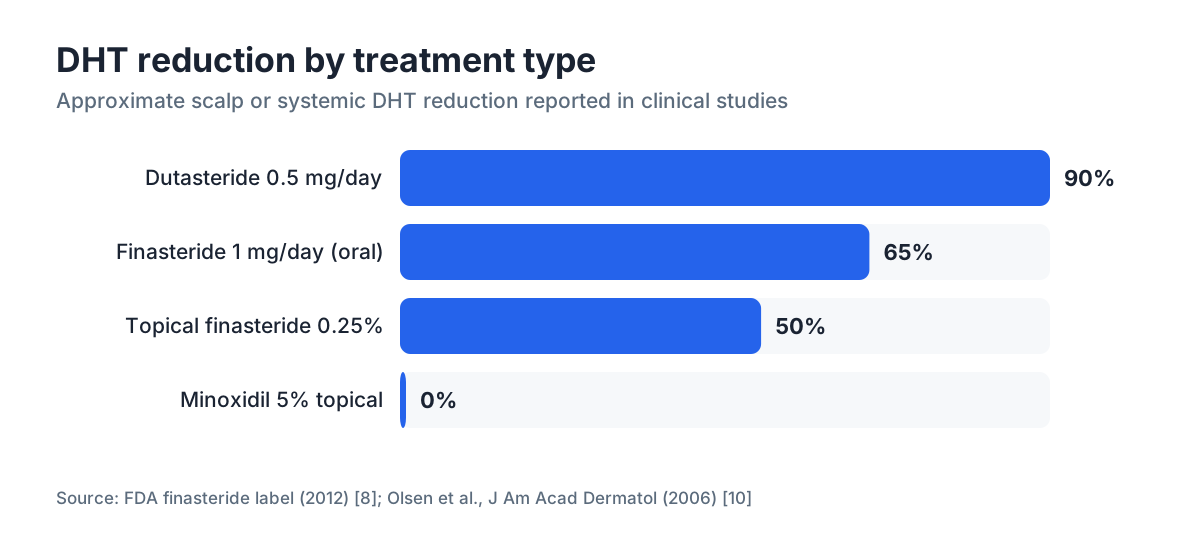
Finasteride inhibits type II 5-alpha reductase, which cuts scalp DHT levels by roughly 60 to 70% [8]. The trials that led to approval showed it halted progression in about 83% of men over two years and produced measurable regrowth in about 66% [8]. It is a once-daily oral pill. Topical finasteride is also available, cutting scalp DHT with lower systemic exposure, though long-term data comparing it to the oral form is still coming in. The finasteride article covers dosing, side effects, and the persistent post-finasteride syndrome debate in detail.
Minoxidil does not directly block androgens. It is a potassium channel opener that increases blood flow to the follicle and prolongs the anagen phase. Because it works through a different mechanism, it stacks well with finasteride. The FDA approved topical minoxidil (2% for women, 5% for men and women), and oral minoxidil (1.25 mg to 5 mg) has grown in use for both sexes off-label [9]. See minoxidil for men for a practical guide, or oral minoxidil if you are considering the pill form.
Anti-androgens used in women include spironolactone (an aldosterone antagonist with androgen-blocking properties, widely used off-label in the US), flutamide, and bicalutamide. None are FDA-approved specifically for hair loss, but they appear in clinical guidelines from the American Academy of Dermatology for women with androgenetic alopecia who have confirmed elevated androgens [5]. Spironolactone is contraindicated in pregnancy.
5-alpha reductase inhibitors in women: finasteride is not FDA-approved for women and is contraindicated in pregnancy. Dutasteride (which inhibits both type I and type II 5-alpha reductase) is used off-label in both men and women in some countries and cuts DHT more completely than finasteride. Studies show it beats finasteride on hair count metrics, but the side effect profile is broader and it lingers in the body longer [10].
Combination therapy with finasteride and minoxidil consistently beats either drug alone. The finasteride and minoxidil article has the comparison data.
For a rundown of dht blocker options beyond prescription drugs, including saw palmetto and other supplements, see that guide. Fair warning: the evidence base for supplements is much thinner than for the pharmaceuticals.
How do DHT blocker drugs compare in effectiveness?
Here is how the main androgen-pathway interventions compare, based on published trial data:
| Treatment | DHT reduction | Hair count change vs placebo | FDA approved for AGA? |
|---|---|---|---|
| Finasteride 1 mg/day (oral) | ~60-70% scalp DHT [8] | +91 hairs/cm² at 2 years [8] | Yes (men only) |
| Dutasteride 0.5 mg/day (oral) | ~90% scalp DHT [10] | Outperforms finasteride in head-to-head trials [10] | No (off-label) |
| Topical finasteride 0.25% | ~50% scalp DHT, low systemic [8] | Comparable to oral in some trials | No (compounded) |
| Spironolactone 100-200 mg/day | Blocks AR, reduces adrenal androgens | Modest improvement in women; limited RCT data [5] | No (off-label) |
| Minoxidil 5% topical | No direct DHT effect | +12-16% hair count vs baseline [9] | Yes (men and women) |
Dutasteride produces the deepest DHT suppression. But deeper is not automatically better for every patient. Finasteride has decades of safety data. Dutasteride's half-life is about five weeks, so side effects, if they happen, hang around much longer after you stop [10].
Not sure where you fall on the Norwood scale or how dense your remaining follicles are? A free AI hair scan at MyHairline can map your pattern before you spend money on a dermatology appointment.
Can lifestyle or diet lower DHT levels meaningfully?
Honestly, the lifestyle interventions people promote for lowering DHT are mostly modest and the evidence is mixed. Here is what is actually known.
Body fat matters. Adipose tissue contains aromatase, which converts testosterone to estrogen rather than DHT. Very lean men, especially those doing extreme caloric restriction or over-exercising, sometimes see temporarily elevated androgens. Obesity can throw the hormone balance off in the other direction. Keeping a healthy body weight is reasonable advice, but it is not a hair loss treatment.
Saw palmetto has mild 5-alpha reductase inhibiting properties in vitro. A small randomized trial published in the Journal of Alternative and Complementary Medicine in 2002 showed modest benefit versus placebo, but the effect size was much smaller than finasteride and the trial had methodological limits. It is unlikely to stop significant androgenetic alopecia on its own.
Zinc deficiency can impair 5-alpha reductase, so zinc supplementation might matter if you are actually deficient. Supplementing beyond normal levels does not appear to lower DHT further.
The hair loss supplements guide covers the evidence for individual nutrients honestly. Spoiler: most have weak data.
Exercise, sleep, and stress management are worth doing for general health. They do affect cortisol and, indirectly, hormones. But if androgenetic alopecia is progressing, they will not stop it alone.
Does creatine or testosterone supplementation increase hair loss?
This comes up constantly. The creatine worry traces back to a single 2009 study in the Clinical Journal of Sport Medicine that found college rugby players taking creatine monohydrate had a statistically significant rise in the DHT-to-testosterone ratio compared to placebo, though total testosterone did not change [11]. That study did not measure hair loss. No later study has shown creatine causes baldness in humans, but the mechanism behind the concern is real enough that the question is fair to ask. See the full does creatine cause hair loss analysis.
Exogenous testosterone, whether from prescribed TRT or anabolic steroids, is a more direct concern. More circulating testosterone means more substrate for 5-alpha reductase to convert to DHT. Men on TRT who are genetically predisposed to androgenetic alopecia frequently report faster loss. Anabolic steroids, many of them highly androgenic, can cause heavy hair loss even in men who might not have lost much otherwise [2].
No treatment fully counteracts this while the exogenous androgen use continues. Finasteride blunts the DHT rise but does not fix the excess substrate problem. If hair loss genuinely worries you, that belongs in the decision to use these compounds.
When is a hair transplant the right answer for androgen-driven hair loss?
A transplant does not stop androgenetic alopecia. It moves androgen-resistant follicles from the donor zone to the thinning area. Get a transplant without also treating the ongoing DHT-driven miniaturization, and you can end up with transplanted hair surrounded by a widening bald zone as your native hair keeps falling. Most transplant surgeons recommend pairing a transplant with medical therapy for exactly this reason [7].
Ideal candidates are usually men (or women) who have stabilized their loss medically, have enough donor hair at the back and sides, and hold realistic expectations about density. The procedure costs roughly $4,000 to $15,000 in the US depending on graft count and technique, with FUE (follicular unit extraction) at the higher end [7].
The hair transplant guide covers the techniques, costs, recovery, and how to evaluate a clinic in depth. The short version: a transplant is a surgical redistribution of hair, not a cure for the underlying androgen sensitivity.
Trying to figure out whether you are a transplant candidate or still early enough for good results from medication alone? Tracking your pattern over time is the most useful thing you can do. The MyHairline AI scan at myhairline.ai/scan gives you a free baseline you can compare against in six to twelve months.
Are there any androgen-independent causes of hair loss to rule out?
Yes, and mistaking them for androgenetic alopecia delays effective treatment.
Telogen effluvium is diffuse shedding triggered by physical or emotional stress, illness, surgery, rapid weight loss, or hormonal shifts like postpartum changes. It looks alarming but is usually temporary [12]. See the telogen effluvium article for the full picture.
Alopecia areata is autoimmune. The immune system attacks follicles, creating round bald patches. DHT is not the mechanism. Treatments include corticosteroids and newer JAK inhibitors like baricitinib, which the FDA approved specifically for severe alopecia areata in 2022 [12].
Thyroid disease (both hypo and hyperthyroidism), iron deficiency anemia, lupus, and certain medications including beta blockers, some antidepressants, and retinoids can all cause hair loss with no androgen involvement.
If your loss does not follow a Norwood or Ludwig pattern, or if it came on suddenly, get bloodwork: TSH, free T4, ferritin, complete blood count, and in women, free testosterone and DHEA-S at minimum. Treating androgenetic alopecia with finasteride when the real cause is iron deficiency just delays the diagnosis.
Sources
- StatPearls (NCBI Bookshelf), Physiology, Dihydrotestosterone
- American Academy of Dermatology, Hair loss types: androgenetic alopecia overview
- Sinclair R et al., Androgenetic alopecia: pathogenesis and treatment, Journal of Investigative Dermatology Symposium Proceedings (NCBI)
- Otberg N et al., Follicular miniaturization in androgenetic alopecia, Dermoscopy and trichoscopy review (NCBI)
- Hagenaars SP et al., Genetic prediction of male pattern baldness, PLOS Genetics 2017
- International Society of Hair Restoration Surgery, Patient information: hair transplant techniques and donor dominance
- Olsen EA et al., The importance of dual 5-alpha-reductase inhibition in the treatment of androgenetic alopecia: dutasteride vs finasteride, Journal of the American Academy of Dermatology 2006 (NCBI)
- van der Merwe J et al., Three weeks of creatine monohydrate supplementation affects dihydrotestosterone to testosterone ratio, Clinical Journal of Sport Medicine 2009 (NCBI)