
TL;DR: CCCA is a scarring hair loss condition most common in Black women that destroys follicles permanently if left alone. Treatment stops inflammation early. It does not regrow lost hair. First-line options are injected and topical corticosteroids, tetracycline antibiotics like doxycycline, and topical minoxidil for density. Catching it while thinning is still mild gives the best odds of halting the spread.
What is central centrifugal cicatricial alopecia and why does it matter?
CCCA is a scarring (cicatricial) hair loss that starts at the crown or central scalp and spreads outward. Scar tissue takes the place of healthy follicles. Once a follicle turns to scar, it cannot come back. That single fact is why the timing of your diagnosis changes everything.
The condition hits Black women harder than any other group. A 2016 community-based study in JAMA Dermatology found CCCA in roughly 5.6% of the Black women screened, making it one of the most common forms of hair loss in that population [1]. It shows up in Black men too, just less often, and rarely in other ethnicities.
For years the blame landed entirely on styling: relaxers, hot combs, tight braids, weaves. Those things can worsen inflammation, but the science moved. A 2019 study in the New England Journal of Medicine found pathogenic variants in the PADI3 gene in a subset of CCCA patients, pointing to a genetic tendency toward premature breakdown of the follicle's inner root sheath [2]. Hair practices are a modifier. They are not the whole story.
What do people actually feel? A tender or burning scalp at the crown, itching, and hair breakage that shows up before the thinning does. Some people feel nothing at all until they spot the patch. That silent version is a big reason CCCA gets caught late.
If you want to make sense of your scalp before you book a dermatologist, documenting your pattern is a reasonable first move. The free AI hair loss analysis at MyHairline can help you track changes over time, though nothing replaces a biopsy for confirming CCCA.
Knowing what causes hair loss more broadly helps you tell CCCA apart from non-scarring conditions like telogen effluvium, which reverses.
How is CCCA diagnosed, and why does a scalp biopsy matter?
A dermatologist's exam can raise the suspicion. A scalp punch biopsy confirms it. The biopsy is the only way to lock in a CCCA diagnosis and rule out other scarring alopecias like lichen planopilaris or discoid lupus. Pathology looks for lamellar fibroplasia around the follicle and inflammatory cells clustered around the upper follicular unit.
Dermoscopy helps too. Under handheld scalp magnification, CCCA shows white or gray halos around the hairs, loss of follicular openings in the central zone, and sometimes redness or scaling. A trained eye uses those signs to pick biopsy sites and judge how far the disease has gone.
The American Academy of Dermatology does not have a standalone CCCA guideline yet, but the North American Hair Research Society (NAHRS) has published consensus recommendations on evaluating scarring alopecia [3]. The guidance is specific: take biopsies from the active border of the patch, not the scarred center. The center shows only fibrosis. The border shows the active inflammation that confirms the diagnosis.
Late diagnosis is the recurring problem here. In some patient surveys, the gap between first symptom and correct diagnosis in scarring alopecias runs past two years. That delay costs follicles. Every month of active inflammation destroys more of them.
What are the first-line treatments for CCCA?
No treatment has FDA approval specifically for CCCA. Every option below is off-label, backed by case series, small trials, and expert consensus. That is normal for a rare skin condition. It means you are trusting a skilled dermatologist's judgment, not a package claim.
Corticosteroids come first for most clinicians. Intralesional triamcinolone acetonide (5 to 10 mg/mL, injected every 4 to 8 weeks into the active border) shuts down the inflammation around the follicle directly. High-potency topical steroids like clobetasol 0.05% solution or foam run daily or on a pulse schedule between injections [4]. The aim is symptom relief and stopping the spread. Not reversing scar.
Oral tetracyclines, mainly doxycycline (100 mg twice daily) and minocycline (100 mg twice daily), get added when inflammation is moderate to severe or when topical steroids alone fall short. These are used for their anti-inflammatory effect, not their antibiotic one. A typical course runs 6 months, then a reassessment by dermoscopy and exam [5].
Topical minoxidil 2% or 5% supports the follicles still alive at the edges of the patch. It does nothing for the inflammation, but it can hold density in non-scarred areas and may improve how the central zone looks if any follicles remain active. For how minoxidil works and what it does to your body, read the guide to minoxidil side effects.
Some dermatologists add topical calcineurin inhibitors (tacrolimus 0.1% ointment or pimecrolimus 1% cream) as steroid-sparing agents, mostly for long-term maintenance. They suppress T-cell inflammation without the skin-thinning risk that comes with months of topical steroids.
Low-dose oral minoxidil (0.625 mg to 2.5 mg daily) is increasingly common as an add-on. The CCCA-specific evidence is still thin, but the wider evidence base for oral minoxidil in hair preservation keeps growing.
Do corticosteroids actually stop CCCA from spreading?
The honest answer: probably yes in the majority of cases, but the evidence is limited by study size. CCCA has no large randomized trials the way male and female pattern hair loss does. Most of what we know comes from retrospective case series and small prospective studies.
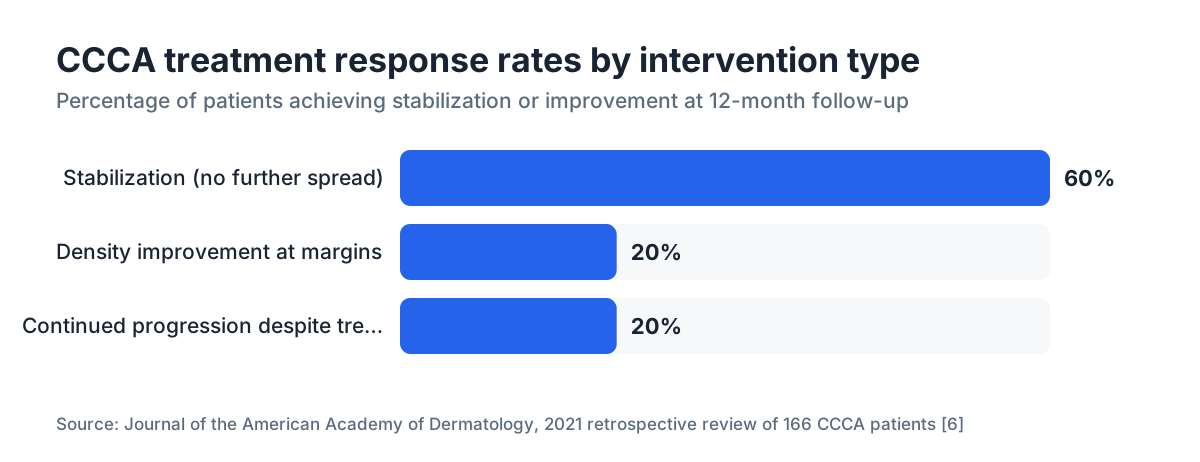
A 2021 retrospective review in the Journal of the American Academy of Dermatology followed 166 CCCA patients treated with intralesional triamcinolone plus topical steroids. Roughly 60% showed their patch size hold steady at 12-month follow-up, measured by dermoscopy and standardized photos [6]. About 20% gained some density at the margins. The other 20% kept progressing despite treatment.
Those numbers are imperfect. They are also real. Stabilization is a genuine win in a scarring disease. Progression means more follicles gone for good, so halting the march in 60% of patients is a result that matters.
Timing is the lever. Patients who started treatment within 6 months of first symptoms held steady at higher rates than those who waited two years or more. Here is the sentence to remember: in CCCA, how fast you start treatment matters more than which drug you start.
Intralesional steroids carry their own downsides over time, including scalp atrophy and loss of pigment, which is why doses stay low and injections stay spaced out.
What role do antibiotics play in CCCA treatment?
Tetracyclines have anchored scarring alopecia treatment for decades, and in CCCA their job is calming inflammation, not killing bacteria. Doxycycline blocks matrix metalloproteinases and suppresses pro-inflammatory cytokines including TNF-alpha and IL-1, both tied to follicle destruction in cicatricial alopecias [5].
In practice, many dermatologists run doxycycline 100 mg twice daily alongside topical treatment for the first 6 months, then reassess. If inflammation is under control (no tenderness, no fresh follicular loss on dermoscopy), the antibiotic gets tapered or stopped while topical maintenance continues.
Minocycline is an alternative with similar anti-inflammatory action, but it carries a higher risk of pigment changes in darker skin, a real concern for this patient population. That is why doxycycline usually wins.
Hydroxychloroquine, an antimalarial with immune-calming effects, gets pulled in when CCCA overlaps with lupus features or when other treatments fail. Dosing runs 200 to 400 mg daily. It needs regular eye exams because long-term use can cause retinopathy.
Can hair transplants treat CCCA, or will they fail?
Maybe, under strict conditions. Timing decides the outcome.
Transplanting into active inflammatory disease is almost always a mistake. Grafts placed in a scalp with ongoing CCCA get destroyed by the same process that killed the native follicles. The AAD and transplant surgeons who see CCCA generally want at least 1 to 2 years of documented stability before anyone considers surgery [7].
Stability means no progression on serial dermoscopy, no burning or itching, and ideally a biopsy showing resolved or minimal inflammation.
For patients in confirmed long-term remission, transplants can give real cosmetic gains. Case reports and small series describe good outcomes. There are no large controlled trials. And recurrence of CCCA activity after surgery, which can wipe out the grafts, stays a live risk.
If you are researching surgery, the broader hair transplant guide covers surgeon selection and realistic expectations. For CCCA specifically, find someone with documented experience in scarring alopecias, more than pattern baldness.
The scarred zone in CCCA can also have reduced blood supply and altered tissue quality, which drags on graft survival. One more reason the surgeon you pick matters more than usual.
Do hair care practices like relaxers or braids cause CCCA or make it worse?
They are modifiers, most likely, not the root cause.
The 2019 NEJM paper on PADI3 variants established a genetic predisposition in a subset of patients [2]. But most CCCA patients carry no identified single-gene mutation, and environment clearly shapes the disease.
NAHRS consensus and several observational studies link CCCA prevalence and severity to specific practices: chemical relaxers (sodium hydroxide and ammonium thioglycolate types), heavy heat styling, and traction from tight braids or weaves. The proposed mechanism is chronic microtrauma and chemical irritation at the follicular infundibulum, stacking on top of a genetic tendency.
A 2018 study in JAMA Dermatology found a statistically significant association between relaxer use and CCCA among 476 Black women surveyed, though the design was cross-sectional and could not prove cause [1].
Practically, most dermatologists advise cutting back or stopping chemical relaxers and heat styling during active treatment. This is not a blame-the-patient move. It removes an inflammatory trigger you can actually control while the medical treatment handles the rest.
It also means CCCA is more than traction alopecia by another name. Receding hairline patterns from traction are a separate thing, with different histology, prognosis, and treatment.
Are there emerging or investigational treatments for CCCA?
The field is small but it moves. A few directions are worth watching.
JAK inhibitors like tofacitinib and baricitinib have produced dramatic regrowth in alopecia areata, another immune-driven hair loss. Their use in scarring alopecias is under study, with case reports and pilot data hinting at benefit in lichen planopilaris, the closest cousin to CCCA. No CCCA-specific JAK inhibitor trial results have been published as of mid-2025, though several trials are running [8].
Platelet-rich plasma (PRP) injections get proposed as a way to nudge surviving follicles at the patch margin. The CCCA evidence is basically anecdotal. PRP has a decent track record in pattern hair loss, but you cannot confidently carry that over to a scarring condition with different biology.
Low-level laser therapy (LLLT) devices are marketed broadly for hair loss, with no published CCCA-specific evidence. The hair loss supplements category is the same story: no data that speaks to CCCA.
The PADI3 findings open a theoretical path toward a therapy that targets the follicular breakdown defect head-on. That is years from the clinic.
For now, early diagnosis plus proven anti-inflammatory treatment is the standard. Do not let the shine of an emerging option stall the treatment that already works.
What does a realistic CCCA treatment timeline look like?
Everyone asks the same thing: how long until I see results? The answer splits in two.
Stopping progression comes first. If treatment starts while the disease is active but early, most patients see signs of stabilization (fewer symptoms, no new loss) within 3 to 6 months of consistent treatment. Dermoscopy at baseline and every 4 to 6 months measures it objectively.
Density improvement comes second, if it comes at all. Modest regrowth at the margins is possible when follicles are still present there, usually visible over 6 to 12 months of topical minoxidil plus anti-inflammatory treatment. The central scarred zone will not regrow, ever. That scar is permanent.
Maintenance runs indefinitely for most people. CCCA is not an infection you cure and forget. It is chronic and it flares. Many patients stay on low-dose topical steroids or calcineurin inhibitors long-term to keep it quiet.
Injection visits typically run every 4 to 8 weeks during active treatment, then stretch to every 3 to 6 months once things are stable. Budget for it: injection visits cost $100 to $400 each out of pocket depending on location and practice, since insurers often treat them as cosmetic-adjacent.
Photographs help more than people expect. Same lighting, same position, every 3 months. They let your dermatologist catch subtle shifts and let you see when treatment is working. The MyHairline AI scan tool is one way to document changes between appointments.
How is CCCA different from other types of hair loss in Black women?
This trips up a lot of people, including some general practitioners. Here are the conditions to keep straight.
Traction alopecia forms at the temples, hairline, and behind the ears, where styling tension is highest. Caught early, it reverses. CCCA starts at the crown, spreads outward, and scars from the start. Different pattern, different ending.
Androgenetic alopecia (female pattern hair loss) thins the top of the scalp diffusely while usually sparing the frontal hairline. It does not scar, so follicular openings stay visible on dermoscopy. CCCA erases those openings. The difference matters because pattern loss responds to minoxidil for men, finasteride, and DHT blockers, while CCCA does not respond to those as primary treatment.
Alopecia areata shows up as smooth, round, well-defined patches anywhere on the scalp, with exclamation-mark hairs at the edge and no scarring. It is autoimmune and often reverses.
Discoid lupus erythematosus (DLE) causes scarring patches with follicular plugging, scale, and sometimes redness. Biopsy separates DLE from CCCA. DLE may respond to hydroxychloroquine and topical steroids.
See a dermatologist experienced with hair disorders in skin of color. Not every dermatologist has equal training in reading dermoscopy on darker skin, and a missed call delays treatment.
The table below lines up the main features of these conditions side by side.
When should you see a specialist, and what kind?
See a board-certified dermatologist, ideally one who subspecializes in hair disorders, at the first sign of crown thinning paired with scalp tenderness, burning, or itching. Those symptoms together flag active cicatricial alopecia. Do not wait it out.
If your family doctor is the first stop, ask directly for a dermatology referral and say the words scarring alopecia. That helps you land with someone who has biopsy capability and dermoscopy on hand.
The Skin of Color Society keeps a directory of dermatologists with expertise in treating skin of color, searchable by location [9]. The North American Hair Research Society site also has a find-a-physician tool [3].
Already managing confirmed CCCA but want a second opinion on the plan? Academic medical centers with hair or pigmented-skin disorder clinics are the resource. Howard University, Tulane, Emory, and several others have published on CCCA and see high patient volumes.
Do not self-treat CCCA with drugstore products while the dermatology visit slips. Minoxidil alone will not do it. The anti-inflammatory part of treatment is what stops the scarring.
Sources
- JAMA Dermatology, Aguh et al. 2016 and 2018 CCCA studies
- New England Journal of Medicine, Malki et al. 2019, PADI3 variants in CCCA
- American Academy of Dermatology, cicatricial alopecia overview
- Journal of the American Academy of Dermatology, tetracyclines in primary cicatricial alopecia
- Journal of the American Academy of Dermatology, CCCA retrospective review 2021
- American Academy of Dermatology, hair transplant patient guidance
- ClinicalTrials.gov, JAK inhibitor trials in cicatricial alopecia
- Skin of Color Society, find a dermatologist directory
- Journal of the American Academy of Dermatology, Dina et al. 2019, CCCA and uterine fibroids
- FDA, minoxidil drug label
- National Institutes of Health MedlinePlus, doxycycline