

TL;DR: Chronic telogen effluvium (CTE) is diffuse hair shedding lasting more than six months, caused by an ongoing trigger that keeps too many follicles in the resting phase. Unlike the acute form, it rarely resolves on its own. Finding and fixing the root cause, whether a nutritional deficiency, thyroid problem, or hormonal shift, is the only reliable path to regrowth.
What is chronic telogen effluvium, and how is it different from regular hair shedding?
Normal scalp hairs cycle through three phases: anagen (active growth, lasting two to seven years), catagen (a brief transition), and telogen (resting, around three months), before the hair sheds naturally. At any given moment roughly 85 to 90 percent of your follicles are in anagen and 10 to 15 percent are in telogen. You shed somewhere between 50 and 150 hairs a day without it being a problem [1].
Telogen effluvium happens when a shock or stressor pushes an unusually large number of follicles into telogen at the same time. Two to four months later, all those resting hairs shed together, and you notice clumps on the shower floor. Most of the time that acute episode resolves within six months once the trigger is gone. Learn more about how that process works.
Chronic telogen effluvium is the stubborn version. The threshold is generally accepted as shedding lasting more than six months [2]. The follicles keep cycling too quickly, resting hairs keep releasing, and the hair never really recovers its former density. This is more than prolonged acute TE. It has a somewhat different clinical profile, and the two can be easy to confuse.
A 1996 paper by Whiting published in the Journal of the American Academy of Dermatology described CTE as a distinct entity primarily affecting women aged 30 to 60, with a fluctuating rather than steady shed, and usually without a clear inciting event. That description still holds clinically, though men can get it too.
What causes chronic telogen effluvium to last so long?
The short answer is that something is still wrong. Acute TE tends to have a single identifiable trigger that resolves. CTE persists because the trigger is ongoing, multiple triggers are layered on top of each other, or the original cause was never found and fixed.
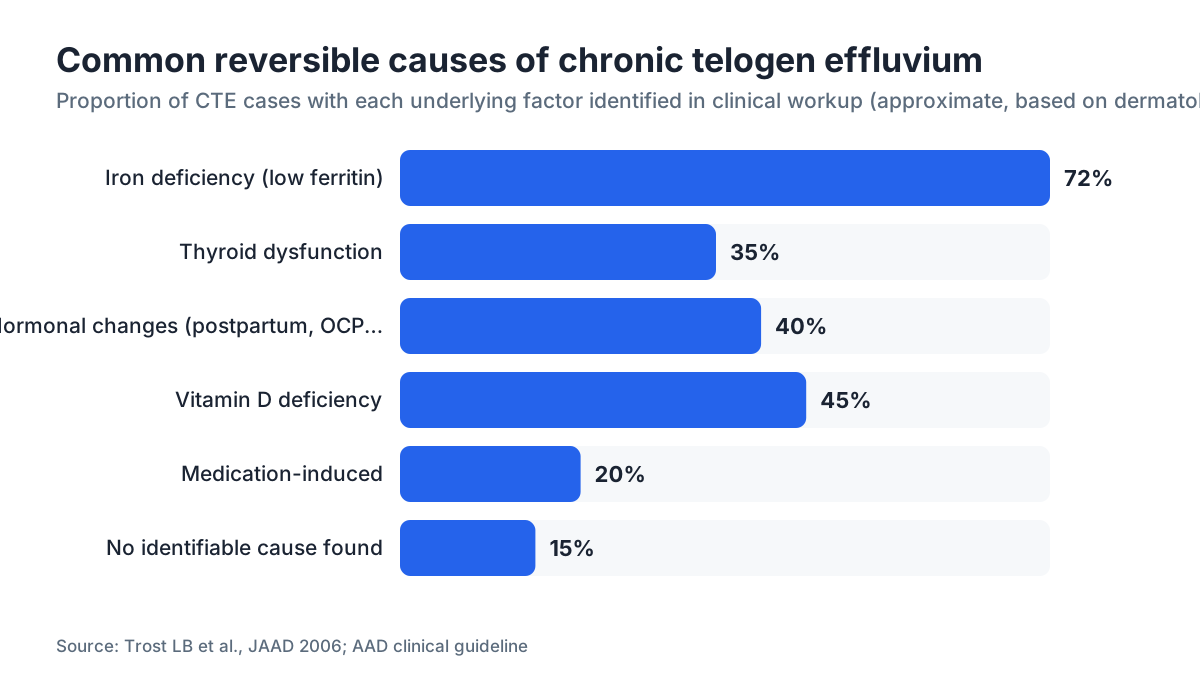
The most common culprits are:
Iron deficiency. Serum ferritin (stored iron) below roughly 30 ng/mL is consistently associated with diffuse shedding in women, though the exact threshold is debated in the literature. Several dermatologists use 70 ng/mL as a treatment target rather than just aiming for the lab's "normal" range [3].
Thyroid dysfunction. Both hypothyroidism and hyperthyroidism disrupt the hair cycle. TSH outside the normal range is one of the first labs any doctor should run. The American Thyroid Association notes that even subclinical hypothyroidism can cause symptoms including hair thinning [4].
Hormonal shifts. The postpartum period, stopping oral contraceptives, perimenopause, and polycystic ovary syndrome (PCOS) are all documented triggers. The drop in estrogen after childbirth or going off the pill is one of the most reliably documented causes of a prolonged shed.
Protein or micronutrient deficiencies. Crash diets, restrictive eating, and malabsorption conditions (celiac disease, inflammatory bowel disease) can starve follicles of the amino acids and micronutrients they need. Zinc, vitamin D, and biotin deficiencies have all been linked to diffuse shedding, though the evidence is strongest for iron and vitamin D [3].
Chronic stress and poor sleep. The mechanism involves elevated cortisol and its downstream effects on the hair cycle. This is harder to measure in a lab, but the relationship is well-supported biologically.
Medications. Beta-blockers, retinoids, anticoagulants, lithium, and several others can cause or sustain TE. If a new medication appeared around the time the shedding started, that connection is worth taking seriously. A broader look at what causes hair loss is useful background here.
In some cases, no single cause is found. That is frustrating, but it does not mean nothing can be done.
How is chronic telogen effluvium diagnosed?
Diagnosis has two steps: ruling out other causes of diffuse shedding, and identifying the underlying trigger.
Step one: history and clinical exam. A dermatologist will ask about the timeline, any recent illnesses, surgeries, pregnancies, dietary changes, new medications, and family history of hair loss. The classic pull test, gently pulling 40 to 60 hairs between thumb and forefinger, is positive (more than six hairs released) in active TE. In CTE the pull test is sometimes only mildly positive or fluctuates, which is one reason the condition gets missed.
Step two: labs. There is no single diagnostic test for CTE. Standard workup typically includes complete blood count, serum ferritin, iron saturation, TSH (and often free T3/T4), vitamin D (25-OH), zinc, and a full metabolic panel. In women, hormonal labs including DHEA-S, testosterone, and prolactin may be added if PCOS or other endocrine issues are suspected. ANA and inflammatory markers may be checked to rule out autoimmune disease.
Trichoscopy (dermoscopy of the scalp) can show increased vellus hairs, empty follicles, or a higher proportion of short regrowing hairs, all suggesting a telogen-heavy state. A scalp biopsy, ideally with a 4mm punch processed for both horizontal and vertical sectioning, shows an increased proportion of telogen hairs (typically more than 25 percent) without the miniaturization pattern you would see in androgenetic alopecia [2].
Ruling out androgenetic alopecia (AGA) is important because the two conditions often coexist, especially in women. If the shedding is diffuse and not patterned at the crown or temples, if there is no miniaturization on exam, and if a trigger or deficiency is found, CTE is the more likely primary diagnosis. That said, AGA can unmask itself during a TE episode, so a patient can have both.
How long does chronic telogen effluvium last without treatment?
This is the question nobody can answer cleanly, because the data is sparse and individual variation is enormous.
Whiting's original cohort followed women with CTE for two to seven years. A subset had spontaneous improvement even without identifying a cause; others shed continuously for years. The general clinical impression is that CTE can run for months to years if untreated, with periods of more and less intense shedding.
The shedding itself rarely causes complete baldness because CTE does not destroy follicles. What you lose is density. Hair may feel thinner, limp, or less full. The hairline usually stays intact, which is one clinical clue that distinguishes it from AGA.
If a reversible cause is found and corrected, most patients see a reduction in shedding within three to six months of treatment, and meaningful regrowth within six to twelve months. That timeline is frustrating, but it reflects how slowly the hair cycle moves. Nothing works faster than the biology allows.
What are the most effective treatments for chronic telogen effluvium?
The most effective telogen effluvium hair loss treatment is correcting whatever is causing it. That sounds obvious, but it means treating CTE as a symptom rather than a disease, and it means actually resolving the underlying issue, more than managing the shedding.
Correct nutritional deficiencies. If ferritin is low, supplementing iron (typically ferrous sulfate 325mg or an equivalent), ideally with vitamin C to aid absorption, is the starting point. Recheck ferritin in three to four months. Vitamin D supplementation at doses of 1,000 to 4,000 IU daily is reasonable if levels are deficient (below 20 ng/mL) or insufficient (20 to 29 ng/mL) per the Endocrine Society guidelines [5].
Treat thyroid disease. If TSH is out of range, working with an endocrinologist to normalize it is necessary. Hair regrowth after thyroid treatment can be slow, sometimes six to eighteen months.
Address hormonal causes. For postpartum TE, most cases resolve once estrogen rebounds, but supplementing iron and watching for coincident AGA is smart. For PCOS-related shedding, treating the underlying hormonal imbalance (with an OB-GYN or endocrinologist) is the primary approach. Some patients with hormonal-pattern diffuse shedding benefit from antiandrogen therapy.
Minoxidil. This is the only topical medication with FDA approval for hair loss, and it is used off-label for CTE to support regrowth while the underlying cause is being addressed [6]. The mechanism is not fully understood, but minoxidil shortens telogen and extends anagen. Topical 2% or 5% applied once or twice daily is the standard starting point for women; 5% foam is FDA-cleared for women once daily. Men typically start at 5%. Expect an initial shedding increase in the first four to eight weeks. This is normal, it is displaced telogen hairs being pushed out by new anagen hairs, not evidence of harm. Read a detailed breakdown of minoxidil for men if you want to go further.
Oral minoxidil at very low doses (0.25mg to 1.25mg daily for women, up to 5mg for men) is increasingly used and may have better compliance than topical, though it comes with systemic side effects including fluid retention and unwanted facial hair in some women. Oral minoxidil is worth understanding before choosing between the two forms.
Nutritional supplements marketed for hair. The evidence for most of them is weak. Biotin is the most heavily marketed, but deficiency is rare outside specific medical conditions. If your biotin is normal, adding more will not change your shed. Hair loss supplements covers the evidence landscape honestly.
Finasteride and other DHT blockers. These are genuinely useful for androgenetic alopecia but have no direct mechanism against the telogen cycling problem in pure CTE. If CTE and AGA coexist (very common in women over 35), finasteride or a DHT blocker may be part of the plan, but it should be a targeted decision, not a default.
Stress reduction, sleep hygiene, and adequate protein intake are not flashy, but they support the whole system. Follicles need amino acids. Chronic sleep deprivation elevates cortisol. None of this is optional background noise.
Chronic telogen effluvium vs. androgenetic alopecia: how do you tell them apart?
This is one of the most common diagnostic tangles in dermatology practice, and it matters because the treatments differ significantly.
| Feature | Chronic Telogen Effluvium | Androgenetic Alopecia |
|---|---|---|
| Pattern | Diffuse, all over scalp | Patterned (temples, crown) |
| Hairline | Usually preserved | Recedes in AGA |
| Scalp biopsy | Elevated telogen %, normal follicle size | Miniaturized follicles |
| Pull test | Positive or fluctuating | Usually negative |
| Family history | Not required | Often positive |
| Age/sex peak | Women 30 to 60, any age possible | Men from teens onward; women post-menopause |
| Response to minoxidil | Often good if cause corrected | Moderate; long-term required |
The two conditions frequently coexist. A woman with underlying AGA may have had perfectly acceptable density until a crash diet or pregnancy tipped her into CTE on top of it. Treating only the CTE gets her back to baseline, but that baseline already had AGA behind it. Both need addressing.
If you have patterned thinning at the crown alongside diffuse shedding, a receding hairline or crown thinning, that clinical picture points strongly toward at least a component of AGA. A dermatologist who does trichoscopy can often distinguish the two in clinic without a biopsy.
Can chronic telogen effluvium cause permanent hair loss?
In the classic form, no. CTE disrupts the hair cycle but does not destroy follicles. Hairs that shed in TE are replaced by new hairs once the cycle normalizes. The follicle is still there, just temporarily out of service.
The catch is time. A prolonged telogen state means months to years of below-normal density. And if CTE coexists with AGA, the AGA component can cause permanent miniaturization independently. So the clinical answer is: pure CTE does not cause permanent loss, but it can unmask or worsen AGA that does.
This is also why early evaluation matters. If someone dismisses diffuse shedding for two or three years as "just stress," underlying AGA may have progressed further than it would have with intervention. Getting a proper diagnosis, including distinguishing TE from AGA, is not overthinking it.
Myhairline.ai offers a free AI hair analysis if you want a quick first look at your shedding pattern before booking a dermatologist, though a clinical evaluation is irreplaceable for a diagnosis this nuanced.
What blood tests should you get if you suspect chronic telogen effluvium?
A reasonable standard workup, based on dermatology practice guidelines from the American Academy of Dermatology, includes [7]:
- Complete blood count (anemia, white cell abnormalities)
- Serum ferritin (target above 30 ng/mL at minimum; many clinicians aim for 70 ng/mL or higher)
- Iron and total iron-binding capacity (TIBC)
- TSH, free T4 (and free T3 if TSH is borderline)
- Vitamin D (25-OH)
- Zinc
- A full metabolic panel (liver and kidney function)
- ANA (to screen for lupus-related alopecia)
In women, add:
- Free and total testosterone
- DHEA-S
- Prolactin
- Follicle-stimulating hormone (FSH) and estradiol if perimenopausal
Some dermatologists also check zinc, selenium, and vitamin B12, particularly in patients following restricted diets.
The results should be interpreted in the clinical context, more than against lab reference ranges. A ferritin of 12 ng/mL is technically "within range" at many labs but is consistently associated with shedding in the dermatology literature. Ask your doctor what the number actually is, more than whether it flagged as abnormal.
Does diet affect chronic telogen effluvium, and can changing what you eat stop the shedding?
Yes, diet can both cause and perpetuate CTE, and changing it can genuinely help, but the effect is usually indirect and slow.
The hair follicle is a metabolically active structure with high energy and protein demands. The matrix cells that build the hair shaft divide faster than almost any other cell in the body. Anything that restricts the supply of amino acids, iron, zinc, or B vitamins will show up in the hair cycle within two to four months.
Crash dieting is a well-documented trigger. A very low calorie diet (below roughly 1,000 to 1,200 calories per day) or very low protein intake (below about 0.8g per kg of body weight per day, per standard nutritional guidelines) can induce TE within months. Vegan and vegetarian diets are not inherently problematic, but they require planning to maintain adequate iron, zinc, and B12.
What actually helps:
- Adequate total calories (this is the most underrated factor)
- Protein intake of at least 1.0 to 1.2g per kg of body weight daily
- Iron-rich foods or supplementation if ferritin is low
- Vitamin D if deficient
- Avoiding prolonged very-low-carbohydrate diets, which have been associated with shedding in case reports (though controlled trial data is limited)
What does not help: adding supplements on top of an already-adequate diet. If your ferritin is 90 ng/mL and your vitamin D is normal, more of either is not going to change your hair.
When should you see a dermatologist, and what should you expect at the appointment?
If shedding has lasted more than three to four months and is noticeably affecting density, it is time to see a dermatologist rather than waiting it out. Six months is the threshold for CTE, but there is no reason to delay evaluation if the shed is heavy.
Bring to the appointment:
- A rough timeline (when shedding started, any major events two to four months before it began)
- A list of all medications and supplements
- Any prior blood work
- Photos of your hair density over time if you have them
Expect the dermatologist to do a scalp exam, likely a pull test, and possibly trichoscopy. They will order labs. A biopsy is not always done on the first visit but becomes more valuable when the diagnosis is unclear after labs and exam.
If your dermatologist dismisses diffuse shedding with "it's just stress, it'll grow back" without any workup, push back or seek a second opinion. CTE is real, it has identifiable and treatable causes in a meaningful proportion of patients, and it warrants investigation.
For patients where AGA is part of the picture, the conversation may expand to include finasteride and minoxidil combination therapy or longer-term maintenance strategies. A hair transplant is not appropriate for active CTE since the follicles are not permanently damaged, but if stable AGA is present alongside resolved CTE, it is a legitimate option to discuss later.
How to treat telogen effluvium hair loss when no clear cause is found
When a thorough workup comes back normal, you are in genuinely uncertain territory. The honest answer is that dermatology does not have a clean protocol for idiopathic CTE.
In this situation most dermatologists will:
-
Treat any borderline deficiencies, even if they are not critically low. A ferritin of 18 ng/mL or a vitamin D of 22 ng/mL may not explain the shedding definitively, but raising them is low-risk and potentially useful.
-
Start minoxidil to support regrowth while the underlying issue (whatever it is) hopefully stabilizes. The AAD lists minoxidil as a first-line recommendation for diffuse hair loss in women [7].
-
Monitor and reassess. Repeat labs in three to four months. Reassess the clinical picture. Ask again about new medications, dietary changes, and stressors.
-
Consider a scalp biopsy if the diagnosis remains unclear at six months.
Nobody has good data on the long-term natural history of truly idiopathic CTE. The closest evidence comes from Whiting's original cohort, where a meaningful subset improved spontaneously over two to seven years. That is a wide range and not very reassuring. Most clinicians treat rather than wait once the diagnosis is established.
Some patients with idiopathic CTE have found benefit in stress-reduction programs, though controlled trial data in CTE specifically does not exist. Given that the mechanism likely involves HPA axis dysregulation and cortisol, it is biologically plausible even without a randomized trial to cite.
Are there any side effects or risks from treating chronic telogen effluvium?
Treatment risk depends entirely on which treatment you are talking about.
Iron supplementation at standard doses can cause GI side effects including constipation, nausea, and dark stools. Iron overload from supplementation is rare in adults without hemochromatosis but is worth monitoring with periodic ferritin levels.
Minoxidil topical most commonly causes scalp irritation and the temporary initial shed described above. Systemic absorption is low with topical use. Minoxidil side effects covers this in detail, including the rarer cardiovascular concerns.
Oral minoxidil carries more meaningful systemic risks, including fluid retention, reflex tachycardia, and unwanted hair growth (hypertrichosis) in about 15 to 20 percent of women in published case series [8]. It should not be used in patients with certain cardiovascular conditions without careful evaluation.
Vitamin D supplementation at high doses (above 4,000 IU daily long-term without monitoring) can cause toxicity. At standard corrective doses, it is safe for the vast majority of people.
Stopping treatment prematurely is a real risk. Minoxidil shed returns if you stop, and nutritional stores need sustained replenishment. The worst outcome many patients experience is stopping iron supplementation when they feel better, watching the ferritin drop again, and cycling back into shedding.
The risk of not treating, particularly if AGA is in the background, is continued and potentially permanent follicle miniaturization. That is the clinical argument for action over watchful waiting in most cases.
Sources
- American Academy of Dermatology, Hair loss types: Alopecia overview
- Whiting DA, Journal of the American Academy of Dermatology 1996; 35(6):899-906
- Trost LB et al., Journal of the American Academy of Dermatology 2006; 54(5):824-844
- American Thyroid Association, Hypothyroidism patient information
- Endocrine Society, Vitamin D deficiency clinical practice guideline 2011
- FDA, Minoxidil topical solution drug label (NDA 019501)
- American Academy of Dermatology, Clinical guideline: Female pattern hair loss
- Randolph M and Tosti A, Journal of the American Academy of Dermatology 2021; 84(6):1689-1700
- Almohanna HM et al., Dermatology and Therapy 2019; 9(1):51-70
- MedlinePlus (NIH National Library of Medicine), Telogen effluvium