
TL;DR: Children almost never have the adult kind of hair loss. The three most common causes are tinea capitis (a fungal infection), alopecia areata (an immune attack on follicles), and traction alopecia from tight hairstyles. Most cases are treatable. A few are permanent. The right diagnosis, made first, decides whether treatment works at all.
How common is hair loss in children?
Hair loss makes up roughly 3% of all pediatric dermatology visits in the United States [1]. That sounds small. But pediatric dermatologists see it every week, so the common causes are well-studied and, in most cases, fixable.
Age tells you a lot. A two-year-old with patchy loss is almost never dealing with the same thing as a fourteen-year-old whose part is widening. Infants shed hair in the first few months of life as the hormone shifts from birth push a batch of follicles into a resting phase at once. That is normal and self-correcting. School-age kids are the ones most at risk for tinea capitis. Adolescents can start showing early androgenetic alopecia, especially with a strong family history, though that is genuinely uncommon before the mid-teens.
Sex matters too. Traction alopecia shows up far more often in girls, particularly those with textured hair worn in braids or ponytails. Tinea capitis is more common in boys in the US [12]. Alopecia areata hits both sexes about equally.
Here is the point that changes everything downstream. The evaluation path for a child looks nothing like the adult one. DHT blockers and high-dose minoxidil, the mainstays of adult treatment, are almost never a first move in a child.
What are the most common causes of hair loss in children?
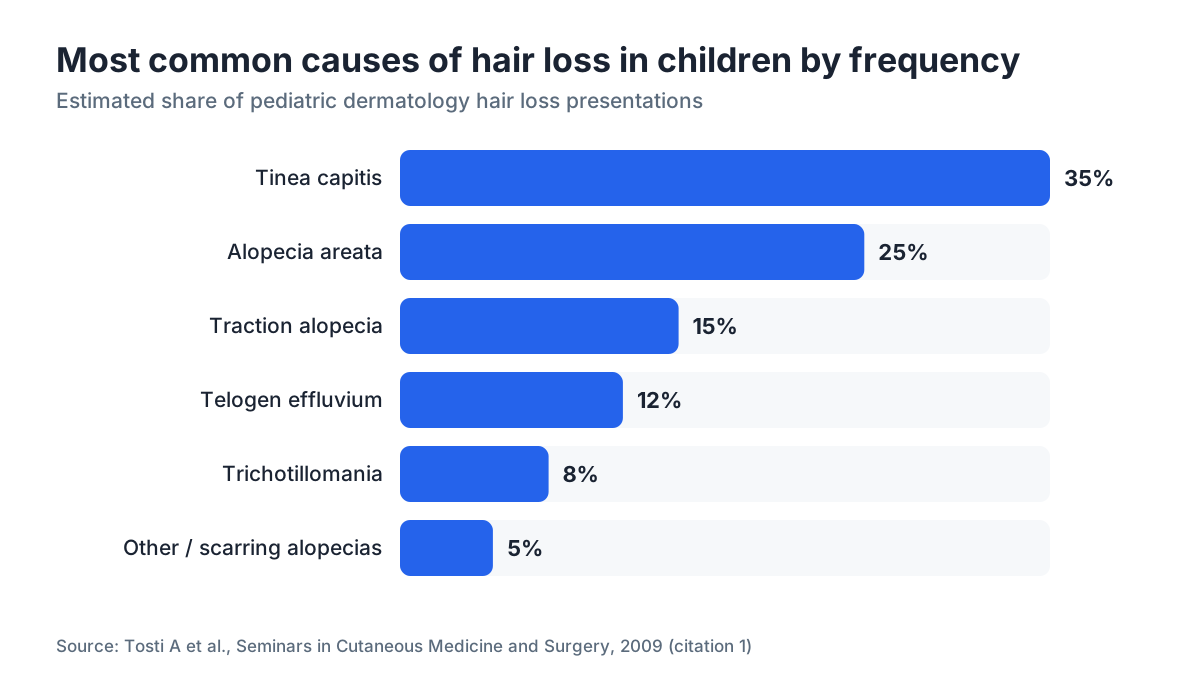
Five causes account for the large majority of cases. Learn these and you will recognize most of what walks into a clinic.
Tinea capitis is a dermatophyte (fungal) infection of the scalp. It is the single most common cause of hair loss in prepubertal children in the US and is especially common in urban settings [2]. The fungus, usually Trichophyton tonsurans in North America, invades the hair shaft and snaps it off close to the scalp, leaving the classic "black dot" patches [12]. It can pass for dandruff, seborrheic dermatitis, or even alopecia areata if you are not looking closely. A scalp culture or a KOH preparation of plucked hair confirms it. Oral antifungal medication (usually griseofulvin or terbinafine) is required, because topical antifungals do not reach the inside of the hair shaft where the fungus lives [11].
Alopecia areata is an autoimmune condition in which the immune system attacks the hair follicle. It causes smooth, round or oval patches with no scaling, no inflammation, and no broken hairs. About 60% of people with alopecia areata have their first episode before age 20 [3]. Mild cases often resolve on their own. Extensive cases, including alopecia totalis (complete scalp loss) and alopecia universalis (loss of all body hair), are harder to treat and may last. It runs alongside thyroid disease, vitiligo, and atopic dermatitis.
Traction alopecia comes from chronic mechanical pulling on the follicle, usually from tight braids, weaves, high ponytails, or heavy extensions. The frontal hairline and temples go first. Caught early, it reverses completely once the hairstyle changes. Years of pulling can scar the follicle for good [4].
Telogen effluvium is diffuse shedding set off by a physical shock: a high fever, an illness, surgery, rapid weight loss, or emotional trauma. The follicles get pushed early into a resting phase, and two to four months after the trigger, hair falls out in handfuls. It looks frightening and is almost always temporary. The mechanism is broken down in the telogen effluvium article.
Trichotillomania is a body-focused repetitive behavior in which a person pulls out their own hair, often without noticing. The patches look irregular and jagged, not the clean circles of alopecia areata. It travels with anxiety and OCD-spectrum conditions. The treatment is behavioral, not dermatologic.
What less common causes should doctors rule out?
Past the big five, a handful of causes show up often enough that a careful workup should keep them in mind.
Nutritional deficiencies, especially iron deficiency (with or without anemia), zinc deficiency, and true biotin deficiency, can cause diffuse thinning. Iron deficiency is the most common nutritional deficiency in children worldwide and does have a real link to telogen effluvium [5]. Most children eating a varied diet in a wealthy country do not have clinically meaningful biotin deficiency, whatever the supplement aisle implies.
Thyroid disease cuts both ways. Hypothyroidism and hyperthyroidism both change hair, and the loss is usually diffuse. A TSH blood test is cheap and belongs in the workup any time a child has unexplained diffuse shedding.
Scarring alopecias, a group of conditions that destroy follicles for good, are rare in children but real. Lichen planopilaris and folliculitis decalvans are two. If the scalp shows inflammation, redness, or scarring around the follicular openings, a scalp biopsy is warranted.
Loose anagen syndrome is a benign condition, most common in fair-haired girls between ages two and five, in which hairs sit so loosely that they pull out painlessly with almost no resistance. The hair often never grows long. Many children grow out of it by adolescence.
Chemotherapy and some medications (including certain anticonvulsants and high-dose vitamin A) cause well-documented hair loss. If a child on a long-term medication starts shedding, going through the drug list with the prescribing physician is a necessary step.
For the full map of what causes hair loss, including the genetic and hormonal mechanisms that matter for older adolescents, that article covers the adult picture.
How do doctors diagnose the cause of hair loss in a child?
Diagnosis starts with the history, which for a child usually means talking to the parent and the child together, then separately if the child is old enough.
The questions that matter: When did it start? One patch or diffuse? Did an illness or a shock come first? Is there itching or pain? What hairstyles does the child wear? Any family history of alopecia, autoimmune disease, or thyroid trouble? Could the child be pulling at their own hair?
The exam reads the pattern (patchy versus diffuse), the scalp surface (scaling, inflammation, scarring, changes at the follicle openings), the hair texture, the results of a hair pull test, and any other skin or systemic findings.
Lab work follows the exam. A reasonable starting panel for unexplained diffuse loss is a CBC, ferritin, TSH, and zinc level. If tinea capitis is on the table, a scalp fungal culture or KOH preparation settles it. If alopecia areata is extensive or the picture is murky, thyroid antibodies and an ANA can help.
Dermoscopy is the tool that changed pediatric scalp exams. It is a handheld optical device that magnifies the scalp 10 to 30 times, and it lets a dermatologist tell alopecia areata from tinea capitis from trichotillomania without touching the child with a needle.
Scalp biopsy is held in reserve. It goes to cases where the diagnosis is genuinely stuck or where scarring alopecia needs confirmation. It is a minor in-office procedure, and most pediatric dermatologists skip it unless they have to.
What treatments actually work for children with hair loss?
Treatment follows the diagnosis and nothing else. There is no all-purpose hair loss treatment for children, and anyone selling one is selling you a story.
Tinea capitis: Oral antifungals are required. Griseofulvin has been the standard for decades. Many pediatric dermatologists now prefer terbinafine for Trichophyton infections because the course is shorter (2 to 4 weeks versus 6 to 8 weeks for griseofulvin) and it has fewer drug interactions [2]. The American Academy of Dermatology recommends adding a selenium sulfide or ketoconazole shampoo, not to treat the infection but to cut spore spread to the rest of the household [2]. Anyone who shares combs, hats, or pillowcases with the child should be checked.
Alopecia areata: For limited patchy disease, intralesional corticosteroid injections (triamcinolone acetonide) work well in older children and teens who can sit through the procedure, but they are usually skipped under age 10 because of the pain and the cooperation problem [10]. Topical corticosteroids are the first-line stand-in for younger children, though the evidence for full regrowth is modest [10]. Topical minoxidil (2%, off-label) often gets added to nudge regrowth while the anti-inflammatory treatment calms the attack. For severe or extensive disease, systemic options including JAK inhibitors are now on the table for teens: ritlecitinib got FDA approval for alopecia areata in adults and adolescents 12 and over in 2023 [6].
Traction alopecia: Stop the traction. That is the treatment. Caught early, hair fills back in once the damaging style is gone. Looser protective styles that leave the hairline alone, silk pillowcases, and lighter extensions give follicles room to recover. Once fibrosis sets in from years of pulling, regrowth is limited.
Telogen effluvium: It clears on its own, usually within 3 to 6 months of the trigger passing. Fixing any real nutritional deficiency speeds things up. No drug is needed.
Trichotillomania: Cognitive-behavioral therapy, specifically habit reversal training, is the first-line, evidence-based treatment. A dermatologist who spots this in a child should refer to a psychologist or psychiatrist who works with body-focused repetitive behaviors.
Parents who want a baseline before the appointment can use the free AI hair scan at MyHairline to document the pattern and severity. It does not replace a medical diagnosis, and that caution is sharper for children, where the causes look so different from adults.
Is minoxidil safe for children?
The honest answer: in narrow circumstances, under specialist supervision, topical minoxidil gets used in children. But it is not FDA-approved for anyone under 18, and the safety concerns are real, not theoretical.
The FDA label for over-the-counter minoxidil topical solution says plainly that it is for adults only [7]. The 2% solution has been used off-label in children with alopecia areata, usually applied by a physician in clinic or with close supervision at home. Pediatric dermatologists lean toward the lowest effective dose and watch for signs of systemic absorption.
Here is why the caution: minoxidil crosses the scalp into the bloodstream, and in a small body even a small systemic dose can cause cardiovascular effects, including a fast heart rate and low blood pressure. Published case reports describe children with serious adverse events after accidental ingestion or over-application [7]. Keep any minoxidil product physically out of a child's reach, even when the child is the one being treated.
Oral minoxidil, covered at oral minoxidil, is not used in children for hair loss. The cardiovascular risk rules it out except in very specific cases run jointly by a pediatric cardiologist and dermatologist.
For the full side effect picture in adults, the minoxidil side effects article covers the data.
Is finasteride or any DHT blocker appropriate for a child?
No. Not for prepubertal children, and not as a routine move for adolescents either.
Finasteride blocks the conversion of testosterone to dihydrotestosterone (DHT), the hormone that drives androgenetic alopecia. It does nothing for tinea capitis, alopecia areata, traction alopecia, or telogen effluvium, which are the causes behind most childhood hair loss. Using it there is aiming at the wrong target.
For post-pubertal adolescents with confirmed early androgenetic alopecia, finasteride sometimes comes up. The FDA has not approved it for anyone under 18 for hair loss. Some pediatric endocrinologists and dermatologists will consider it in late-adolescent males case by case, off-label, carrying the same sexual side effect profile seen in adults. It is flatly contraindicated in females of reproductive potential because of the risk of feminizing a male fetus.
Dutasteride and the other DHT blockers carry the same contraindications. Parents asking about these for a teenager should sit down with a dermatologist or endocrinologist, not reach for something over the counter.
The adult evidence base for finasteride is covered separately.
When should a parent take a child to see a doctor for hair loss?
The short version: fairly quickly. The cause sets the treatment, and some causes (tinea capitis, scarring alopecia) get worse the longer they sit.
See a pediatrician or dermatologist soon if:
- Hair loss comes with scaling, redness, pustules, or crusting on the scalp. Treat that as tinea capitis until proven otherwise; it needs a prescription antifungal.
- The child has one or more smooth, sharply edged, coin-shaped bald patches. That pattern is classic alopecia areata and calls for a check on associated autoimmune conditions.
- Loss is diffuse and the child recently had a big illness, high fever, or a new medication.
- The eyebrows and eyelashes are thinning too, which can point to alopecia areata or a systemic problem.
- You suspect the child is pulling at their hair, especially if they seem anxious or the patches look ragged.
- Hair loss comes with other symptoms: fatigue, weight changes, cold intolerance.
Hair loss alone is not an ER visit. But waiting several months to see if it sorts itself out can delay treatment for a fungal infection, which is contagious, and for alopecia areata, where earlier treatment tends to do better.
Can children's hair loss be permanent?
Most of it is not. Tinea capitis clears with treatment. Telogen effluvium resolves when the trigger passes. Early traction alopecia reverses when the hairstyle changes. Many cases of alopecia areata, especially limited patchy disease, regrow on their own.
Some cases do stay.
Alopecia totalis and universalis have low rates of spontaneous regrowth. Studies suggest fewer than 10% of patients with alopecia totalis or universalis see significant spontaneous regrowth [3]. The JAK inhibitors have shifted that picture over the last few years, with baricitinib and ritlecitinib showing meaningful regrowth in trials in adults and, for ritlecitinib, adolescents 12 and older [6].
Scarring alopecias destroy the follicle by replacing it with fibrous tissue. Caught late, the hair over scarred areas will not come back. Catching it early is what protects the follicles that are left.
Long-standing traction alopecia, especially at the temples and hairline in girls and women with textured hair who have worn tight braids for years, can scar the follicle permanently, even though the condition started out reversible.
For children who reach adulthood with permanent loss from alopecia areata or another non-androgenetic cause, a hair transplant is not a standard recommendation, because the immune or structural problem that caused the original loss can keep attacking the transplanted follicles.
What should parents know about tinea capitis specifically?
Of all the causes of childhood hair loss, tinea capitis is the one that is contagious, and that one fact drives most of the practical advice.
It spreads through direct contact with infected hair or skin and through shared objects: combs, brushes, hats, pillowcases, towels, sometimes barber tools. The fungus survives on surfaces for a long time. In a household or classroom where one child has it, exposure to the others is likely.
The child does not have to stay home from school once treatment starts, per AAD guidance [2]. Untreated or unrecognized cases are the ones that keep spreading in packed classrooms, and plenty of children carry it without knowing.
Antifungal shampoo (not oral medication) is a reasonable step for household contacts who share hair-care items. Any contact who develops symptoms needs a real evaluation.
The "black dot" pattern comes from the hair shaft snapping at the scalp surface [12]. Not every case looks that tidy. Some children show up with a kerion, a boggy, tender, inflamed mass on the scalp that mimics a bad bacterial infection. A kerion is actually the immune system reacting to the fungus, and it still needs oral antifungals, not antibiotics, though a secondary bacterial infection can ride along and complicate things.
Griseofulvin taken with a fatty meal (the instruction matters, since fat drives absorption) has a long safety record in children. Terbinafine has the shorter course and is generally well tolerated. Finishing the full course matters, because stopping early brings the infection back [2].
How does alopecia areata in children differ from adults?
The mechanism is the same in both: the immune system attacks the follicle bulb and forces it to pause production without, in most cases, destroying it. What differs is how it presents and what it means over time.
Children who develop alopecia areata before puberty carry a higher risk of the extensive forms (alopecia totalis or universalis) than adults who develop it for the first time later in life [3]. Early onset tends to mean a longer disease course.
About 20% of people with alopecia areata have a family member with the condition [3], which points to a strong genetic thread. A child with a parent or sibling who has alopecia areata, thyroid disease, or vitiligo sits at higher risk.
The psychological cost lands harder on a child. Losing visible hair means teasing, exclusion, and identity questions at exactly the age when those things cut deepest. Pediatric dermatologists who treat alopecia areata usually work with a wider team, including psychologists or counselors.
Treatment response can actually be better in children with limited disease. Spontaneous regrowth of a single patch is common, and that should weigh on any decision to start aggressive treatment. Watchful waiting for 3 to 6 months in mild cases is reasonable when the child is not badly distressed.
Are there any hair loss supplements that help children?
The direct answer is no, not the way the supplement label promises.
Biotin is the most heavily marketed hair supplement, and parents do ask about it for kids. The evidence that biotin improves hair growth in anyone without a real biotin deficiency is essentially absent [8]. True deficiency is rare and usually tied to eating a lot of raw egg whites or to certain rare metabolic conditions. A pediatrician can test for it if there is genuine suspicion.
Iron is different. Supplementation matters if a child has documented iron deficiency. Some dermatologists cite ferritin above 40 ng/mL as the target for hair recovery, though the exact level is still argued over in the literature. The move is dietary change plus supplementation, prescribed off actual lab values, not a guess.
Zinc has some evidence in zinc-deficient children and none worth acting on in children with normal levels.
The hair loss supplements article covers the adult evidence, but the rule for children is the same: test first, supplement only when you find a real deficiency, and be careful about handing children adult-strength doses.
A multivitamin at proper pediatric dosing is unlikely to hurt. It is also unlikely to reverse hair loss driven by a structural or autoimmune cause.
How to support a child emotionally through hair loss
Clinical write-ups gloss over this part. They should not.
Hair loss is hard at any age. For a child it hits self-image at the exact moment peers are sizing each other up without mercy. Studies of children and adolescents with alopecia areata show higher rates of anxiety, depression, and social withdrawal than children with other skin conditions [9].
A few things that actually help:
Tell the school. A short note from the pediatrician to the school nurse and teacher, explaining that the child has a medical condition affecting their hair, that it is not contagious, and that they did nothing to cause it, heads off a lot of classroom trouble. Some children want to run that conversation themselves. Ask them first.
Let the child lead on appearance. Some want wigs, hats, or head coverings. Some want none of it. Pushing either way tends to backfire. The aim is the child feeling in control of how they look.
Find the community. The National Alopecia Areata Foundation (NAAF) runs peer support programs for children and adolescents, including camps where kids meet others living with the same thing.
Psychological support belongs in the treatment plan, not tacked on at the end. If a child shows signs of depression, school avoidance, or heavy anxiety about their hair, a referral to a child psychologist or counselor experienced in chronic skin conditions is the right call.
Sources
- Tosti A et al., 'Hair loss in children', Seminars in Cutaneous Medicine and Surgery, 2009
- American Academy of Dermatology, Tinea Capitis Clinical Guidelines
- National Alopecia Areata Foundation, Disease Overview
- Khumalo NP et al., 'Traction alopecia', Journal of the American Academy of Dermatology, 2007
- WHO, Iron Deficiency Anaemia: Assessment, Prevention and Control, 2001
- FDA Drug Approval: Ritlecitinib (Litfulo), 2023
- FDA, Minoxidil Topical Solution Drug Label and Medication Guide
- Patel DP et al., 'A Systematic Review of the Use of Biotin for Hair Loss', Skin Appendage Disorders, 2017
- Bilgiç Ö et al., 'Psychiatric symptomatology and health-related quality of life in children and adolescents with alopecia areata', Journal of the European Academy of Dermatology and Venereology, 2014
- AAD, Alopecia Areata: Diagnosis and Treatment Guidelines
- Ghannoum MA et al., 'Antifungal agents: mode of action, mechanisms of resistance, and correlation of these mechanisms with bacterial resistance', Clinical Microbiology Reviews, 1999
- Lenane P et al., 'Prevalence of tinea capitis in Dublin primary school children', British Journal of Dermatology, 2000