

TL;DR: Cicatricial (scarring) alopecia permanently destroys hair follicles through inflammation. There is no cure and no treatment regrows hair on already-scarred skin. The goal is stopping progression. Depending on the subtype, first-line options include potent topical or injected corticosteroids, hydroxychloroquine, doxycycline, and mycophenolate mofetil. Diagnosis and early treatment by a dermatologist are essential.
What is cicatricial alopecia and why does it matter for treatment?
Cicatricial alopecia is hair loss caused by inflammatory destruction of the hair follicle itself. The follicle is replaced by fibrous scar tissue. Once that happens, the follicle is gone for good.
This is the feature that separates scarring from non scarring alopecia treatment situations like androgenetic alopecia or telogen effluvium, where the follicle is still alive and can theoretically regrow hair with the right treatment. In cicatricial alopecia, you are racing against the inflammation, not trying to revive something dormant.
The American Academy of Dermatology classifies cicatricial alopecias into two broad categories by the dominant inflammatory cell type [1]. Lymphocytic subtypes include lichen planopilaris (LPP), frontal fibrosing alopecia (FFA), and central centrifugal cicatricial alopecia (CCCA). Neutrophilic subtypes include folliculitis decalvans and dissecting cellulitis. Mixed forms exist too. The subtype determines almost everything about which drugs you reach for first.
Symptoms vary. Some people have active burning, itching, and redness at the scalp margin of the bald patch. Others notice no symptoms at all and only see the spreading bald area. No symptoms does not mean no disease activity, which is one reason dermatologists use dermoscopy and sometimes scalp biopsy to assess what's actually happening [2].
If you are noticing a hairline that seems to be receding in an unusual pattern, or patches of scalp that look smooth and shiny without follicular openings, get it evaluated quickly. The earlier you catch active inflammation, the more follicles you can save.
How is cicatricial alopecia diagnosed before treatment starts?
You cannot treat cicatricial alopecia correctly without knowing which subtype you have. A dermatologist typically combines three things: clinical history, dermoscopy (a handheld lighted magnifier), and a 4mm punch biopsy of the active inflamed margin.
Dermoscopy in LPP, for example, shows perifollicular scale and the loss of follicular openings. In folliculitis decalvans, you see tufted follicles and pustules. These dermoscopic signs differ enough that an experienced dermatologist can often make a working diagnosis before biopsy results come back [2].
The biopsy tells you the predominant inflammatory infiltrate, which is the single most important piece of information for choosing a drug. Lymphocytic infiltrates respond better to immunomodulators; neutrophilic infiltrates usually need antibiotics or isotretinoin. Biopsying the wrong spot (already-scarred skin rather than the active edge) gives useless results, so the location of the punch matters.
Blood work is sometimes ordered too, particularly antinuclear antibodies (ANA) if lupus-related alopecia is suspected, or a complete metabolic panel before starting hydroxychloroquine or methotrexate [3]. The British Association of Dermatology guidance on hydroxychloroquine requires baseline glucose-6-phosphate dehydrogenase (G6PD) testing in at-risk populations before prescribing [3].
Here is the plain version: any treatment started without a biopsy-confirmed subtype diagnosis is a guess, and guessing wrong can mean months of ineffective treatment while more follicles die.
What are the first-line treatments for scarring alopecia?
First-line treatment depends almost entirely on subtype. The table below maps the major subtypes to their typical first-line options.
| Subtype | Predominant cell type | First-line treatment |
|---|---|---|
| Lichen planopilaris (LPP) | Lymphocytic | Intralesional or topical corticosteroids + hydroxychloroquine |
| Frontal fibrosing alopecia (FFA) | Lymphocytic | 5-alpha reductase inhibitors (finasteride/dutasteride), topical steroids |
| Central centrifugal cicatricial alopecia (CCCA) | Lymphocytic | Topical and intralesional corticosteroids, gentle hair practice changes |
| Discoid lupus erythematosus (DLE) | Lymphocytic | Topical/intralesional steroids + hydroxychloroquine |
| Folliculitis decalvans | Neutrophilic | Rifampicin + clindamycin combination, or doxycycline |
| Dissecting cellulitis | Neutrophilic | Isotretinoin, rifampicin + clindamycin |
For lymphocytic subtypes, the workhorse is corticosteroids delivered directly into the affected scalp. Intralesional triamcinolone acetonide at 5 to 10 mg/mL is injected every 4 to 8 weeks into the active margin [1]. This does not regrow hair where scarring has already occurred. It suppresses the inflammation enough to protect the follicles sitting just ahead of the scar front.
Hydroxychloroquine (Plaquenil), an antimalarial with immune-modulating effects, is frequently added for LPP and DLE. Typical doses run 200 to 400 mg daily, adjusted to body weight to reduce retinal toxicity risk. The American Academy of Ophthalmology recommends keeping the dose at or below 5 mg/kg of real body weight per day to minimize that risk [4]. Patients on hydroxychloroquine need annual ophthalmology exams after the first five years of use.
For FFA specifically, 5-alpha reductase inhibitors have shown meaningful benefit in multiple retrospective studies and small trials. A 2019 study in JAMA Dermatology found that finasteride 1 to 5 mg daily or dutasteride 0.5 mg daily were among the treatments most commonly associated with disease stabilization in FFA cohorts [5]. This is not FDA-approved for FFA specifically, but the off-label use is now standard practice in major dermatology centers. If you want to understand how these drugs work mechanistically, the finasteride and DHT blocker pages go into detail.
What second-line and systemic treatments are used when first-line fails?
When topical and intralesional steroids plus hydroxychloroquine do not stabilize the disease after three to six months, dermatologists escalate.
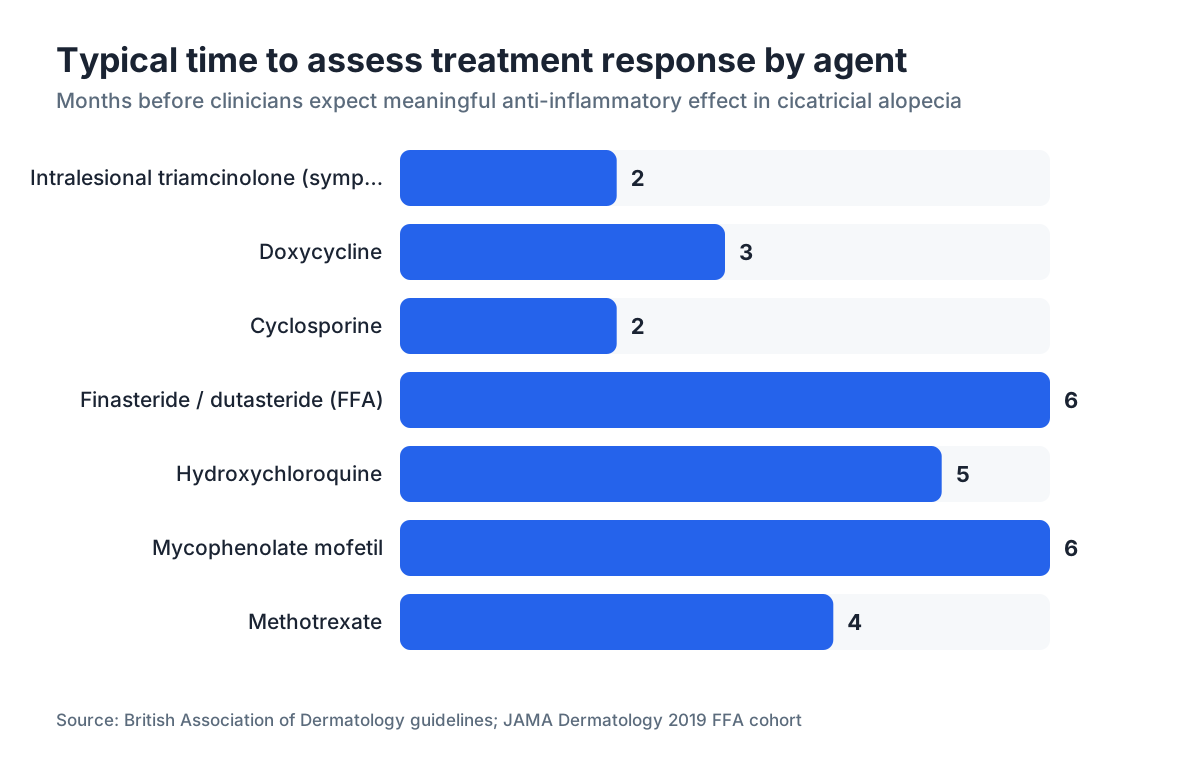
Mycophenolate mofetil (MMF) is one of the most commonly used second-line agents for refractory lymphocytic cicatricial alopecia. It inhibits lymphocyte proliferation. Doses typically range from 1 to 3 grams daily, and it takes three to six months to see meaningful response. It requires regular blood count and liver function monitoring because of myelosuppression risk [3].
Cyclosporine is another option for rapid disease control. It works faster than MMF (sometimes within weeks) but is not suitable for long-term use because of hypertension and nephrotoxicity risks. Dermatologists sometimes use it as a bridge to slower-acting agents [3].
Methotrexate, at 15 to 25 mg weekly, is used particularly for DLE-associated scarring alopecia. Monthly liver function tests and blood counts are standard monitoring, and patients need folic acid supplementation on non-methotrexate days to reduce side effects.
Doxycycline, a tetracycline antibiotic with anti-inflammatory properties, is useful in both LPP (as an anti-inflammatory, not an antibiotic) and in neutrophilic subtypes. At 100 mg twice daily it has a reasonable safety profile for months-long courses.
For folliculitis decalvans, the rifampicin 300 mg plus clindamycin 300 mg twice daily combination for ten weeks is supported by controlled data and remains a go-to regimen [6]. Resistance and relapse are common, and some patients need repeated courses.
Isotretinoin at doses around 0.5 to 1 mg/kg daily is the most effective treatment for dissecting cellulitis of the scalp. It often produces dramatic improvement. Monthly iPLEDGE compliance (the FDA's required risk management program for isotretinoin) applies regardless of sex [7].
Are biologic drugs an option for scarring alopecia?
Biologics are being studied, but the evidence is still thin and mostly comes from case series and small open-label trials rather than randomized controlled data.
JAK inhibitors have generated the most excitement. Ruxolitinib and tofacitinib, which block the JAK-STAT signaling pathway that drives T-cell mediated inflammation, have shown hair regrowth in alopecia areata (a non-scarring condition) in FDA-approved trials. For cicatricial alopecia, small case series in LPP and FFA show some stabilization, but the data are not strong enough yet for these to be standard of care [8]. The FDA has not approved any JAK inhibitor for cicatricial alopecia.
Secukinumab (an IL-17A inhibitor) and other biologics used in psoriasis have been reported in isolated cases of folliculitis decalvans with some benefit, which makes biological sense given the neutrophilic, IL-17-driven pathology. Again, randomized trial data are lacking [8].
PRP (platelet-rich plasma) is sometimes discussed. The honest answer is that evidence for PRP in scarring alopecia is minimal. It has a better evidence base in androgenetic alopecia, where the follicle is alive and you are trying to stimulate it. In cicatricial alopecia, injecting PRP into already-scarred skin will not recreate a follicle.
If you are considering any biologic or emerging therapy, ask your dermatologist whether there is an active clinical trial you could enroll in. ClinicalTrials.gov lists open studies, and enrollment in a well-designed trial is sometimes the best available option for refractory disease [9].
Can hair transplants treat cicatricial scarring alopecia?
Transplanting into scarred tissue is possible, but there are serious caveats.
The key requirement is confirmed disease quiescence for a minimum of one to two years before surgery. Transplanting into an area with ongoing active inflammation results in the transplanted follicles being destroyed by the same process that caused the original loss. This is not a hypothetical risk; it is a well-documented failure mode [10].
Even in quiescent disease, graft survival rates in scarred scalp tissue are lower than in standard androgenetic alopecia transplants because the vascularity of scar tissue is reduced. Surgeons use various techniques to improve graft take, including smaller graft units and intralesional steroid pretreatment of the recipient site.
FFA presents a particular challenge because the disease often continues slowly even when it appears stable clinically. Many experienced hair restoration surgeons decline to transplant FFA until the patient has documented stability with serial photographs over at least two years.
For CCCA, there is more published experience with transplantation. A 2022 review in the Journal of the American Academy of Dermatology noted acceptable outcomes when disease was well-controlled, though recurrence of disease post-transplant remains a risk that requires ongoing medical management [10].
The hair transplant overview covers general candidacy criteria, costs, and technique comparisons if you want to understand the baseline procedure before thinking about how scar tissue changes the picture.
What happens to hair follicles that have already been destroyed by scarring?
Nothing grows back from fully fibrosed follicles. This is the hard truth of cicatricial alopecia and the reason "treatment" in this context means disease control, not hair restoration.
The follicle unit, once replaced by dense collagen scar, has lost the stem cell population in the bulge region that would be needed to generate new hair. There is no currently approved drug or procedure that can regenerate this stem cell niche in humans.
Some early-stage research looks at follicle neogenesis and Wnt pathway activation, but these are preclinical findings, not something available in a clinic.
This is why the framing of success in cicatricial alopecia treatment is different from minoxidil for men or finasteride and minoxidil conversations. With androgenetic alopecia, success might mean regrowth of 20% of lost hair. With cicatricial alopecia, success is: no new bald patches in the last six months, inflammatory markers on dermoscopy are quieter, biopsy shows less active infiltrate.
Patients understandably find this reframing difficult. The bald area visible today is permanent. The treatment protects what is next in line. Managing expectations honestly, early, is part of the clinician's job.
How is central centrifugal cicatricial alopecia (CCCA) treated differently?
CCCA warrants its own section because it is the most common form of scarring alopecia in Black women, and the treatment conversation includes culturally relevant hair practice modifications alongside medical therapy [1].
Research has consistently found associations between CCCA and heat styling, chemical relaxers, and certain types of extensions and braids, though whether these practices cause the condition or exacerbate it in a genetically predisposed person remains debated [1]. The practical upshot: switching to low-tension, heat-free styles is recommended as part of any treatment plan, not as an alternative to medical therapy.
Medical treatment is topical and intralesional corticosteroids, usually starting with clobetasol propionate 0.05% solution or foam applied to the vertex twice daily. Intralesional triamcinolone is added for more active areas. Tetracyclines (doxycycline 100 mg twice daily) are sometimes added given the inflammatory profile.
A 2021 retrospective study in the Journal of the American Academy of Dermatology found that patients with CCCA who combined medical treatment with hair practice changes had better stabilization outcomes than those who pursued medical treatment alone [1].
Minoxidil is sometimes used in CCCA as a supportive agent for the follicles at the margin that have not yet been destroyed, though the evidence base is limited and it does not address the inflammatory process. Understanding the full side-effect profile is useful; the minoxidil side effects page covers this in detail.
How long does treatment for scarring alopecia take to show results?
Months. This is one of the hardest parts of managing cicatricial alopecia.
Intralesional steroid injections can reduce symptoms like burning and itching within a few weeks, and dermoscopy may show less perifollicular redness at the six to eight week mark. But proving that disease progression has actually stopped requires serial clinical photos or dermoscopy images over at least three to six months.
Hydroxychloroquine has a slow onset of four to six months before its anti-inflammatory effects are fully operational. Patients who stop it after two months because they see no change have not given it a fair trial.
MMF typically requires three to six months for a meaningful response. Cyclosporine is faster, sometimes showing results in four to eight weeks.
Dermatologists generally assess disease activity every three to four months with clinical examination and dermoscopy, and may repeat biopsy at six to twelve months if it is unclear whether inflammation is suppressed. The standard definition of remission in research protocols is usually twelve months with no clinical or dermoscopic progression [6].
Patience is not optional here. The patients who do best over the long term are the ones who commit to consistent monitoring appointments even when they feel nothing is changing, because subclinical progression can be detected and treated before it becomes visible.
How can you tell if treatment is working?
This is a question that confuses patients because the treated scalp still looks bald. The markers of response are not the ones people instinctively look for.
Signs that treatment is working include: symptom reduction (less burning, itching, tenderness), decreased perifollicular erythema and scale on dermoscopy, absence of new bald patch extension on serial photography at three-month intervals, and if repeat biopsy is done, reduced inflammatory infiltrate around follicles.
Signs that treatment is failing include: continued symptomatic burning or itching, expansion of the alopecia patch on serial photos, ongoing perifollicular erythema at the active margin on dermoscopy, or worsening infiltrate on repeat biopsy.
Patients tracking their own progress benefit from taking standardized scalp photographs themselves, at the same angle, lighting, and hair parting, every four to eight weeks. Some dermatology practices use in-office trichoscopy with stored images for longitudinal comparison.
If you want an objective starting point for tracking hair and scalp changes over time, the free AI scan at MyHairline can analyze scalp photographs and flag early pattern changes worth discussing with a dermatologist, though it is not a substitute for clinical evaluation and biopsy.
Once genuine remission is confirmed (typically twelve or more months of no progression), some dermatologists taper treatment. Others maintain lower-dose suppressive therapy indefinitely because relapse risk is real. The decision is individualized.
What lifestyle and supportive measures help alongside medical treatment?
Medical therapy is the foundation, but a few supportive measures are worth knowing.
Scalp care matters. Gentle, fragrance-free shampoos reduce mechanical and chemical irritation that may aggravate inflammation. For CCCA specifically, avoiding tight hairstyles, heat tools above 400°F, and sodium hydroxide relaxers is recommended based on the epidemiological associations noted earlier [1].
Sun protection is relevant for FFA, which is more common in postmenopausal women with higher UV exposure histories. Broad-spectrum SPF on the affected scalp and hairline, or hat use, is a simple adjunct.
Nutritional deficiencies, particularly iron deficiency, can worsen any hair loss condition and should be corrected. A ferritin level below 30 ng/mL is frequently cited in the hair loss literature as a threshold worth treating, though the evidence for this specific number is not ironclad. The hair loss supplements article covers which supplements have actual evidence behind them versus which are marketing.
Stress management is sometimes mentioned in patient guides. There is no strong mechanistic evidence that psychological stress triggers cicatricial alopecia flares the way it can trigger telogen effluvium. That said, reducing chronic systemic stress probably does not hurt any inflammatory condition.
Smoking cessation is worth noting. Smoking has associations with increased severity in DLE and possibly LPP. The biological mechanism involves microvascular effects and upregulation of pro-inflammatory cytokines. Patients who smoke should be counseled to quit as part of their overall care plan [3].
When should you see a specialist, and what kind?
See a board-certified dermatologist with experience in hair disorders (a trichologist or hair specialist) as soon as you suspect scarring alopecia. General practitioners can refer you, but the diagnosis and treatment of cicatricial alopecia really does require dermoscopy skills and biopsy interpretation that most GPs do not routinely perform.
If you are in an area without a hair specialist, look for a general dermatologist affiliated with an academic medical center. Academic centers are more likely to have dermatopathologists who can correctly interpret the biopsy and clinicians who see enough cases to distinguish LPP from FFA from DLE without guessing.
For DLE or when systemic lupus is on the differential, rheumatology involvement is appropriate alongside dermatology.
For neutrophilic subtypes with significant disease burden, some centers have multidisciplinary clinics combining dermatology and plastic surgery input for surgical planning once disease is quiescent.
The North American Hair Research Society (NAHRS) maintains a directory of hair disorder specialists [11]. The Cicatricial Alopecia Research Foundation (CARF) is the primary patient advocacy and research funding organization for this specific disease group and maintains a physician directory on its site [12].
If you are trying to understand the broader landscape of what causes hair loss before your first appointment, that overview will help you arrive with better questions.
Sources
- American Academy of Dermatology, Clinical guidelines on primary cicatricial alopecias
- Journal of the American Academy of Dermatology, Dermoscopy of primary cicatricial alopecias
- British Association of Dermatology, Guidelines for the safe and effective prescribing of hydroxychloroquine
- American Academy of Ophthalmology, Recommendations on Screening for Chloroquine and Hydroxychloroquine Retinopathy
- JAMA Dermatology, Frontal fibrosing alopecia: a multicenter review of 355 patients, 2019
- Journal of the European Academy of Dermatology and Venereology, Treatment of folliculitis decalvans with rifampicin and clindamycin
- U.S. Food and Drug Administration, iPLEDGE Program
- Journal of the American Academy of Dermatology, JAK inhibitors in cicatricial alopecia case series and review
- ClinicalTrials.gov, U.S. National Library of Medicine
- Journal of the American Academy of Dermatology, Hair transplantation in cicatricial alopecia review 2022
- Cicatricial Alopecia Research Foundation (CARF)