TL;DR: Dermatologists most often point to shampoos with ketoconazole 1-2%, zinc pyrithione, or selenium sulfide for hair loss support. None regrow hair on their own. What they do is calm the scalp inflammation and seborrheic dermatitis that speed up shedding. Ketoconazole 2% has the strongest evidence: one randomized trial found hair density gains comparable to 2% minoxidil in men with androgenetic alopecia.
Do shampoos actually help with hair loss, or is it mostly marketing?
Honest answer: shampoos are not hair loss treatments. They rinse off after two or three minutes, which means the active ingredient barely has time to reach the follicle, let alone reverse miniaturization from androgenetic alopecia. Anyone selling a shampoo as a "hair regrowth" product is overselling the evidence.
That said, shampoos can make a real difference in one specific way. Scalp inflammation, seborrheic dermatitis, and excess Malassezia yeast all speed up shedding and make the environment around the follicle hostile. Medicated shampoos that calm that inflammation can slow shedding and support the actual treatments like minoxidil for men or finasteride and minoxidil. Think of a good shampoo as clearing the field, not planting the crops.
Dermatologists recommend specific shampoo ingredients for specific problems. The wrong shampoo for your situation does nothing useful. Understanding why each ingredient matters is how you stop wasting money on fragrant bottles full of nothing.
Which shampoo ingredients do dermatologists actually recommend?
Four ingredients have real evidence behind them. Everything else is unproven, mildly helpful at best, or a marketing ingredient with no clinical trial backing.
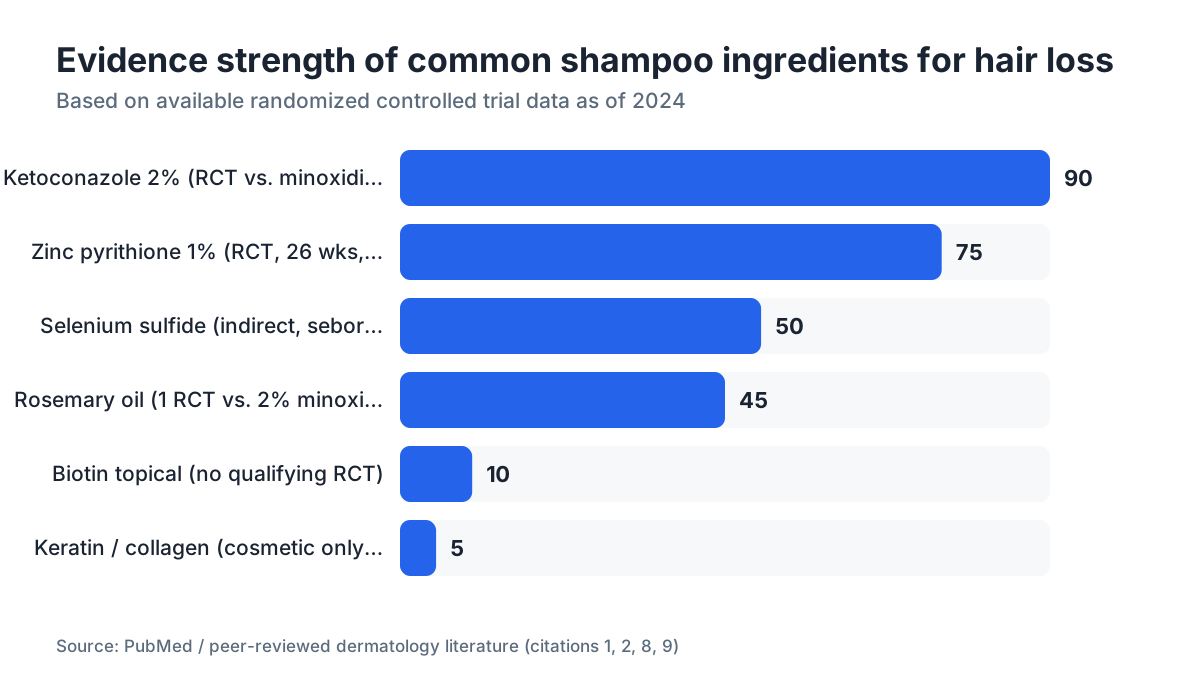
Ketoconazole (1% or 2%) is the most studied. It is an antifungal with mild anti-androgen properties, meaning it may block dihydrotestosterone (DHT) at the scalp level. A randomized controlled trial published in Dermatology in 1998 found that a 2% ketoconazole shampoo used every two to four days increased hair shaft diameter and density in men with androgenetic alopecia to a degree comparable to 2% minoxidil solution [1]. The 1% version (Nizoral A-D in the US) is available over the counter. The 2% version needs a prescription in the US.
Zinc pyrithione (ZPT) at 1-2% is the active ingredient in Head & Shoulders and many generic dandruff shampoos. It kills the Malassezia fungi and bacteria that inflame hair follicles. A 2003 study in the British Journal of Dermatology found that a 1% ZPT shampoo used daily for 26 weeks significantly reduced hair shedding compared to placebo [2]. Dermatologists reach for it as a low-cost option for people with dandruff and thinning at the same time.
Selenium sulfide (1% or 2.5%) works much like ZPT. The 1% version is over the counter (Selsun Blue). The 2.5% version needs a prescription. It controls Malassezia and reduces scalp flaking. It has less direct hair density data than ketoconazole, but it is a standard American Academy of Dermatology (AAD) recommendation for seborrheic dermatitis, which itself worsens shedding [3].
Zinc pyrithione combined with salicylic acid shows up in some formulations. Salicylic acid at 2-3% removes scale and lets other actives reach the scalp. It is a keratolytic, not a growth agent, but clearing buildup that clogs follicle openings is useful for some people.
| Ingredient | OTC strength | Rx strength | Primary mechanism | Hair evidence level |
|---|---|---|---|---|
| Ketoconazole | 1% | 2% | Antifungal + mild anti-androgen | Strongest (RCT data) |
| Zinc pyrithione | 1-2% | N/A | Antifungal / antibacterial | Good (RCT, 26 wks) |
| Selenium sulfide | 1% | 2.5% | Antifungal / cytostatic | Moderate (indirect) |
| Salicylic acid | 2-3% | 3-6% | Keratolytic / descaling | Supportive only |
| Caffeine | 0.2% | N/A | Unclear | Weak, early-stage data |
How does ketoconazole shampoo compare to minoxidil for hair loss?
The 1998 Piérard-Franchimont trial is the study that gets cited most often here [1]. It compared 2% ketoconazole shampoo, 2% minoxidil solution, and a non-medicated shampoo in men with mild to moderate androgenetic alopecia over six months. Both the ketoconazole and minoxidil groups saw significant increases in hair density and shaft diameter versus the control group, with no statistically significant difference between the two active treatments.
Before you cancel your minoxidil subscription over that, read carefully. This was a single small trial from 1998. Nobody has replicated it at scale with rigorous methodology. Minoxidil has decades of large trials, FDA approval for androgenetic alopecia, and consistent real-world evidence behind it [4]. Ketoconazole shampoo does not carry that volume of support. The defensible conclusion: ketoconazole is a useful adjunct to minoxidil, not a replacement.
Many dermatologists treating androgenetic alopecia recommend a ketoconazole shampoo two to three times per week alongside topical or oral minoxidil. The combination hits both the DHT-driven miniaturization and the scalp inflammation that speeds shedding. That is probably the most evidence-consistent approach you can build without a prescription.
What does the FDA say about shampoos and hair loss claims?
The FDA classifies hair loss products as drugs, not cosmetics, once they claim to affect hair regrowth. Minoxidil topical solution and foam are the only FDA-approved over-the-counter drugs for androgenetic alopecia [4]. No shampoo holds FDA approval for hair regrowth.
Ketoconazole 2% shampoo (brand name Nizoral) was originally FDA-approved as a prescription antifungal for seborrheic dermatitis and tinea versicolor, not for hair loss. The hair loss evidence, though real, is off-label use [11]. The 1% OTC version is approved only for dandruff.
This matters for two reasons. First, any shampoo making direct "regrows hair" claims without FDA approval is making an illegal drug claim under cosmetic labeling rules [12]. Second, when a brand markets a shampoo for "thinning hair" without claiming regrowth, it sits in cosmetic territory and the FDA does not require it to prove the product does anything at all. The market is full of products in that gap, charging premium prices for ingredients with no peer-reviewed evidence.
The AAD's own patient guidance on hair loss puts FDA-approved treatments (minoxidil, finasteride) first and frames medicated shampoos as supportive care, not primary treatment [3].
When should you see a dermatologist for hair loss instead of just buying a shampoo?
A shampoo is a reasonable first step if your main issue is dandruff-linked shedding, mild diffuse thinning, or you want to keep the scalp healthy while using a proven treatment. Stop there and see a dermatologist if any of these apply.
You are losing more than 100-150 hairs per day consistently. Some daily shedding is normal. Telogen effluvium (a stress-related mass shed) and androgenetic alopecia look different and need different management. A dermatologist can tell them apart with a pull test and sometimes a scalp biopsy.
Your hairline is actively receding. A receding hairline driven by androgenetic alopecia will not respond meaningfully to shampoo. You need finasteride, minoxidil, or both. Every month you spend experimenting with shampoos instead costs you follicles you cannot get back.
You have patches of hair loss, scalp pain, burning, or scarring. These point to alopecia areata, lichen planopilaris, or other conditions that need diagnosis and prescription treatment. Shampoos are the wrong tool entirely.
Dermatologists for hair loss usually perform a trichoscopy (dermoscopy of the scalp), review your history for medications and nutritional deficiencies, and may order bloodwork. That workup costs money, but it tells you what causes hair loss in your specific case, which is the only way to treat it correctly.
Are biotin and keratin shampoos worth buying?
No. Not if you have actual hair loss.
Biotin is a water-soluble B vitamin. Biotin deficiency can cause hair loss, but deficiency is rare in people eating a normal diet. Applying biotin topically in a shampoo has no plausible way of reaching the follicle in a meaningful concentration because it rinses off. There is no peer-reviewed trial showing a biotin shampoo improves hair density in people without a documented deficiency. The AAD has noted that biotin supplementation for hair loss is not supported by strong evidence in people who are not deficient [6].
Keratin in shampoos coats the hair shaft temporarily, which makes hair look thicker and shinier. That is a cosmetic benefit. It does nothing to the follicle and nothing about the causes of hair loss. Expensive keratin shampoos are a fine styling choice. Buying them as a hair loss treatment is a waste.
Same story for most "hair growth" shampoos built around saw palmetto extract, rosemary oil, pumpkin seed oil, or caffeine. A few of these ingredients have early-stage or small trial data showing modest effects, but the evidence falls well short of what dermatologists need to recommend them over proven options. If you want to read more about supplemental approaches, the hair loss supplements article covers what the evidence actually shows.
How do you use a medicated shampoo correctly for hair loss?
Most people use medicated shampoos wrong, which is why they see nothing. The active ingredient needs contact time with the scalp, not the hair shaft.
For ketoconazole or selenium sulfide shampoos: apply directly to a wet scalp, work into a lather, and leave it on for three to five minutes before rinsing. The instructions on most OTC bottles say this outright. Lather and rinse like a regular shampoo and you wash away most of the benefit.
Frequency matters too. For hair loss support, two to three times per week is the common schedule for ketoconazole. Daily use dries the scalp and causes irritation. Zinc pyrithione shampoos are gentler and some formulations are built for daily use, but for hair loss specifically, every other day or three times a week is a reasonable target.
Do not expect shampoo-driven changes in hair density before three to six months of consistent use. Hair cycles are slow. If you are also using minoxidil, be patient and understand the shampoo is probably slowing the shed rate rather than producing visible regrowth you can photograph.
If you want an objective read on your current density before starting a new regimen, the free AI hair analysis at MyHairline gives you a scalp image baseline, which makes it easier to track real changes over time.
What is the best shampoo for androgenetic alopecia specifically?
For androgenetic alopecia (male pattern baldness or female pattern hair loss), ketoconazole 1-2% is the shampoo with the most direct clinical evidence and the one most dermatologists point to [1]. Nizoral 1% (ketoconazole) sells at most US pharmacies for around $15-20 for an 8 oz bottle. The prescription 2% version costs more and varies by insurance coverage.
A practical approach many dermatologists suggest: use ketoconazole shampoo two to three times per week as the scalp-focused piece of a regimen that also includes topical minoxidil and, for men, finasteride if appropriate. Shampoo alone will not hold your hairline. But shampoo plus a proven medical treatment beats medical treatment alone on an inflamed, Malassezia-heavy scalp.
For women with androgenetic alopecia, the picture is the same. Ketoconazole and zinc pyrithione shampoos are safe for women. Finasteride is generally not recommended for premenopausal women who may become pregnant, but minoxidil is FDA-approved for women at 2% [4]. The shampoo supports the treatment. It does not replace it.
If you are worried about pattern hair loss and have not yet mapped your Norwood stage or the extent of your thinning, that context changes which treatments are worth pursuing. A hair transplant is a different conversation than early-stage minoxidil use, and the dermatologist visit that stages you accurately is worth more than any shampoo.
Can shampoo cause or worsen hair loss?
Yes, in a few scenarios.
Sulfate-heavy shampoos (sodium lauryl sulfate or sodium laureth sulfate) can strip the scalp's natural oils, cause dryness and irritation, and make conditions like seborrheic dermatitis worse. They do not directly damage follicles, but a chronically irritated scalp is not a healthy growing environment. Dermatologists often recommend low-sulfate or sulfate-free shampoos for people with sensitive or dry scalps alongside any medicated product.
Shampoos with silicones, heavy conditioning agents, and certain preservatives can build up on the scalp and clog follicular openings. This is less about chemical toxicity and more about physical obstruction. If your scalp feels perpetually coated or itchy despite regular washing, switching to a lighter formulation and adding a salicylic acid shampoo once a week to clear buildup is reasonable.
Fragrances and certain preservatives (methylisothiazolinone is a common allergen) can cause contact dermatitis on the scalp, which triggers a shedding episode. If your shedding started after a shampoo switch and your scalp is itchy or red, allergic contact dermatitis is the first thing a dermatologist will rule out. Patch testing can find the culprit.
How much does a dermatologist visit for hair loss cost?
A first dermatology appointment for hair loss in the US typically costs between $150 and $400 out of pocket without insurance [7]. With insurance, copays run $20 to $75 depending on your plan and whether dermatology sits in a specialist tier. Trichoscopy is usually done in-office during the same visit at no extra charge.
If biopsies or extensive bloodwork are ordered, costs climb. A scalp biopsy runs $200 to $600 out of pocket. A full hair loss panel (ferritin, thyroid, androgens, CBC) through a lab costs $100 to $300 without insurance, sometimes covered when medically indicated.
For comparison, prescription ketoconazole 2% shampoo runs $30 to $80 for a standard bottle without insurance. Generic finasteride runs about $20 to $40 per month. Topical minoxidil is $20 to $35 per month. The dermatologist visit is a one-time cost that can save you years of spending on the wrong products.
If hair loss has progressed to the point where you are weighing surgery, hair transplant expenses are a different order of magnitude, typically $4,000 to $15,000 in the US depending on the number of grafts. That makes the $200 dermatologist visit look cheap in hindsight.
What do dermatologists say about rosemary oil and natural shampoo alternatives?
Rosemary oil got a lot of attention after a 2015 randomized trial published in SKINmed compared rosemary oil to 2% minoxidil in men with androgenetic alopecia over six months and found no significant difference in hair count between groups [8]. That is genuinely interesting. It is also one small single trial, and it compared against 2% minoxidil, which is weaker than the 5% formulation most men use today.
Dermatologists tend to stay cautiously open to rosemary oil as an add-on, not a replacement. It is low risk, reasonably cheap, and the one trial that exists is encouraging even if it is not definitive. Applying a diluted rosemary oil (roughly 2-3 drops per teaspoon of carrier oil) to the scalp before washing is the delivery method from that trial, not a rosemary-scented shampoo where concentration is unknown and contact time is minimal.
Pumpkin seed oil (400 mg oral supplementation) showed a 40% increase in hair count versus 10% in placebo in a 24-week trial of men with androgenetic alopecia published in Evidence-Based Complementary and Alternative Medicine in 2014 [9]. That is an oral supplement, not a shampoo, which is the whole point. Topical pumpkin seed in a shampoo has no equivalent evidence.
The honest position: natural ingredients in shampoos are mostly unproven for hair regrowth at the concentrations and contact times you get from shampooing. A few have early-stage trial data worth watching. None have the evidence base to be a first-line recommendation from a dermatologist treating real hair loss.
What questions should you ask a dermatologist about hair loss at your appointment?
Walking into a dermatology visit without a question list is a common mistake. Appointments are short, dermatologists are busy, and you will forget half of what you meant to ask.
Ask: What type of hair loss do I have and what is driving it? This is the most important question. Androgenetic alopecia, telogen effluvium, and alopecia areata have different treatments. You cannot make a good decision without knowing which you have.
Ask: Are there nutritional deficiencies contributing to my shedding? Ferritin (stored iron) below 40-70 ng/mL is associated with increased telogen hair loss in some studies, though the exact threshold is debated [10]. Thyroid dysfunction, low vitamin D, and zinc deficiency are also worth ruling out.
Ask: Should I be on finasteride or minoxidil, and which formulation? Many primary care doctors are comfortable prescribing these, but dermatologists can also design combination approaches and monitor side effects. The minoxidil side effects article covers what to watch for.
Ask: Which shampoo do you recommend for my specific scalp type and diagnosis? The answer changes depending on whether you have seborrheic dermatitis, a dry scalp, or no scalp condition at all alongside your hair loss.
Ask: How will we measure progress? Trichoscopy photos at baseline and at six months give you objective data. Without a baseline measurement, you cannot know if anything is working.
At MyHairline, the free AI hair analysis gives you a starting point before your appointment, so you walk in with a visual record of your current hair density instead of a vague sense that things look thinner than they used to.
Sources
- Dermatology (Karger), Piérard-Franchimont et al. 1998 - ketoconazole vs minoxidil RCT
- British Journal of Dermatology, Berger et al. 2003 - zinc pyrithione RCT
- American Academy of Dermatology - Hair loss types and treatments
- US Food and Drug Administration - Drug information
- American Academy of Dermatology - Hair loss diagnosis and treatment
- Healthcare Bluebook - Dermatologist visit cost benchmarks
- SKINmed, Panahi et al. 2015 - rosemary oil vs minoxidil RCT
- Evidence-Based Complementary and Alternative Medicine, Cho et al. 2014 - pumpkin seed oil trial
- Journal of the American Academy of Dermatology - ferritin and hair loss review
- National Institutes of Health MedlinePlus - Ketoconazole topical
- Electronic Code of Federal Regulations, Title 21 Part 701 - Cosmetic labeling