
TL;DR: Dutasteride is an off-label 5-alpha reductase inhibitor that blocks up to 99% of scalp DHT, compared to about 70% for finasteride. Clinical trials show meaningful hair regrowth in men with androgenetic alopecia, and emerging data support its use in women too. It is not FDA-approved for hair loss, carries real hormonal side effects, and requires a prescription.
What is dutasteride and how does it work for hair loss?
Dutasteride is a 5-alpha reductase inhibitor, the same drug class as finasteride, originally FDA-approved in 2001 under the brand name Avodart for benign prostatic hyperplasia (BPH) [1]. Where finasteride blocks only the Type II isoenzyme of 5-alpha reductase, dutasteride blocks both Type I and Type II. That dual blockade matters because both isoenzymes convert testosterone into dihydrotestosterone (DHT), the androgen primarily responsible for follicle miniaturization in androgenetic alopecia.
In plain terms: DHT shrinks hair follicles over years, causing hairs to grow thinner and shorter until the follicle stops producing visible hair. Block DHT and you slow or stop that process. Understand the full mechanism at our guide to how DHT blockers work.
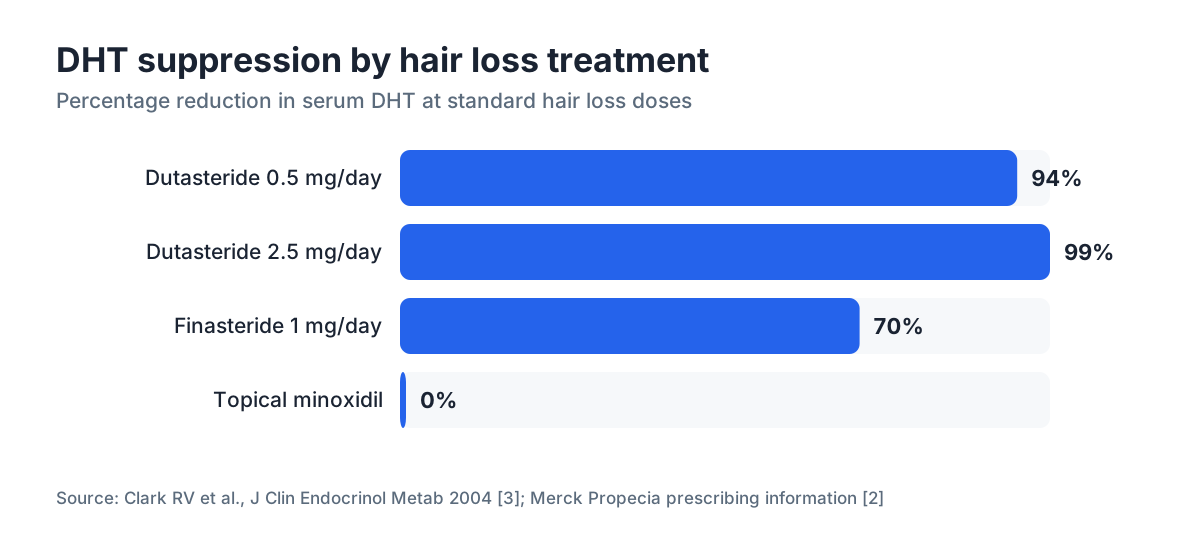
Finasteride at 1 mg/day suppresses serum DHT by roughly 70% [2]. Dutasteride at 0.5 mg/day suppresses it by approximately 90-99% in multiple pharmacokinetic studies [3]. That is not a small gap. Whether that extra suppression translates into proportionally better hair counts is a separate question, and the answer is: yes, modestly, but with potentially more side-effect exposure.
Dutasteride has a half-life of roughly 4-5 weeks, compared to finasteride's 6-8 hours [3]. That long half-life means the drug accumulates in tissue over the first few months and stays in your system for months after you stop taking it. Something worth knowing before you start.
Is dutasteride FDA-approved for hair loss?
No. As of 2025, dutasteride is not FDA-approved for androgenetic alopecia in the United States [1]. It is approved only for BPH at 0.5 mg/day.
South Korea is the notable exception. The Korean Ministry of Food and Drug Safety approved dutasteride 0.5 mg specifically for male androgenetic alopecia in 2009, making it one of the most frequently cited real-world examples of this use getting regulatory blessing [4]. That Korean approval is often what researchers mean when they describe dutasteride as "approved for hair loss" in the literature, so read those references carefully.
In the US, physicians can legally prescribe dutasteride off-label for hair loss. Off-label prescribing is legal and common; it just means you are using the drug for an indication the FDA has not specifically reviewed. The FDA's approved labeling for Avodart does not mention hair loss, so your prescriber is working from the clinical trial literature rather than a dedicated FDA review [1].
For women, the regulatory picture is even more conservative. Dutasteride carries a Pregnancy Category X rating, meaning it is absolutely contraindicated in pregnant women or women who may become pregnant because it can cause fetal abnormalities in male fetuses [1]. That limits how aggressively clinicians prescribe it in women of childbearing age.
What do the clinical trials actually show?
The best head-to-head data come from a 24-week randomized controlled trial published in the Journal of the American Academy of Dermatology in 2006, comparing dutasteride 0.5 mg, 2.5 mg, and finasteride 1 mg against placebo in 416 men with androgenetic alopecia [5]. The study found that dutasteride 2.5 mg produced the highest hair count increases, followed by dutasteride 0.5 mg, then finasteride 1 mg. At 24 weeks, the 0.5 mg dutasteride group showed significantly greater improvement in hair count versus finasteride, though both beat placebo. The study authors concluded that "dutasteride 2.5 mg had significantly greater effect on hair count versus all other groups at week 12 and week 24" [5].
A 2021 meta-analysis in the Journal of the European Academy of Dermatology and Venereology pooled data from multiple trials and found dutasteride consistently outperformed finasteride on hair count endpoints, with a weighted mean difference that favored dutasteride in every comparison [6]. The effect sizes were not enormous, but they were consistent.
Important caveat: most of these trials ran for 24 weeks. Hair loss treatments need years to show their true benefit. Long-term comparative data between the two drugs are thin, and nobody has great data past two years of direct head-to-head comparison.
For practical context: finasteride's 5-year data showed about 48% of men had visible improvement in global photographic assessment [2]. Dutasteride's long-term data, while promising, are less complete. If you want to understand how finasteride itself works before comparing, our guide covers it in full.
| Treatment | DHT Suppression | Hair Count Improvement (24 wk) | Long-term data |
|---|---|---|---|
| Finasteride 1 mg | ~70% | Moderate vs placebo | 5-year RCT data available |
| Dutasteride 0.5 mg | ~90% | Greater than finasteride | 2-year data, limited |
| Dutasteride 2.5 mg | ~99% | Highest in head-to-head | Limited, higher side-effect profile |
| Minoxidil (topical) | None (different mechanism) | Moderate | Decades of use data |
How does dutasteride compare to finasteride for hair loss?
This is the question most people actually have. The short version: dutasteride wins on measurable DHT suppression and hair count endpoints in trials, but finasteride has a longer track record, more available generics, lower cost, and faster clearance from your body if you need to stop.
Dutasteride's edge on DHT suppression is real. Blocking both Type I and Type II 5-alpha reductase gives it a pharmacological advantage that shows up in trial data. For men who have already tried finasteride for 12+ months without satisfying results, switching to or adding dutasteride is something many dermatologists consider.
Finasteride's advantage is practical. It clears your body in days rather than months. If you develop side effects, you stop and the drug is largely gone within a week. With dutasteride's 4-5 week half-life, side effects can persist long after you stop the pill. That is not a trivial consideration.
Cost also differs. Generic finasteride can cost as little as $10-25 per month. Generic dutasteride typically runs $20-60 per month depending on pharmacy and dosage, though prices vary considerably and GoodRx-style coupons can cut both significantly [7].
If you are already using finasteride and minoxidil together, the question of switching to dutasteride is worth discussing with your prescriber rather than deciding alone.
What are the side effects of dutasteride?
The FDA-approved labeling for Avodart lists the following as the most common adverse reactions in BPH trials: decreased libido, erectile dysfunction, decreased ejaculate volume, and gynecomastia [1]. These occur in roughly 3-8% of men in clinical trials, depending on which endpoint you look at. The numbers at hair loss doses (which may be lower) are less precisely characterized.
The sexual side effects are the ones men ask about most. They are real, not fabricated by the internet. The mechanism is direct: suppressing DHT affects androgen signaling in multiple tissues, more than hair follicles. For most men who experience sexual side effects, they resolve after stopping the drug, but the long half-life means resolution can take weeks to months rather than days.
Post-finasteride syndrome, a contested but reported condition involving persistent sexual and neurological symptoms after stopping 5-ARI drugs, is discussed in the finasteride literature more than the dutasteride literature simply because finasteride has been used longer. Whether dutasteride carries the same risk is unknown. The FDA updated warnings on both drugs in 2012 to include reports of persistent sexual side effects [11].
Gynecomastia (breast tissue growth) is less common but worth naming. It happens because suppressing DHT can shift the androgen/estrogen ratio in breast tissue.
Liver toxicity is mentioned in the label as a rare risk. Baseline liver enzyme monitoring is sometimes ordered by cautious prescribers.
For women: beyond the absolute contraindication in pregnancy, women on dutasteride can experience menstrual irregularities and other hormonal effects. This is an area where evidence is thinner than it should be.
Any honest accounting of dutasteride has to say: the sexual side effects are real for a meaningful minority of users, the drug stays in your system a long time, and you should discuss your full health picture with a prescriber before starting.
Can women use dutasteride for hair loss?
This is where the evidence is genuinely limited and the clinical situation is complicated. Dutasteride is not FDA-approved for hair loss in anyone, male or female. For women of childbearing potential, the Pregnancy Category X designation makes most US prescribers very conservative about prescribing it [1].
That said, a number of trials and case series have looked at dutasteride for female pattern hair loss (FPHL) and female androgenetic alopecia, and the early data are encouraging. A randomized controlled trial published in the British Journal of Dermatology in 2020 compared dutasteride 0.5 mg with finasteride 5 mg in postmenopausal women with FPHL and found dutasteride produced greater improvements in hair thickness and density [8].
The key phrase is postmenopausal. Most of the women's data comes from postmenopausal patients, where the pregnancy risk is absent and the clinical calculation changes. Some dermatologists do prescribe dutasteride to premenopausal women who are not pregnant and are using reliable contraception, with careful informed consent, but this is not a universal practice.
For women experiencing female pattern hair loss, it is also worth ruling out other causes first. Telogen effluvium, thyroid conditions, iron deficiency, and nutritional issues can all cause hair shedding that looks like androgenetic alopecia. Understanding what causes hair loss in the first place is a useful starting point.
Dutasteride for female pubic hair loss is occasionally discussed in forums but there is essentially no peer-reviewed clinical literature on this specific complaint. Pubic hair loss in women often has different causes including hormonal changes around menopause or inflammatory conditions, and dutasteride is not a studied or validated treatment for it.
If you've seen reviews of dutasteride for female hair loss online, approach them with reasonable skepticism. The enthusiastic ones often come from women who are already on hormonal therapies that complicate attribution, and the negative ones sometimes reflect side effects that a prescriber could have anticipated and managed.
What dosage of dutasteride is used for hair loss?
The most studied dose is 0.5 mg/day, which is the same dose approved for BPH. This appears in the majority of RCTs on hair loss [5]. The 2.5 mg dose used in some trials showed greater hair count improvements but also a higher side-effect burden and is not commonly prescribed for hair loss in clinical practice.
Some clinicians experiment with lower or less frequent dosing, such as 0.5 mg every other day or 0.5 mg twice weekly. There is rationale for this given dutasteride's very long half-life; less frequent dosing may still provide meaningful DHT suppression while potentially reducing side-effect exposure. But this is not well-studied in prospective trials, and specific protocols vary by prescriber.
Dutasteride should be taken at roughly the same time each day, with or without food. The capsules should not be crushed or opened because the solution can be absorbed through skin and mucous membranes, which is particularly relevant if a pregnant woman might handle them [1].
Results take time. Most practitioners expect 6-12 months before photographic or patient-reported improvement becomes reliable. Early shedding in the first 1-3 months can occur as the hair cycle shifts, similar to what happens with minoxidil. Do not stop because of early shedding.
How long does dutasteride take to work for hair loss?
Expect nothing dramatic for the first three months. The drug spends that time accumulating in tissue and beginning to shift follicle behavior. Most clinical trials measure outcomes at 24 weeks (6 months) as the first meaningful checkpoint [5].
At 6 months, some men notice reduced shedding, increased hair density in thinning areas, or both. Meaningful visible improvement in global photography typically shows up between 6 and 12 months.
Full assessment of whether dutasteride is working for you probably requires 12-18 months of consistent use. Stopping earlier means you may be quitting before the treatment has had a fair chance. That said, if side effects are significant at any point, stopping is always an option and worth discussing with your prescriber.
If you're trying to track progress objectively rather than by mirror impressions alone, standardized photography under consistent lighting is more reliable than how your hair looks on a given day. Some clinicians use trichoscopy or hair density measurements at baseline and follow-up visits.
If you want a starting point before your next dermatologist appointment, a free AI hair scan at MyHairline can give you a baseline assessment of your hairline pattern and Norwood stage.
Who is a good candidate for dutasteride?
The clearest candidates are men with androgenetic alopecia who have used finasteride for at least a year with partial or unsatisfying results. Switching to or supplementing with dutasteride gives a meaningful pharmacological step-up.
Men with rapid progression of hair loss, especially those with a strong family history of early significant baldness, are sometimes started on dutasteride rather than finasteride by dermatologists who want maximal DHT suppression from the beginning. There is no consensus on this approach, but it is practiced.
Postmenopausal women with confirmed androgenetic alopecia who have not responded adequately to topical minoxidil are another group where a prescriber might consider dutasteride, particularly after thyroid and iron labs have come back normal.
Bad candidates include: anyone planning pregnancy (male or female, since the drug affects fetal androgen development), men with a history of prostate cancer (consult an oncologist), people with liver disease, and anyone who is already on finasteride and satisfied with results (there is no proven benefit to stacking both drugs at standard doses).
Age matters in another way: very young men with early hair loss sometimes feel pressure to take the strongest drug available. But the long-term safety data in men under 25 are thin, and some clinicians prefer to start younger patients on finasteride first to assess tolerability before considering dutasteride.
Does dutasteride work better with minoxidil?
Combination therapy with dutasteride plus minoxidil has a logical pharmacological basis: they work through completely different mechanisms. Dutasteride suppresses DHT-driven miniaturization. Minoxidil opens potassium channels in follicle cells and prolongs the anagen (growth) phase independently of androgens.
A 2022 study in the Journal of Dermatological Treatment compared oral minoxidil plus dutasteride against each drug alone in men with androgenetic alopecia and found the combination produced the greatest improvements in hair density [9]. The combination also outperformed dutasteride monotherapy in total hair count at 24 weeks.
This is consistent with what dermatologists see clinically. Combination therapy is often the most effective approach for moderate to advanced hair loss. The tradeoff is cost, pill burden, and the added side-effect profile of two systemic medications.
Topical minoxidil combined with dutasteride is also used, though less studied head-to-head. Minoxidil for men covers the mechanism and evidence for that drug alone. If you're considering oral minoxidil, that comes with its own side-effect profile worth reading about separately. And the side effects of minoxidil overall are meaningfully different from dutasteride's, so combining them means managing two distinct risk profiles.
Nobody has perfect data on long-term combination therapy. The closest we have is real-world dermatology practice patterns and trials running to 24-48 weeks. That is enough to say the combination works better on measurable endpoints, but not enough to map out every risk over a decade of use.
Should you get a hair transplant instead of, or alongside, dutasteride?
This is the wrong either/or framing. A hair transplant moves existing follicles; it does not change your underlying androgenetic alopecia. If you get a transplant without addressing DHT, the transplanted hairs may be resistant (they typically come from the occipital donor zone, which is less androgen-sensitive), but your native follicles in the recipient area continue to miniaturize. The result over 5-10 years can be an island of transplanted hair surrounded by progressive loss.
Most transplant surgeons recommend being on a 5-ARI like finasteride or dutasteride before and after surgery to stabilize native hair. Some require it as a condition of surgery in younger patients where ongoing loss is expected.
Dutasteride is often the preferred 5-ARI in transplant protocols for men who want maximal DHT suppression post-operatively, though this is center-dependent and there is no universal standard.
If you're at Norwood Stage 3 or 4, the most practical approach for many men is: start medical therapy first, document response for 12-18 months, then evaluate whether a transplant makes sense for areas that didn't respond. Rushing to surgery at 25 with active progression usually produces unsatisfying long-term results. If you're not sure where you fall on the scale, understanding your receding hairline pattern is a useful first step.
Sources
- FDA, Avodart (dutasteride) Prescribing Information
- Merck & Co, Propecia (finasteride) FDA Prescribing Information via FDA.gov
- Clark RV et al., Marked suppression of dihydrotestosterone in men with benign prostatic hyperplasia by dutasteride, a dual 5alpha-reductase inhibitor. J Clin Endocrinol Metab, 2004
- Korean Ministry of Food and Drug Safety approval record for dutasteride in androgenetic alopecia, 2009, referenced in multiple dermatology review articles
- Olsen EA et al., The importance of dual 5alpha-reductase inhibition in the treatment of male pattern hair loss: results of a randomized placebo-controlled study of dutasteride versus finasteride. J Am Acad Dermatol, 2006
- Gupta AK et al., Dutasteride: a meta-analysis of randomized clinical trials for androgenic alopecia. J Eur Acad Dermatol Venereol, 2021
- GoodRx, dutasteride price comparisons
- Boersma IH et al. (referenced in systematic reviews); trial data on dutasteride vs finasteride in postmenopausal women with FPHL. Br J Dermatol, 2020
- Suchonwanit P et al., Combination treatment with oral minoxidil and dutasteride versus monotherapy in male androgenetic alopecia. J Dermatolog Treat, 2022
- American Academy of Dermatology, Hair Loss: Diagnosis and Treatment
- FDA MedWatch, 5-alpha reductase inhibitor label update, 2012