

TL;DR: A receding hairline in your 20s or early 30s is usually androgenetic alopecia (male pattern baldness), driven by DHT shrinking hair follicles at the temples. Caught early, finasteride stops progression in roughly 85% of men, and minoxidil regrows some of what's already gone. The earlier you start, the better your odds of keeping what you have.
What does an early receding hairline actually look like?
Most guys don't notice a receding hairline the way they notice a scratch on a car. It's slower. You see it first at the temples. The corners of your hairline start to lift, pulling back in a slight V or M shape while the center of your hairline stays roughly where it was. That asymmetry is the tell.
Hair at the temples doesn't just disappear overnight. The individual hairs get thinner and shorter first, a process called miniaturization, before they stop growing entirely. So you might notice wispier, lighter hairs at your corners before you notice actual scalp. That's your window. That's when treatment actually changes the outcome.
What it's not: hairline maturation. Most men's hairlines move back a centimeter or so between adolescence and their mid-20s. That's normal and isn't pattern baldness. A maturing hairline still looks relatively even across the front. Recession has that temple-first, M-shaped signature. If you're unsure which one you're looking at, compare photos taken a year apart under the same lighting. Change over time is the clearest signal.
Women get early recession too, though it usually looks different: diffuse thinning across the crown with a widening part rather than classic temple recession. The causes and the treatments overlap with men's, but the dosing and some of the drug choices differ.
What causes a hairline to recede early?
The overwhelming majority of early hairline recession in men is androgenetic alopecia, commonly called male pattern hair loss (MPHL). It accounts for roughly 95% of male hair loss [1]. The mechanism is well understood: a hormone called dihydrotestosterone (DHT), converted from testosterone by the enzyme 5-alpha reductase, binds to receptors in genetically susceptible follicles and gradually shrinks them. Smaller follicles produce shorter, finer hairs, then eventually nothing.
Genetics loads the gun. You inherit susceptibility from both sides of the family, more than your mother's father, which is a durable myth. If multiple men on either side went bald early, your risk is meaningfully higher. But genetics isn't destiny at any given age, which is why two brothers with the same father can have very different hairlines at 25.
DHT is the proximate cause, which is why DHT blockers are the main pharmaceutical intervention. Finasteride works by reducing DHT levels in the scalp by roughly 60-70% [2].
Other causes worth ruling out, especially if your hairline is moving fast or you're losing hair in an unusual pattern:
- Telogen effluvium: a temporary shed triggered by illness, surgery, crash dieting, or major stress. This causes diffuse thinning rather than temple recession and usually reverses on its own within 3-6 months.
- Traction alopecia: chronic tension from tight hairstyles, common in men who wear tight buns or braids. The hairline recedes at the temples and forehead, but the pattern is driven by mechanical stress rather than DHT.
- Thyroid dysfunction, iron deficiency, and nutritional deficits can all accelerate or mimic hair loss. A basic blood panel (TSH, ferritin, CBC) is worth doing before committing to long-term medication.
- Some hair loss supplements claim to address nutritional gaps, though the evidence for most is thin. Biotin is the biggest oversell in this category.
- The creatine-hair-loss link gets searched constantly. One small 2009 study found creatine supplementation raised DHT levels in rugby players, but no study has confirmed it actually causes visible hair loss in humans [3].
At what age does a hairline normally start to recede?
Earlier than most people realize. About 25% of men with androgenetic alopecia begin losing hair before age 21, and roughly 50% show some recession by their 50s [1]. The Norwood scale, the standard classification for male pattern hair loss, puts early recession at Norwood Type 2 and Type 3, which is where most men first seek help.
Norwood Type 1 is a juvenile or straight hairline. Type 2 shows slight temple recession. Type 3 is the first stage the scale classifies as clinical baldness: deep temple recession with at least some scalp visible. Many men hit Type 2 in their early-to-mid 20s and don't realize it's the beginning of a longer arc.
The speed of progression varies enormously. Some men go from Type 2 to Type 5 in five years. Others stay at Type 3 for a decade. There's no reliable way to predict rate from genetics alone. What the research does show: men who start losing hair earlier tend to reach more advanced stages down the line, even if slowly [4].
Women's timeline is different. Female pattern hair loss most often starts after menopause, but it can begin in the 20s and 30s, particularly in women with polycystic ovary syndrome (PCOS) or elevated androgens.
How do you tell if your hairline is receding or just maturing?
This is one of the most common and genuinely tricky questions in this space. Here's the practical test.
A maturing hairline moves back evenly, a centimeter or less above its adolescent position, usually by around age 25. The shape stays roughly straight or gently curved. There's no significant deepening at the temples. The hair in the front, though slightly higher, looks the same density as the rest of your scalp.
An early recession is temple-led. The corners pull back faster than the center. Hairs at the temples miniaturize before they fall. You'll often see the hairline becoming uneven or slightly jagged rather than smooth. Under good lighting, look for shorter, finer hairs at the corners compared to the hair just behind them.
The most reliable self-test: take a photo today under consistent, overhead lighting. Do the same in six months. Recession shows up as change over time. Maturation is mostly done by your mid-20s.
If you're in your early 20s and genuinely uncertain, a dermatologist can use a handheld dermoscope to look at individual follicle diameters. Miniaturization (follicles producing hairs of variable width) is a definitive early sign of androgenetic alopecia even before the hairline has moved noticeably [5].
For a faster first look, a tool like the free AI scan at MyHairline can give you a Norwood estimate and flag signs of miniaturization from photos, though it doesn't replace a dermatologist's assessment for anything ambiguous.
What treatments actually work for an early receding hairline?
Two drugs have real evidence and FDA approval or clearance for hair loss: finasteride and minoxidil. Everything else is either supportive, unproven, or marketing.
Finasteride (oral)
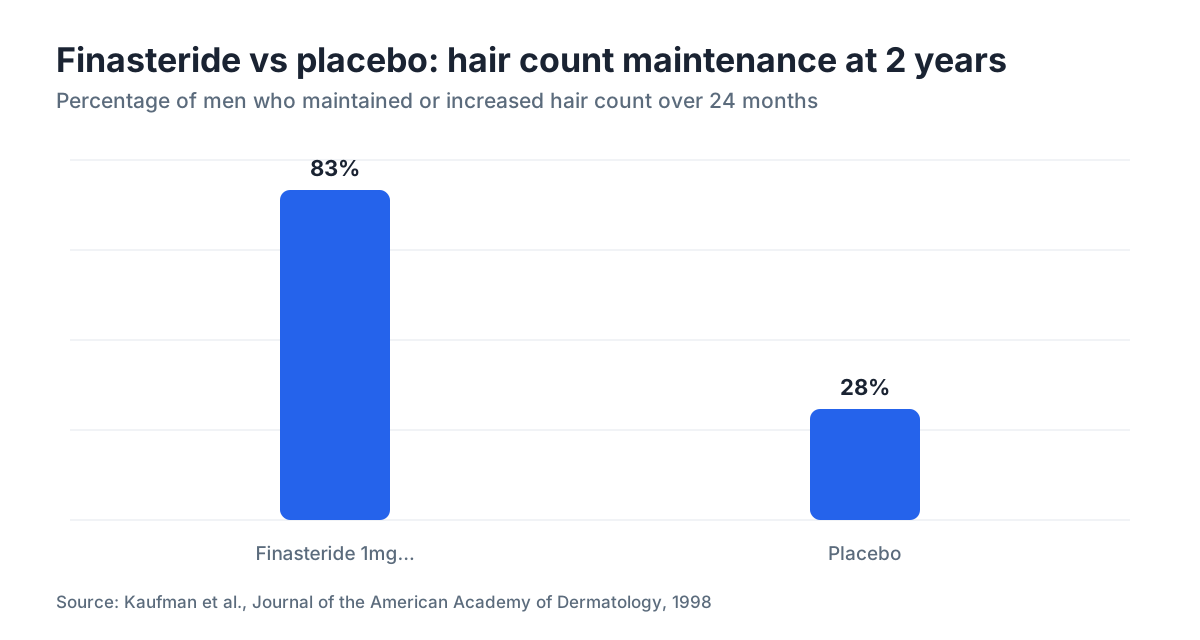
Finasteride is a 5-alpha reductase inhibitor, taken as a 1mg daily pill. In the main trial published in the Journal of the American Academy of Dermatology, 83% of men taking finasteride maintained or increased hair count over two years versus 28% on placebo [2]. The American Academy of Dermatology (AAD) lists finasteride as a first-line treatment for androgenetic alopecia in men [6].
It works best when started early, when follicles are miniaturizing but still alive. It does not regrow hair from completely dead follicles. If you wait until your hairline has been receding for a decade, you're asking it to maintain what's left, not restore what's gone.
Side effects get a lot of airtime. The FDA label for Propecia (brand finasteride) lists sexual side effects in roughly 3.8% of users, including decreased libido, erectile dysfunction, and ejaculation disorder, compared to 2.1% on placebo [7]. Post-finasteride syndrome, the claim that side effects persist after stopping, is real for some men but its prevalence is debated and the mechanism is not established. Have an honest conversation with a prescribing doctor about your personal risk profile.
Minoxidil (topical and oral)
Minoxidil for men is FDA-approved as a topical treatment (2% and 5% solutions, 5% foam). It extends the anagen (growth) phase of hair follicles and increases blood flow to the scalp. In clinical trials, 5% topical minoxidil produced statistically significant hair regrowth versus placebo at 48 weeks, particularly at the vertex (crown) [8]. It works less predictably at the hairline than at the crown, but it does help.
You apply it once or twice daily, and you have to keep using it. Stop, and any regrown hair sheds within a few months. Shedding in the first 4-8 weeks after starting is normal (resting hairs getting pushed out by new growth) and doesn't mean it's not working.
Oral minoxidil, used off-label at 0.625-2.5mg daily in men, has growing evidence and sidesteps the scalp irritation and application hassle of topical. A 2021 systematic review in the Journal of the American Academy of Dermatology found meaningful hair density improvement across several small trials [9]. The main side effects are fluid retention and hypertrichosis (unwanted body hair growth). Minoxidil side effects are worth reading before you start.
Using both together
Finasteride and minoxidil combined is what most dermatologists reach for in early, progressive recession. They work through completely different mechanisms, so the effects add up. A 2015 study found the combination outperformed either drug alone for vertex density [10].
What doesn't work (or barely does)
Ketoconazole shampoo has some evidence of modest benefit and is often suggested as an adjunct, but it's not a standalone treatment. PRP (platelet-rich plasma) injections have mixed trial results and no FDA approval for hair loss. Red light therapy (LLLT) has an FDA clearance for hair loss but effect sizes in trials are modest at best. Biotin, saw palmetto, and most OTC hair supplements have very limited evidence.
Hair transplant
A hair transplant is a permanent surgical option, but it's not the right first step for an early receding hairline. Surgeons are generally reluctant to operate on men under 25-30 because the final pattern of loss isn't clear yet. Transplanting hair into a hairline only to have the native hair behind it continue to fall out produces an unnatural result. Use medication to stabilize first, then consider surgery if you have significant permanent loss and stable donor supply.
How effective are finasteride and minoxidil side by side?
Here's an honest comparison of the main treatment options for early hairline recession, using data from clinical literature.
| Treatment | FDA status | Halts progression | Regrowth | Main risk | Cost/month (est.) |
|---|---|---|---|---|---|
| Finasteride 1mg oral | Approved (men only) | ~85% of users [2] | Modest at hairline | Sexual side effects (~3.8%) [7] | $15-60 |
| Topical minoxidil 5% | Approved (men) | Partial | Moderate (crown > hairline) | Initial shed, scalp irritation | $10-30 |
| Oral minoxidil 0.625-2.5mg | Off-label | Partial | Moderate | Fluid retention, body hair | $10-25 |
| Finasteride + minoxidil | Approved / approved | Highest of any combo | Best of any combo [10] | Combined side effect profile | $25-85 |
| Hair transplant | FDA-cleared devices | Permanent (surgical) | Permanent where transplanted | Surgical risk, cost, requires stable donor | $4,000-15,000 total |
| PRP | Not approved for hair | Mixed evidence | Modest, variable | Injection discomfort, cost | $500-1,500/session |
Cost estimates are approximate U.S. ranges as of 2025 and depend on whether you use brand or generic and which telehealth or in-person prescriber you use.
Can you stop a receding hairline from getting worse?
Yes, often. This is probably the most important thing to take away from this article.
Androgenetic alopecia is progressive without intervention. With finasteride, the large two-year trial showed 83% of men had no further hair loss, and some had net regrowth. With minoxidil alone, progression slows but doesn't stop as reliably. The combination is your best shot at a stable hairline.
The catch is that these drugs work while you take them. Stop finasteride and your DHT levels return to baseline within weeks. Your hairline will start receding again, often catching up to where it would have been within a year or two. This is a long-term commitment, not a course of antibiotics.
Starting early in the process, at Norwood 2 or early Norwood 3, gives you the most to work with. Follicles that have been severely miniaturized for years may be beyond recovery even with medication. Dead follicles are dead. The goal of early treatment is to keep as many follicles in the miniaturized-but-alive category, where medication can still reverse the process.
Lifestyle factors that compound the problem: chronic caloric restriction, very high androgen levels from anabolic steroid use, and chronic stress (via telogen effluvium on top of the pattern loss). Addressing those isn't a substitute for medication, but ignoring them while on medication is leaving outcomes on the table.
Should you see a dermatologist or start treatment on your own?
Seeing a board-certified dermatologist, ideally one who specializes in hair, is the right first move if you can access one. A dermatologist can confirm the diagnosis, rule out other causes, assess your Norwood stage with a dermoscope, and prescribe medication with informed consent. The AAD recommends seeing a physician before starting any prescription hair loss medication [6].
That said, access and cost are real barriers. Telehealth platforms have made finasteride and minoxidil significantly easier to obtain in the U.S., sometimes for under $20 a month for generics. If you're using one of those routes, be honest on your intake forms about any cardiovascular history (relevant for minoxidil) and sexual health concerns (relevant for finasteride).
Get blood work before starting. At minimum: TSH (thyroid), ferritin (iron stores), and a basic metabolic panel. If those are normal, you've essentially ruled out the most common reversible causes of hair loss and you can start medication with more confidence that you're treating the right thing.
A note on women: finasteride is not FDA-approved for women and is contraindicated in pregnancy due to the risk of feminizing a male fetus [7]. Women with female pattern hair loss are typically treated with topical minoxidil, spironolactone (off-label), or low-dose oral minoxidil under physician supervision. Do not self-prescribe finasteride if you are or could become pregnant.
Does stress or diet cause a receding hairline?
Stress causes a different type of hair loss than a receding hairline. Severe or prolonged stress can trigger telogen effluvium, a widespread shed of hairs that enter the resting phase all at once. This gives you diffuse thinning across the scalp rather than the temple-first recession of pattern baldness. Telogen effluvium from a single acute stressor usually reverses within six months [11].
Chronic stress is more complicated. There's decent evidence from animal models that chronic stress hormones affect the hair follicle cycle, and some human observational data links high-stress periods to accelerated androgenetic alopecia, but the causal chain isn't as clean as with DHT. Stress almost certainly doesn't cause a receding hairline in someone without genetic susceptibility, but it may speed up recession in someone who has it.
Diet is similar. A crash diet or severe caloric restriction can trigger telogen effluvium and worsen androgenetic alopecia temporarily. Protein deficiency, iron deficiency, and very low ferritin levels (below 30-40 ng/mL is a rough threshold used by many dermatologists, though standards vary) are associated with worsened hair loss [11]. Eating adequately and keeping ferritin up is genuinely helpful as a baseline, but eating a 'hair-healthy' diet will not stop DHT-driven recession.
There's no meaningful evidence that specific foods regrow a receding hairline.
What Norwood stage is an early receding hairline?
The Norwood-Hamilton scale is the standard classification for male androgenetic alopecia, running from Type 1 (no loss) to Type 7 (only a horseshoe fringe remains). An early receding hairline is usually Norwood Type 2 or Type 3.
Norwood 2: Slight recession at the temples. The hairline has moved back but the recession is minor and the frontal forelock is intact. Many men at this stage are dismissed, including by themselves, as just having a mature hairline.
Norwood 3: The first stage classified as significant hair loss. Temple recession is deep, and there's visible scalp at the corners. Some men at Type 3 also have early crown thinning (Type 3 Vertex, the classification adds a V).
Norwood 4 and above generally reflects more advanced loss that has involved the crown, more than the hairline.
For a full breakdown of what to expect at each stage, the detailed Norwood staging guide goes deeper on staging and what treatments tend to work at each point.
The practical reason staging matters: finasteride's evidence base is strongest for men at Norwood 2-4. At Norwood 5 and above, you're mostly looking at maintaining a smaller remaining area rather than recovering lost ground.
Are there any warning signs your hairline is receding faster than normal?
Normal androgenetic alopecia progression, even early, is gradual. If your hairline is receding noticeably over months rather than years, or you're also losing eyebrows, body hair, or patches rather than a diffuse pattern, that warrants a faster trip to a dermatologist rather than just starting minoxidil.
Warning signs that suggest something other than typical pattern baldness:
- Patchy loss rather than a diffuse or hairline-patterned loss (could be alopecia areata, an autoimmune condition)
- Scalp scaling, redness, or itching accompanying the loss (could be seborrheic dermatitis or a fungal infection, both of which cause hair loss and are treatable)
- Loss of eyebrows or eyelashes alongside scalp loss
- Sudden rapid shedding after a fever, surgery, or dramatic weight loss (telogen effluvium)
- Recession at an early Norwood stage that progresses to a later stage in under 12 months (aggressive androgenetic alopecia, but warrants confirmation)
The AAD's guidance on hair loss evaluation includes thyroid testing and iron studies as standard first steps when hair loss is rapid or atypical [6]. Don't skip this step and jump straight to finasteride; you want to know what you're actually treating.
If photos from year to year show clear change and the pattern matches androgenetic alopecia, you're likely in the right camp. You can use a tool like the MyHairline AI scan to get a visual Norwood estimate and compare future photos objectively, then bring that to your dermatologist.
Sources
- National Library of Medicine, StatPearls: Androgenetic Alopecia
- Kaufman et al., Journal of the American Academy of Dermatology, 1998: Finasteride 1mg two-year trial
- Hamilton JB, Annals of the New York Academy of Sciences, 1951: Patterned loss of hair in man
- Rudnicka et al., Journal of the American Academy of Dermatology, 2008: Trichoscopy in hair loss diagnosis
- American Academy of Dermatology, Hair Loss: Diagnosis and Treatment
- Olsen et al., Journal of the American Academy of Dermatology, 2002: Topical minoxidil 5% vs 2% in men
- Randolph and Tosti, Journal of the American Academy of Dermatology, 2021: Oral minoxidil systematic review
- Khandpur et al., Journal of Dermatology, 2002: Combination finasteride and minoxidil vs monotherapy