

TL;DR: Hair loss at the back of a woman's head usually traces to traction alopecia, central centrifugal cicatricial alopecia (CCCA), female pattern hair loss, or telogen effluvium. Treatment depends entirely on the cause. Some types grow back. Others scar permanently if caught late. A dermatologist can usually sort them out with a scalp exam and basic bloodwork.
Why does hair loss at the back of the head look different in women than men?
Most hair loss advice assumes a man reading it, which leaves women whose thinning starts somewhere other than the temples or crown with almost nothing useful. Women lose hair at the back and sides in patterns that have their own names, their own causes, and their own treatment windows.
The back of the scalp (the occipital region) and the sides (the temporal and parietal regions) take the most physical stress from styling. They're also where two inflammatory conditions, CCCA and traction alopecia, tend to begin. Neither one is on most people's radar the way ordinary pattern baldness is.
Hair loss at the sides in women often shows up as a part widening near the temples, slow recession along the hairline edges, or thinning that only appears when the hair is pulled back. At the back, it can look like a bald patch, diffuse thinning across the crown and occiput, or a ring of short, broken hairs circling a central spot.
Anatomy decides treatment. What fixes one zone can be pointless for another. Minoxidil is FDA-approved for the vertex (crown) in women, not the occipital scalp specifically, though dermatologists do apply it off-label to other areas [1]. Getting the location and pattern right before you spend a dollar is the most useful move you can make.
What are the most common causes of hair loss at the back of the head in women?
Six causes account for the large majority of cases. They aren't equally common, and they aren't equally reversible.
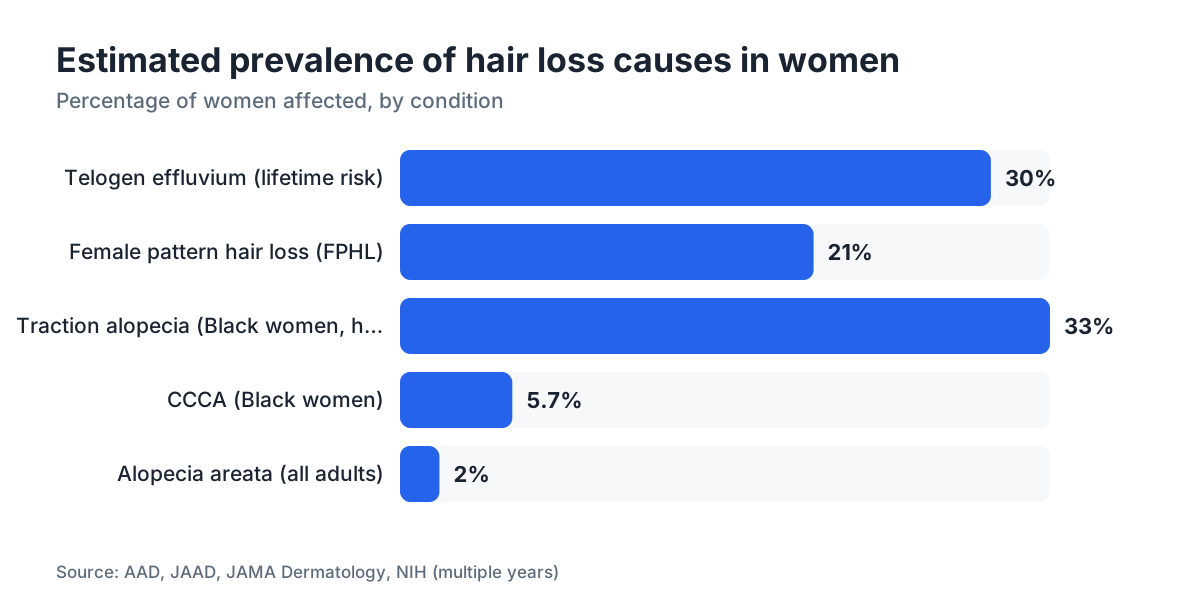
1. Traction alopecia This is physical damage from hairstyles that pull on follicles over and over. Tight braids, weaves, high buns, ponytails, extensions, and locs all create chronic tension. The back hairline and temples go first because that's where the pull is hardest in most styles. Early traction alopecia grows back once the tension stops. Late-stage traction alopecia destroys the follicle for good. Research summarized in Clinical, Cosmetic and Investigational Dermatology estimates traction alopecia affects roughly 1 in 3 Black women who use high-tension styles [12].
2. Central centrifugal cicatricial alopecia (CCCA) CCCA is a scarring alopecia that starts at the crown and spreads outward. It hits women of African descent hardest. The scarring is permanent once it forms, which is the whole reason early diagnosis matters. Many patients feel itching or tenderness before they see any loss. A 2021 JAMA Dermatology study found CCCA in about 5.7% of Black women in a community-based sample [3].
3. Female pattern hair loss (FPHL) Also called androgenetic alopecia in women, FPHL usually shows as diffuse thinning over the crown and vertex rather than the receding front hairline men get. The Ludwig scale sorts it into three stages. The back and sides hold on longer than in men, but real shedding can still reach them in later stages. Estrogen partly shields the follicles, which is why FPHL often speeds up after menopause [9].
4. Telogen effluvium A systemic shock, like surgery, rapid weight loss, childbirth, thyroid disease, or severe stress, can push a large share of follicles into the resting (telogen) phase at once. Two to four months later, those hairs shed together. The loss is diffuse and covers the whole scalp, back and sides included. It's usually temporary, but a chronic version can drag on for years if the trigger stays unresolved [5].
5. Alopecia areata This autoimmune condition sends the immune system after the follicles, leaving smooth, round bald patches. The occipital scalp and the hairline edges (the ophiasis pattern) are common spots. It strikes any age and any ethnicity. About 2% of people develop alopecia areata at some point in their life [11].
6. Tinea capitis (scalp ringworm) A fungal infection that produces patchy loss with scaling and sometimes inflammation. More common in children, but adults get it too. It needs antifungal medication, more than a topical.
How is the cause of hair loss at the back of the head diagnosed?
You can't reliably diagnose this yourself from photos, though photos help a dermatologist track how things change over time. A board-certified dermatologist, or a trichologist working alongside one, usually runs through the same steps.
First comes a visual scalp exam, often with a dermatoscope (a handheld magnifier). Dermoscopy shows follicle spacing, scaling, follicular openings, and early scarring that the naked eye misses. Then a pull test: gently tugging about 60 hairs and counting how many release. More than 10% is abnormal. Then bloodwork for ferritin (iron storage), thyroid function (TSH, free T4), vitamin D, zinc, and androgens like DHEA-S and free testosterone. Nutritional deficiencies and thyroid problems are treatable causes of diffuse shedding.
A scalp biopsy is the gold standard for telling scarring from non-scarring alopecia. It's a small punch biopsy done under local anesthetic and read by a dermatopathologist. If CCCA or another scarring alopecia is on the table, get the biopsy, because the treatment window narrows as the scarring spreads.
The American Academy of Dermatology advises seeing a dermatologist when hair loss comes with scalp symptoms (itching, burning, tenderness), when patches appear suddenly, or when shedding jumps over a short stretch [7].
What does hair loss on the sides of the head in women indicate?
Hair loss on the sides, especially along the temples and above the ears, has a shorter list of suspects than diffuse shedding does.
Traction alopecia leads that list when the patient wears tight styles. The loss tracks the hairline edge and leaves a fringe of short, broken hairs where the follicles are still alive. Stop the tension early enough and those hairs return. Keep pulling for years and the loss becomes permanent.
FPHL can thin the temples and sides too, though it usually does so alongside crown thinning rather than on its own. The frontal fibrosing alopecia (FFA) variant of lichen planopilaris creates a band-like recession along the whole frontal and temporal hairline, sometimes taking the eyebrows with it. FFA is a scarring alopecia that has grown much more common since the 1990s, for reasons researchers still can't fully explain [8].
Temporal hair loss can also flag secondary syphilis, lupus, or iron deficiency anemia. That's not meant to scare you. It's the reason bloodwork isn't optional when the loss is new and unexplained.
Hair loss at the front of the head in women reads a little differently: it tends to point to FPHL (Ludwig pattern), FFA, or hairline traction from chemical processing and heat.
Which treatments actually work for female hair loss at the back of the head?
Treatment follows the diagnosis. There's no single answer, and anyone selling you one is selling you something.
Minoxidil (topical and oral) Minoxidil 2% solution is the only FDA-approved topical for female pattern hair loss. The approval covers the vertex specifically, though dermatologists apply it elsewhere. A 32-week placebo-controlled trial reported to the FDA found 2% minoxidil raised non-vellus hair counts significantly over placebo in women with FPHL [1]. Minoxidil works on non-scarring alopecias (FPHL, telogen effluvium, some early traction cases). It does not reverse scarring. Low-dose oral minoxidil (0.25 to 1.25 mg daily for women) is used more and more off-label and can be easier to stick with; see our oral minoxidil overview. Know the minoxidil side effects before you start.
Anti-inflammatory and immunosuppressive therapies for CCCA and alopecia areata For CCCA, first-line treatment means dropping chemical relaxers and heat styling, plus topical or intralesional corticosteroids and sometimes an oral tetracycline-class antibiotic for its anti-inflammatory effect. For alopecia areata, options include intralesional corticosteroids, topical minoxidil as an add-on, and JAK inhibitors for severe cases. The FDA approved baricitinib for severe alopecia areata in adults in June 2022 [6].
Finasteride and other DHT blockers in women Finasteride is FDA-approved for male pattern baldness, not for women. Doctors use it off-label in postmenopausal women with FPHL, but it carries a pregnancy category X risk and needs careful patient selection. Spironolactone (an androgen blocker) is the more common prescription for premenopausal women with hormonal hair loss in the US. Read up on how DHT blockers work and on finasteride specifically.
Hair transplant For permanent, stable, non-scarring loss, hair transplant surgery can rebuild density. The back of the head is where surgeons harvest donor hair in most procedures, so a transplant's feasibility hinges on how much donor hair is left. Scarring alopecias (CCCA, FFA) usually make poor transplant candidates, because the same process that killed the original follicles can attack the transplanted ones.
What doesn't work Biotin alone has no evidence behind it for regrowth unless you have a documented biotin deficiency, which is rare. Red light therapy has small preliminary data and no large randomized trials. PRP (platelet-rich plasma) injections show mixed results. Hair loss supplements run from useless to mildly helpful; our hair loss supplements breakdown lays out the real evidence.
How to stop hair loss at the back of the head in women: a practical step-by-step
Here's what I'd actually do, in order.
Step 1: Document it now. Take clear, consistent photos in good light every 4 to 8 weeks. Dermatologists lean on side-by-side comparison shots to judge whether a treatment is working.
Step 2: Get the bloodwork. Ask your GP or gynecologist for ferritin (aim above 70 ng/mL for hair, well over the lab's lower normal reference), TSH, free T4, vitamin D, zinc, and if there are signs of excess androgens, DHEA-S and free testosterone. Correcting a real deficiency can stop the shedding with no prescription at all.
Step 3: See a dermatologist if the loss is rapid, patchy, or symptomatic. A biopsy matters most if there's any chance of scarring alopecia. That window closes.
Step 4: Change what you can right now. Wearing tight styles? Stop. Using heat daily? Cut it back. Using chemical relaxers? Ask a dermatologist about timing and alternatives. These changes cost nothing and can halt traction alopecia before it turns permanent.
Step 5: Match the treatment to the diagnosis. Minoxidil for FPHL and telogen effluvium. Anti-inflammatories for CCCA and alopecia areata. Antifungals for tinea. Hormonal treatment for androgen-driven loss in the right candidates.
Step 6: Give it real time. Hair grows roughly 0.5 to 1.5 cm a month. Meaningful regrowth takes at least 6 months of consistent treatment, often 12. Quitting after 8 weeks because nothing's happening is the most common mistake there is.
Is hair loss at the back of the head in women ever permanent?
Yes. Some causes take follicles you never get back if you leave them untreated long enough.
Scarring alopecias (CCCA, FFA, lichen planopilaris, discoid lupus) destroy the follicle and fill the space with fibrous scar tissue. Once that happens, no topical or oral treatment regrows hair there. That's why early diagnosis carries more weight with these conditions than with any others.
Late-stage traction alopecia is permanent too. Follicles don't survive decades of steady mechanical stress.
FPHL isn't permanent in quite the same way. The follicles miniaturize rather than scar. But miniaturized follicles left alone long enough can eventually stop cycling for good.
Telogen effluvium, alopecia areata, and tinea capitis are all potentially reversible, though alopecia areata recurs in about 30% of cases over 5 years [6].
For women losing hair at the sides or back, that permanence is exactly why I'd chase a real diagnosis before experimenting with drugstore products. A few months of delay you can manage. A few years of delay with a scarring alopecia you can't.
Does postpartum hair loss affect the back and sides of the head?
Postpartum hair loss is telogen effluvium set off by the hormonal drop after delivery. It usually starts 2 to 4 months after birth and peaks around month 4 to 6. The shedding is diffuse, so it hits the whole scalp, but many women notice it most at the temples and hairline edges, because those hairs are finer and shorter to begin with.
The good news: postpartum telogen effluvium clears on its own in most women within 6 to 12 months, no treatment needed [5]. The follicles aren't damaged. They're just synchronized in the shedding phase.
What helps meanwhile: keeping iron (ferritin) and vitamin D adequate, easing physical stress on the hair, and skipping tight styles that add traction to already fragile edges. Minoxidil usually isn't recommended during breastfeeding, so talk timing over with your OB or dermatologist.
If the shedding hasn't improved by 12 months postpartum, it's time to look for another cause.
Can scalp conditions like seborrheic dermatitis cause hair loss at the back of the head?
Seborrheic dermatitis (chronic scalp dandruff driven by Malassezia yeast overgrowth) is one of the most common scalp conditions in adults. It causes flaking, itching, and inflammation, mostly on the scalp, around the ears, and down the nape of the neck.
Seborrheic dermatitis on its own doesn't destroy follicles. But its chronic inflammation may add to shedding, and the scratching it drives can cause physical damage. There's also evidence it can worsen androgenetic alopecia in genetically prone people by turning up follicular inflammation [9].
The back of the scalp and the occipital hairline are common flare sites, which is one reason some women see extra shedding in that zone during a flare. Zinc pyrithione, selenium sulfide, or ketoconazole shampoos usually settle the dermatitis itself.
Scalp psoriasis can look similar and also causes loss through inflammation. A dermatologist can tell the two apart.
What should women of color know specifically about hair loss at the back of the head?
Black women carry a heavier burden of certain hair loss conditions than any other group, and the research long left them out. That gap is closing, but it's still real.
CCCA has a reported prevalence of 2.7% to 5.7% in Black women depending on the study population [3]. It starts at the crown and pushes outward, and by the time it's obvious to the eye, real scarring has often already set in. Symptoms worth an early visit: tenderness, burning, or itching at the crown or back of the scalp, even before any visible loss.
Traction alopecia is common in Black women who use high-tension styles, with some studies putting the figure near 1 in 3 [12]. The styles most tied to it, including tight braids, weaves, locs, and relaxers paired with heat, carry real cultural meaning, which makes "just stop" advice both medically correct and socially loaded. A good dermatologist will name that in the conversation.
Both CCCA and traction alopecia stay underdiagnosed, partly because many affected women don't seek care and partly because some providers lack training in textured hair [3].
If you're a Black woman with any scalp symptoms or visible thinning at the back or sides, finding a dermatologist experienced with textured hair disorders is worth the effort. The AAD's Find-a-Dermatologist tool lets you filter by specialty [7].
This is also where a tool like MyHairline's free AI hair scan earns its place as a first step. It can help you name the pattern of your loss before you walk into the appointment, so the visit goes further.
How does female pattern hair loss (FPHL) progress, and when does the back get affected?
FPHL follows the Ludwig classification in its classic form. Stage I is a widening part at the crown. Stage II is a more obvious widening with less volume. Stage III is heavy thinning across the whole crown with near-total loss of density on top [9].
The occipital (back) and temporal (side) regions hold on longest. In most women with FPHL, density at the back stays relatively intact even in later stages, which is exactly why that area works so well as a donor zone for transplants.
In a subset of women, though, especially those with higher androgen levels (polycystic ovary syndrome, for one), the Ludwig pattern can come with bitemporal recession that looks more male, and some diffuse thinning can reach the back.
When the loss doesn't fit the classic Ludwig pattern, the Olsen classification and the Sinclair scale offer other ways to stage it. The pattern matters because it steers treatment choice and helps predict how things go.
More on how androgenetic alopecia fits into what causes hair loss generally, and how finasteride and minoxidil pair up in practice.
When should a woman see a doctor about hair loss at the back of her head?
See a dermatologist (rather than only a GP, ideally) if any of these fit.
The loss showed up suddenly, over less than 3 months. Smooth, round, fully bald patches appear anywhere on the scalp. The scalp itches, burns, feels tender, or shows scaling or redness. A single thinning spot has kept growing for more than 6 months with no improvement. You've used minoxidil consistently for 6 months and seen zero change. You're losing eyebrow, eyelash, or body hair at the same time.
Any of these point toward a scarring alopecia, an autoimmune process, or a systemic condition that needs a proper workup. Waiting costs follicles you can't recover.
A rough rule: diffuse shedding that started after a clear event (surgery, illness, stress, childbirth) and has run less than 9 months is almost certainly telogen effluvium, and watchful waiting plus bloodwork is reasonable. Anything that doesn't match that story deserves a biopsy-capable evaluation.
MyHairline's AI scan (/scan) is a genuinely useful way to map which pattern you're dealing with before that appointment. It's a starting point, not a stand-in for the biopsy and bloodwork that scarring alopecias require.
Sources
- FDA, Minoxidil Topical Solution 2% label (NDA 019501)
- Osei-Sekyere B et al. JAMA Dermatology 2021: community-based prevalence of CCCA
- Malkud S. Telogen Effluvium: A Review. J Clin Diagn Res. 2015;9(9):WE01-WE03
- FDA Drug Approval: Baricitinib (Olumiant) for alopecia areata, June 2022
- American Academy of Dermatology, Find a Dermatologist tool and hair loss guidance
- Vañó-Galván S et al. Frontal fibrosing alopecia: a multicenter review of 355 patients. J Am Acad Dermatol. 2014;70(4):670-8
- National Institutes of Health, National Library of Medicine: Androgenetic Alopecia in Women (StatPearls)
- Rossi A et al. Minoxidil use in dermatology: side effects and recent patents. Recent Pat Inflamm Allergy Drug Discov. 2012
- NIH National Institute of Arthritis and Musculoskeletal and Skin Diseases: Alopecia Areata
- Billero V, Miteva M. Traction alopecia: the root of the problem. Clin Cosmet Investig Dermatol. 2018;11:149-159