

TL;DR: Female pattern hair loss (FPHL) is the most common cause of hair thinning in women, driven mainly by genetic sensitivity to androgens. It thins the crown and part-line while the frontal hairline usually stays intact. Minoxidil 2% or 5% is the only FDA-approved topical treatment. Catching iron deficiency early can make a real difference in outcomes.
What is female pattern hair loss?
Female pattern hair loss is a genetically influenced, progressive thinning of scalp hair in women. The medical term is androgenetic alopecia, the same root condition that causes male baldness, but the way it presents in women is genuinely different.
In men, hair retreats from the temples and crown in a predictable front-to-back pattern. In women, the frontal hairline is usually preserved. Thinning happens instead along the part-line and spreads outward across the crown in a diffuse, Christmas-tree shape. Women rarely go fully bald the way men do, but the thinning can become severe enough to see the scalp clearly under normal lighting.
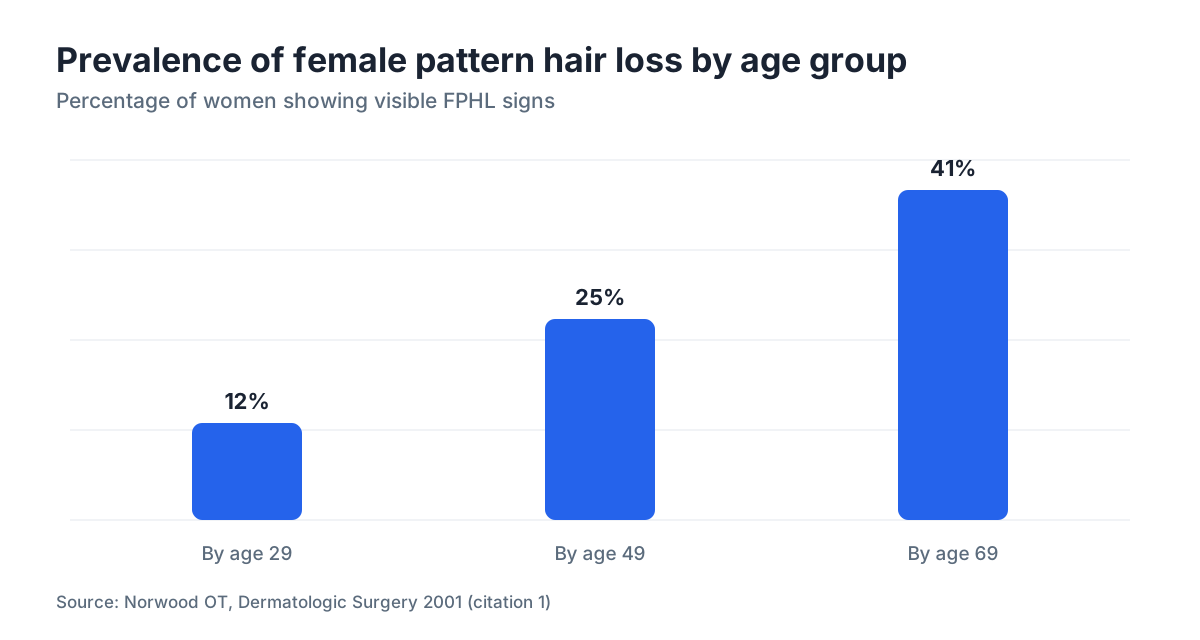
The condition is extremely common. Studies suggest roughly 12% of women show signs by age 29, and that number climbs to about 25% by age 49 and close to 41% by age 69 [1]. So if you're in your 40s or older and noticing your part widening, you are absolutely not alone.
FPHL is a chronic condition, not an acute shed. It moves slowly, over years or decades. That slow pace means most people don't seek help until significant density is already lost, which is unfortunate because treatment works better the earlier you start.
What causes female pattern hair loss?
The honest answer is that the cause is partially understood but not fully mapped.
The clearest driver is genetic susceptibility to androgens, the same class of hormones (including testosterone and DHT) that trigger hair follicle miniaturization in men. In women, follicles on the scalp that are sensitive to androgens gradually shrink over repeated hair cycles, producing thinner, shorter hairs until eventually the follicle stops producing a visible hair at all [2].
Here's where it gets complicated: many women with FPHL have completely normal androgen levels on blood tests. The follicles are simply more reactive to whatever androgen is circulating. Other women do have elevated androgens, often linked to polycystic ovary syndrome (PCOS), adrenal disorders, or less commonly androgen-secreting tumors. This is why a workup with a dermatologist or endocrinologist matters, especially if the hair loss came on quickly or you have other symptoms like irregular periods or acne.
Estrogen appears to be protective. This is one reason hair thinning often accelerates or becomes noticeable after menopause, when estrogen levels drop. Postmenopausal women are significantly more likely to have noticeable FPHL than premenopausal women [1].
Genetics play a large role. If your mother or maternal grandmother had significant thinning on the crown, your risk goes up substantially. The inheritance is polygenic, meaning it's not a simple one-gene situation and having the family history doesn't guarantee you'll develop FPHL, but it does shift the odds.
Iron deficiency deserves its own discussion, and gets one below, because it is the most common correctable contributor to hair loss in women and is genuinely underdiagnosed.
Does iron deficiency cause or worsen female pattern hair loss?
This is one of the most searched questions about hair loss for female, and the research is messier than you'd hope.
Iron deficiency, even without frank anemia, is associated with increased hair shedding in women. A 2006 review in the Journal of the American Academy of Dermatology concluded that iron deficiency may be a reversible cause of hair loss in some women, though the relationship is not fully established [3]. The mechanism is plausible: hair follicle cells divide rapidly and need iron for DNA synthesis and oxidative metabolism. When iron stores drop, the follicle may cut corners.
The key measurement is serum ferritin, a marker of iron stores, more than hemoglobin or serum iron. Many labs flag ferritin as normal down to 12 ng/mL, but several dermatologists argue that hair loss in women correlates with ferritin below 40 ng/mL, and that restoring levels above 70 ng/mL may improve hair density [3]. Nobody has a perfectly clean randomized trial on this threshold, but the data is compelling enough that most dermatologists will check ferritin as part of a hair loss workup and treat low levels regardless.
The overlap with FPHL is real. A woman can have both iron deficiency hair loss and early stage female pattern baldness happening simultaneously. Treating the iron deficiency may reduce shedding and improve response to minoxidil, without necessarily reversing the underlying androgenetic process. Female hair loss iron deficiency and FPHL are often two logs on the same fire, not one or the other.
If you're a woman with hair loss and haven't had ferritin checked, ask your doctor specifically for that test. It's inexpensive and frequently missed on standard panels.
See also telogen effluvium, a related but distinct condition where nutritional deficiencies and physical stressors trigger a mass shedding episode rather than slow progressive thinning.
How do dermatologists diagnose and stage FPHL?
Diagnosis usually starts with a physical exam. A dermatologist will look at the distribution of thinning, pull-test a small bundle of hairs to check how many release easily, and examine the scalp under a dermatoscope to look at follicle caliber and density.
Blood tests typically include ferritin, serum iron, total iron binding capacity, complete blood count, thyroid-stimulating hormone (TSH), and sometimes total and free testosterone, DHEA-S, and prolactin [4]. These aren't tests for FPHL itself but for the other conditions that can mimic or worsen it.
For staging, the Ludwig Scale is the standard used for female pattern hair loss classification:
| Ludwig Stage | What it looks like |
|---|---|
| I (mild) | Slight widening of the part-line; thinning visible on close inspection |
| II (moderate) | Noticeably wider part; significant decrease in hair volume on the crown |
| III (advanced) | Diffuse thinning across the crown; scalp clearly visible through remaining hair |
Some clinicians also use the Sinclair scale (5 grades) or the BASP classification, but Ludwig remains the most widely recognized in published trials [10].
A scalp biopsy is occasionally used when the diagnosis is unclear, particularly to distinguish FPHL from scarring alopecias (like lichen planopilaris) where the follicle is permanently destroyed. Scarring alopecias require completely different treatment and catching them early matters a great deal.
If you want a quick first look at your pattern before booking a dermatologist, the free AI scan at MyHairline uses your photos to map thinning zones and suggest whether the pattern fits FPHL or something else.
What treatments actually work for female hair loss?
Let's be direct: there is no cure. There are treatments that slow progression and, in some cases, partially reverse miniaturization. The earlier you start, the more follicles you can protect.
Minoxidil (topical)
Minoxidil is the only FDA-approved topical treatment for female pattern hair loss. The 2% solution was the first approved formulation specifically for women; the 5% foam was later studied in women and found to produce faster, greater regrowth in randomized controlled trials [5]. Both concentrations are now available without a prescription.
In a 48-week randomized trial comparing 5% foam versus 2% solution in women, the 5% group had statistically significantly greater increases in nonvascular terminal hair counts [5]. The difference wasn't dramatic, but it was real. Minoxidil takes four to six months before you see meaningful results, and you have to keep using it indefinitely. Stopping causes the regrowth to shed within a few months.
The mechanism isn't perfectly understood. Minoxidil appears to extend the anagen (growth) phase of the hair cycle and may have local vasodilatory effects on the scalp. It doesn't block DHT, so it's not addressing the root hormonal cause.
Some women are interested in oral minoxidil, a low-dose pill (typically 0.25 to 1 mg daily for women) that has shown promising results in observational studies and small trials. It's not FDA-approved for hair loss but is prescribed off-label. The lower doses used for women reduce, though don't eliminate, cardiovascular side effects. Check minoxidil side effects for a full breakdown of what to watch for.
Finasteride and other antiandrogens
Finasteride is FDA-approved for male pattern hair loss but not for female pattern hair loss. In postmenopausal women, evidence is mixed. A few randomized trials showed modest benefit at 1 mg/day in postmenopausal women, but results were not consistently statistically significant across studies [6]. Some dermatologists prescribe it off-label, particularly at higher doses (2.5 to 5 mg), with better reported response rates in those clinical contexts.
Finasteride is absolutely contraindicated in women who are pregnant or could become pregnant because of the risk of genital birth defects in male fetuses [6]. This is not a soft warning.
Spironolactone, an aldosterone antagonist with antiandrogen properties, is widely used off-label for FPHL in women with elevated androgen levels or those who haven't responded to minoxidil alone. Standard doses range from 50 to 200 mg/day. It requires regular potassium monitoring and is also contraindicated in pregnancy.
See dht blocker for a detailed comparison of how these agents work at the receptor level.
Low-level laser therapy (LLLT)
The FDA has cleared (not approved, different standard) several laser devices for hair loss. A 2014 randomized sham-controlled trial in women found significantly greater hair density in the LLLT group after 26 weeks [7]. The effect size is modest. LLLT doesn't work for everyone, and devices range from well-studied to essentially unvalidated.
Platelet-rich plasma (PRP)
PRP injections involve drawing your blood, spinning it to concentrate growth factors, and injecting it into the scalp. Small randomized trials show statistically significant improvements in hair density and thickness compared to placebo injections [8]. Effect sizes vary and results are not permanent; most protocols require maintenance sessions every six to twelve months. Not covered by insurance; costs typically run from $1,500 to $3,500 per treatment course depending on location.
Hair transplant
A hair transplant can work for women with FPHL, but patient selection is more complicated than in men. A good candidate is a woman with stable donor hair on the back and sides of the scalp, clearly defined areas of thinning rather than diffuse loss across the entire scalp, and realistic expectations. Women with diffuse thinning across the whole scalp may not have reliable donor hair to use. If you're exploring this, find a surgeon experienced specifically with female transplant patients.
Is hair loss in women different from hair loss in men?
Yes, in several meaningful ways.
Pattern and distribution differ significantly. Men typically lose hair at the temples and vertex in a defined sequence described by the Norwood scale. Women lose diffusely across the crown, preserving the frontal hairline. Women almost never reach the total baldness common in advanced male androgenetic alopecia [2].
Androgen sensitivity works differently too. Men convert testosterone to DHT via the 5-alpha reductase enzyme primarily in the scalp follicles, and blocking this enzyme (with finasteride) reliably slows or reverses miniaturization in men. In women, the relationship between circulating androgens and follicle response is less predictable, which is part of why finasteride has weaker evidence in women.
The hormonal triggers for FPHL are often different. Pregnancy, postpartum hormone shifts, menopause, and hormonal contraceptives can all trigger or worsen shedding in women in ways that simply don't apply to men. See what causes hair loss for the full picture.
Treatment options also differ. Minoxidil works for both sexes but the approved doses are different. Finasteride is approved only in men. Spironolactone, commonly used in women for FPHL, is not used in men for this purpose because of feminizing effects.
Psychological impact is another difference that deserves acknowledgment. Research consistently finds that women report greater distress and reduced quality of life from hair loss than men do, likely because cultural expectations around women's hair are more stringent [4]. This isn't trivial. Depression and anxiety are real co-morbidities and worth discussing with a provider.
Which supplements help with female pattern hair loss?
Supplement marketing for hair loss is aggressive and mostly ahead of the evidence. A few things genuinely matter; most don't.
Iron and ferritin: already covered. This is the highest-yield lab check for women.
Vitamin D: deficiency is associated with alopecia areata (a different autoimmune condition) and possibly FPHL. The evidence for FPHL specifically is weak but given how widespread vitamin D deficiency is, and given that the risk of supplementing at normal doses is minimal, checking and correcting deficiency is reasonable.
Biotin: heavily marketed, largely overhyped for FPHL. Biotin deficiency does cause hair loss, but true deficiency is rare outside of specific medical conditions (like prolonged antibiotic use or genetic disorders of biotin metabolism). If you're not deficient, adding more biotin won't grow more hair. It will, however, interfere with certain thyroid and cardiac lab tests at high doses, which is not a trivial concern [9].
Nutrafol and similar multi-ingredient supplements have small industry-funded trials showing modest improvements in shedding. They're expensive (typically $80 to $90 per month) and the evidence quality is low enough that I'd prioritize checking and correcting actual deficiencies first.
Zinc and selenium deficiencies can also contribute to hair shedding. Worth checking in the right clinical context, but don't supplement aggressively without knowing your levels.
See hair loss supplements for a much more detailed breakdown of what has real evidence behind it.
When does female pattern hair loss start and how fast does it progress?
FPHL can start as early as the late teens or early 20s, though it's far more common to first notice it in the 30s or around menopause.
Progression is usually slow and gradual. Most women don't notice a discrete starting point. Instead, they realize one day that their ponytail is thinner, their part looks wider, or they're seeing more scalp in photos. By the time that happens, follicle miniaturization has typically been underway for years.
The rate of progression varies a lot between individuals. Some women stabilize at mild thinning for decades. Others progress relatively quickly through the Ludwig stages, particularly around menopause when estrogen loss removes a protective buffer. There's no reliable way to predict which trajectory you'll follow without watching the pattern over time.
This unpredictability is one argument for starting treatment at Ludwig Stage I rather than waiting. Minoxidil is significantly better at maintaining existing hair and recovering recently miniaturized follicles than it is at rescuing follicles that have been dormant for years.
Can female pattern hair loss be reversed?
Partial reversal is possible. Complete reversal is not, with current treatments.
Minoxidil can cause visible regrowth in a meaningful portion of women. In the key 48-week minoxidil trial, 5% foam produced a 13.8% increase in terminal hair count from baseline [5]. That's a real but modest improvement. A subset of women see more dramatic responses.
The key biological fact: a follicle that has been completely miniaturized and gone dormant for a long time is much harder to reactivate than a follicle still producing a fine, vellus-like hair. This is why starting treatment at early stage female pattern baldness matters so much.
PRP and LLLT also show partial reversal in controlled trials. Hair transplant, done well, can restore density in specific areas permanently since transplanted follicles from the back of the scalp are genetically resistant to DHT.
What none of these treatments do is reset the underlying genetic sensitivity. You're managing the condition, not ending it. If you stop effective treatment, the trajectory resumes.
How do I know if my hair loss is FPHL or something else?
This distinction matters because the treatments are completely different.
Telogen effluvium is the most common other cause of hair shedding in women. It's characterized by a sudden, diffuse shed (often 200 to 400 hairs per day or more) triggered by a stressor three to four months prior: surgery, a severe illness, significant weight loss, childbirth, or extreme psychological stress. It usually recovers on its own within six to nine months once the trigger is removed. FPHL is gradual, progressive, and crown-focused; telogen effluvium is sudden, diffuse, and self-limiting (usually).
Alopecia areata produces patchy, defined bald spots. It's autoimmune. It can occur anywhere on the scalp, more than the crown. Dermatoscopy and sometimes biopsy distinguish it from FPHL.
Scarring alopecias (lichen planopilaris, frontal fibrosing alopecia, central centrifugal cicatricial alopecia) destroy the follicle permanently. They often have symptoms like scalp itch, burning, or redness around follicles. They require different treatment and catching them early prevents irreversible loss.
Thyroid disorders, particularly hypothyroidism, cause diffuse shedding that mimics FPHL. A TSH test rules this out quickly.
If you're not sure what you're dealing with, the pattern of thinning (where on the scalp, how fast it came on, whether it's patchy or diffuse) combined with blood tests and a dermatoscope exam is usually enough to get a clear answer without a biopsy.
For an initial pattern check at home, you can use the free AI hair scan at MyHairline to map which zones are thinning before your appointment.
What lifestyle changes can slow female hair loss?
Lifestyle changes won't reverse FPHL, but a few are worth taking seriously.
Correct nutritional deficiencies. Ferritin, vitamin D, and zinc top the list. These aren't speculative; deficiency genuinely impairs the hair cycle.
Reduce traction and mechanical damage. Tight ponytails, braids, and weaves worn repeatedly cause traction alopecia, which is a different condition but can compound existing FPHL in the same areas. Loose styles reduce this risk.
Be gentle with wet hair. Wet hair is more susceptible to mechanical breakage. Wide-tooth combs and microfiber towels (patting dry rather than rubbing) reduce fragility and breakage, though they don't affect follicle miniaturization directly.
Manage stress. Chronic psychological stress elevates cortisol, which can disrupt the hair cycle and worsen telogen effluvium on top of baseline FPHL. Exercise and sleep hygiene are the best-validated interventions here.
If you smoke, stopping is worth mentioning: smoking is associated with androgenetic alopecia in both men and women, possibly via oxidative damage to follicles and reduced scalp circulation.
Avoiding highly processed diets with very low protein is also reasonable. Hair is essentially protein (keratin), and severe caloric or protein restriction does impair hair production. Normal dietary protein intake in otherwise healthy women is almost certainly not a limiting factor, but crash dieting is a documented trigger for telogen effluvium.
Sources
- Norwood OT. Incidence of female androgenetic alopecia. Dermatologic Surgery 2001
- American Academy of Dermatology Association: Hair loss types: Androgenetic alopecia
- Rushton DH. Nutritional factors and hair loss. Clinical and Experimental Dermatology 2002; and Kantor J et al. Decreased serum ferritin is associated with alopecia in women. JAAD 2003
- American Academy of Dermatology Association: Hair loss diagnosis and treatment
- Blume-Peytavi U et al. Efficacy and safety of minoxidil 5% foam versus 2% solution in women with androgenetic alopecia. JAAD 2011
- U.S. National Library of Medicine, DailyMed: Finasteride prescribing information
- Lanzafame RJ et al. The growth of human scalp hair in females using visible red light laser and LED sources. Lasers in Surgery and Medicine 2014
- Gentile P et al. The Effect of Platelet-Rich Plasma in Hair Regrowth. Stem Cells Translational Medicine 2015
- U.S. Food and Drug Administration: Biotin interference with lab tests safety communication
- Ludwig E. Classification of the types of androgenetic alopecia occurring in the female sex. British Journal of Dermatology 1977
- Olsen EA. Female pattern hair loss. Journal of the American Academy of Dermatology 2001
- National Institutes of Health, MedlinePlus: Hair loss in women