

TL;DR: Female pattern hair loss (FPHL) affects roughly 12% of women by age 29 and up to 40% by menopause. It causes gradual diffuse thinning at the crown and part line, not a receding hairline. Minoxidil 2% is FDA-approved and the most studied first-line treatment. Starting early gives you the best chance of keeping what you have.
What is female pattern hair loss and is it really that common in your 20s?
Female pattern hair loss, also called androgenetic alopecia, is the most common cause of hair loss in women. It's a gradual, progressive miniaturization of hair follicles driven by genetic sensitivity to androgens, mainly dihydrotestosterone (DHT). Follicles that are sensitive to DHT shrink over time, producing thinner, shorter hairs until eventually the follicle stops producing visible hair at all.
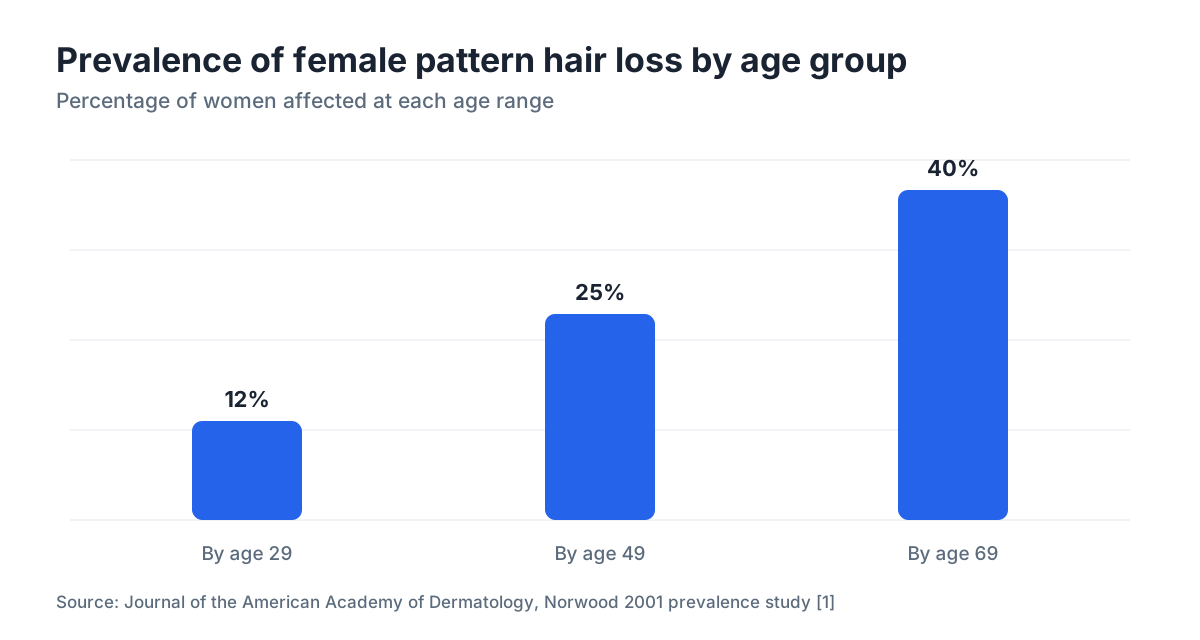
Yes, it really does start in the 20s for a meaningful share of women. A widely cited prevalence study published in the Journal of the American Academy of Dermatology estimated that FPHL affects approximately 12% of women by age 29, rising to around 25% by age 49 and up to 40% by age 69 [1]. Those numbers are probably underestimates because many women in their 20s attribute early thinning to stress, diet, or styling damage and never get a diagnosis.
The average woman notices first. A dermatologist confirms it. Then she spends six months googling before doing anything. That delay matters because FPHL is much easier to slow than to reverse.
One thing worth knowing up front: FPHL in a 20-year-old is not the same clinical picture as FPHL in a 55-year-old. In younger women, hormonal factors like polycystic ovary syndrome (PCOS), thyroid dysfunction, or post-pill shedding are more likely to be co-contributors. That means a blood workup is genuinely useful early on, more than a formality.
How does female pattern hair loss look different from male pattern baldness?
This is the question that confuses most women in their 20s, because they are expecting something that looks like their dad's hair loss. It doesn't look like that.
Male pattern baldness follows the Norwood scale: a receding hairline at the temples plus a bald spot at the crown that eventually merge. Women almost never lose their frontal hairline entirely. Instead, FPHL follows the Ludwig scale and presents as:
| Ludwig Stage | What you see |
|---|---|
| I (mild) | Wider part line, subtle thinning at the crown. Hair elsewhere looks normal. |
| II (moderate) | Noticeably reduced density at the crown, part line clearly wider, scalp visible. |
| III (advanced) | Marked thinning across the top of the scalp, frontal hairline mostly intact. |
A key early sign that many 20-somethings miss is the widening part. If your part looks wider in photos from two years ago compared to today, that's worth taking seriously. You might also notice that your ponytail circumference has shrunk, or that your scalp shows through wet hair at the crown when it didn't before.
The frontal hairline itself stays relatively intact in FPHL, which is why receding hairline resources aimed at men often don't describe what women experience. The pattern is different.
Miniaturization is the core mechanism. A healthy terminal hair is thick, pigmented, and grows for years. A miniaturized hair is thin, short, and often lacks pigment. A dermatologist can confirm miniaturization with dermoscopy, a handheld device that magnifies the scalp to show follicle caliber variation without a biopsy.
What causes female pattern hair loss in your 20s specifically?
Genetics is the primary driver. If your mother, maternal grandmother, or father experienced significant hair thinning, your risk is substantially higher. FPHL is polygenic, meaning many genes contribute, so you can inherit it from either side of the family.
But in women under 30, a few other factors often layer on top of genetic predisposition:
PCOS. Polycystic ovary syndrome causes elevated androgens, and FPHL is one of its recognized features. Studies estimate that between 70% and 80% of women with PCOS show some degree of clinical hyperandrogenism [2]. If you have FPHL plus irregular periods, acne, or excess facial hair, PCOS is worth ruling out with your OB-GYN or an endocrinologist.
Post-hormonal contraceptive shedding. Stopping the pill can trigger a temporary shed called telogen effluvium, where large numbers of hairs shift from the growth phase into the resting phase simultaneously. This shed usually resolves in 3 to 6 months. The tricky part: if you have underlying FPHL, the regrowth after a telogen effluvium may be thinner than before, making the FPHL visible for the first time.
Thyroid dysfunction. Both hypothyroidism and hyperthyroidism cause diffuse shedding. A TSH test is standard in any hair loss workup.
Iron deficiency. Low serum ferritin is common in women in their 20s, especially those with heavy periods. Ferritin below 30 ng/mL has been associated with impaired hair cycling in some studies, though the threshold is debated [3].
Nutritional deficits. Crash dieting, very low-calorie eating, or protein restriction can accelerate shedding. This is not the same as FPHL, but it can worsen it. Understanding what causes hair loss in general helps you figure out which factors apply to your situation.
The practical upshot: in a 20-year-old with diffuse thinning, the workup should include TSH, ferritin, a complete blood count, and androgen levels before assuming it's purely genetic FPHL.
How is female pattern hair loss diagnosed?
There is no single definitive test. Diagnosis is clinical, meaning a dermatologist looks at the pattern of loss, the hair caliber under dermoscopy, your history, and lab results together.
The pull test is one quick bedside tool. A clinician grasps about 40 to 60 hairs between the thumb and forefinger and pulls with gentle traction. More than 6 hairs coming out on a single pull is considered positive and suggests active shedding [4]. It's useful for detecting telogen effluvium but less specific for FPHL.
Dermoscopy is much more informative. Under magnification, FPHL shows a characteristic pattern of follicular miniaturization with variability in hair shaft diameter (more than 20% of hairs showing diameter variation is a commonly cited threshold), peripilar signs, and increased vellus hairs at the crown [4].
A scalp biopsy is occasionally done when the diagnosis is uncertain, for example when scarring alopecia needs to be ruled out. It's a minor procedure where a small punch of scalp tissue is sent for histology. For straightforward FPHL in a young woman, it's not usually necessary.
Labs your doctor should order: TSH, free T4, serum ferritin, complete blood count, DHEA-S, free and total testosterone, and a morning cortisol if Cushing syndrome is a concern. Some dermatologists also order zinc and vitamin D levels.
If you want a starting point before your appointment, the free AI hair analysis at MyHairline can show you the pattern of your thinning and help you describe it accurately to a clinician. It's not a diagnosis, but it gives you something concrete to bring to the conversation.
What treatments actually work for female pattern hair loss?
Here is the honest answer: nothing regrows hair to its original density once significant miniaturization has occurred. What treatments do is slow or stop further loss and, in responders, partially thicken existing miniaturized hairs. Starting earlier almost always produces better outcomes.
Minoxidil (topical). This is the only FDA-approved topical treatment for female pattern hair loss. The 2% solution applied twice daily has the most evidence in women; a 5% foam applied once daily is also FDA-approved and often preferred for convenience. A Cochrane-style meta-analysis found that minoxidil 2% significantly increased hair count compared to placebo after 32 weeks [5]. Minoxidil doesn't block DHT; it works by prolonging the anagen (growth) phase and increasing follicle size. You need to use it indefinitely because stopping causes shedding of regrown hair within a few months. Read up on minoxidil side effects before starting, especially the initial shed that happens in the first 4 to 8 weeks.
Oral minoxidil. Low-dose oral minoxidil (0.25 mg to 2.5 mg daily in women) has gained significant traction in dermatology over the last five years. A 2020 retrospective study in the Journal of the American Academy of Dermatology found clinically meaningful improvement in the majority of women treated with 1 mg daily [6]. It's prescribed off-label, so insurance coverage varies. Oral minoxidil tends to cause less scalp irritation than topical formulations, but it comes with its own side effect profile including hypertrichosis (unwanted body hair growth), fluid retention, and in higher doses, blood pressure effects.
Finasteride. Finasteride, a 5-alpha-reductase inhibitor that blocks DHT production, is FDA-approved for men but used off-label in women. The data in postmenopausal women are modestly positive. In premenopausal women, the situation is more complicated because finasteride is teratogenic (category X in pregnancy) and must be used with reliable contraception. Some dermatologists prescribe it to premenopausal women with documented high androgen levels and strict contraceptive use. See more detail on finasteride. Spironolactone, an androgen receptor blocker, is more commonly prescribed to premenopausal women in the US for this reason and often helps those with PCOS-related FPHL.
Combining treatments. Using topical minoxidil with an anti-androgen is more effective than either alone in most dermatologists' clinical experience, though head-to-head RCT data specifically in young women are limited. Finasteride and minoxidil together have the strongest evidence in men and are increasingly used off-label in women.
Platelet-rich plasma (PRP). PRP involves injecting concentrated growth factors from your own blood into the scalp. The evidence is mixed; some small RCTs show improvements in hair density, others don't. It's not FDA-approved for hair loss, costs $500 to $2,000 per session, and typically requires 3 to 6 sessions plus maintenance. Worth asking about if first-line treatments fail, not before.
Hair transplant. A hair transplant is generally not recommended as a first-line option for women with FPHL, because FPHL involves diffuse donor area thinning. If you transplant hair from a donor area that itself will miniaturize, the transplanted hair eventually thins too. Transplant surgeons typically want to see stable disease for several years before operating. Age 20 to 25 is almost always too early.
Supplements. The evidence for hair loss supplements like biotin, saw palmetto, and marine collagen is weak. Biotin deficiency is rare; if you're not deficient, adding more biotin doesn't help. Correcting iron deficiency and vitamin D deficiency does matter. Nutrafol has some proprietary study data but those trials are small and industry-funded. Supplements are not a substitute for proven treatments but fixing a documented deficiency is never a bad idea.
DHT blockers as a category, including both prescription drugs and some supplement ingredients, work through different mechanisms and carry different evidence levels. Prescription spironolactone and finasteride have real clinical data; herbal DHT blockers mostly don't.
What do real outcomes look like? What the evidence says about success
Female pattern hair loss success stories on social media skew toward dramatic transformations, which is survivorship bias in action. Most women who get modest but real results don't post about it. Here is what the data actually shows.
In the FDA-submission trials for topical minoxidil 2% in women, approximately 13% of women rated their hair regrowth as moderate to dense after 32 weeks, compared to 6% in the placebo group. Around 50% reported minimal regrowth, and the remainder saw no change [5]. So "success" in the trial sense means slowing loss and getting some regrowth in roughly half of users, with meaningful regrowth in a smaller subset.
For oral minoxidil at 1 mg daily in women, the 2020 retrospective study mentioned earlier found that 74% of patients showed improvement by physician global assessment at follow-up (median 14 months) [6]. That's a better-looking number, but it's retrospective, from a single center, and "improvement" includes mild improvement.
Spironolactone studies in FPHL are smaller. A 2015 study in Dermatology and Therapy found that 44% of women with FPHL treated with spironolactone reported hair stabilization or improvement after one year [7]. Again, not a cure, but stopping the slide counts as a win.
The honest framing: treatment for FPHL is a long-term commitment aimed at slowing a progressive condition, not reversing it. Women who start at the first signs of thinning in their 20s and stay consistent with treatment tend to maintain much more density over the following decade than those who wait. That's the real argument for acting early.
What should you do first if you notice thinning in your 20s?
Don't panic, but don't wait a year either. Here's a sensible order of operations.
First, document it. Take a consistent photo of your part line and crown in the same lighting every three to four months. You need a baseline. Hair loss is notoriously hard to perceive in real time; photos make it objective.
Second, see a board-certified dermatologist, ideally one with a subspecialty interest in hair. A general practitioner can order the initial blood panel, but dermoscopy and interpretation of the results really does need a hair specialist. The American Academy of Dermatology has a find-a-dermatologist tool [8].
Third, get the blood panel. Don't skip this even if you're sure it's genetic. A fixable cause like iron deficiency or thyroid disease layered on top of FPHL will blunt the response to any treatment until corrected.
Fourth, take your own hair assessment seriously. If you want to understand your pattern before your appointment, the MyHairline AI scan can give you a visual map of where your density loss is concentrated. Bring it to your derm visit.
Fifth, after diagnosis, commit to a treatment plan for at least 12 months before evaluating whether it's working. Minoxidil's effects on hair count and thickness are often not fully visible until 6 to 12 months in [5]. Stopping after two months because you "didn't notice a difference" is the single most common reason treatments fail.
Does hair loss in your 20s mean it will be severe by 40?
Not necessarily. The rate of progression varies enormously between individuals, and early onset doesn't automatically predict severe end-stage FPHL. Some women show early Ludwig I thinning at 22 and stay at Ludwig I for decades with or without treatment. Others progress more quickly.
Factors associated with faster progression include a strong family history on both sides, elevated androgens (as in PCOS), early age of onset before 25, and failure to treat early loss. Factors associated with slower progression include lower androgen sensitivity, consistent treatment use, and addressing modifiable contributors like iron deficiency.
The research on long-term natural history of FPHL specifically in women who first notice it in their 20s is actually quite thin. Most longitudinal studies have followed older cohorts. Honestly, nobody has perfect data on this; the closest estimates come from cross-sectional prevalence studies showing cumulative progression across decades rather than tracking individual women.
What we do know: FPHL is progressive over time in most untreated women. Treatment slows that progression. Starting in your 20s with documented mild thinning is about the best position you can be in therapeutically.
Can lifestyle changes help with female pattern hair loss?
Lifestyle changes won't reverse FPHL, but a few of them genuinely matter at the margin.
Iron and ferritin. If your ferritin is below 30 to 70 ng/mL (dermatologists debate the exact threshold), supplementing iron may improve shedding. Get a ferritin level before supplementing because iron overload is also harmful.
Protein intake. Hair is about 95% keratin, and adequate protein (roughly 0.8 g per kilogram of body weight per day as a minimum) matters for hair cycling. Restrictive diets that drop protein significantly can worsen any type of hair loss.
Scalp health. Chronic scalp inflammation from seborrheic dermatitis or product buildup may worsen shedding. Keeping the scalp clean and treating dandruff with an appropriate shampoo (ketoconazole 1% or zinc pyrithione) is a reasonable adjunct.
Stress. Chronic psychological stress can push hairs into the telogen phase and worsen the appearance of FPHL. It's not the root cause of FPHL but it's a meaningful modifier.
Styling habits. Tight hairstyles (tight buns, braids, extensions) cause traction alopecia, a separate condition that can worsen thinning at the hairline and part line. Minimizing heat and mechanical trauma is basic hair maintenance.
Creatine is worth mentioning because a lot of women in their 20s use it for fitness. One small crossover study found that creatine supplementation increased DHT levels relative to testosterone. The evidence is not definitive, but if you already have FPHL and elevated androgens, it's a reasonable question to raise with your doctor. More detail at does creatine cause hair loss.
What questions should you ask your dermatologist?
Showing up with a prepared list makes the appointment much more productive. Here are the questions that actually matter for a woman in her 20s with suspected FPHL.
- Is this androgenetic alopecia, telogen effluvium, or both? These require different approaches.
- What does my dermoscopy show about the degree of miniaturization?
- Which labs should I get, and what are your specific thresholds for treatment?
- Given my age and whether I want to become pregnant, which anti-androgen makes the most sense?
- Should I start topical or oral minoxidil? What's your reasoning?
- What does success look like at 6 months? At 12 months?
- If first-line treatment doesn't work, what's next?
- Is there anything about my pattern that suggests a scarring alopecia we should biopsy?
Bring photos. Bring a timeline of when you first noticed changes and anything that happened around that time (stopping a medication, a stressful event, a diet change, a pregnancy). The more context a dermatologist has, the more accurate the diagnosis.
Are there any emerging treatments for female pattern hair loss?
The pipeline is more active than it was ten years ago, though most options are still in clinical trial phases.
JAK inhibitors (baricitinib, ritlecitinib) have shown strong results in alopecia areata, a different autoimmune hair loss condition. Their role in FPHL is still being investigated; early data are mixed.
Prostaglandin analogs like bimatoprost (the active ingredient in Latisse) are primarily studied for eyebrow and eyelash growth. Small studies suggest some effect on scalp hair; nothing is approved yet.
Wnt pathway activators target the signaling pathway that regulates follicle cycling. Several companies are in preclinical or early-phase trials. Don't expect an approved product within the next two years.
Low-level laser therapy (LLLT) via devices like the HairMax LaserBand has FDA clearance (not approval, clearance) for promoting hair growth. The evidence base is modest. A 2014 RCT in the American Journal of Clinical Dermatology found significantly increased hair count in women using a laser comb device versus sham [9]. Effect sizes are smaller than minoxidil.
The realistic takeaway: the next few years will likely bring better options, but today's proven treatments are minoxidil, spironolactone, and (with appropriate caveats) finasteride. Waiting for something better is not a strategy when you're losing hair now.
Sources
- Journal of the American Academy of Dermatology: Prevalence of androgenetic alopecia in men and women (Norwood 2001)
- NICHD / NIH: Polycystic Ovary Syndrome (PCOS) information page
- Journal of the American Academy of Dermatology: The role of iron in hair loss (Trost et al., 2006)
- American Academy of Dermatology: Hair loss diagnosis and treatment overview
- FDA: Minoxidil topical solution prescribing information and approval history
- Journal of the American Academy of Dermatology: Low-dose oral minoxidil in women (Randolph and Tosti, 2020)
- Dermatology and Therapy: Spironolactone in the treatment of female pattern hair loss (Sinclair et al., 2015)
- American Academy of Dermatology: Find a Dermatologist tool
- American Journal of Clinical Dermatology: Low-level laser therapy for female pattern hair loss (2014 RCT)
- FDA: Finasteride label and pregnancy category information
- National Institute of Arthritis and Musculoskeletal and Skin Diseases (NIAMS): Alopecia areata