
TL;DR: Finasteride 1 mg is an FDA-approved oral pill that blocks DHT, the hormone that shrinks hair follicles in male-pattern baldness. Clinical trials show it stops further loss in roughly 87% of men and regrows measurable hair in about 66%. It requires a prescription, takes 6-12 months to show results, and carries real (though uncommon) sexual side effects worth understanding before you start.
What is finasteride 1 mg and how does it work?
Finasteride 1 mg is a prescription oral medication sold under the brand name Propecia (and widely as a generic) for androgenetic alopecia, the medical term for male-pattern hair loss. It belongs to a class called 5-alpha reductase inhibitors. Specifically, it blocks the type II isoform of the enzyme 5-alpha reductase, which converts testosterone into dihydrotestosterone (DHT) in the scalp, liver, and skin. [1]
DHT is the main driver of follicle miniaturization in men who are genetically susceptible. When DHT binds to receptors in a follicle, it shortens the growth phase and gradually shrinks the follicle until it stops producing visible hair entirely. You can read more about how this process starts in our overview of what causes hair loss and in our dedicated piece on DHT blockers.
A single 1 mg daily dose reduces serum DHT by approximately 65-70% within 24 hours. [1] That reduction is enough to slow or stop follicle miniaturization in most men, and in many it lets partially miniaturized follicles recover enough to produce thicker, visible hair again.
Finasteride does not cure androgenetic alopecia. It manages it. Stop taking it and DHT levels return to baseline within about two weeks, after which any hair regrown or preserved typically sheds over the following 9-12 months.
What does the clinical evidence actually show?
The registration trials that got Propecia approved enrolled men aged 18-41 with mild to moderate male-pattern hair loss (Norwood-Hamilton II through IV at the vertex and anterior mid-scalp). The two-year trial published in the Journal of the American Academy of Dermatology in 1998 randomized 1,553 men to finasteride 1 mg daily or placebo. [2]
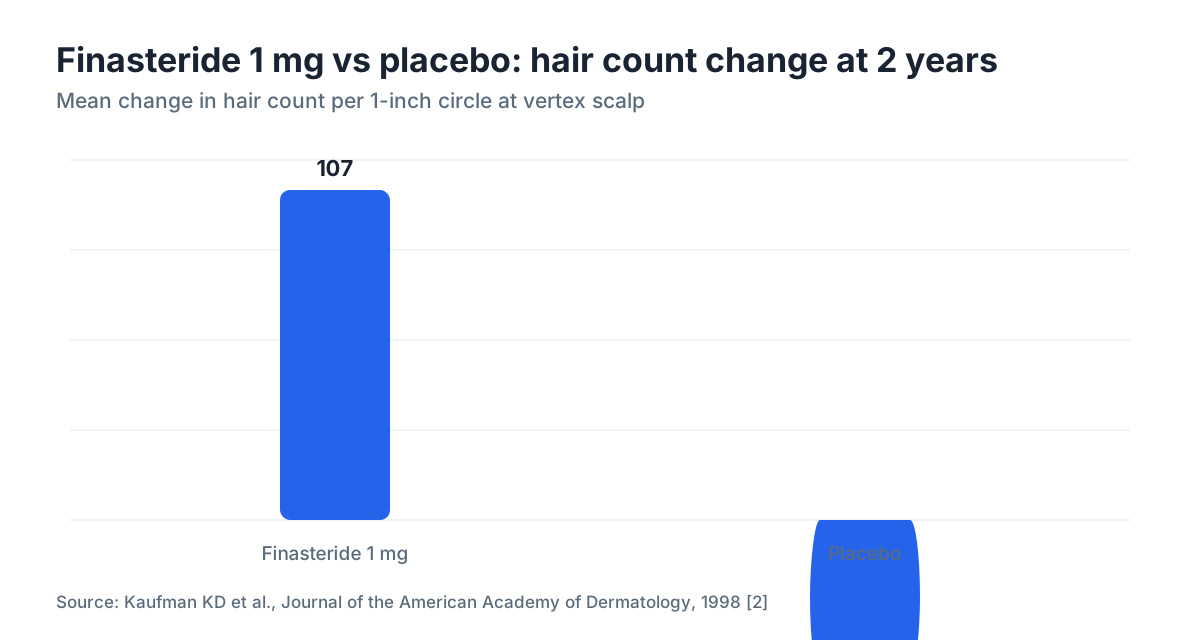
At two years, 83% of men on finasteride had no further hair loss versus 28% on placebo. Hair count increased by a mean of 107 hairs per one-inch circle at the vertex compared with a loss of 50 hairs in the placebo group. By five years of the open-label extension, about 90% of men maintained or increased hair count. [2]
A separate two-year trial focused on the anterior hairline found that finasteride beat placebo there too, though the effect was smaller than at the vertex. The FDA label states finasteride 1 mg is indicated for male-pattern hair loss and has not been shown to work in women or men over 41 in the trials supporting approval. [1]
For a fuller look at the evidence across doses and formulations, including topical finasteride, see our full finasteride overview.
Here is the honest caveat. The trials measured standardized photographs and hair counts under controlled conditions. Real-world response varies more. Some men see dramatic regrowth. Some see only stabilization. Roughly 13% see no meaningful benefit by two years and may want to reassess with their prescriber.
How does finasteride 1 mg compare to other hair loss treatments?
The table below puts the main options side by side on efficacy, mechanism, and practicalities.
| Treatment | Mechanism | Hair loss stopped (approx.) | Regrowth shown | Prescription needed | Typical monthly cost (US) |
|---|---|---|---|---|---|
| Finasteride 1 mg (oral) | Blocks DHT systemically | ~87% at 1 yr [2] | Yes, ~66% [2] | Yes | $20-60 generic |
| Minoxidil 5% topical | Vasodilator, prolongs anagen | ~60-70% stabilization | Yes, modest | No | $15-30 OTC |
| Oral minoxidil 2.5-5 mg | Same as topical, higher bioavailability | Strong in open-label trials | Yes | Yes | $25-50 generic |
| Finasteride + minoxidil | Dual mechanism | Higher than either alone [5] | Yes | Yes (finasteride) | $40-90 combined |
| Hair transplant surgery | Moves permanent follicles | N/A (surgical) | Yes (transplanted hairs) | No (but surgical) | $4,000-$15,000+ one-time |
Finasteride consistently beats topical minoxidil on the vertex in head-to-head and comparison data. A 2019 network meta-analysis in the Journal of Investigative Dermatology ranked finasteride above minoxidil 5% topical for male-pattern hair loss at 24 weeks and beyond. [3] Using both together produces additive benefit, which is why many dermatologists prescribe them as a pair. We cover finasteride and minoxidil together and oral minoxidil in separate articles if you want the detail on those combinations.
A hair transplant is the only option that physically adds permanent hair, but surgeons routinely prescribe finasteride alongside it to protect the native hair that was not transplanted. Skip it and you can still lose the surrounding non-transplanted follicles.
What are the real side effects of finasteride 1 mg?
Sexual side effects are the most discussed risk and deserve straight talk rather than minimization or exaggeration.
In the FDA-approved prescribing information, the following occurred in the 1 mg trials at rates higher than placebo [1]:
- Decreased libido: 1.8% finasteride vs 1.3% placebo
- Erectile dysfunction: 1.3% vs 0.7%
- Ejaculation disorder: 1.2% vs 0.7%
Those numbers look small, and they are. But they come from industry-sponsored trials with relatively young, healthy men followed for two years. Post-marketing surveillance and later independent surveys have found higher self-reported rates in some populations. The FDA added a label warning in 2012 noting that libido changes, ejaculatory disorders, and breast tenderness have been reported to persist after discontinuation in some patients. [1]
Post-finasteride syndrome (PFS) is the term used for men who report persistent sexual, neurological, or psychological symptoms after stopping finasteride. The Post-Finasteride Syndrome Foundation has documented cases, and the FDA's adverse event database includes reports. The frequency is genuinely uncertain. A 2020 JAMA Dermatology review estimated the persistence rate at less than 1% but flagged serious methodological limitations in the available data. [4] Nobody has good large prospective data on this.
Other side effects from the label include breast tenderness or enlargement (gynecomastia) in a small percentage of men, and a reduction in semen volume that is generally reversible.
Finasteride reduces PSA (prostate-specific antigen) levels by about 50%. [1] If you get a PSA test while on finasteride, tell your doctor, because the lab result needs to be doubled to reflect your true PSA level. Skip that step and screening can miss prostate cancer.
Depression and mood changes appear in post-marketing data. The European Medicines Agency reviewed this in 2017 and added it to the EU label. The FDA's current US label notes it as a post-marketing adverse reaction. [1]
Here is the bottom line. Most men tolerate finasteride without noticeable side effects. The sexual side effects are real but statistically uncommon in trials. The question of persistent effects after stopping is unresolved, and honest prescribers will say so. Anyone with a history of depression or sexual dysfunction should have an especially thorough conversation with their doctor before starting.
Who should not take finasteride 1 mg?
Finasteride 1 mg is approved only for men. Women who are pregnant or may become pregnant must not handle crushed or broken tablets. The drug can be absorbed through skin and has caused genital birth defects in male fetuses in animal studies. The FDA label carries a specific pregnancy contraindication (Category X). [1]
Postmenopausal women with female-pattern hair loss are sometimes prescribed finasteride off-label, but the evidence is much weaker and this sits outside the approved indication.
Men with liver disease should talk it through carefully with their prescriber because finasteride is metabolized hepatically.
Finasteride has not been shown effective in men over 41 in the trials that supported its approval, though many dermatologists do prescribe it to older men off-label based on mechanistic rationale. Men with a family history of prostate cancer should discuss the prostate cancer signal (see the section below) with their urologist before starting.
If you take other medications that affect the CYP enzyme system, discuss interactions with your pharmacist. Finasteride is metabolized by CYP3A4 and interactions are generally low-risk but worth flagging.
Does finasteride 1 mg increase prostate cancer risk?
This is one of the more confusing areas in finasteride's history and deserves a clear explanation.
The Prostate Cancer Prevention Trial (PCPT), a large randomized study published in the New England Journal of Medicine in 2003, found that finasteride 5 mg (the Proscar dose, not the hair loss dose) reduced prostate cancer incidence by about 25% compared to placebo over seven years. But among those who did develop prostate cancer, high-grade tumors (Gleason score 7 or above) appeared at slightly higher rates in the finasteride group. [6]
The FDA issued a safety communication in 2011 adding a warning to the Proscar (5 mg) label about high-grade prostate cancer. [9] The Propecia (1 mg) label also carries this note as a precaution given that it is the same molecule at a lower dose. [1]
The current scientific consensus, including a 2013 long-term follow-up of the PCPT, leans toward the high-grade finding being partly a detection artifact. DHT-reduced prostates are smaller, so biopsies sample a higher proportion of any cancer present, making high-grade tumors more likely to be detected. This is not fully settled. Men at elevated prostate cancer risk should involve a urologist in this decision.
For everyday 30-something men taking 1 mg for hair loss, most dermatologists and urologists consider the prostate cancer risk low in the context of the full evidence. That is a statement of clinical practice, not a guarantee.
How long does finasteride 1 mg take to work?
DHT suppression happens fast, within 24 hours of the first dose. The hair follicle response is much slower.
Most men see no visible change in the first three months. Some notice more shedding in the first 2-3 months, which sounds backwards but often signals that miniaturized follicles are resetting their growth cycles, similar to the initial shed sometimes seen with minoxidil. It is not a reliable sign of failure. It is alarming if you are not expecting it. Our article on telogen effluvium explains why this happens.
By 6 months, most men who will respond have seen stabilization. Regrowth, if it happens, typically becomes noticeable between 9 and 12 months. The trials saw continued improvement through 24 months on vertex hair counts, with peak benefit in the two-year range. [2]
Dermatologists generally recommend a minimum 12-month trial before concluding the drug is not working for you. Stopping at three months because you see no change is one of the most common mistakes.
How much does finasteride 1 mg cost and how do you get it?
Generic finasteride 1 mg is cheap in the United States. A 30-day supply at most pharmacies runs roughly $20-60 without insurance, and GoodRx coupons commonly bring it below $20 at major chains. Brand-name Propecia runs $90-100 per month or more. Essentially nobody pays that when generics are FDA-approved and chemically identical.
You need a prescription. Options include:
- A dermatologist or primary care physician in person (typically involves a physical exam and sometimes a scalp assessment).
- Telehealth platforms that prescribe and ship directly (generally $30-80 per month inclusive of the prescription and a brief async or video consult).
- Some insurance plans cover generic finasteride when prescribed for benign prostatic hyperplasia (the 5 mg indication) but routinely do not cover it for hair loss, which insurers classify as cosmetic.
The FDA requires that finasteride be dispensed with a patient medication guide. [1] Any prescriber or pharmacy that skips this is cutting corners.
If you want a fast starting point before or after your doctor visit, the free AI hair analysis at MyHairline can map your loss pattern and Norwood stage, which is useful information to bring to a prescriber when discussing whether finasteride is likely to help your specific pattern.
One practical note. The 5 mg tablet (Proscar, prescribed for BPH) is sometimes prescribed off-label and cut into quarters to approximate the 1 mg dose at lower per-pill cost. Some pharmacists and physicians do this. It is not FDA-approved practice, and the tablet is not scored for quartering, so dose consistency varies. Mention it to your doctor if you have heard about it, and get their opinion.
Can finasteride 1 mg help a receding hairline?
This is where expectations need calibrating carefully.
The original registration trials showed a clear benefit at the vertex (crown) and a more modest benefit at the anterior mid-scalp. The hairline, meaning the frontal temporal recession that defines the early Norwood stages, showed the weakest response in the original trials. [2] This is more than a minor caveat. A lot of men start finasteride hoping to push their hairline forward and come away disappointed.
More recent real-world data and post-marketing studies suggest the effect on the hairline is real but smaller than at the crown, and stabilization (stopping further recession) is more common than reversal. If your main concern is a receding hairline, finasteride is still worth considering to prevent further loss, but it is unlikely to restore a significantly receded hairline on its own.
For men with advanced frontal recession, a combination approach (finasteride to protect remaining hair plus a transplant to restore the hairline) is often what dermatologists and hair restoration surgeons recommend. Finasteride alone will not rebuild a hairline that has been gone for years.
Is topical finasteride a better option than the 1 mg pill?
Topical finasteride is a newer formulation applied directly to the scalp. It is not FDA-approved as a standalone product for hair loss at the time of writing, though it is available through compounding pharmacies and some telehealth services in the United States.
The rationale is straightforward. Delivering finasteride to the scalp directly should suppress local DHT where it matters while reducing systemic DHT less, potentially lowering the risk of sexual side effects.
A 2018 randomized trial in the Journal of the American Academy of Dermatology found that topical finasteride 0.25% applied once daily reduced scalp DHT by 47% versus only a 3% reduction in serum DHT, compared to a 68% serum DHT reduction for oral finasteride 1 mg. [7] Hair growth outcomes were similar between the two in this trial at 24 weeks.
The honest answer is that the evidence for topical finasteride is promising but still thin next to the decades of data on oral finasteride 1 mg. Head-to-head trial data at longer follow-up is limited. If sexual side effects are a specific concern for you, topical is a reasonable thing to discuss with your prescriber, but you are stepping off the well-established evidence base.
The 1 mg oral pill remains the standard of care.
What happens if you stop taking finasteride 1 mg?
DHT rebounds to baseline within about two weeks of stopping. Hair follicles that had been protected or partially recovering then re-enter miniaturization.
Most of the hair preserved or regrown by finasteride sheds within 9-12 months of discontinuation, returning the scalp roughly to where it would have been without treatment. The five-year trial data showed that men who discontinued after two years lost significant ground within a year. [2]
This is not a reason to never start. It is a reason to go in knowing that finasteride is a long-term commitment, not a course of treatment. If you start at 28 and want to keep the benefits, you are likely looking at decades of use.
Some men stop because of side effects. If that is your situation, discuss a supervised taper or immediate discontinuation with your prescriber. For most men, side effects resolve on stopping. For a small subset, as discussed in the side effects section, some effects may persist. That is the post-finasteride syndrome concern, and it remains incompletely understood.
Does finasteride 1 mg work for women?
The FDA indication is for men only. [1] The drug is teratogenic in male fetuses, which creates an absolute barrier to use in women of childbearing potential.
For postmenopausal women with female-pattern hair loss (androgenetic alopecia presenting as diffuse thinning rather than recession), finasteride has been studied off-label. Results have been mixed. A well-cited 2012 randomized controlled trial in JAMA Dermatology found no significant benefit of finasteride 1 mg versus placebo in postmenopausal women with female-pattern hair loss over 12 months. [8] Some studies with higher doses (5 mg) have shown modest benefit in postmenopausal women, but this remains off-label use with weaker evidence than in men.
For women dealing with hair loss, minoxidil 2% or 5% topical is the FDA-approved first-line treatment. The minoxidil for men (and women) article covers how that works. Women with hormonal hair loss should also see an endocrinologist to rule out treatable causes before reaching for DHT-blocking drugs.
Sources
- US FDA prescribing information for Propecia (finasteride 1 mg), drug labels and safety information
- Kaufman KD et al., Journal of the American Academy of Dermatology, 1998; and 5-year extension data
- Zhu et al., network meta-analysis, Journal of Investigative Dermatology, 2019
- Dhurat R et al., JAMA Dermatology review, 2020 (post-finasteride syndrome persistence rate)
- Khandpur S et al., Journal of Dermatology, 2002 (finasteride plus minoxidil combination)
- Thompson IM et al., New England Journal of Medicine, 2003 (Prostate Cancer Prevention Trial)
- Caserini M et al., Journal of the American Academy of Dermatology, 2018 (topical finasteride)
- Iorizzo M et al., JAMA Dermatology, 2012 (finasteride in postmenopausal women)
- FDA Drug Safety Communication, 2011 (5-alpha reductase inhibitors and high-grade prostate cancer)
- European Medicines Agency, 2017 review of finasteride and depression
- American Academy of Dermatology, hair loss guidelines