

TL;DR: Stress triggers a condition called telogen effluvium, where a large percentage of hair follicles prematurely shift into the resting and shedding phase. Shedding typically starts 2 to 3 months after the stressful event and can last 3 to 6 months. In most cases it fully reverses once the trigger is gone, though underlying genetic hair loss can complicate recovery.
What actually causes hair to fall out when you're stressed?
Hair loss from stress isn't random. It follows a specific, well-documented biological pathway, and understanding that pathway matters because it tells you both why it happens and when it will stop.
Every hair follicle cycles through three phases: anagen (active growth), catagen (a short transition), and telogen (resting and shedding). Under normal conditions, roughly 85 to 90 percent of your scalp hairs are in anagen at any given time, and only 5 to 10 percent are in telogen [1]. You shed about 50 to 100 hairs a day as a baseline. You probably never notice it.
A significant physiological or psychological stressor, whether that's a high fever, surgery, childbirth, crash dieting, or a sustained period of severe emotional stress, can disrupt this balance. The precise mechanism isn't fully mapped, but the leading explanation involves the stress hormone cortisol and substance P, a neuropeptide released during stress, both of which have been shown to shorten the anagen phase and push follicles prematurely into telogen [2]. When that happens to a large portion of your follicles at once, you get a sudden, diffuse shed 2 to 3 months later, because that's how long it takes the prematurely resting hairs to physically release from the scalp. This condition is called telogen effluvium.
The delay is why people are often confused. You go through something stressful in January, and your hair seems fine. Then in March or April you're suddenly losing clumps in the shower and on your pillow, and you can't figure out why. The stressor has already passed. The shedding is just the biological bill arriving late.
Acute stress events tend to cause acute telogen effluvium, which resolves. Chronic ongoing stress, like a grinding long-term work situation or prolonged grief, can cause chronic telogen effluvium, which persists as long as the stress does and can be harder to reverse.
How much hair loss from stress is normal, and when is it too much?
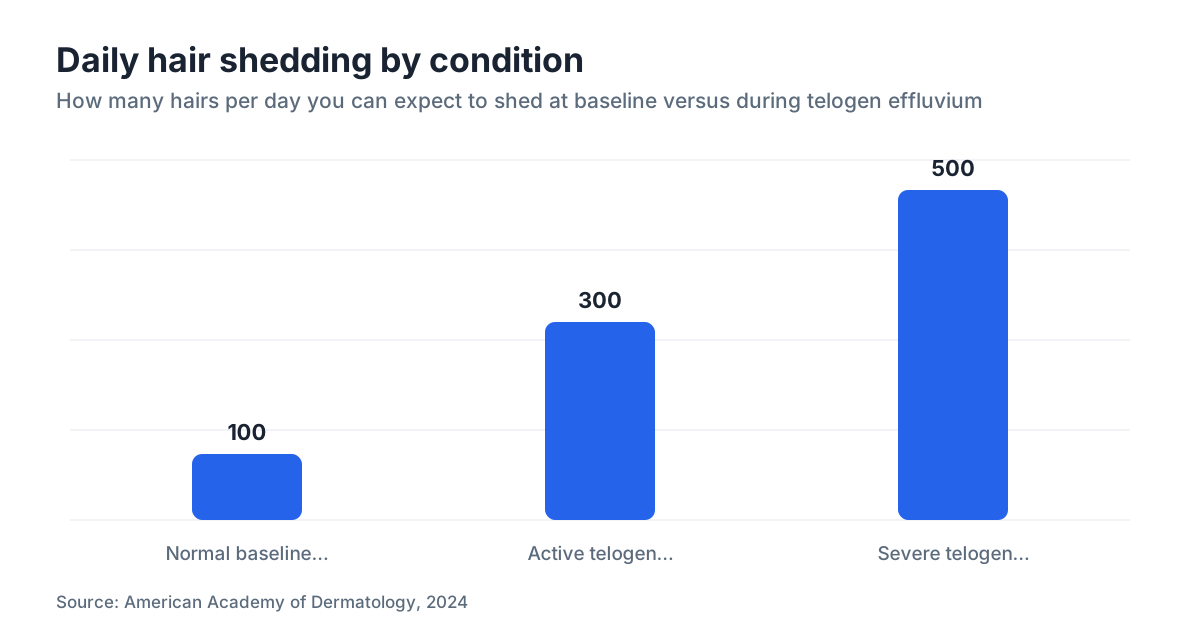
Baseline daily shedding of 50 to 100 hairs is normal. During a telogen effluvium episode, daily shedding can rise to 300 to 500 hairs or more [1]. That sounds alarming. In practice, it means noticeably more hair in the drain, on your brush, and on your pillow, but it rarely causes visible bald patches because the shedding is diffuse across the whole scalp rather than concentrated in one area.
The classic pattern is overall thinning, especially at the temples and the part line, where the scalp becomes more visible. Complete baldness from telogen effluvium alone is extremely rare.
A simple clinical test called the pull test gives a rough read on whether active shedding is happening. You grasp about 60 hairs between your fingers, apply gentle traction, and count how many come out. Pulling out more than 6 hairs is considered a positive pull test, suggesting active effluvium [3]. This isn't something you need a doctor to do: you can do a version of it yourself by running your fingers through your hair over a white surface and counting what falls out.
When you should see a dermatologist: if shedding is still significant after 6 months without improvement, if you notice patchy rather than diffuse loss (which points toward alopecia areata, another stress-linked condition), if you're losing hair from eyebrows or eyelashes, or if you're a man with a receding hairline or crown thinning that's getting worse. That last one matters because stress-triggered effluvium can unmask underlying androgenetic alopecia (genetic hair loss) that was already quietly progressing [see what causes hair loss]. If genetic loss is part of the picture, reversal of the stress won't be enough.
How long does stress-related hair loss last?
For acute telogen effluvium, the typical timeline goes like this. The stressor hits. Two to three months later, shedding begins. The heavy shed phase lasts roughly 3 to 6 months and then tapers off as the follicles cycle back into anagen. By 9 to 12 months from the start of the shed, most people have returned to their baseline [1].
The regrowth you notice first is short, fine hair, often called "baby hairs," appearing around the hairline and temples. That's a good sign. It means follicles are back in anagen.
Chronic telogen effluvium is a different story. It's defined as diffuse shedding lasting more than 6 months, and it often has multiple overlapping triggers: ongoing stress, poor nutrition, thyroid issues, iron deficiency. A 2013 review in the Indian Journal of Dermatology, Venereology and Leprology notes that chronic telogen effluvium is harder to resolve and requires identifying and treating every contributing factor, more than the psychological ones [9].
One honest caveat: the 9 to 12 month recovery estimate assumes the stressor is gone and no other factors are at play. Real life rarely cooperates. Many people have stress plus inadequate protein intake plus borderline iron levels at the same time. Each of those can independently maintain the shed. A blood workup that includes ferritin (more than hemoglobin), thyroid-stimulating hormone, and total iron binding capacity is genuinely useful here and often overlooked.
Does stress cause permanent hair loss?
Telogen effluvium itself is almost always reversible. The follicles aren't destroyed. They're just temporarily parked in the wrong phase. Once the trigger resolves, they return to anagen and regrow hair normally [1].
The exception, and it's an important one, is if the effluvium uncovers or accelerates androgenetic alopecia. Androgenetic alopecia, driven by DHT (dihydrotestosterone), does cause permanent follicle miniaturization if untreated. Stress doesn't cause androgenetic alopecia, but it can speed up the timeline in someone who was already susceptible. If you've noticed your hairline receding or your crown thinning in addition to diffuse shedding, that component won't reverse when the stress does. That's worth investigating separately, and a receding hairline article covers the distinction in detail.
Alopecia areata (patchy hair loss) has a more complex relationship with stress. It's an autoimmune condition, and psychological stress appears to trigger flare-ups in people who are genetically predisposed, though the evidence is observational and causality is hard to establish cleanly [11]. In alopecia areata, the underlying autoimmune process can damage the follicle more significantly, and regrowth is less predictable than with telogen effluvium.
Here's the short version. Stress-only hair loss is reversible. Stress plus genetics is partially reversible. Stress plus alopecia areata is more complicated and warrants a dermatologist's assessment.
What does the research say about stress hormones and hair follicles?
The cortisol and substance P story has decent mechanistic support, though most of the strongest studies are in animal models and cell cultures, with human data being more limited.
A 2021 study published in Nature by Choi et al. used mouse models to show that chronic stress elevates corticosterone (the mouse equivalent of cortisol), which suppresses the secretion of Gas6, a protein that normally activates hair follicle stem cells. The researchers concluded that "stress-elevated glucocorticoids impair hair follicle stem cell activation." [5] That's a direct link between stress hormone levels and follicle dormancy, though extrapolating from mice to humans requires caution.
On the human side, elevated serum cortisol has been documented in patients with chronic telogen effluvium compared to controls, but whether the elevated cortisol is a cause or a correlate of the overall physiological stress state isn't easy to separate [2].
Substance P, released by nerve fibers around the follicle during stress, has been shown in human tissue studies to induce follicle regression. It's one reason that neurogenic stress (the kind that activates your nervous system even without a physical illness) can trigger shedding, not only physical stressors like surgery or fever.
The honest takeaway: the mechanism is real and supported by good science. The specific dosing and thresholds in humans, meaning exactly how much stress for how long triggers a clinical shed, aren't well quantified. Individual variation is large. Some people shed visibly after a single acute event. Others go through years of chronic stress without notable effluvium. Genetic predisposition and baseline nutritional status appear to shape vulnerability a great deal.
Which nutrients and deficiencies make stress hair loss worse?
Stress and nutritional deficiency often occur together, and the combination accelerates shedding more than either alone.
Iron deficiency is the most well-documented nutritional contributor to telogen effluvium. Ferritin, the storage form of iron, is the most sensitive marker. Research summarized in the dermatology literature links ferritin levels below 12 ng/mL to telogen effluvium, and some dermatologists target levels above 40 to 70 ng/mL for hair regrowth, though the optimal threshold is still debated [6]. Serum ferritin is cheap to test and routinely underchecked.
Zinc deficiency is another real factor. Zinc is required for DNA synthesis in rapidly dividing follicle cells, and even mild deficiency slows the anagen phase. Stress increases urinary zinc excretion, creating a feedback loop where stress depletes zinc, and zinc depletion worsens the stress response on the follicle.
Protein intake matters more than most people realize. Hair is roughly 95 percent keratin, a protein. Severe caloric restriction or inadequate dietary protein, common when people under stress skip meals or eat poorly, deprives follicles of the amino acids they need for fiber production. Telogen effluvium from crash dieting typically shows up 3 months after the dietary restriction begins, exactly like stress-triggered effluvium.
Vitamin D deficiency has weaker but emerging evidence. Vitamin D receptors are present in hair follicles, and deficiency is associated with various forms of alopecia, though causality in humans is not firmly established [4].
What actually helps: fixing deficiencies. Get a basic blood panel (ferritin, TSH, zinc, vitamin D, CBC) before spending money on supplements that target normal levels. Supplementing iron when your ferritin is already normal doesn't help hair and can cause real harm. For a broader overview of what evidence-based supplementation looks like, see hair loss supplements.
What treatments actually work for stress-related hair loss?
Here's the honest hierarchy.
Fix the root cause first. If the stress is ongoing, reducing it, or improving your physiological resilience to it, is the single highest-leverage intervention. No topical treatment overcomes an active, ongoing stressor.
Address nutritional gaps. If your ferritin is low, supplementing iron (under medical guidance) can meaningfully speed up regrowth. Same with protein intake. These are unsexy but genuinely effective.
Minoxidil is the only FDA-approved topical treatment for hair loss, and it works partly by prolonging the anagen phase [7]. For telogen effluvium, the evidence is thinner than for androgenetic alopecia, but many dermatologists recommend a course of topical minoxidil (2% or 5%) to support faster regrowth during the recovery period. It's not a cure and won't prevent the shed, but it may shorten the regrowth timeline. See minoxidil for men and minoxidil side effects for full details on dosing and what to watch out for.
If you're a man and the workup suggests androgenetic alopecia on top of the effluvium, finasteride is worth a serious conversation with your doctor. It works by blocking DHT at the follicle level and has strong long-term data for androgenetic alopecia [see finasteride and DHT blockers]. It does nothing for pure telogen effluvium, but if stress has uncovered genetic loss, it addresses the component that won't self-resolve. Combining both treatments is a common clinical approach; finasteride and minoxidil together have more evidence than either alone for androgenetic alopecia.
Platelet-rich plasma (PRP) injections have limited but growing evidence for telogen effluvium specifically, though cost is high (typically $1,500 to $3,500 per course) and it's not FDA-approved as a treatment.
Hair transplants are not appropriate for telogen effluvium. Transplanting follicles into a scalp with an active effluvium doesn't work well, and the underlying shed can affect transplanted grafts. A hair transplant is a consideration only after the effluvium has resolved and if significant permanent loss is confirmed.
What's a waste of money: most "hair loss shampoos," biotin supplements when you're not biotin deficient, and scalp stimulation devices with no clinical evidence behind them. Biotin is genuinely required for hair growth, but true biotin deficiency is rare in people eating a normal diet, and supplementing it when you're not deficient has no documented effect on shedding [4].
If you want to see where your hair loss pattern sits right now before spending money on anything, MyHairline's free AI scan (/scan) can give you a visual assessment of your current pattern and density as a starting point.
Does reducing stress actually regrow hair, or is it too late once it starts shedding?
Reducing the stressor won't stop the shed that's already in progress. Those hairs are already in telogen and will complete the shedding cycle regardless of what you do. But it absolutely determines whether the shed extends or resolves.
Once you remove the trigger and your follicles return to anagen, regrowth begins. You typically see new hair visible about 3 to 4 months after the stress is resolved. Full density takes longer, often 12 months or more depending on your hair's growth rate (roughly 6 inches per year on average for scalp hair, meaning it takes time for a short new hair to look the same as a long established one).
This is why stress management has genuine clinical relevance for hair recovery, more than as lifestyle advice. Cognitive behavioral therapy, regular exercise, and sleep hygiene have measurable effects on cortisol regulation. Exercise in particular is well-documented to reduce cortisol levels at rest. None of this is a quick fix, but it's part of actual treatment.
One thing worth being honest about: if your day-to-day stress doesn't go away because it's structural, meaning it's your job, your finances, your caregiving responsibilities, then "just reduce stress" isn't useful advice. In those cases, focusing on the nutritional and physiological side of resilience, sleep, protein, iron, is more actionable.
Is hair loss from stress different in women versus men?
The basic biology is the same: telogen effluvium affects everyone with scalp hair follicles. But there are real differences in prevalence and context.
Telogen effluvium is significantly more common in women. Postpartum hair loss is one of the most common forms: the hormonal shift after childbirth acts as a physiological stressor that triggers a large synchronized shed, typically starting 2 to 4 months after delivery [1]. The American Academy of Dermatology notes this is normal and almost always resolves without treatment [1].
Women are also more frequently affected by the iron deficiency overlap, since monthly blood loss from menstruation creates a chronic low-grade iron deficit in many premenopausal women. This makes them more vulnerable to effluvium from stressors that wouldn't trigger shedding in an iron-replete person.
For men, stress effluvium is complicated more often by the androgenetic alopecia question. Men with a genetic predisposition to male pattern baldness may find that a stress episode accelerates visible thinning at the crown or hairline in a way that's more permanent than a pure effluvium would be. The two conditions can be present at the same time and require different treatment approaches.
Hormonal contraceptives can also trigger effluvium in women when started or stopped, acting as a physiological stressor. This is a separate mechanism from stress, but it sometimes overlaps with a stressful period, making cause attribution difficult.
What blood tests should you get if your hair is falling out from stress?
A targeted blood workup is genuinely useful and often skipped. Here's what's worth checking and why.
Ferritin: the most important hair-specific marker. It beats hemoglobin or serum iron; ferritin specifically. Levels below 30 ng/mL are commonly associated with effluvium even without clinical anemia [6].
Thyroid-stimulating hormone (TSH): both hypothyroidism and hyperthyroidism cause diffuse hair shedding that looks exactly like stress-related effluvium. TSH is a sensitive screening test [10]. If abnormal, free T4 follows.
Complete blood count (CBC): checks for anemia and gives a general picture of nutritional status.
Serum zinc: not a routine test but useful if you're eating poorly or under prolonged stress.
Vitamin D (25-hydroxyvitamin D): deficiency is common and associated with various alopecias, though evidence for correction improving hair is weaker than for iron.
In women, free and total testosterone and DHEAS may be checked if there's concern about hormonal androgen excess, which causes a different pattern of thinning (frontal and parietal, resembling male pattern baldness).
Antihistone antibodies or ANA if alopecia areata or lupus-related hair loss is suspected clinically.
You don't need all of these automatically. A dermatologist can help prioritize based on your pattern and history. But ferritin and TSH are almost always worth checking before attributing everything to stress, because missed hypothyroidism or iron deficiency prolonging a shed is a completely avoidable outcome [10].
Can anxiety and depression cause hair loss on their own?
This is a genuinely nuanced question. Anxiety and depression can contribute to hair loss through several pathways, well beyond the cortisol and substance P mechanism.
First, the direct physiological pathway: chronic psychological stress maintains elevated cortisol, which as described above can suppress follicle stem cell activation [5]. Anxiety and depression, especially when severe, represent exactly this kind of chronic stress state.
Second, behavioral pathways: depression often disrupts sleep, appetite, and regular eating. Poor nutrition and sleep deprivation are independent contributors to effluvium. Anxiety in some people manifests as trichotillomania, a compulsive hair-pulling disorder that causes mechanical follicle damage and, if severe, permanent loss.
Third, medications: some antidepressants, particularly SSRIs and SNRIs, list hair loss as a documented side effect. The mechanism isn't fully understood but may involve interference with follicle cycling. If you started a new psychiatric medication around the time shedding began, that's a conversation worth having with your prescriber. You shouldn't stop medication without guidance, but a switch or dose adjustment may be possible.
The honest answer is yes, anxiety and depression can independently maintain a state of hair shedding beyond what a single acute stressor would cause. Treating the mental health condition is genuinely part of the treatment plan for the hair loss, not separate from it.
How do you tell stress hair loss apart from genetic hair loss?
Pattern and distribution are the main distinguishing features, though they frequently overlap.
Telogen effluvium: diffuse thinning across the whole scalp. The part line widens evenly. The hairline usually stays intact. Shedding is sudden and noticeable. There's often a clear precipitating event 2 to 3 months prior. The pull test is positive across multiple areas of the scalp.
Androgenetic alopecia (genetic hair loss): follows a predictable pattern. In men, it typically starts at the temples and crown and progresses through the Norwood scale. In women, it follows a Ludwig pattern with thinning at the crown and part line while the frontal hairline stays relatively intact. It's gradual and progressive. There's no acute trigger. The pull test is usually normal.
The tricky part: both can be present at once. Stress can trigger effluvium in someone who also has underlying androgenetic alopecia, and the combined shed is both larger and more alarming than either alone [12]. A dermatologist can use dermoscopy, examining the scalp with a magnifying lens, to look for the miniaturized hairs that mark androgenetic alopecia and separate them from the normal-caliber hairs of effluvium [10].
If you're a man under 35 with a family history of baldness, it's worth getting assessed even if you believe the current shed is stress-related. Missing early androgenetic alopecia during a window when treatment is most effective is a real cost. The what causes hair loss article walks through the full differential in more detail.
If you want a structured visual starting point, the MyHairline AI scan (/scan) can help you identify your current pattern before booking a clinical appointment.
Sources
- American Academy of Dermatology (AAD), Hair loss types: Telogen effluvium overview
- Peters EMJ, et al. Stress and the hair follicle (review of cortisol and substance P effects on the hair cycle), summarized in dermatology literature
- StatPearls (NCBI/NIH), Telogen Effluvium, Diagnostic pull test description
- Almohanna HM, et al. (2019). The Role of Vitamins and Minerals in Hair Loss: A Review. Dermatology and Therapy, 9(1):51-70. NCBI PMC
- Choi S, et al. (2021). Corticosterone inhibits GAS6 to govern hair follicle stem-cell quiescence. Nature, 592:428-432
- Rushton DH. (2002). Nutritional factors and hair loss. Clinical and Experimental Dermatology, 27(5):396-404; cited in Kantor J et al. 2003 JAAD review on ferritin and telogen effluvium
- FDA, Minoxidil Topical Solution label (Drugs@FDA)
- Grover C, Khurana A. (2013). Telogen effluvium. Indian Journal of Dermatology, Venereology and Leprology, 79(5):591-603. NCBI
- Phillips TG, et al. (2017). Hair loss: common causes and treatment. American Family Physician, 96(6):371-378
- National Institute of Arthritis and Musculoskeletal and Skin Diseases (NIAMS), NIH: Alopecia areata
- Rossi A, et al. (2011). Analysis of Androgenetic Alopecia and Telogen Effluvium Concurrence: A Microhisto-pathological Study. International Journal of Immunopathology and Pharmacology, 24(2 Suppl):3-7. NCBI