

TL;DR: Hair transplants in New York City run roughly $4,000 to $20,000. Most FUE procedures land between $8,000 and $15,000, driven by graft count and surgeon experience. NYC has some of the best-trained restoration surgeons in the country and some of its most aggressive marketing. This guide covers real costs, technique differences, red flags, and how to find a board-certified surgeon worth trusting.
What does a hair transplant in NYC actually cost?
The honest range is $4,000 on the very low end (a small hairline session at a high-volume clinic) up to $20,000 or more for a large FUE procedure with a top-tier surgeon. Most New Yorkers pay between $8,000 and $15,000 for a full session of 1,500 to 3,000 grafts [1].
Pricing is almost never posted online, and that is by design. Clinics price per graft, per session, or as a package, and none of those models converts cleanly into another. The most common structure in NYC is a per-graft fee of $4 to $12. A 2,000-graft FUE session at $6 a graft is $12,000. The same session at a lesser-known practice charging $4 a graft is $8,000. Neither number tells you much about quality.
What pushes price up: surgeon reputation and training, Manhattan overhead (the rent alone is brutal), a small number of patients per day, and newer tools like motorized punches or robotic assistance. What pushes it down: high-volume clinics, physician assistants or technicians doing most of the hands-on work, and practices outside Manhattan in areas like Flushing, Brooklyn, or the New Jersey suburbs.
Insurance does not cover any of this. Every major plan treats hair transplants as cosmetic. Some patients reach for medical credit cards like CareCredit, which several NYC clinics accept, but interest can hit 26.99% APR or higher once a promotional period lapses. Read the terms before you sign anything.
FUE vs. FUT: which technique do NYC surgeons use?
The two main techniques are Follicular Unit Excision (FUE) and Follicular Unit Transplantation (FUT, sometimes called strip surgery). NYC practices have moved hard toward FUE over the past decade, and most well-known clinics now run it as their primary method [2].
FUT removes a strip of scalp from the back of the head, dissects it into individual grafts under a microscope, then implants those grafts into thinning areas. It leaves a linear scar across the back of the scalp. Wear your hair longer and the scar stays hidden. Shave your head and it shows.
FUE pulls follicular units one at a time using a circular punch tool, manual or motorized. No strip, no linear scar. Recovery is faster, and the donor area heals with small dot scars that are hard to spot even with short hair. The trade-off: FUE takes longer to perform, demands technical consistency across several hours, and usually costs more.
Robotic FUE, offered by some NYC clinics running the ARTAS system, automates the extraction step with image-guided robotics. The FDA cleared ARTAS for follicular unit harvesting in 2011 [3]. It performs best on straight dark hair against lighter scalp and can struggle with curly or fine hair. Some surgeons swear by it for consistency. Others prefer manual work because their hands adapt to each follicle in a way the robot does not.
For most patients in 2025, FUE from a skilled surgeon is the better call. No linear scar, faster recovery, worth the higher price. But FUT is not dead. When a patient needs a very high graft count in one session, strip surgery still yields more grafts per procedure.
See our full breakdown of hair transplant techniques if you want the deeper comparison.
How do NYC hair transplant costs compare to other cities?
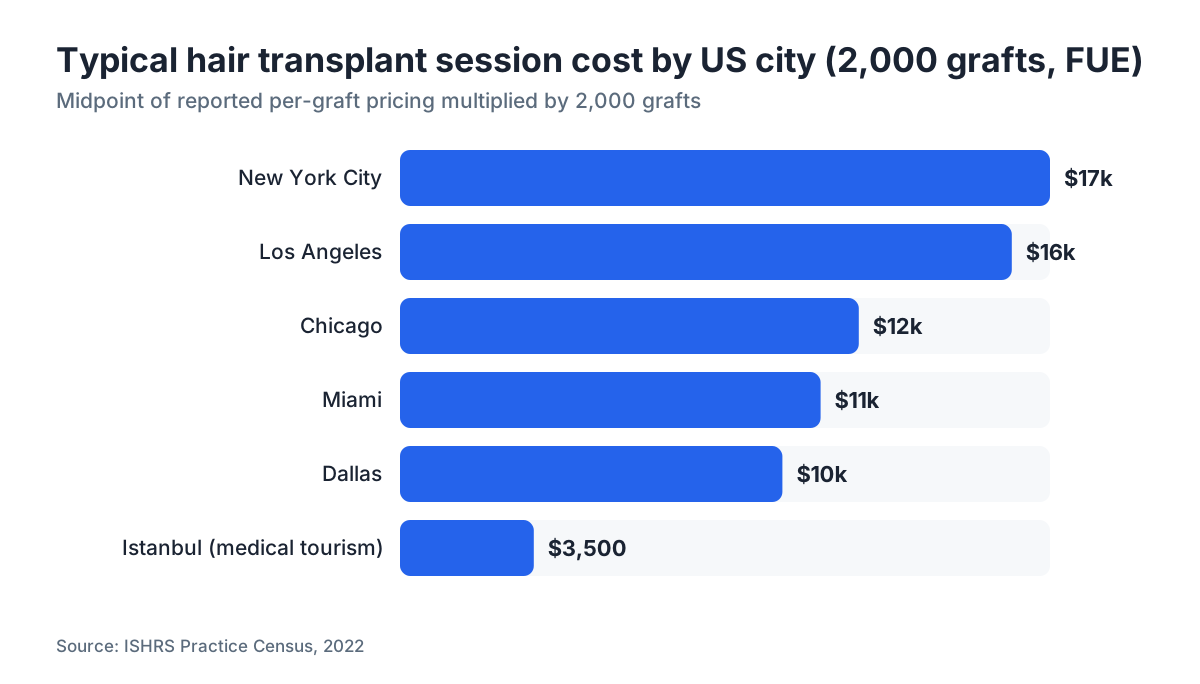
New York City is one of the priciest markets in the country for hair restoration, second only to Beverly Hills in most industry surveys. The table below shows approximate per-graft pricing and total session costs across major US markets [1][4].
| City | Per-graft range | Typical 2,000-graft session |
|---|---|---|
| New York City | $5 to $12 | $10,000 to $24,000 |
| Los Angeles | $5 to $11 | $10,000 to $22,000 |
| Chicago | $4 to $8 | $8,000 to $16,000 |
| Dallas | $3 to $7 | $6,000 to $14,000 |
| Miami | $3 to $8 | $6,000 to $16,000 |
| Istanbul (medical tourism) | $1 to $3 | $2,000 to $5,000 |
Istanbul is the global center for medical tourism hair transplants, and plenty of patients fly there for procedures that cost a fraction of NYC prices. Results from well-reviewed Istanbul clinics can be excellent. The risks are real too. Follow-up care is hard to coordinate from another continent, revision surgery gets expensive once you add flights and hotels, and quality swings wildly between clinics. Nobody has clean aggregated complication data on international transplant tourism; the closest published analysis is a 2021 case series in the Journal of the European Academy of Dermatology and Venereology describing complications in patients who returned from abroad [5].
Staying local in New York costs more, and the extra money buys something concrete: surgeons with strong credentials, follow-up appointments you can actually get to, and accountability if something goes wrong.
What qualifications should a NYC hair transplant surgeon have?
This is where most patients do the least homework and where the stakes are highest.
Board certification in dermatology (American Board of Dermatology) or plastic surgery (American Board of Plastic Surgery) is a baseline, not proof of transplant skill. Hair restoration is a subspecialty. The two main professional bodies are the International Society of Hair Restoration Surgery (ISHRS) and the American Board of Hair Restoration Surgery (ABHRS). The ABHRS certification exam requires documented case experience plus a written and oral test [6]. It is not mandatory to practice, but a surgeon who holds it has proven they meet a defined standard.
The New York State Department of Health licenses physicians and posts public disciplinary records [7]. Before you book, look up your surgeon's license and check for any actions. It takes five minutes. Almost nobody does it.
Watch for these red flags during a consultation: a technician runs your scalp analysis instead of the physician, the surgeon can't tell you how many cases they personally do per week, the price sits far below market (usually a sign the surgeon isn't in the room for most of the work), or the clinic pushes a larger graft count than you asked about with no clinical reason.
A good surgeon will tell you flat out if you're not ready. If your loss is early and still moving, operating now often means a second procedure in three to five years as the native hair around your new grafts keeps falling. A surgeon who won't say that is not looking out for you.
Who is a good candidate for a hair transplant in NYC?
The ideal candidate has stable hair loss, enough donor hair in the back and sides of the scalp, realistic expectations, and a Norwood scale pattern that surgery can actually address [8].
Stability matters more than most patients think. Transplanted follicles are genetically resistant to DHT (the hormone behind androgenetic alopecia), so they tend to last. But the native hair around them keeps thinning. If you're 25 and shedding aggressively, a transplant today can look great for a few years, then look patchy as the surrounding hair vanishes. Most experienced NYC surgeons prefer to wait until the pattern settles, or until you're on medical therapy (finasteride, minoxidil, or both) that has slowed the slide.
Donor density is the other hard limit. FUE can harvest roughly 4,000 to 6,000 grafts over a lifetime from the back and sides, though that ceiling depends on your scalp laxity and follicle density. If your loss is advanced (Norwood 6 or 7) and you want full coverage, you may not have the supply. A good surgeon maps your donor density with a trichoscope or densitometer at the consultation.
People with diffuse thinning across the whole scalp, donor area included, are generally poor candidates. So are patients with certain autoimmune types like alopecia areata, where the transplant may not survive if the autoimmune process is active [9].
Want a preliminary read on your pattern before booking consultations? MyHairline's free AI hair analysis at /scan can map your hairline and thinning zones. It does not replace a clinical exam, but it gives you something concrete to bring into one.
What is the hair transplant procedure like, step by step?
Most NYC hair transplants happen as outpatient procedures under local anesthesia. You arrive in the morning, the team photographs your scalp and marks the hairline design with your input, then the surgeon injects local anesthetic into the donor and recipient areas. This is the most uncomfortable part of the day.
For FUE, extraction comes next. The surgeon or a technician uses a punch tool (typically 0.8 to 1.0 mm across) to score around each follicular unit and lift it out. A 2,000-graft session runs roughly four to six hours, sometimes split across two days for very large cases. The extracted grafts sit in a holding solution while the implantation team preps the recipient sites.
The surgeon makes small incisions (slits or holes, depending on the tool) in the thinning areas, matching the natural angle and direction of the existing hair. Grafts go in one by one. This is where artistry actually matters. A flawless extraction followed by sloppy implantation angles produces hair that looks fake.
Afterward, the back of your head has small open punctures and the recipient area holds tiny implanted grafts. You leave with instructions on washing, sleeping position (elevated for the first few nights to cut swelling), and activity limits. Most people take three to five days off work. Redness and crusting in the recipient area last about one to two weeks.
The grafts then go through a shedding phase called shock loss, starting around two to six weeks out. This is normal and expected. New growth begins at three to four months, and the full result takes twelve to eighteen months to show [2].
How long does hair transplant recovery take in NYC?
Most people look presentable in ten to fourteen days, though you'll still see some pinkness. Desk work is fine at three to five days if you're comfortable with people seeing your head. Gym and heavy exercise usually clear at two weeks. Swimming and contact sports at four weeks.
The emotional recovery runs longer. Shock loss, when the newly transplanted hairs fall out in the first month, is the hardest part for most patients. You can look worse at six weeks than you did before surgery. This is not a failure. The follicle bulb is alive beneath the surface and will grow a new shaft in the months that follow.
By month three to four, the first new growth appears. By month six, you can see where the result is heading. Month twelve is when most surgeons assess the outcome. Month eighteen is when the last stragglers finish growing in.
If you smoke, stop before surgery. Nicotine constricts blood flow and is tied to higher rates of graft failure in the dermatologic surgery literature. If you're on blood thinners, your surgeon will have you pause them ahead of time under your prescribing physician's guidance.
Should you use finasteride or minoxidil alongside a hair transplant?
Most hair restoration surgeons in NYC will strongly push you to pair a transplant with medical therapy, and the evidence backs them up.
Finasteride (Propecia) lowers DHT and slows or stops further loss in the areas you didn't transplant. Because transplanted hair is DHT-resistant but your native hair is not, halting the ongoing miniaturization of surrounding follicles extends how long the result stays full. A 2002 randomized controlled trial in the Journal of the American Academy of Dermatology found that 1 mg daily finasteride maintained or increased hair count in 83% of men over two years [10]. The FDA approved finasteride 1 mg for androgenetic alopecia in men in 1997 [11].
Minoxidil, applied topically to the recipient and thinning areas, may support graft survival in the early post-op window, though the evidence for that specific claim is thin. Clearer is that it helps hold the native hair around the transplant. Some patients take oral minoxidil, which shows similar or greater efficacy at lower doses and avoids scalp irritation, though it stays off-label for hair loss (see oral minoxidil for more detail).
For a combined approach, read our comparison of finasteride and minoxidil. To understand DHT's role in more depth, dht blocker covers the mechanism and your options.
Not every patient wants to be on medication for decades, and that's a real conversation to have with your surgeon. But walking into a $12,000 procedure with no plan for the hair you didn't transplant is a decision worth sitting with.
What are the risks and complications of hair transplants?
Hair transplants have a strong safety record when a trained surgeon works in a proper facility, but they are not risk-free.
The common issues are temporary and minor: forehead swelling in the first few days, folliculitis (small pimples around newly growing hairs, usually self-resolving), and numbness or itching in the donor area that fades over weeks to months.
More serious complications include infection, which is uncommon but needs antibiotics when it shows up. Keloid or hypertrophic scarring can happen in the donor area, especially in patients with a personal or family history of abnormal scarring. Graft failure, where a chunk of transplanted hair never grows, can come from poor graft handling, patient factors like vascular disease, or surgical error.
A risk specific to FUE is over-harvesting. Take too many grafts from the donor zone in one session, or across too many sessions, and the back of the scalp can look thin or patchy. This is called donor depletion, and it is very hard to reverse.
Necrosis (tissue death) in the recipient area is rare but possible, usually after procedures with a large number of closely-spaced incisions that choke off blood supply.
The American Academy of Dermatology's guidelines on hair loss say patients should be counseled on realistic expectations before any surgical intervention [9]. If a clinic tells you the procedure carries no real downside, walk out.
Understanding what causes hair loss in the first place gives you better context for what surgery can and can't do. See what causes hair loss for the full overview.
How do you find the best hair transplant surgeon in New York City?
Start with credentials, not Instagram. Search the ISHRS member directory (ishrs.org) and the ABHRS directory (abhrs.org) for New York surgeons with certification. Cross-reference against the New York State physician license lookup [7].
Then go to consultations, plural. See at least two surgeons before you commit. A good consultation has the surgeon personally examining your scalp (not a salesperson or coordinator), a discussion of your Norwood stage and likely loss trajectory, a realistic graft count with the reasoning behind it, and a straight answer to one question: who is in the room for the extraction and implantation?
Ask to see before-and-after photos from the surgeon's own patients, not stock images. Ask whether you can speak to a past patient. Ask flat out about the surgeon's complication rate and how they handle cases where the result comes up short.
Price shopping is fair, but don't let it run the decision. A $14,000 procedure with an ABHRS-certified surgeon who does five cases a week usually beats a $7,000 one where you can't get a clear answer about who actually holds the punch tool.
Word of mouth from the NYC hair loss community is genuinely useful. Online forums and subreddits focused on hair restoration have members who document their experiences in detail, naming specific surgeons. Real patient results over 12 to 18 months beat any marketing material.
Still figuring out how severe your loss actually is before booking? A receding hairline assessment and MyHairline's free AI scan at /scan can both help you pin down your stage.
Is a hair transplant worth it compared to other treatments?
For the right candidate, a hair transplant is the only treatment that permanently replaces lost hair. Finasteride and minoxidil can slow or partially reverse loss, but they need ongoing use and won't regrow hair in fully bald areas where the follicles are already gone.
The math shifts with how much you've lost. If you're a Norwood 2 or 3 with early recession, starting finasteride now and watching how the pattern develops usually beats surgery. If you're a stable Norwood 4 with a clear pattern and adequate donor supply, a transplant fills in what medication cannot.
Hair loss supplements get a lot of attention and carry very little evidence. Biotin deficiency is genuinely rare, and dosing past your needs has not been shown to grow hair in people who aren't deficient. Saw palmetto has some weak DHT-inhibiting data but is far less effective than finasteride. See hair loss supplements for a clear-eyed look at what the research actually shows.
Some patients shed after a stressful life event rather than from true androgenetic alopecia. That condition, telogen effluvium, usually resolves on its own and needs no surgery. Get a proper diagnosis before you spend money on a transplant.
Go in with good medical management, realistic expectations about the timeline, and a skilled surgeon, and the results can last decades. That's a very different value proposition from paying for something forever. For most men with stable androgenetic alopecia past Norwood 3, the long-term math often favors surgery over a lifetime of medication costs, though doing both is the most effective strategy overall.
Sources
- International Society of Hair Restoration Surgery, Practice Census Results
- American Academy of Dermatology, Hair Loss Treatment Overview
- U.S. Food and Drug Administration, 510(k) Premarket Notification Database, ARTAS System
- ISHRS 2022 Practice Census Report
- Journal of the European Academy of Dermatology and Venereology, 2021 case series on complications after hair transplant tourism
- American Board of Hair Restoration Surgery, Certification Requirements
- New York State Department of Health, Physician License Verification
- American Academy of Dermatology, Androgenetic Alopecia and the Norwood Scale
- American Academy of Dermatology, Clinical Guidelines on Androgenetic Alopecia
- Kaufman KD et al. Finasteride 1 mg in the treatment of men with androgenetic alopecia. Journal of the American Academy of Dermatology, 2002
- U.S. Food and Drug Administration, Propecia (finasteride 1 mg) Drug Label