
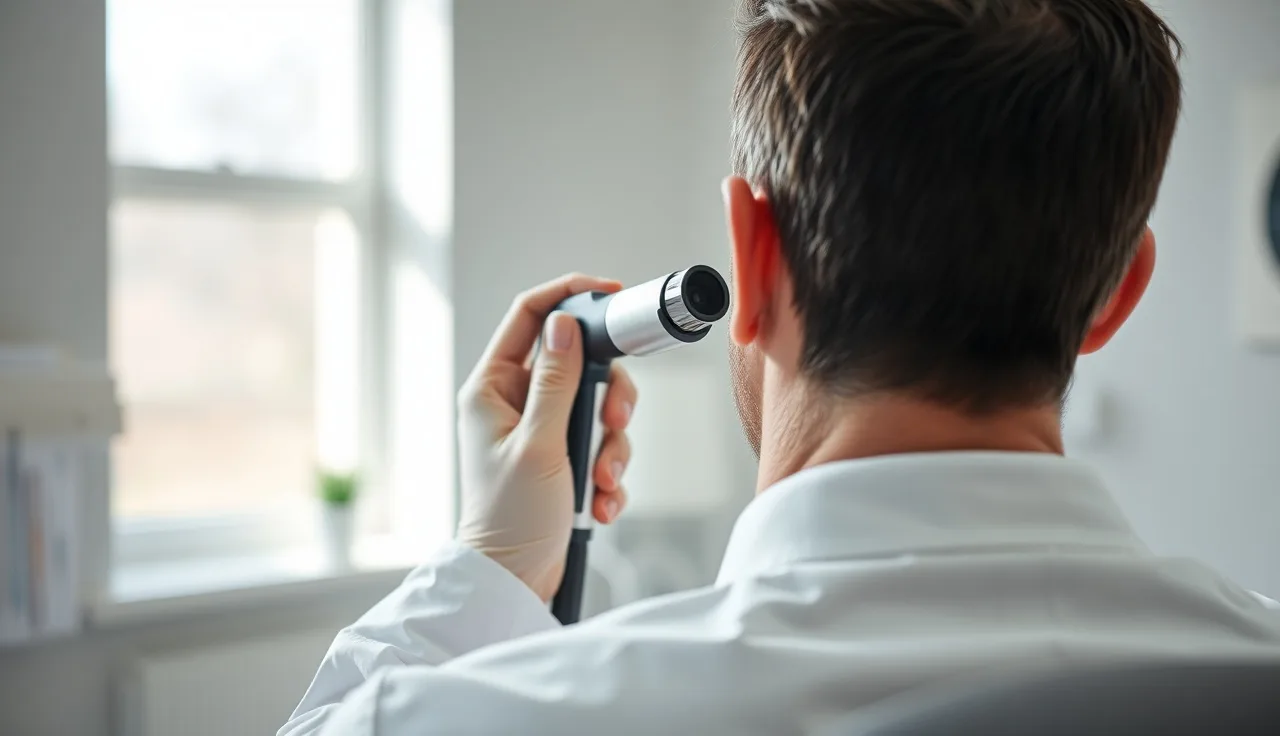
TL;DR: Most surgeons treat 40 to 80 follicular units per cm² as workable donor density, with the best candidates sitting around 60 to 80 FU/cm². Below roughly 40 FU/cm², there usually aren't enough grafts to cover much without wrecking the donor zone. A trained surgeon measures this with a dermoscope or trichometer before quoting you a single graft count.
Why donor density is the single biggest limit on transplant results
A hair transplant moves hair. It does not make new hair. Follicles get relocated from a donor zone that resists DHT (almost always the back and sides of the scalp) to the top, where thinning or baldness has set in. How much you can move over your whole life is fixed by two things: how many follicular units live in that donor zone, and how tightly they sit together.
Density outranks almost everything else at your consultation. The best surgeon alive cannot pull full coverage out of a sparse donor area. Flip it around and a patient with heavy density can walk away looking like they never lost a hair.
The donor zone is also permanent in a way most people underestimate. Every follicular unit removed is gone for good. Surgeons call this the "donor supply problem," and any honest clinic builds it into the plan before offering you surgery [1].
When the donor is thin, the surgeon runs into simple arithmetic: not enough supply to meet the demand. Understanding what the numbers mean keeps you from paying $10,000 or $20,000 for a result that leaves you flat.
What does 'donor density' actually mean in numbers?
Donor density is counted in follicular units per square centimeter (FU/cm²). A follicular unit is a natural bundle of one to four hairs growing from a single follicle group. Because each unit carries several hairs, hair density (hairs per cm²) always runs higher than FU density.
The average Caucasian scalp carries roughly 65 to 85 follicular units per cm² in the donor zone, which works out to about 100 to 150 individual hairs per cm² [2]. Ethnicity shifts these numbers. People of Asian descent often have fewer FUs but thicker hair shafts, which cover more scalp per graft. People of African descent often have tight curl that lets single grafts read as fuller than they are.
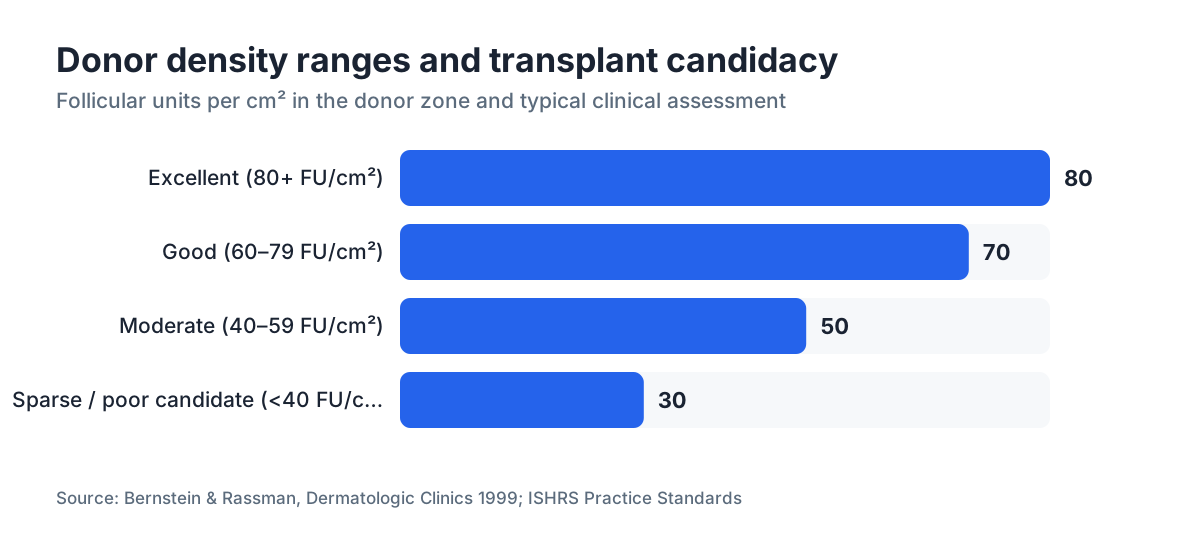
Here is the rough framework surgeons carry in their heads:
| Donor density (FU/cm²) | General assessment |
|---|---|
| 80+ | Excellent; good candidates for large sessions |
| 60 to 79 | Good; typical candidate range |
| 40 to 59 | Moderate; careful planning needed |
| Below 40 | Sparse; surgery may not achieve meaningful coverage |
These thresholds are not laws. Density gets weighed against the size of the recipient area, hair caliber (thickness), and the color contrast between hair and scalp. A patient with 45 FU/cm² of thick, dark hair close to their skin tone can end up looking better than someone with 70 FU/cm² of fine, high-contrast hair.
One more number counts: the safe donor area itself. For FUE (follicular unit excision), surgeons work inside a region bounded by the occipital scalp and the temporal sides, roughly 6,000 to 8,000 cm² across an average head [3]. Multiply usable density by safe area and you have your total graft reservoir.
How do surgeons actually measure donor density before surgery?
Eyeballing the back of your head is not the job. Real clinics use at least one, usually two, of these methods.
Dermoscopy (trichoscopy). A handheld or video dermoscope magnifies the scalp 10x to 70x and counts follicular units per cm² on screen. It also picks up miniaturization, the early thinning where follicles are still there but shrinking. Miniaturized follicles in the donor zone are a warning sign, because they may not survive transplantation reliably [4].
Trichometer or phototrichogram. This shaves a small patch (usually 1 cm²) in the donor area, photographs it at day 0 and day 2, and lets software count the hairs that grew back. It gives hair density (hairs/cm²) rather than FU density, but most surgeons convert. Some clinics call it the "FotoFinder" method after a common trichoscopy brand.
FUE extraction test. A few grafts get pulled from one spot and the punch diameter is matched against the follicular unit spacing. The surgeon gets a hands-on read of how tightly the units are packed. This sometimes happens right at the start of a planned session to confirm the pre-op estimate.
The International Society of Hair Restoration Surgery (ISHRS) treats a thorough donor evaluation as part of any ethical pre-operative consultation [1]. A clinic that skips it and quotes you a graft count off photos alone is waving a red flag.
Upload a photo of your donor area to MyHairline's free AI scan for a rough read on visible thinning patterns before you set foot in a clinic.
What role does miniaturization in the donor zone play?
Miniaturization is DHT slowly shrinking a follicle over years. The hair gets thinner, shorter, then quits altogether. In the donor zone, that is a real problem.
A follicular unit that shows up under dermoscopy but is already miniaturizing may never produce a full, permanent hair after transplant. Surgeons generally want under 20% miniaturization in the planned harvest zone. Above that, the long-term stability of transplanted hair gets unpredictable [4].
Miniaturization in the donor zone can point to a few things. You might have diffuse unpatterned alopecia (DUPA), a form of androgenic alopecia where DHT sensitivity ignores the usual safe zones. You might have telogen effluvium thinning the whole scalp temporarily, donor included. (The telogen effluvium article covers how to tell that apart from permanent loss.) Or you might be at an early, aggressive stage of pattern baldness that hasn't fully shown its hand yet.
Checking the donor zone for miniaturization is one of the most useful things you can ask a surgeon to do. Ask for a percentage. If they can't give one, or they say it looks fine without measuring, push back.
How many total grafts can you realistically harvest in a lifetime?
This is the question most patients should ask and almost never do.
A solid candidate with 70 FU/cm² and a safe FUE donor area of 120 to 150 cm² has roughly 8,000 to 10,000 grafts available for their entire life [3]. That sounds like plenty until you learn that restoring a Norwood 5 hairline to a reasonable density can eat 4,000 to 6,000 grafts in one sitting. A two-session plan can drain the whole lifetime supply.
Strip (FUT) surgery harvests from a wider band and sometimes yields more grafts per session than FUE, because the effective donor zone is larger and transection runs lower. The trade is a linear scar. FUE leaves tiny dot scars scattered across the zone instead. Both methods pull from the same finite reservoir.
Some surgeons count body hair (beard, chest) as backup donor supply, mostly for patients whose scalp donor is limited. Beard hair survives scalp transplantation with decent success, though its growth cycle differs and it can behave a little differently once moved [1]. Body hair as a primary donor is a last resort, not a first plan.
For men who are young (under 25) or early in their Norwood progression, taking only what's needed now and protecting the rest with medical treatment like finasteride or minoxidil for men usually beats a big early session. The lifetime supply is the thing you're really spending.
Does hair thickness (caliber) change how density requirements work?
Yes, a lot. Density gives you the count. Caliber gives you the optical trick of fullness.
One thick hair (diameter 80 to 100 microns or more) covers more scalp than two fine hairs (40 to 55 microns each). Surgeons talk about "follicular unit equivalent" coverage and often apply a caliber multiplier. That's why Asian patients, who tend toward lower FU/cm² but higher shaft diameter, can sometimes get better cosmetic coverage per graft than the FU count alone predicts [2].
Hair color against skin tone is the other caliber-adjacent variable. High contrast (dark hair, pale scalp) makes every thin spot pop. Low contrast (blonde on fair skin, or grey on pale scalp) can make the same objective density look far fuller. Surgeons often tell high-contrast patients to expect less coverage and aim for higher density.
A good pre-surgical consult accounts for all of it. A density number by itself tells you less than that number plus caliber plus contrast plus recipient area size. If a clinic hands you a graft quote without ever mentioning caliber and contrast, they left variables on the table.
What conditions can disqualify you from being a good donor candidate?
Several conditions make a transplant a bad idea even when density looks fine at a glance.
Diffuse unpatterned alopecia (DUPA). Hair loss that ignores the usual horseshoe safe zone. The back and sides thin right along with the top. Transplanted grafts can be lost to DHT over time. DUPA hits a minority of people with androgenic alopecia and is easy to miss without a careful donor exam.
Active alopecia areata. This autoimmune condition can strike the donor zone and makes graft survival almost impossible to predict. Most surgeons won't operate until alopecia areata has stayed in remission for at least two years [4].
Scarring alopecias (lichen planopilaris, frontal fibrosing alopecia). These destroy follicles permanently and can hit any scalp zone. Transplanting into an active scarring condition tends to fail, and harvesting from a scarred donor zone gives low graft survival. The American Academy of Dermatology treats these as distinct from patterned loss for good reason [8].
Recent or ongoing chemotherapy. Temporary, but density readings are unreliable until hair cycles normalize.
Telogen effluvium in the donor zone. A stressful event, crash diet, or illness can push a big share of follicles into rest, making density read lower than the true baseline. The article on what causes hair loss walks through these triggers. Surgeons usually want the shedding resolved for at least six months before they assess donor density.
Being on a DHT blocker like finasteride before surgery is a plus, not a problem. It steadies the recipient area and may help hold donor density over the long run, though it can't bring back follicles already lost.
What happens if you proceed with a transplant on an insufficient donor area?
The outcomes run from disappointing to permanent.
If density is a bit low but not critically sparse, you can end up with see-through coverage instead of natural fullness. The transplanted area looks worked on but wrong under strong light. Patients call it "the doll look" or "pluggy" when grafts sit too far apart, trying to cover too much ground with too few of them.
Overharvest a sparse donor zone, especially with FUE, and the donor itself starts to look moth-eaten. Extracted follicles leave small circular holes that stack up into a visibly low-density patch at the back. This is "donor area depletion," and in bad cases it's a disfigurement that's hard to walk back [1]. Rassman and colleagues flagged exactly this risk in their early FUE work in Dermatologic Surgery [10].
If donor miniaturization was there but got missed, the transplanted hairs may thin and shed over five to ten years, dropping the patient back to where they started or worse, now with a depleted donor and no good moves left.
The ethical surgery community has grown louder about all of this. ISHRS guidance on ethical practice names overpromising coverage as a specific red flag for patients [1]. A surgeon who promises full coverage from a sparse donor, or quotes a huge graft count without examining your donor zone, is not being straight with you.
How can you stabilize your hair before assessing donor viability?
Measuring donor density while your loss is still moving is like measuring a moving target. Today's number can be different in two years, and the recipient area you need to cover will only be bigger.
For most people with androgenic alopecia, finasteride (1 mg/day orally) is the best-supported way to slow or stop progression. A 1998 randomized controlled trial in the Journal of the American Academy of Dermatology found that finasteride 1 mg/day produced "a mean increase of 277 hairs in a 1-inch circle count area" versus a decline in the placebo group over two years [5]. The FDA approved finasteride 1 mg for male pattern hair loss in 1997 [6].
Minoxidil works through a different mechanism and pairs fine with finasteride. The FDA has approved topical minoxidil for hair loss in both men and women [6]. Some clinics now use low-dose oral minoxidil (2.5 to 5 mg/day for men), though that's off-label. The article on finasteride and minoxidil covers how the two run together.
Most experienced surgeons want candidates on at least one stabilizing treatment for six to twelve months before surgery. It does two jobs: it cuts the odds the recipient area keeps expanding after surgery, and it gives the donor zone time to show its true density once temporary shedding clears.
If your receding hairline has moved fast in the past two years, that's your cue to stabilize before committing to surgery.
What questions should you ask a surgeon about your donor area at consultation?
Walk into any transplant consultation with these questions. The answers tell you almost everything about the quality of care.
1. What is my current donor density in FU/cm²? They should give you a number from a real measurement, not a guess off observation.
2. What percentage of miniaturization do you see in my donor zone? Anything above 15 to 20% deserves a candidacy conversation.
3. What is my estimated lifetime graft supply? This number should decide whether they push a conservative or aggressive first session.
4. How many grafts are you proposing this session, and what percentage of my total supply is that? Taking more than 50 to 60% of lifetime supply in one go is aggressive and leaves little room later.
5. Do you see any evidence of DUPA or diffuse thinning in the donor zone? This one question separates the surgeons who actually looked from the ones who didn't.
6. Will my donor density support the coverage I'm expecting? Get their honest read on the gap between what you want and what the numbers allow.
A surgeon who answers all six clearly, even when the answers sting, is worth trusting. A surgeon who slides away from specifics and into glossy before-and-afters is not.
Running a MyHairline AI scan before your consultation gives you a baseline read on your thinning pattern and helps you frame these questions with real context.
Can you improve donor density before a transplant?
Not really, but you can stop it from getting worse and make sure you're measuring it at its best.
Finasteride and minoxidil can't grow new follicles. They can rescue miniaturizing ones and bring back some functional density in both the recipient and donor zones, which is why density measured before you start treatment can underestimate your true viable supply. A surgeon assessing donor density on a patient two years into stable finasteride is working with a far more reliable number than one taken at the first sign of loss.
Platelet-rich plasma (PRP) injections into the donor zone get pitched as a way to improve graft survival after harvest, not to raise baseline density before surgery. The evidence is mixed and the studies are small, though a 2019 systematic review in Dermatologic Surgery found some benefit for hair density and thickness [7]. It is no substitute for adequate baseline density.
Low-level laser therapy (LLLT) has FDA clearance as a hair-growth device, but the effect size is modest and the evidence is weaker than finasteride's [6]. It will not rescue a genuinely insufficient donor area.
The honest version: if your donor is truly sparse, no pre-surgical treatment reliably turns you from a poor candidate into a good one. The variables that decide this are genetic and structural.
Sources
- International Society of Hair Restoration Surgery (ISHRS), Practice Standards
- Bernstein RM, Rassman WR. Follicular unit transplantation. Dermatologic Clinics, 1999
- Unger WP et al. Hair Transplantation, 5th ed., chapter on donor area planning
- Dhurat R, Saraogi P. Hair evaluation methods: merits and demerits. International Journal of Trichology, 2009
- Kaufman KD et al. Finasteride in the treatment of men with androgenetic alopecia. Journal of the American Academy of Dermatology, 1998
- U.S. Food and Drug Administration, Drugs information and approvals
- Gupta AK, Carviel JL. Meta-analysis of efficacy of platelet-rich plasma therapy for androgenetic alopecia. Dermatologic Surgery, 2019
- American Academy of Dermatology Association, Hair loss types and treatments
- Nusbaum BP, Fuentefria S. Naturally occurring female hairline patterns. Dermatologic Surgery, 2009
- Rassman WR et al. Follicular unit extraction: minimally invasive surgery for hair transplantation. Dermatologic Surgery, 2002