

TL;DR: A receding hairline from androgenetic alopecia can be slowed, partially reversed, or restored with FDA-approved treatments: finasteride (oral), minoxidil (topical or oral), low-level laser therapy, and hair transplants. Full regrowth is rare without surgery. Starting early gives the best outcome. No supplement or shampoo reverses genetic hair loss.
Can you actually reverse a receding hairline?
Sometimes, partially, and it depends almost entirely on how early you start and what caused it.
Androgenetic alopecia (male or female pattern baldness) is behind the vast majority of receding hairlines. It's driven by dihydrotestosterone (DHT) shrinking hair follicles over years until they stop producing visible hair. Once a follicle has been completely miniaturized and sits dormant long enough, the window for medical regrowth closes. That's the hard ceiling no pill or serum gets past.
Follicles that are miniaturized but still alive, which is most of what you see in the early-to-mid stages, can often be coaxed back into producing thicker, more visible hair. Several treatments have genuine clinical evidence behind them. The word "reverse" is a stretch for the most severe cases. "Significantly slow and partially restore" describes what medicine can do without surgery more honestly [1].
If your hairline has been receding for only a year or two, you're in the best position. If you've watched it thin for a decade and the skin at your temples is smooth and shiny, you're likely looking at surgery as the only meaningful restoration option. We'll cover the full spectrum.
What causes a receding hairline and why does that matter for treatment?
Treatment only works when it targets the right mechanism. A receding hairline has more than one cause, and they don't all respond to the same fixes.
Androgenetic alopecia is by far the most common driver. DHT binds to receptors in genetically susceptible follicles and triggers a miniaturization process that shortens the growth (anagen) phase cycle by cycle. The receding hairline gets worse over time in a predictable pattern described by the Norwood scale.
Telogen effluvium is different. It's a temporary, diffuse shed triggered by physiological stress: crash dieting, surgery, illness, or extreme psychological stress. Hair can thin suddenly across the entire scalp, but it almost always grows back once the trigger is gone, usually within 6 to 9 months. No medication required. You can read more about that process at our telogen effluvium article.
Traction alopecia happens when hairstyles pull constantly at the hairline, particularly tight ponytails, cornrows, or buns. Caught early, it reverses fully when the tension stops. Left too long, it causes permanent scarring.
Scarring alopecias (lichen planopilaris, frontal fibrosing alopecia) actively destroy follicles and can look like a receding hairline, but they don't respond to minoxidil or finasteride. A dermatologist has to rule these out before you spend money on treatments that won't work.
The first practical step, before trying anything, is understanding what causes hair loss in your specific case. If you're unsure, a board-certified dermatologist can examine the pattern, pull a few hairs, and often give you a confident diagnosis without a biopsy.
Which treatments have real evidence for reversing a receding hairline?
The short version: finasteride and minoxidil have the most trial data. Used together they work better than either alone. Everything else has thin evidence, works for a specific subset, or is adjunctive.
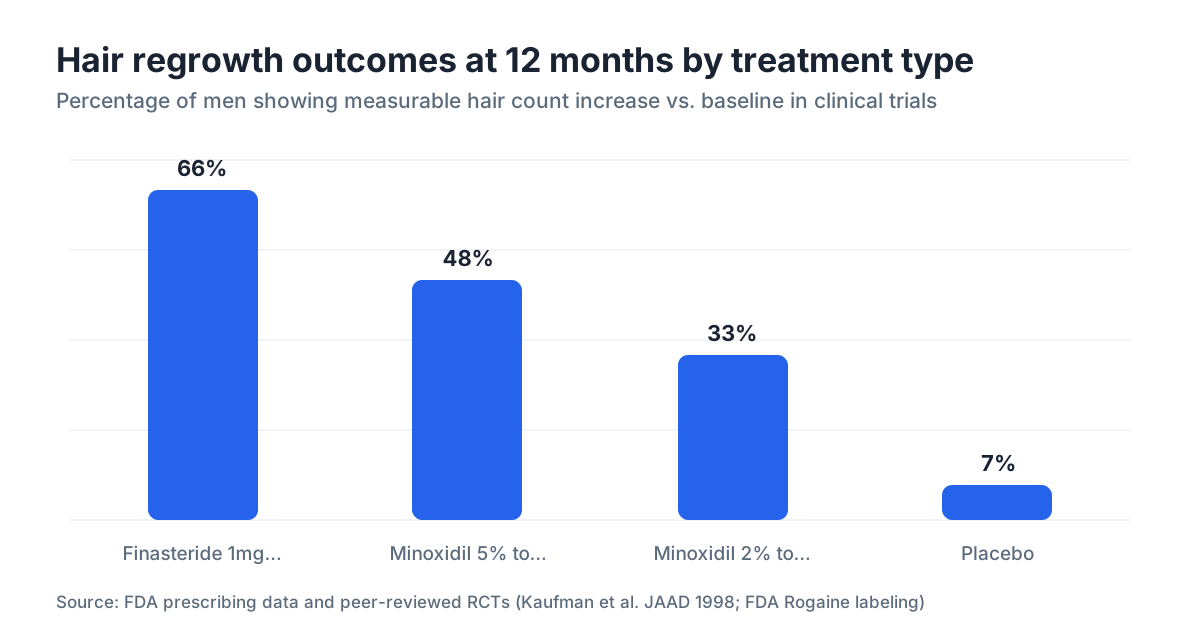
Finasteride (oral) Finasteride 1 mg daily is FDA-approved for androgenetic alopecia in men [2]. It inhibits type II 5-alpha reductase, the enzyme that converts testosterone to DHT, cutting scalp DHT by roughly 60 to 70 percent. A two-year randomized controlled trial published in the Journal of the American Academy of Dermatology found that 83% of men taking finasteride had no further hair loss, and 66% showed measurable hair regrowth compared to baseline [3]. Those numbers hold up across replication studies.
The catch: it takes 6 to 12 months to see meaningful results, you have to keep taking it to maintain them, and roughly 1 to 2 percent of men have sexual side effects (decreased libido, erectile dysfunction) that reverse in most cases after stopping [2]. More detail is at our finasteride article.
Topical minoxidil Minoxidil 2% and 5% solutions are FDA-approved for hair loss in both men and women [4]. It's a vasodilator that extends the anagen phase and may directly stimulate follicle activity, though the exact mechanism is still not fully nailed down. It doesn't block DHT, which is why it works better at maintaining density than at regrowing a dramatically receded hairline.
For men, the 5% formulation beats the 2% in clinical trials. A 48-week trial found 5% topical minoxidil produced 45% more hair regrowth than 2% in men with androgenetic alopecia [4]. The common issues are scalp irritation and, in some cases, unwanted facial hair from drips. Full detail on what to expect is in our minoxidil for men guide.
Oral minoxidil Low-dose oral minoxidil (0.625 to 5 mg daily) has shown strong results in observational studies and is increasingly used off-label by dermatologists for patients who find topical application inconvenient or get scalp irritation. A 2021 systematic review in the Journal of the American Academy of Dermatology found oral minoxidil effective for androgenetic alopecia with a favorable safety profile at low doses, though hypertrichosis (body hair growth) and fluid retention are reported side effects [5]. It requires a prescription. Our oral minoxidil page covers dosing and side effects in detail.
Finasteride plus minoxidil together The combination beats either treatment alone in head-to-head trials. If you're using one and not the other, there's a reasonable argument to add the second. We've covered the combination evidence at finasteride and minoxidil.
Low-level laser therapy (LLLT) FDA-cleared laser devices for home use, including combs and caps, have data showing modest improvements in hair density [6]. FDA clearance is not the same as FDA approval, but it does mean the safety and efficacy claims went through review. The effect size is smaller than medication. It's a reasonable add-on, not a replacement.
Platelet-rich plasma (PRP) PRP injections into the scalp use your own blood's growth factors to stimulate follicles. The evidence is growing, with several randomized trials showing improvement in hair count and thickness, but protocols still vary between clinics, which makes outcomes variable [7]. It's not cheap, typically $500 to $2,000 per session, and usually needs repeat sessions.
How effective is finasteride at reversing a receding hairline?
Finasteride is the strongest single medical option for androgenetically driven hairline recession in men. The two-year Merck-sponsored trial that led to FDA approval found that 66% of men had measurable regrowth, and 83% showed no further loss [3]. A five-year follow-up found that men who continued finasteride kept their results, while men who stopped saw hair loss resume within 12 months.
At the hairline specifically, regrowth at the temples tends to be more modest than at the crown. Frontal hairline follicles have more DHT receptors and are more sensitive to the hormone, which is why they often recede first and recover less completely than midscalp hair. Realistic expectations: a year of finasteride might give you a denser, slightly fuller hairline rather than a fully restored juvenile hairline.
Finasteride is not approved for women who are or may become pregnant, because of teratogenicity risk, and its use in women with pattern hair loss is off-label [2]. Women of childbearing age should discuss this carefully with a physician.
Side effects are the main hesitation point. The FDA label reports sexual side effects (libido reduction, ejaculatory disorder, erectile dysfunction) in 1.8% of men in clinical trials versus 1.3% in the placebo group [2]. Post-marketing reports of persistent side effects after stopping exist, though causality is debated in the literature.
Does minoxidil reverse a receding hairline or just slow it down?
Both, to varying degrees, depending on the stage.
Minoxidil is better at preventing further recession and increasing density in existing miniaturized zones than at filling in large areas of established baldness. In the early Norwood stages (I through III), consistent minoxidil use can produce visible regrowth at the temples. In Norwood V and beyond, you're mostly in maintenance territory.
The 5% topical foam has better evidence than the 2% liquid for men. Application twice daily is the FDA-approved regimen; once daily shows less effect. The minoxidil side effects you're most likely to encounter are scalp dryness, initial shedding (a normal but alarming response in the first 4 to 8 weeks), and in rare cases, cardiac symptoms with oral formulations.
One thing minoxidil cannot do: counteract the ongoing DHT-driven miniaturization. If you stop using it, the hair it maintained typically sheds within 3 to 6 months. That's not a failure of the drug. It's the nature of treating a chronic, progressive condition.
Are there DHT blockers or supplements that help?
Finasteride and dutasteride are the evidence-backed DHT blockers. Everything else marketed as a "DHT blocker" has much weaker data.
Saw palmetto is the most popular supplement claim. Some small studies suggest it inhibits 5-alpha reductase, but the concentrations needed and the actual DHT reduction achieved are far below what finasteride delivers. A 2020 review in Dermatology and Therapy concluded saw palmetto had modest, inconsistent evidence and that existing trials were too small to draw firm conclusions [8]. It's not nothing, but it's not a substitute for a real medication if you're serious about reversing hair loss.
Biotin gets sold relentlessly for hair loss but does essentially nothing for androgenetic alopecia. Biotin deficiency can cause hair loss, but that deficiency is rare in healthy adults eating a normal diet. Supplementing beyond your needs doesn't produce extra growth. Our hair loss supplements breakdown covers what the evidence actually says.
DHT blocker shampoos with ketoconazole (like Nizoral) have a small but real supporting study base. Ketoconazole may have mild anti-androgenic effects at the scalp level. It won't reverse significant recession on its own, but as an adjunct to finasteride or minoxidil, there's some logic to it. Our dht blocker article goes deeper.
Nutrient deficiencies (iron, ferritin, zinc, vitamin D) can worsen hair loss that's already happening from other causes. Correcting a deficiency won't reverse pattern baldness, but it can stop a secondary accelerant.
What Norwood stage determines whether you can reverse without surgery?
Stage matters enormously. Think of it as a spectrum from "medicine works well" to "medicine maintains what's left."
| Norwood Stage | What it looks like | Medical treatment likely outcome |
|---|---|---|
| I | No significant recession | Prevention; maintain current hairline |
| II | Slight temple recession | Good regrowth possible with finasteride + minoxidil |
| III | Moderate temple recession, possible crown thinning | Partial regrowth at hairline; better results at crown |
| IV | Significant frontal loss, separated by a band | Slow further loss; modest density improvement |
| V | Large bald area, narrow band remains | Mainly maintenance; temples unlikely to fill |
| VI | Band mostly gone, large continuous bald area | Medical treatment has limited cosmetic impact |
| VII | Minimal rim of hair remaining | Surgery is typically the only meaningful option |
The Norwood scale itself dates to 1975, when O'Tar Norwood classified male pattern baldness into stages I through VII [13]. Most dermatologists treat Norwood II through IV as the sweet spot for medical management. Men in Stage V and above who want significant restoration usually need a hair transplant.
One thing that confuses people: the scale was designed for men. Women with androgenetic alopecia tend to lose density diffusely (Ludwig scale) rather than receding at the temples, though frontal recession does occur in women, particularly after menopause.
When is a hair transplant the right choice for a receding hairline?
A transplant is worth considering when medical therapy has stabilized your hair loss (you don't want to transplant into a still-active recession zone), the recession is significant enough that drugs alone won't restore the cosmetic result you want, and you have adequate donor hair at the back and sides of your scalp.
Modern FUE (follicular unit extraction) transplants individual follicular units without a linear scar, and natural-looking hairlines are achievable by experienced surgeons. Grafts at the frontal hairline use single-hair units to mimic the natural transition zone. Results are permanent because transplanted follicles are DHT-resistant by origin (taken from the occipital zone).
Costs in the U.S. run from roughly $4,000 to $15,000 depending on the number of grafts, surgeon experience, and geography. That's out of pocket; health insurance doesn't cover cosmetic hair restoration [9]. Recovery involves 10 to 14 days of visible redness and scab formation, the transplanted hairs shed in weeks 3 to 6, and the final result typically becomes visible 9 to 14 months post-procedure.
The detail most clinics don't stress upfront: you likely still need to continue finasteride after a transplant to keep the non-transplanted native hairs from continuing to miniaturize. A great transplant on top of untreated pattern baldness can look increasingly patchy behind the transplanted zone over time.
Our full hair transplant article covers FUE vs. FUT, what to ask a surgeon, and how to read before and after photos.
How long does it take to see results from hairline reversal treatments?
Patience is the variable most people underestimate. Hair biology is slow.
Finasteride reduces DHT relatively quickly, within weeks, but the follicular response lags because hair cycles take months to complete. Most dermatologists say to commit to 12 months before deciding if it's working. You may notice reduced shedding at 3 to 4 months, some thickness increase by 6 months, and the most meaningful regrowth (if it happens) visible at 9 to 12 months [3].
Topical minoxidil follows a similar timeline, with many users noticing a shed (new growth pushing out old club hairs) at weeks 4 to 8 that looks alarming at first. Do not stop at this point. New growth typically becomes visible at 4 to 6 months, with continued improvement through month 12.
Oral minoxidil at low doses seems to produce results on a similar or slightly faster timeline than topical, based on observational data.
PRP treatments typically show early response at 3 months with peak effect around 6 to 12 months for a full treatment series.
Hair transplant results follow their own timeline: grafts shed at 3 to 6 weeks post-op, regrowth begins at 3 to 4 months, and the final result isn't fully visible until 12 to 14 months after surgery.
The practical implication: if you try one treatment for three months and see nothing, you haven't given it a fair trial.
What definitely does not reverse a receding hairline?
Here's where I'll be blunt, because a lot of money gets wasted.
Castor oil, rosemary oil, onion juice, and similar topicals have no credible RCT evidence for reversing androgenetic hairline recession. A small 2015 study compared rosemary oil to 2% minoxidil and found similar hair counts at 6 months [10], but that's a single trial against the weakest minoxidil formulation and it hasn't been replicated. Using rosemary oil while taking finasteride is harmless. Don't substitute it for something that actually works.
Scalp massage alone has some very preliminary data suggesting a possible modest effect on hair thickness via mechanical stimulation, but it will not reverse a receding hairline driven by DHT. Four minutes a day of massage is fine. Canceling your finasteride prescription to do it is not.
Hair growth shampoos and thickening serums sold at pharmacies or in influencer ads have no clinical data for reversing pattern hair loss. They can improve the look of existing hair but do not change follicle biology.
High-dose biotin supplements are a genuinely large waste of money for people without a documented deficiency. High biotin intake can also interfere with thyroid and cardiac biomarker lab tests, a real safety concern the FDA has flagged [11].
Any product promising to "regrow a full hairline in 90 days" or claiming to be "better than finasteride" without FDA approval is making claims it cannot legally support. The FTC and FDA have both taken action against fraudulent hair loss product claims [12].
How to build a hairline reversal plan step by step
Here's how I'd think about this practically, assuming androgenetic alopecia and early-to-moderate recession.
Step 1: Get a real diagnosis. See a dermatologist, not a general practitioner, for an assessment. This rules out scarring alopecia, nutritional deficiency, thyroid issues, and traction damage that need different treatment. A scalp dermoscopy takes 5 minutes and gives you a lot of information.
Step 2: Start with the most effective intervention you're comfortable with. For most men with confirmed androgenetic alopecia, that's finasteride 1 mg daily. If you won't take a systemic medication, topical minoxidil is your starting point, though results will be more modest.
Step 3: Add minoxidil to finasteride. The combination consistently outperforms monotherapy. Topical 5% foam applied once or twice daily is practical. Oral minoxidil at low doses is an option if topical application is a hassle.
Step 4: Give it 12 months. Photograph your hairline (same lighting, same angle, weekly or monthly) from day one. Your brain is bad at perceiving slow changes. Photos don't lie.
Step 5: Reassess at 12 months. If you've had meaningful response, you've found your maintenance regimen. If recession continued despite compliance, discuss adjuncts (PRP, LLLT, dutasteride off-label for men with poor finasteride response) or start looking at whether a transplant consultation makes sense.
If you want an objective baseline before you start, or want to track progress, a free AI hair analysis at MyHairline (/scan) can map your hairline and give you a starting Norwood estimate, which makes your 12-month photo comparison much more useful.
Step 6: If surgery. Choose a surgeon who is fellowship-trained or board-certified in dermatology or plastic surgery with a demonstrable portfolio of hairline work specifically. Ask to see 12-to-18 month post-op results, not 3-month photos. Hairlines are technically demanding, and the margin between a natural result and an obviously transplanted one is real.
Can women reverse a receding hairline?
Women can absolutely benefit from treatment, though the options differ.
Minoxidil 2% is FDA-approved for women with androgenetic alopecia; 5% is approved for men but widely used off-label in women by dermatologists and typically more effective [4]. Topical minoxidil is the first-line recommendation for women from the American Academy of Dermatology [1].
Finasteride is not FDA-approved for women and carries a pregnancy risk that makes it off-limits for women of childbearing age without rigorous contraception. Postmenopausal women sometimes use it off-label under physician supervision, and some data supports modest benefit.
Spironolactone (25 to 200 mg daily) is used off-label in women with androgenetic alopecia as an anti-androgen. It has a decent evidence base and is a more common choice than finasteride for premenopausal women. It requires monitoring of potassium levels.
Frontal fibrosing alopecia, which causes progressive recession along the frontal and temporal hairline in women (and occasionally men), is increasingly common. It does not respond to finasteride or minoxidil and needs specific anti-inflammatory treatment. That's one reason a diagnosis before treatment matters so much.
Sources
- American Academy of Dermatology, Hair Loss: Diagnosis and Treatment
- FDA, Propecia (finasteride) prescribing information via DailyMed
- Kaufman KD et al. Journal of the American Academy of Dermatology, 1998
- FDA, Rogaine (minoxidil) topical solution labeling via DailyMed
- Vañó-Galván S et al. Journal of the American Academy of Dermatology, 2021 - Oral minoxidil systematic review
- FDA, Medical Device Databases (510(k) Premarket Notification)
- Gupta AK, Carviel J. Journal of Cutaneous and Aesthetic Surgery, 2017 - PRP for androgenetic alopecia
- Evron E et al. Dermatology and Therapy, 2020 - Saw palmetto systematic review
- American Society of Plastic Surgeons, Hair Transplant Procedure
- Panahi Y et al. Skinmed, 2015 - Rosemary oil vs minoxidil 2% trial
- FDA Safety Communication, 2017/2019 - Biotin interference with lab tests
- FTC Business Guidance, Health Products Compliance / Consumer Information
- Norwood OT. Southern Medical Journal, 1975 - Norwood male pattern baldness classification